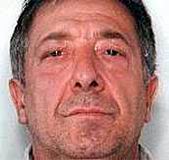
Donato Bilancia
Serial killer Maurizio Minghella
Serial killer · Italy · 1978
Maurizio Minghella was born in Genova on 16 luglio 1958. He lived in the Bolzan…
9 victims
Maurizio Minghella
Serial killer · Italy · 1978
Maurizio Minghella was born in Genova on 16 luglio 1958. He lived in the Bolzan…
9 victims
 Marco Bergamo
Serial killer · Italy · 1985
Marco Bergamo (detto il “mostro di Bolzano”) was a saldatore and carpentiere wh…
5 victims
Marco Bergamo
Serial killer · Italy · 1985
Marco Bergamo (detto il “mostro di Bolzano”) was a saldatore and carpentiere wh…
5 victims
 Andrea Matteucci
Serial killer · Italy · 1980
Andrea Matteucci (also known as “Mostro di Aosta”) was an Italian serial killer…
4 victims
Andrea Matteucci
Serial killer · Italy · 1980
Andrea Matteucci (also known as “Mostro di Aosta”) was an Italian serial killer…
4 victims
 Antonio Mantovani
Serial killer · Italy · 1983
Antonio Mantovani was born in Trevenzuolo (Verona) in 1957 and was known as the…
4 victims
Antonio Mantovani
Serial killer · Italy · 1983
Antonio Mantovani was born in Trevenzuolo (Verona) in 1957 and was known as the…
4 victims
 Eldridge Broussard
Homicide · 1988
Eldridge Broussard was the founder of the Ecclesia Athletic Association. Eldrid…
1 victim
Eldridge Broussard
Homicide · 1988
Eldridge Broussard was the founder of the Ecclesia Athletic Association. Eldrid…
1 victim
 Garcia Glen White
Murderer · USA · 1989
Garcia Glen White was the subject of a case involving an argument and rape. Gar…
3 victims
Garcia Glen White
Murderer · USA · 1989
Garcia Glen White was the subject of a case involving an argument and rape. Gar…
3 victims
 Ervin Lupoe
Mass murderer · USA · 2009
Ervin Lupoe killed his wife, Ana Lupoe, and their five children, then killed hi…
6 victims
Ervin Lupoe
Mass murderer · USA · 2009
Ervin Lupoe killed his wife, Ana Lupoe, and their five children, then killed hi…
6 victims
 Bernard Eugene Giles
Serial killer · USA · 1973
Bernard Eugene Giles was sentenced to life in prison on February 17, 1977. Bern…
5 victims
Bernard Eugene Giles
Serial killer · USA · 1973
Bernard Eugene Giles was sentenced to life in prison on February 17, 1977. Bern…
5 victims
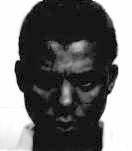 Raymond Riles
Murderer · USA · 1974
Raymond Riles was an inmate from Houston who had been on death row for more tha…
1 victim
Raymond Riles
Murderer · USA · 1974
Raymond Riles was an inmate from Houston who had been on death row for more tha…
1 victim
- Gender
- male
- Country
- Italy
- Location
- Italy
- Date of birth
- July 10, 1951
- Age at first offence
- 46
- Characteristics
- revenge, robbery, serial rapist
- Victim profile
- Giorgo Centanaro, 58 / Maurizio Parenti and his wife Carla Scotto / Bruno Solari and his wife Maria Luigia Pitto / Luciano Marro / Giangiorgio Canu, 52 / Bodejana Almerina / Ljudmila Zubskova / Enzo Gorni / Massimo Gualillo and Candido Randò / Evelyn Esohe Endoghaye, 27 / Elisabetta Zoppetti, 32 / Mema Valbona / Maria Angela Rubino / Giuseppe Mileto, 51 (9 women and 8 men)
- Method of murder
- Shooting ( .38 caliber revolver)
- Date(s) of murder
- 1997 - 1998
- Years active
- 1997–1998
- Date of arrest
- May 6, 1998
- Status
-
Life imprisonment
Sentenced to 13 terms of life imprisonment, with no possibility of release, on April 12, 2000
Overview
Donato Bilancia was sentenced to 13 terms of life imprisonment, with no possibility of release, on April 12, 2000. He was convicted of murdering 17 people in a six-month killing spree on the Italian Riviera. The “Bilancia case” was covered by Roberta Bruzzone.
Donato “Walter” Bilancia was described as a serial killer who murdered 17 people—nine women and eight men—on the Italian Riviera in the seven months from October 1997 to May 1998.
Timeline
- October 1997 — Bilancia began a seven-month killing spree on the Italian Riviera.
- May 6, 1998 — Bilancia was arrested at his home in Genoa; his revolver was seized.
- April 12, 1998 — He boarded a train from Genoa to Venice.
- Six days later — He boarded a train to San Remo.
- April 12, 2000 — A Genoa court sentenced him to 13 life sentences.
- May 1998 — The seven-month period of murders ended.
Background
Donato Bilancia was born in Potenza, in southern Italy, in 1951. When he was about five years old, his family moved to northern Italy, first to Piedmont and then to Genoa in the Liguria region.
Bilancia was described as a chronic bedwetter until age 10 or 12. His mother shamed him by placing his wet mattress on the balcony where it could be seen by neighbors.
When undressing him for bed, his aunt shamed him by pulling down his underwear in front of his cousins to show his underdeveloped penis.
At age 14, he decided to start calling himself Walter. He dropped out of high school and worked at jobs including mechanic, bartender, baker, and delivery boy.
Bilancia was described as living alone and as a compulsive gambler.
The offence
Victims and killing pattern
Bilancia murdered 17 people—nine women and eight men—on the Italian Riviera. His spree was described as lasting seven months, from October 1997 to May 1998.
His victims included four prostitutes, a newly-wed couple, two jewellers, two security guards, and two women attacked in the toilets of moving trains. He was said to have strangled or shot victims in a rage after he felt “swept by a fire” and “a bite in the head”.
It was reported that the court rejected a plea of diminished responsibility.
Methods and statements
In all his killings, Bilancia used or carried a .38 caliber revolver loaded with wad cutter ammunition.
He made no attempt to conceal his victims’ bodies.
The court proceedings included the victims’ relatives, who wanted him transferred to a harsher prison. The judge ordered that he never be released.
Earlier murders and alleged motive
Bilancia was described as having first murdered a friend by strangulation in October 1997. The killing was described as revenge after the friend betrayed him by luring him into a rigged card game, in which he lost £185,000 (about $267,000). Authorities originally thought this death was a heart attack.
His next two murders were described as revenge shootings: of the game’s operator and of the operator’s wife. He emptied their safe afterward. Bilancia later said these first killings gave him a taste for murder.
In his last killing before his arrest, he murdered a service station attendant after filling up with petrol, then took the day’s receipts, about 2 million lira (about $1000).
Motive was described as uncertain or not found. It was also stated that Bilancia could not give a motive.
Specific incidents described in the record
- He robbed a jeweler at home, then shot the jeweler and the jeweler’s wife to death when the wife began screaming. He emptied their safe of jewelry.
- He robbed and murdered a money changer.
- Two months after that, he killed a night watchman making his rounds because he did not like night watchmen.
- He killed an Albanian prostitute and a Russian prostitute.
- A second money changer was killed next, shot multiple times, and his safe was emptied.
- In March 1998, while receiving oral sex at gunpoint from a transsexual prostitute, he shot and killed two night watchmen who interrupted, then shot the prostitute; the prostitute survived to help develop a police sketch and later testify against him.
- He also killed a Nigerian prostitute and a Ukrainian prostitute, and robbed and assaulted an Italian prostitute without killing her.
- On April 12, 1998, he boarded the train from Genoa to Venice because he “wanted to kill a woman”. Spotting a young woman traveling alone, he followed her to the toilet, unlocked the door with a skeleton key, shot her in the head, and stole her train ticket.
- Six days later, he boarded the train to San Remo and followed another young woman to the toilet. He used his key to enter, then used her jacket as a silencer and shot her behind the ear. Excited by her black underwear, he masturbated and used her clothes to clean up.
- The murders of two “respectable” women sparked a public outcry and the creation of a police task force.
During the killings, a recurring narrative described that he could not bear to look at his victims’ eyes, and he asked if doctors could explain to him why he did it:
The worst serial killer in Italian history asked if doctors could explain to him why he did it.
Investigation
Police considered Bilancia “suspect number one” based on the description of a black Mercedes one of his prostitute victims was seen entering the night she was killed, and police followed him for ten days.
Police collected his DNA from cigarette butts and a coffee cup, and it matched DNA found at crime scenes.
A police squad tailed their suspect around Genoa’s bars and streets, collecting his cigarette butts for DNA sampling.
Arrest and confession
On May 6, 1998, Bilancia was arrested at his home in Genoa and his revolver was seized.
After eight days in police custody, he confessed. He spoke for two days and drew 17 diagrams.
Trial
Bilancia’s trial was described as an 11-month trial that ended with the sentence on April 12, 2000.
It was stated that he did not attend court and watched proceedings on closed circuit television in his cell at Chiavari prison.
The court deliberated for five hours.
The court pronounced its verdict after deliberating for five hours and satisfied the victims’ relatives, who wanted him transferred to a harsher prison.
His lawyer, Umberto Garaventa, said:
“For me that man is crazy.”
The police task force and public response to the killings were described as including panic among regular travellers on the railway line.
A special serial killer detection squad was described as being set up by Italian police, with a commanding officer described as “a former chief of liaison in Washington between the Italian police and the American FBI,” and that officer was said to have been responsible for helping to bring to justice a notorious Italian serial killer of recent years.
An associated detail described that investigators believed the same person may also have been responsible for four other murders this year of foreign prostitutes along the Italian Riviera.
The record included an episode of police reporting describing the investigation into a suspected serial killer: Police were reported to be looking for a suspected serial killer whose latest victim, a 32-year-old woman, had been found shot dead locked in the toilet of a local train at Ventimiglia on the Italian Riviera. It was also reported as “the second such killing in recent days,” and that “Two Italian women have now been shot in the head at close range and locked in the toilet of a Riviera train within the space of a week.” Police said they believed they were dealing with a serial killer and that the same person may also be responsible for four other murders that year of foreign prostitutes along the Italian Riviera. The report stated that the prostitutes were from Albania, the Ukraine, and Nigeria, and that they were shot in the head with a pistol of the same calibre used to kill the two women found in the train toilets.
A court also described Bilancia as nicknamed “Angel Voice” due to his rasp, and as a dapper dresser who was not suspected by friends or relatives who knew him as courteous and unflappable.
Sentencing
On April 12, 2000, after an 11-month trial, Bilancia was sentenced by a Genoa court to 13 terms of life imprisonment.
It was also stated that he received 13 life sentences plus an additional 20 years imprisonment for the attempted murder of the transsexual prostitute.
Appeals and outcome
It was stated that an appeal was allowed.
The record stated that Bilancia confessed to the murders but could not give a motive.
The record also described that the court rejected a plea of diminished responsibility.
Other details
Prior history and mental health
It was stated that at some point he was committed to the psychiatric division of the Genoa General Hospital, but escaped.
After he was apprehended, he spent 18 months in prison for robbery.
He served several prison terms in Italy and France for robbery and armed robbery.
Although he had a history of psychiatric problems, it was stated that up to age 47 he had no record of violence.
At an earlier time while underage, he was arrested and released for stealing a motor scooter and for stealing a truck loaded with Christmas sweets.
In 1974 he was stopped and jailed for having an illegal gun.
Incidents involving acquaintances
It was described that the shock from Bilancia ambushing Centenaro caused his friend to have a heart attack, and police assumed natural causes had killed him.
It was described that he broke into Parenti’s home and shot him and his wife.
Allegations involving prostitutes and physical characteristics
It was reported that prostitutes he visited alleged that he had a tiny penis and was impotent.
Dates and deaths
The record described a murder occurring at Ventimiglia in connection with the case’s public reporting, stating that a 32-year-old woman was found dead locked in the toilet of an almost empty local train when it arrived at Ventimiglia on the French border.
No information was included in the provided text about any bodies “never found” beyond the included framing of characteristics.
Spotted an error, or have more information about this case?