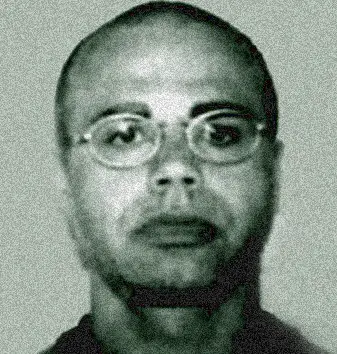
Antonio Mantovani
Serial killer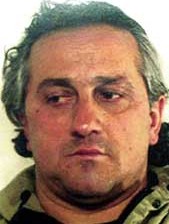 Maurizio Minghella
Serial killer · Italy · 1978
Maurizio Minghella was born in Genova on 16 luglio 1958. He lived in the Bolzan…
9 victims
Maurizio Minghella
Serial killer · Italy · 1978
Maurizio Minghella was born in Genova on 16 luglio 1958. He lived in the Bolzan…
9 victims
 Marco Bergamo
Serial killer · Italy · 1985
Marco Bergamo (detto il “mostro di Bolzano”) was a saldatore and carpentiere wh…
5 victims
Marco Bergamo
Serial killer · Italy · 1985
Marco Bergamo (detto il “mostro di Bolzano”) was a saldatore and carpentiere wh…
5 victims
 Andrea Matteucci
Serial killer · Italy · 1980
Andrea Matteucci (also known as “Mostro di Aosta”) was an Italian serial killer…
4 victims
Andrea Matteucci
Serial killer · Italy · 1980
Andrea Matteucci (also known as “Mostro di Aosta”) was an Italian serial killer…
4 victims
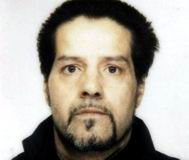 Bartolomeo Gagliano
Serial killer · Italy · 1981
Bartolomeo Gagliano was mentally ill and was serving time for multiple murders…
3 victims
Bartolomeo Gagliano
Serial killer · Italy · 1981
Bartolomeo Gagliano was mentally ill and was serving time for multiple murders…
3 victims
 Donato Bilancia
Serial killer · Italy · 1997
Donato Bilancia was sentenced to 13 terms of life imprisonment, with no possibi…
17 victims
Donato Bilancia
Serial killer · Italy · 1997
Donato Bilancia was sentenced to 13 terms of life imprisonment, with no possibi…
17 victims
 Joshua Daniel Bishop
Murderer · USA · 1994
Joshua Daniel Bishop was 22 years old when he was sentenced to death in Baldwin…
1 victim
Joshua Daniel Bishop
Murderer · USA · 1994
Joshua Daniel Bishop was 22 years old when he was sentenced to death in Baldwin…
1 victim
 David Ivy
Murderer · USA · 2001
David Ivy was on parole in June 2000, with parole status scheduled to terminate…
1 victim
David Ivy
Murderer · USA · 2001
David Ivy was on parole in June 2000, with parole status scheduled to terminate…
1 victim
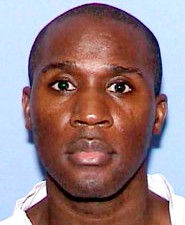 Curtis Moore
Murderer · USA · 1995
Curtis Moore was convicted of capital murder in Texas and was sentenced to deat…
3 victims
Curtis Moore
Murderer · USA · 1995
Curtis Moore was convicted of capital murder in Texas and was sentenced to deat…
3 victims
 Mechele Linehan
Justice miscarriage? · USA · 1996
Mechele Linehan was a former dancer and a former fiancée of Kent Leppink. She w…
0 victims
Mechele Linehan
Justice miscarriage? · USA · 1996
Mechele Linehan was a former dancer and a former fiancée of Kent Leppink. She w…
0 victims
- Gender
- male
- Country
- Italy
- Location
- Milan, Lombardy, Italy
- Date of birth
- 1957
- Age at first offence
- 26
- Characteristics
- rape, arson
- Victim profile
- Carla Zacchi , 26 / Dora Vendola / Simona Carnevale, 26 / Cesarina De Donato, 60
- Method of murder
- Strangulation - Suffocation
- Date(s) of murder
- 1983 / 1996 - 1997
- Years active
- 1983–1997
- Date of arrest
- June 1999
- Status
-
Life imprisonment
Sentenced to life in prison on November 12, 2001
Case record: Antonio Mantovani
Background
Antonio Mantovani was born in Trevenzuolo (Verona) in 1957 and was known as the “mostro di Milano”. He had a difficult childhood: at age 7, he was sent to boarding school because his mother did not want to take care of him anymore.
The offence
Mantovani attempted to rape a 3-year-old girl when he was 14. In 1979, he attempted to rape the wife of a friend.
On 11 February 1983, Mantovani raped and killed Carla Zacchi, 26. Carla Zacchi was an employee at a newspaper and the wife of a friend of Mantovani. After the killing, the body, stripped of clothing, was thrown into a canal in Lucino di Rodano, near Milan. A rejection by the woman to have sex with him was described as the trigger for Mantovani’s homicidal “raptus”.
During his period in semi-liberty in 1996, Mantovani killed a woman named Dora Vendola. Dora Vendola was strangled using a lace and her body was found in her car in Milan. The date given for Dora Vendola’s death was 6 November 1996.
In 1997, while using permits while in semi-liberty, Mantovani killed two women. Simona Carnevale was killed in March 1997, and Carolina De Donato was killed in June 1997.
Simona Carnevale, a hairdresser aged 26, disappeared on the evening of 7 March 1997 after leaving her shop in Milan. The disappearance led to coverage on the television programme “Chi l’ha visto?”. The narrative describes that Simona had called home to tell her sister that she would return later, and that this was her last trace. It was described that there had been an attempted kidnapping in the area some days before, leading Simona to be accompanied home by her father or her boyfriend, and the narrative raised the question of why she was alone that day. It was also described that she had met a boy a few days earlier, but that he was not with her the day she disappeared. The narrative describes that the boy contacted the programme, explaining that he was outside Milan that day and that he knew Simona only superficially. It also describes that relatives and friends began to fear for the young hairdresser.
On 2 June 1997, Carolina De Donato’s body was found carbonized. Carolina De Donato was described as the owner of the apartment that Mantovani had rented. The narrative described the woman as being in her bed, surrounded by about twenty dolls.
Cesarina De Donato was described as a woman aged 60. Her death was initially described as a suicide that was “anomalous” due to a fire that had partially destroyed the corpse. The narrative says that on 2 June 1997, she was found dead in her apartment on via Santa Teresa in Milan. Her body was described as lying across the bed, surrounded by perfume bottles, with remains of plastic bags on her face and partially carbonized. It also states that fire fighters and police found some dolls and items to which Cesarina De Donato, who lived alone after separation from her husband, was particularly attached. Investigations and an autopsy at the time led to talking about suicide: the version described Cesarina De Donato as having killed herself by covering her body with perfume and setting herself on fire while using the plastic bags to suffocate herself.
Later investigations described the event as an intentional homicide camouflaged as suicide. The narrative states that the homicide was committed after sexual rejection.
Investigation
Mantovani was arrested and convicted after the killing of Carla Zacchi.
After the killing of Dora Vendola, Mantovani was placed under investigation but was never accused. In interrogation, Mantovani admitted that he knew Dora Vendola and stated that she had rejected him in an attempted sexual approach, while denying that he had killed her. It was described that investigators considered his explanation credible and that his semi-liberty was not revoked, leaving him able to strike again.
With the deeper investigation, it was described that there was a phone number of Mantovani among Simona Carnevale’s papers, indicating the two knew each other.
During the investigation into Simona Carnevale’s disappearance, an anonymous letter was received by “Chi l’ha visto?” describing an aggression she had suffered on the underground and that, after the aggression, Simona would have been taken away in a car. The programme made an appeal to the writer:
" se il suo racconto è vero ci aiuti a scoprire i colpevoli. "
On 1 June 1999, “Chi l’ha visto?” returned to the Carnevale case because the GIP of Milan had issued an order for a precautionary custody measure against Mantovani, who was in prison for serving his 1983 sentence. The narrative says that on the night of the offence Mantovani was not in prison but in semi-liberty.
The narrative describes that Mantovani was accused by Carlo Fermi, who was his cellmate. It says that after seeing Simona’s photograph on television, Fermi remembered seeing her with Antonio. It further describes that Fermi said Mantovani returned to his cell very agitated on the night of 7 March 1997 and confessed that he had killed a girl, and that the next day he showed him the body of the young woman wrapped in a cloth in the trunk of his yellow Y10.
The narrative describes that as investigations proceeded Mantovani was also held responsible for the murder of Cesarina De Donato. It states that Mantovani’s name had been connected to Cesarina De Donato’s death only recently, after revelations by a detained friend of Mantovani allowed the reconstruction of Simona Carnevale’s homicide.
The narrative mentions that the prosecution granted a nulla osta for the cremation of Cesarina De Donato’s body, which the GIP Salvini criticized in an ordinance, and that the cremation made later checks difficult after two years.
It also describes additional investigative elements used to support the homicide theory after two years, including:
- marks of a bite on a cheek (detected from photos taken at the time);
- an “error” of having closed the house door of the woman, causing the keys to disappear;
- burn marks found on Mantovani’s hands during hospitalization a few days after the offence (when he had attempted suicide);
- other findings found by investigators.
The narrative says that Dora Vendola’s killing was linked as another homicide under suspicion while Mantovani was in semi-liberty in 1996, based on the case being pursued and supported by later developments.
Arrest
The narrative states that after the homicide of Carla Zacchi, Mantovani was arrested and condemned to 29 years of imprisonment.
It also states that after his conviction attempts to flee, but in 1998 he was found and arrested.
Trial
After the killing of Carla Zacchi, Mantovani was sentenced to 29 years in prison in 1983.
The narrative describes an appeal process. On 23 October 2001, a second-degree process began before the Corte d’Assise d’Appello of Milan against Antonio Mantovani. The narrative describes that in July of the previous year he had been convicted to life imprisonment for “duplice omicidio volontario” (two women killed within three months) while he was in semi-liberty to serve the last part of his sentence for another homicide: the killing in ’83 of the wife of a friend, Carla Zacchi, who had opposed his sexual advances.
The narrative describes that in analogous circumstances the other two episodes had occurred: the disappearance of Simona Carnevale on 7 March 1997 and, on 2 June of the following month, the suffocation of Cesarina De Donato (60) in her bed in a home on the upper floor of Mantovani’s residence. It states that Simona Carnevale’s body was never found, while Cesarina De Donato’s body was burned and carbonized.
It states that in first instance the accused included a detained person who said he had seen an episode immediately after the murder of the hairdresser, when Mantovani supposedly showed him the body in the trunk of a yellow Y10.
It also states that both women were said to have been killed because they had not accepted Mantovani’s sexual requests, while in court Mantovani denied all allegations.
The narrative says that defence counsel Franco Gandolfi asked for the renewal of the trial to allow verification of some testimonies and for a psychiatric assessment. It states that one friend claimed to have seen Simona shortly before her disappearance while speaking on the phone, and that checks through Telecom call records did not record that call on that phone at that time; and that another woman said she had seen Carnevale in Tortona three days after her disappearance from home.
The narrative states that the Corte d’Assise d’Appello was presided over by dottor Pier Camillo Passerini, rejected the defence requests, declared a psychiatric assessment unnecessary, and scheduled the continuation of the process for the next day for the requisitions by the substitute attorney general Ugo Dello Russo.
On 24 October 2001, the narrative says that Ugo Dello Russo requested life imprisonment for Antonio Mantovani. It described that he would have killed two women in 1997 while in semi-liberty. It also reiterated that the prior life sentence in first instance was imposed on 13 July of the previous year. It states that in first instance Mantovani was held responsible for two murders: Simona Carnevale and Cesarina De Donato, whose body was found carbonized. It states that the charges asserted the murders occurred because the victims did not accept his sexual requests, while Mantovani denied the allegations.
Sentencing
The narrative states:
- Mantovani was sentenced to 29 years in prison in 1983.
- Released in 1996 after serving only 13 years and obtained semi-liberty.
- On 12 November 2001, Mantovani was sentenced to life imprisonment, despite consistently professing innocence and expressing regret for the families of the victims, including crying multiple times during the process.
- The narrative states he was detained in the prison of Opera (Milan).
Appeals
The narrative describes the start of the second-degree trial on 23 October 2001. It states that the appeal proceeded, and on the basis of the narrative, in late 2001 Mantovani’s life imprisonment for the murders of Simona Carnevale and Cesarina De Donato was confirmed.
Outcome
The narrative describes that Mantovani was convicted and later received a life imprisonment sentence on November 12, 2001. It also states he was detained in the prison of Opera (Milan).
It further states that Mantovani was formally investigated for a third offence: the murder of Dora Vendola, notified with an extension of investigations. The narrative says that the notification was received by Mantovani in prison and by his defence counsel, avv. Franco Gandolfi, and that the murder had occurred in 1996 when Mantovani was in semi-liberty. It states that Dora Vendola was strangled and that she was found dead with a belt around her neck in a Panda parked in viale Monza, Milan on 6 November 1996.
Other details
- Mantovani reportedly spent his time during day while in semi-liberty working for an IT company or in a small rented apartment in Milan, and returned to prison only at night to sleep.
- The narrative describes that on 6 November 1996 Dora Vendola was found in her car.
- The narrative states that the body of Simona Carnevale was never found.
- The narrative states that on 7 March 1997 Mantovani was not in prison but in semi-liberty.
- The narrative says that Carlo Fermi was Mantovani’s cellmate.
- The narrative describes that Mantovani had been shown by Carlo Fermi as having confessed after returning to his cell and showing the body wrapped in a cloth in the trunk of his yellow Y10.
- The narrative includes the television programme title “Chi l’ha visto?”.
- The narrative describes that the statement made by Mantovani included: “Era un'amicizia pulita, tranquilla - ha detto il detenuto - che non e' mai sfociata in un corteggiamento”.

Spotted an error, or have more information about this case?