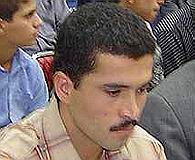
Mohammed Bijeh
Serial killer Saeed Hanaei
Serial killer · Iran · 2000
Saeed Hanaei Saeed Hanaei was found guilty and was hanged at dawn in Mashhad Pr…
19 victims
Saeed Hanaei
Serial killer · Iran · 2000
Saeed Hanaei Saeed Hanaei was found guilty and was hanged at dawn in Mashhad Pr…
19 victims
 Ali Asghar Borujerdi
Serial killer · Iran · 1908
Ali Asghar Borujerdi (Persian: عَلی اَصغَر بروجردی) was known in Iran as اصغر ق…
33 victims
Ali Asghar Borujerdi
Serial killer · Iran · 1908
Ali Asghar Borujerdi (Persian: عَلی اَصغَر بروجردی) was known in Iran as اصغر ق…
33 victims
 Mahin Qadiri
Serial killer · Iran · 2008
Mahin Qadiri was an Iranian woman convicted as a serial killer. A Guardian repo…
5 victims
Mahin Qadiri
Serial killer · Iran · 2008
Mahin Qadiri was an Iranian woman convicted as a serial killer. A Guardian repo…
5 victims
 Edson Isidoro Guimaraes
Serial killer · Brazil · 1999
Edson Isidoro Guimarães was a Brazilian nursing assistant and nurse’s aide at S…
131 victims
Edson Isidoro Guimaraes
Serial killer · Brazil · 1999
Edson Isidoro Guimarães was a Brazilian nursing assistant and nurse’s aide at S…
131 victims
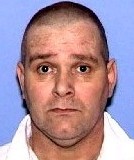 Keith Thurmond
Murderer · USA · 2001
Keith Thurmond was sentenced to death on November 14, 2002. He was executed by…
2 victims
Keith Thurmond
Murderer · USA · 2001
Keith Thurmond was sentenced to death on November 14, 2002. He was executed by…
2 victims
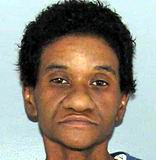 Nikole Flagg
Murderer · USA · 2003
Nikole Flagg (defendant) Myrvinia Lowe (victim; 61-year-old; employee at Cincin…
2 victims
Nikole Flagg
Murderer · USA · 2003
Nikole Flagg (defendant) Myrvinia Lowe (victim; 61-year-old; employee at Cincin…
2 victims
 Jesusa Tatad
Murderer · USA · 2011
Jesusa Tatad was 41 years old at the time of her sentencing. She had divorced R…
1 victim
Jesusa Tatad
Murderer · USA · 2011
Jesusa Tatad was 41 years old at the time of her sentencing. She had divorced R…
1 victim
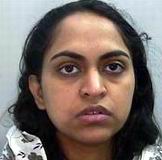 Sara Ege
Murderer · United Kingdom · 2010
Sara Ege was convicted of murder and perverting the course of justice at Cardif…
1 victim
Sara Ege
Murderer · United Kingdom · 2010
Sara Ege was convicted of murder and perverting the course of justice at Cardif…
1 victim
 Joji Obara
Murderer · Japan · 1992
Joji Obara (織原城二; Obara Jōji) was born in 1952 in Osaka, Japan. He was a convic…
1 victim
Joji Obara
Murderer · Japan · 1992
Joji Obara (織原城二; Obara Jōji) was born in 1952 in Osaka, Japan. He was a convic…
1 victim
- Gender
- male
- Country
- Iran
- Location
- Tehran, Iran
- Date of birth
- February 7, 1975
- Age at first offence
- 29
- Characteristics
- pedophile, rape, child abuse
- Victim profile
- 17 children ( boys between 8 and 15 years old) and 3 adults
- Method of murder
- Blows from a stone
- Date(s) of murder
- March-September 2004
- Years active
- 2004
- Date of arrest
- September 2004
- Status
-
Executed
Executed by hanging in Pakdasht on March 16, 2005
Case overview
Mohammed Bijeh (Persian: محمد بيجه ) was an Iranian serial killer. He confessed in court to raping and killing 16 young boys between March and September 2004, and was sentenced to 100 lashes followed by execution. All the boys were between 8 and 15 years old. He also killed two adults. He was dubbed “the Tehran desert vampire” and was also known as “Desert Vampire” and “Night Bat: Khofashe Shab.”
Timeline
- March 2004 — Mohammed Bijeh confessed to raping and killing 16 young boys.
- September 2004 — Mohammed Bijeh and accomplice Ali Baghi were arrested.
- October 12, 2004 — The trial of two Iranian men accused of kidnapping, raping and murdering 20 people began in Tehran.
- October 13, 2004 — The trial was halted after relatives of the victims made a courtroom stampede.
- October 14, 2004 — A judge sentenced Mohammad Bijeh to death for killing 17 children and three adults; Ali Baghi was jailed for 15 years.
- October 24, 2004 — Investigations into dereliction of duty against seven police officers related to the Pakdasht serial murders were completed and forwarded to courts; additional police arrests followed.
- November 18, 2004 — A re-trial was ordered; the head of the judiciary said both men would now die for the crimes and would be executed publicly at the crime scene, subject to supreme court approval and with an appeal window described as 20 days.
- March 16, 2005 — Mohammed Bijeh was executed by hanging in Pakdasht.
Background
Mohammed Bijeh worked in brickworks in Pakdasht, an impoverished town south of Tehran, where the pair’s killings took place. The crimes had drawn major media attention in Iran, and President Mohammad Khatami was reported to have ordered his interior minister to personally investigate the case. The prosecution and victims’ families demanded execution.
Mohammed Bijeh and accomplice Ali Baghi were reported to have preyed on children by luring them into the desert by saying they were going to dig out rabbits or foxes from their burrows. The killings did not come to light for a time because many victims were from illegal refugee families from neighbouring Afghanistan and were afraid to come forward.
The offence
Mohammed Bijeh confessed in court to raping and killing 16 young boys between March and September 2004. The boys were between 8 and 15 years old. In addition to the boys, he killed two adults.
The trial accounts described kidnappings alongside sexual abuse. Mohammed Bijeh and Ali Baghi allegedly stunned victims with blows from a stone, sexually abused them, and buried the bodies in shallow graves in the desert south of Tehran. They also allegedly placed dead animals near victims’ bodies to cover up the smell of rotting corpses. Reports also said they placed dead cats and dogs near shallow graves to disguise the stench of corpses. Iranian media also said Bijeh burned the bodies of his victims.
It was reported that the pair were convicted of the murders of between 19 and 22 people, most of them young children. Local people believed the toll was higher, and the prosecution and families demanded execution for the offences.
Investigation
During the case, Abbas Ali Alizadeh said the head of the judiciary in Tehran ordered a re-trial given that one of the men escaped death, and the head of the judiciary was quoted as saying the pair had been found “corrupt on earth” and would now both die for the crimes. The pair were reported to have been convicted of killing between 19 and 22 people around the impoverished town of Pakdasht just south of Tehran.
A senior judicial official, Abbasali Forati, said investigations into charges of dereliction of duty against seven police officers related to the Pakdasht serial murders were completed and forwarded to courts. Forati said the two policemen failed to identify “Iran’s most ruthless assassins Mohammad Basijeh (aka Bijeh) and Ali Gholampour (aka Ali Baghi) who raped and killed more than 20 people, mostly children.” Forati also said the two policemen ignored calls from local people to inspect one of the murder scenes. Forati said five more police officers were arrested for derailing investigations by refusing to identify the murderers earlier at Tehran Police’s Bureau of Investigation, and that they were in custody awaiting trial.
Jamal Karimi-Rad was quoted as saying: “two inspectors, an assistant public prosecutor and Pakdasht prosecutor also evidently had some shortcomings in dealing with this case.”
Arrest
Mohammed Bijeh and accomplice Ali Baghi were arrested last month in connection with charges described as killing and raping 17 children and kidnapping. Additional reporting said the pair were arrested in September.
The trial began after the pair had been arrested and charged; it was also reported that Baghi had been arrested at one point but then allowed free on bail.
Trial
The trial of two Iranian men accused of kidnapping, raping and murdering 20 people began in Tehran on Tuesday, October 12, 2004. Mohammad Bijeh and Ali Baghi were described as dubbed “hyenas” or “vampires of the Tehran desert” in the press. It was reported that, according to Iranian media, the men were judged to be in their “full faculty,” meaning they could stand trial, and that the trial was taking place behind closed doors due to the nature of the crimes. The prosecutor and victims’ relatives demanded the harshest possible sentence.
A father of one of the victims was quoted as complaining of irregularities in the case, including that Baghi was arrested at one point but then allowed free on bail. The father also questioned whether the two were merely part of a larger group “dealing in children's body parts.”
“We are ready to pay the judiciary as much as they want so they can hand them over to us and we can deal with them,” the man said.
A courtroom stampede occurred during the trial on October 13, 2004, after relatives attacked Mohammed Bijeh as he recounted details. A witness said Bijeh was “completely calm and free of any remorse,” and described the courtroom response.
“He was completely calm and free of any remorse. He gave all the gory details on how he killed his seventh victim. The family of the victim then rose from their seats and ran towards him,” the witness said.
“Then other relatives of the victims began shouting and running at the accused. They wanted to kill the accused men with bare hands. The police then quickly whisked the accused out of the court,” the witness said.
“The courtroom was a mess and the hearing was halted.”
According to reporting, Mohammed Bijeh and Ali Baghi were charged with killing and raping 17 children, two men and a woman, in the desert south of Tehran.
Sentencing
On October 14, 2004, it was reported that an Iranian judge sentenced Mohammad Bijeh to death for killing 17 children, most of them young boys he raped first, and three adults. Ali Baghi, described as a 24-year-old accomplice, was jailed for 15 years.
It was also reported that Mohammed Bijeh was convicted of 19 of the killings and received 16 death sentences. Four families did not press for the death penalty and agreed to settle for blood money compensation instead; one death penalty was described as for rape. It was reported that the state would pay blood money to the four families that demanded it because the killers came from indigent families.
Separate reporting described Mohammed Bijeh’s sentencing as one death sentence for each murder he confessed and 100 lashes of the whip for the rapes.
A November 18, 2004 report said the head of the judiciary ordered a re-trial after determining that one of the men escaped death. Abbas Ali Alizadeh was quoted as saying: “They will be publicly executed at the very crime scene,” and it was added that the men could appeal within 20 days and that the death penalties were subject to supreme court approval.
Appeals
The November 18, 2004 reporting said the men could appeal within 20 days and that the death penalties were subject to supreme court approval.
Mohammed Bijeh’s verdict was reported to have been upheld by the Supreme Court before the execution.
Outcome
On March 16, 2005, Mohammed Bijeh was executed by hanging in Pakdasht. The execution took place in front of a crowd of about 5,000. It was reported that he was shirtless and handcuffed to an iron post, where he received lashes from different judicial officials. He was reported to have fallen to the ground more than once during the punishment, but he did not cry out; other reporting described him as calm and silent and said he fell to his knees multiple times as he received lashes.
A relative of one of the victims stabbed Mohammed Bijeh with a knife as he was being punished. A mother of one of the victims was invited to put a blue nylon rope around his neck. The rope was attached to a crane; the crane’s arm jerked upward and Mohammed Bijeh’s body dangled about 10 meters in the air. After about 20 minutes, a doctor confirmed he was dead. Scuffles and attempts by members of victims’ families to approach the body continued, with riot police preventing access.
The crowd chanted “harder, harder” as judicial officials took turns to flog Bijeh’s bare back. Some in the crowd threw stones at him as he was flogged, and some shouted “Shame on you, Bijeh!” One resident, Zahra Khaleghi, was quoted as saying: “Public executions reduce the occurrence of offenses. Bijeh destroyed many families. He deserved more than death.” Dariush Mehraban was quoted as saying: “Many criminals have been hanged, but offenses have never reduced. It's an ugly scene that a human being is hanged even if he has committed many crimes. Revenge is not the solution,” and he watched the hanging.
Aftermath
Reporting described disciplinary action against police officers. It was said that six execution-day police officers were reprimanded for dereliction of duty and that the Interior Ministry criticized the police for failing to catch the suspects after the first crime. Another report said 16 police officers were reprimanded for dereliction of duty and that investigative failures continued to draw criticism.
The case provoked national outrage in Iran, and it was also reported that Iranian reformists argued that public executions hurt the country’s international image and reflected badly on Islam. It was also stated that convicts were hanged in public in Iran only if a court deemed that their offences deeply affected public sentiment, and that Iranian courts were controlled by hard-liners.
Other details
Mohammed Bijeh was described as being between 23 and 24 years old in different reports, and his birth date was shown as February 7, 1975.
Ali Baghi was described by different reports as being sentenced to 15 years in prison and 100 lashes. One report said Ali Baghi was acquitted of involvement in the murders but was convicted of taking part in some of the kidnappings to which he confessed; it also stated he was sentenced to 15 years in prison and 100 lashes.
The trial proceedings were described as having included interruptions by relatives of the victims, and the case was described as provoked by calls for investigation and harsh sentencing, with relatives attempting to attack Mohammed Bijeh during testimony and multiple reports noting chaos in the courtroom.
Names that appeared in the reporting around the execution included Rahim Younessi, who was described as a victim, and Milad Kahani, who was described as one of the victims’ mothers asked to put the noose around Mohammed Bijeh’s neck.
Spotted an error, or have more information about this case?