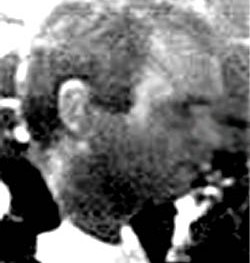
Andrea Matteucci
Serial killer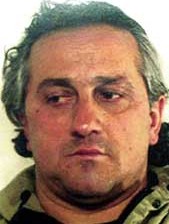 Maurizio Minghella
Serial killer · Italy · 1978
Maurizio Minghella was born in Genova on 16 luglio 1958. He lived in the Bolzan…
9 victims
Maurizio Minghella
Serial killer · Italy · 1978
Maurizio Minghella was born in Genova on 16 luglio 1958. He lived in the Bolzan…
9 victims
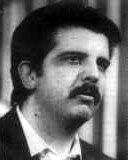 Marco Bergamo
Serial killer · Italy · 1985
Marco Bergamo (detto il “mostro di Bolzano”) was a saldatore and carpentiere wh…
5 victims
Marco Bergamo
Serial killer · Italy · 1985
Marco Bergamo (detto il “mostro di Bolzano”) was a saldatore and carpentiere wh…
5 victims
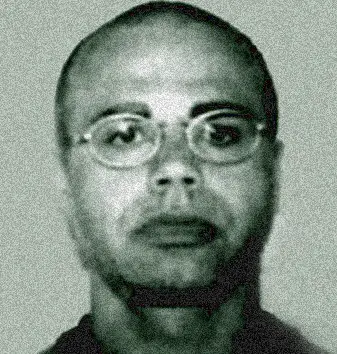 Antonio Mantovani
Serial killer · Italy · 1983
Antonio Mantovani was born in Trevenzuolo (Verona) in 1957 and was known as the…
4 victims
Antonio Mantovani
Serial killer · Italy · 1983
Antonio Mantovani was born in Trevenzuolo (Verona) in 1957 and was known as the…
4 victims
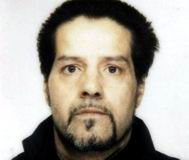 Bartolomeo Gagliano
Serial killer · Italy · 1981
Bartolomeo Gagliano was mentally ill and was serving time for multiple murders…
3 victims
Bartolomeo Gagliano
Serial killer · Italy · 1981
Bartolomeo Gagliano was mentally ill and was serving time for multiple murders…
3 victims
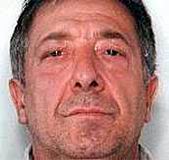 Donato Bilancia
Serial killer · Italy · 1997
Donato Bilancia was sentenced to 13 terms of life imprisonment, with no possibi…
17 victims
Donato Bilancia
Serial killer · Italy · 1997
Donato Bilancia was sentenced to 13 terms of life imprisonment, with no possibi…
17 victims
 James Walter Moreland
Murderer · USA · 1982
James Walter Moreland was executed by lethal injection in Texas on January 27,…
2 victims
James Walter Moreland
Murderer · USA · 1982
James Walter Moreland was executed by lethal injection in Texas on January 27,…
2 victims
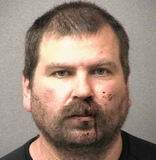 Adam Leroy Lane
Murderer · USA · 2007
Adam Leroy Lane was a former trucker who committed knife attacks on women in Ne…
2 victims
Adam Leroy Lane
Murderer · USA · 2007
Adam Leroy Lane was a former trucker who committed knife attacks on women in Ne…
2 victims
 Huan Yun Xiang
Homicide · Australia · 2002
Huan Yun “Allen” Xiang was a commerce student at Monash University. He opened f…
2 victims
Huan Yun Xiang
Homicide · Australia · 2002
Huan Yun “Allen” Xiang was a commerce student at Monash University. He opened f…
2 victims
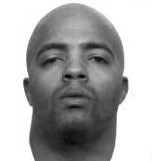 Anthony Nathaniel Bonham
Murderer · USA · 1981
Anthony Nathaniel Bonham (also shown as Antonio Nathanial Bonham) was executed…
1 victim
Anthony Nathaniel Bonham
Murderer · USA · 1981
Anthony Nathaniel Bonham (also shown as Antonio Nathanial Bonham) was executed…
1 victim
- Gender
- male
- Country
- Italy
- Location
- Aosta/Puglia, Italy
- Date of birth
- April 24, 1962
- Age at first offence
- 18
- Characteristics
- torture, dismemberment, arson, rape, serial rapist, abuse, domestic violence, drug dealer
- Victim profile
- Domenico Raso (gay man) / Daniela Zago / Clara Omarei Bee / Albana Dakovi (prostitutes)
- Method of murder
- Stabbing with knife - Shooting
- Date(s) of murder
- 1980 / 1992 - 1995
- Years active
- 1980–1995
- Date of arrest
- June 26, 1995
- Status
-
Imprisoned
Sentenced to 28 years in prison on 16 April 1996
Case overview
Andrea Matteucci (also known as “Mostro di Aosta”) was an Italian serial killer. Between 1980 and 1995, he was considered responsible for the murders of three prostitutes and one homosexual man, and he was suspected of the disappearance of some prostitutes in Puglia. The modus operandi included stabbing and burning of corpses.
Timeline
- 30 April 1980 — Andrea Matteucci left home and killed Domenico Raso by stabbing him with a knife and causing fatal injuries.
- 1983 — Andrea Matteucci married and lived in Saint Pierre, then Sarre, then Villeneuve.
- 1992 — Andrea Matteucci killed Daniela Zago at Brissogne.
- 1994 — Andrea Matteucci killed Clara Omoregbee in Arnad and committed the attempted killing of Lucy Omon on 10 September 1994.
- April 1995 — Andrea Matteucci was processed for car theft and was subject to legal benefits with restrictions on movement and reporting requirements.
- 12 May 1995 — Andrea Matteucci killed Albana Dakovi at Arnad.
- 26 June 1995 — Andrea Matteucci was arrested and placed in a security room.
- 16 April 1996 — Andrea Matteucci was sentenced to 28 years in prison.
The offence
Killing of Domenico Raso (1980)
On the evening of 30 April 1980, Andrea Matteucci met the homosexual shopkeeper Domenico Raso at the Arc d’Augusto. Domenico asked Andrea if he wanted to have sex with him behind the monument where they would not be seen. After Andrea accepted, he struck Domenico in the nose with a punch, grabbed him by the hair, took a Boy Scout knife from his belt, and stabbed him in the back, where the knife became lodged between two vertebrae. He tried to pull the knife out but could not, then tried to leave. When Domenico returned and shouted loudly, Andrea went back under the Roman monument, struck him again in the chest and back, and stopped only when Domenico told his last words. Andrea left the monument, threw the knife into the first trash bin he found, and returned home.
Killing of Daniela Zago (1992)
In 1992, Andrea Matteucci met the prostitute Daniela Zago (described as being from Turin) in Brissogne while she was in her van. She agreed to get into his vehicle. They had sex, then a dispute occurred: Daniela was described as putting him in a hurry and insisting he should return her to where he had found her. Andrea later returned and asked her to try again; he loaded her into the car and asked whether she had children. Daniela said she did not, and Andrea pointed a pistol at her neck and shot her. She was not killed at first and was described as being wounded and terrified. Daniela begged to be taken to hospital; Andrea said he would. He took her to an isolated place, pretended to help her get out of the car, then shot her in the head and Daniela died on the spot. Andrea took Daniela’s jewelry with the intention of giving it to his wife. He then buried the body, but after a month he dug it up, cut the body apart with a knife, placed it into a bin, and set it on fire. The fire did not take, so he made a hole in the bin’s sheet metal to facilitate combustion. After eight hours, only ashes remained; Andrea scattered them in a landfill.
Killing of Clara Omoregbee (1994)
In 1994, Andrea Matteucci went to Chambave and found the Nigerian prostitute Clara Omoregbee. He took her to Arnad, and they had full sexual relations. Afterward, they argued: Andrea was described as being dissatisfied, hitting Clara with a fist, and Clara then pulling out a pistol. She shot twice, with one shot mortal to the head. Andrea waited for an hour and then had sexual relations with Clara’s body. He returned home with his “Ape,” dragged the body into the kitchen, took a knife, cut off Clara’s head, legs, and arms, then went to Arvier with the dismembered remains and threw them into a bin used earlier and set it on fire. After six hours, ashes were described as being brought home and hidden for one night. The following day, Andrea went to Villeneuve and threw the ashes from a bridge onto the Dora Baltea.
Attempted killing of Lucy Omon (1994)
On 10 September 1994, while hunting for prostitutes, Andrea Matteucci went to Nus and saw the Nigerian prostitute Lucy Omon. He convinced her to get in and follow him until his home. They had full sexual relations, and Andrea promised to take her back to Nus. While in the car, Andrea was described as driving toward Arvier rather than Nus, to the usual parking area near his old workshop as a small tradesman in Rue de Rolland, where the bin was located. Lucy was surprised and began to fear. Andrea attempted to suffocate her with a pillow in the car but did not succeed; Lucy broke free and managed to open the car and escape.
Killing of Albana Dakovi (1995)
In April 1995, Andrea Matteucci was described as being processed for car theft using legal benefits, with obligations that he not move outside the perimeter between Arvier and Aosta and the obligation to sign at the Pont Saint Martin barracks.
On 12 May 1995, he killed the Albanian prostitute Albana Dakovi in Arnad. He found her, they had sexual relations in a van after she accepted and followed him into an isolated side road, and Andrea paid her. He then returned her to her workplace. Later, around 18:00, Andrea returned from Albana’s location and, because he had found her sympathetic and said he had gotten along with her, he wanted another sexual encounter. Albana got into the vehicle again, and the two were described as having sex in Arnad again. Andrea then wanted to talk; Albana was described as becoming hurried and angry, and wanting to be taken back. Andrea did not want to take her back; Albana began to shout; Andrea slapped her, pushed her out of the van, struck her on the head with an English key, and Albana was described as being stunned. Andrea then took a knife, stabbed Albana five times, and cut her throat, causing her death.
Andrea then placed the body in his Iveco Daily van, went to fill up with gasoline with the body in the van, and then went to the Pont Saint Martin barracks to sign in the register with the body of the girl. The body was described as being burned, like those before.
Investigation and arrest
A protector of the last prostitute killed, Albana, sent an anonymous letter to the Pont Saint Martin barracks after seeing Albana loaded into Andrea Matteucci’s Iveco Daily van. On 26 June 1995, Andrea Matteucci was arrested and placed in a security room. Initially he said he had seen Albana the night of her disappearance, then stopped saying he had killed her. The next day he was interrogated again and stated that he was responsible for Albana’s death, with emphasis that it was not intentional (“involontariamente”). Because of contradictions, the narrative shifted, first to the 1980 killing and then Andrea confessed to all his homicides.
Trial and sentencing
Andrea Matteucci was judged and was described as being considered socially dangerous with a partial mental deficiency and suffering from mental disorders. He was sentenced on 16 April 1996 by the Corte d’Assise of Aosta to 28 years in prison, to lifelong disqualification from public offices, and to disqualification from parental authority for the duration of the sentence, as well as to three years in a care institution.
The prosecutor Pasquale Longarini had requested life imprisonment and 18 years of prison for the homicide of Domenico Raso in 1980. The civil party had requested compensation of 640 million lire for that homicide. Andrea Matteucci had been judged guilty of only one offence: the homicide of Albana Dakovi and the attempted homicide of Lucy Omon, another prostitute who initially survived and later failed to escape? (The record indicates she escaped from Andrea’s attack.)
The defense counsel Ada Lizzio argued that Andrea Matteucci was a “mitomane” and that the “accusatory castle” relied only on Matteucci’s statements and had no objective confirmation. The court, composed of President Domenico Cuzzola, judge a latere Maria Grazia Damonte, and six popular jurors, deliberated for more than eight hours and after shortly after midnight partly accepted the defense position. The prosecutor’s request for life imprisonment and 13 years of prison was not accepted.
After sentencing, Andrea Matteucci was described as having been released in 2027 at age 65.
Background and personal details
Andrea Matteucci was born in Turin on 24 April 1962. He was described as an artisan and a scalpellino (stoneworker). His father was described as an industrial worker with criminal records for theft and receiving stolen goods but left the family in the same year Andrea was born, so Andrea did not get to know him. His mother, Maria Pandiscia, was described as prostituting herself in a home. Because she could not work with a child in the same place, she left Andrea with his sister. Andrea moved to live in Foggia with his aunt Lina, where he stayed until age five. His mother later took him back to Foggia at age five and brought him to Aosta. In Aosta he was taken by his mother to a religious institution and lived there until age nine, then went to another boarding school.
When he attended elementary school, he returned home every night, but he was described as being treated badly by his mother, who called him “coniglio” and “cagone” and told him he was like his father. The mother also boasted of killing two clients: one with a pistol because the client had spoken badly of her, and another because she said he had evirated Andrea because he did not want to pay her. She also boasted of hanging the neighbor’s dog because she disliked it. The narrative also described that the mother claimed Andrea had caused the grandmother’s death by stuffing her pills and beating her in the head, and that Andrea had hallucinations in which he saw the dead both at night and during the day.
At age 13, Andrea was described as stealing a bicycle with a friend, but because he feared being discovered and taken away by carabinieri, he replaced the stolen bicycle with the friend’s bicycle. When the stepfather saw him, he beat him. The stepfather shouted across the whole neighborhood that he was a thief, and Andrea was described as beginning to develop the instinct to kill. At age 14, he attempted to rob the butcher shop where he worked, but a week later he autodenounced himself and reported himself. Between ages 14 and 18, he stayed in a community. At age 18 he went to work as a mechanic in Quart, but his mother continued to insult him at home, and his instinct to kill was described as returning. On the night of 30 April 1980 he went out and killed the first person he encountered.
After military service, Andrea met a woman in Aosta. In 1983 he married her and they lived first in Saint Pierre, then in Sarre, then in Villeneuve. He worked as a shop assistant in a grocery store. In 1987, he had a first child and his life was described as happy. Afterward, he left the job and worked as a scalpellino, first under various companies and later independently in a laboratory in Arvier. His work was described as worsening, and he argued more frequently with his wife; the narrative described that sometimes one would leave the house and then return.
People involved
Victims and attempted victim
- Domenico Raso — described as a homosexual shopkeeper killed in Aosta in 1980.
- Daniela Zago — described as an Italian prostitute killed in Brissogne in 1992.
- Albana Dakovi — described as an Albanian prostitute killed in Arvier in 1994? (The record places her homicide described as occurring in June 1995 and provides addresses and events around Arnad and Arvier, and the case summary ties her to Arvier in 1994.)
- Clara Omoregbee — described as a Nigerian prostitute killed in Arnad? (The record places the killing in Arnad and also references Arvier for dismemberment and burning.)
- Lucy Omon — described as a Nigerian prostitute subjected to attempted murder on 10 September 1994.
Prosecutor and court
- Pasquale Longarini — prosecutor who requested life imprisonment and 18 years of prison for the 1980 homicide of Domenico Raso.
- Ada Lizzio — defense counsel who argued that Andrea Matteucci was a “mitomane” and that the case relied only on his statements without objective confirmation.
- Domenico Cuzzola — president of the Corte d’Assise of Aosta.
- Maria Grazia Damonte — judge a latere.
Family and other named individuals
- Maria Pandiscia — mother.
- Lina — aunt in Foggia.
- Andrea Matteucci’s stepfather — described as beating him and shouting that he was a thief.
- Daniela Zago’s narrative includes reference to her being wounded and terrified and begging to be taken to hospital.
- Domenico Raso — described as having two children.
Outcome
Andrea Matteucci was sentenced to 28 years in prison and received disqualification from public offices and disqualification from parental authority for the duration of the sentence, plus three years in a care institution. The prosecutor’s request for life imprisonment was not accepted. Andrea Matteucci was described as a person socially dangerous with partial mental deficiency and mental disorders.

Spotted an error, or have more information about this case?