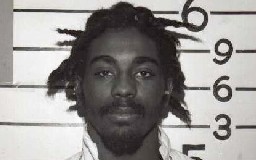
Larry Hicks
Murderer?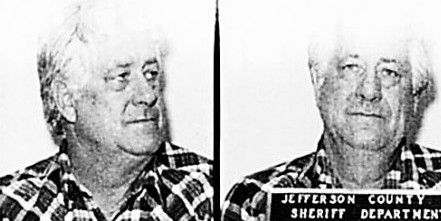 Thomas McCormick
Murderer? · USA · 1975
Thomas McCormick recruited homeless men from a Denver church mission to work on…
8 victims
Thomas McCormick
Murderer? · USA · 1975
Thomas McCormick recruited homeless men from a Denver church mission to work on…
8 victims
 Todd Warzecha
Murderer? · USA · 1972
Todd Warzecha was a prime suspect in two unsolved Mid-Michigan murders. Michiga…
6 victims
Todd Warzecha
Murderer? · USA · 1972
Todd Warzecha was a prime suspect in two unsolved Mid-Michigan murders. Michiga…
6 victims
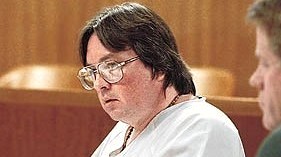 Floyd Tapson
Murderer? · USA · 1987
Floyd Tapson was convicted by a jury in the Thirteenth Judicial District Court,…
3 victims
Floyd Tapson
Murderer? · USA · 1987
Floyd Tapson was convicted by a jury in the Thirteenth Judicial District Court,…
3 victims
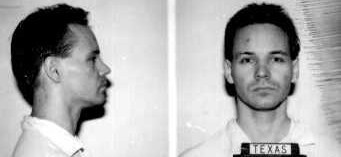 Michael Roy Toney
Murderer? · USA · 1985
Michael Roy Toney (December 29, 1965 – October 3, 2009) · Name as recorded: Mic…
3 victims
Michael Roy Toney
Murderer? · USA · 1985
Michael Roy Toney (December 29, 1965 – October 3, 2009) · Name as recorded: Mic…
3 victims
 Michael Tisius
Murderer · USA · 2000
early June 2000 — Michael A. Tisius and Roy Vance were cellmates at the Randolp…
2 victims
Michael Tisius
Murderer · USA · 2000
early June 2000 — Michael A. Tisius and Roy Vance were cellmates at the Randolp…
2 victims
 Michael Robert Tucker
Murderer · USA
Michael Robert Tucker was sentenced to death on November 15, 1988.
2 victims
Michael Robert Tucker
Murderer · USA
Michael Robert Tucker was sentenced to death on November 15, 1988.
2 victims
 Yvette Taylor
Murderer · USA · 2012
Yvette Taylor was a Martinez, Georgia woman. She was the roommate of Theodore C…
1 victim
Yvette Taylor
Murderer · USA · 2012
Yvette Taylor was a Martinez, Georgia woman. She was the roommate of Theodore C…
1 victim
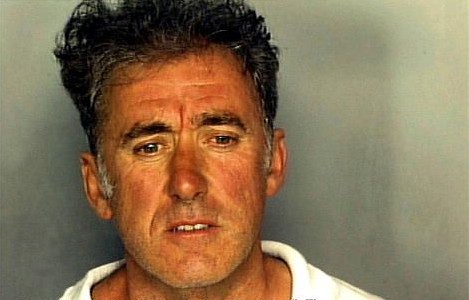 Francisco Arce Montes
Murderer · France · 1996
Francisco Arce Montes was a psychologically troubled loner who drifted around E…
1 victim
Francisco Arce Montes
Murderer · France · 1996
Francisco Arce Montes was a psychologically troubled loner who drifted around E…
1 victim
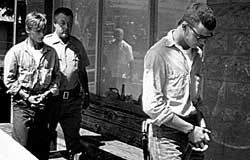 Thomas Eugene Braun
Spree killer · USA · 1967
Thomas Eugene Braun was sentenced to death in California. · Thomas Eugene Braun…
4 victims
Thomas Eugene Braun
Spree killer · USA · 1967
Thomas Eugene Braun was sentenced to death in California. · Thomas Eugene Braun…
4 victims
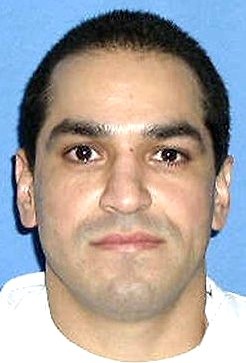 Lionell Gonzales Rodriguez
Murderer · USA · 1990
Lionell Gonzalez Rodriguez was executed by lethal injection on June 20, 2007 in…
1 victim
Lionell Gonzales Rodriguez
Murderer · USA · 1990
Lionell Gonzalez Rodriguez was executed by lethal injection on June 20, 2007 in…
1 victim
- Gender
- male
- Country
- USA
- Location
- Lake County, Indiana, USA
- Date of birth
- February 12, 1958
- Age at first offence
- 20
- Characteristics
- —
- Victim profile
- Norton Miller,28, and Stephen Crosby, 26
- Method of murder
- St abbing with knife
- Date(s) of murder
- February 5, 1978
- Years active
- 1978
- Date of arrest
- —
- Status
-
Acquitted / overturned
Sentenced to death on September 1, 1978; at retrial he was acquitted and released on November 21, 1980
Case record: Larry Hicks
Names
- Larry Hicks
Legal status and outcomes
- Larry Hicks was sentenced to death on September 1, 1978.
- At retrial, Larry Hicks was acquitted and released on November 21, 1980.
Background
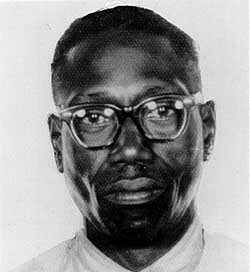
Larry Hicks was a 19-year-old black man from the deep ghetto of Gary, Indiana. He dropped out of high school but tried to get his diploma by taking a few evening courses. He searched for part-time work, found it, and worked harder than any other ten men put together.
He had never been in trouble with the law. He never drank alcohol and never used drugs.
In the Gary ghetto, Larry Hicks’ nickname was “Black Jesus.” Some people stayed away from him because they could not come to grips with his eternal optimism, helpful ways, and unselfish nature.
No insanity defense was interposed in either of Larry Hicks’ trials; the pleas in both trials were straight ordinary pleas of not guilty.
The offence
Larry Hicks was sentenced to die in the Indiana electric chair for supposedly murdering two men by stabbing them to death in a fight inside a Gary home.
Investigation
Eyewitness testimony against him at his original trial was perjured.
The coroner’s report contained information relevant to the timing of the murders, but Larry’s original trial attorney never used it, and the state did not refer to it.
Scientific forensic analysis was described as proving multiple points that supported Larry Hicks’ claims of innocence, including the nature of staining on his jeans and the knife’s inability to have caused the wounds that were inflicted on the men who were murdered.
Trial
Original trial and sentencing
Larry Hicks was represented by an incompetent public defender.
Before the trial, Larry’s public defender was not aware that Larry faced the death penalty until a week before the trial took place. The lawyer admitted this in open court before trial, and it was in the transcript.
Larry’s public defender failed to investigate Larry’s alibi that Larry was not present at the time of the brutal slayings.
Larry’s public defender failed to examine dark red stains on the jeans Larry wore on the night of the murders. The prosecution would have termed the stains “blood” without chemical examination.
Larry’s public defender failed to examine the knife which the state claimed Larry used to stab the two men.
As revealed by the public defender’s 1/4-inch thick file on this death penalty case, the public defender otherwise totally failed to prepare for the one and a half day long murder trial that resulted in Larry Hicks being sentenced to die in Indiana’s electric chair.
The original trial included a timing claim by the prosecution that the murders occurred around midnight, but other evidence indicated the murders occurred around 5 a.m.
Grounds for setting aside the original death sentence and verdict
At retrial, the described grounds for setting aside the original death sentence and verdict and for ordering a new trial were based on the order of a new trial by the original trial judge himself, rather than by an appellate court.
The alternative reason described for granting a new trial related to competency to stand trial.
The original pre-sentence investigation had resulted in a report for the judge that included comments from three psychiatrists the judge had ordered to examine Larry before imposing sentence. One psychiatrist reported that he thought Larry was fine. Another said Larry’s I.Q. was so low that there was a doubt as to Larry’s competency to stand trial (as opposed to “insanity”) at the time of the original trial.
Indiana’s three-pronged test for competency to stand trial at the time was described as:
- Does the accused understand the nature of the charges?
- Can the accused effectively communicate with counsel?
- Does the accused appreciate the gravity of the situation?
Since the law forbade competency to stand trial to be determined after a trial takes place but only before trial, the argument was that there was a reasonable doubt about Larry’s competency to initially stand trial, and that this could not be rectified retroactively except by ordering a new trial.
The judge agreed, promptly ordered a new trial, and ordered psychiatrists to examine Larry to determine whether he was competent to go through the second trial.
Larry was found competent to stand trial, and it was also stated that there was no suggestion that Larry was not competent.
One psychiatrist prepared to testify, if asked the right questions, that he doubted Larry’s competency because Larry “had such blind faith that he might fail to appreciate the gravity of the situation since he had no worry about the outcome.”
After the competency hearing, it was described that the psychiatrist told the argument’s proponent that the third factor (“appreciate the gravity of the potential consequences”) gave him pause because he thought Larry might not appreciate the potential consequences at all.
The psychiatrist explained this concern as due to Larry “had no fear of the consequences whatsoever because he knew that God had sent a lawyer to save his life.”
It was stated that the argument’s proponent learned this from the psychiatrist after going out for some coffee following the competency hearing. Larry later confirmed the gist of this to the argument’s proponent, noting that the psychiatrist told him he probably should not tell the judge about it else the judge might think that he was crazy.
Second trial and acquittal
At the second trial, the judge instructed the jury that the “burden of proof is on the state to prove guilt beyond a reasonable doubt” and instructed the jury that the defense had no obligation to prove anything at all.
In an opening statement to the jury, Larry’s defense team’s attorney reminded the jurors of those instructions and told them:
“despite the legal burden of proof being on the state, the defense in this case would gladly accept the burden of proof and affirmatively prove that this young man was absolutely innocent of the brutal murders he had been accused of.”
It was stated that the defense powerfully proved innocence.
In addition to the true facts described as relevant to the case, it was stated that there was further inadmissible evidence of Larry’s innocence which the jury could not lawfully hear and never did. That described inadmissible evidence included a polygraph test administered by John O. Danbury, described as having been the top polygraph expert for the Indiana State Police for 20 years before retiring to set up his own private firm. It was stated that Larry passed Danbury’s polygraph test.
It was also stated that after Larry passed Danbury’s examination, the defense hired the top polygraph expert in the nation—Leonard Harrelson of Chicago’s famed Keeler Institute—and Harrelson concluded that Hicks was telling the truth when he claimed not to have been involved in the double murders.
When the verdict was returned, and after the jurors were excused but still present in the courtroom, the attorney pointed to the prosecutor and said:
“This case should never have been prosecuted in the first place.”
The prosecutor responded:
“I agree.”
Then, eleven of the 12 jurors and the judge joined the defense team at the Crown Point, Indiana, Holiday Inn suite, and it was stated that all, including Larry, celebrated until dawn. Larry had “a couple of soft drinks,” while the rest of the group imbibed from coffee to Dom Perignon.
A young and attractive female juror decided Larry deserved special attention after more than two years on death row and enticed him into the bathroom; it was stated that he exited there in under a minute. The next day, Larry told the attorney of her offer of sex in the bathroom and said he thought the only proper thing to do would be to decline since, after all, she was a married lady.
Jury and courtroom interactions
- The judge instructed the jury that the burden of proof was on the state to prove guilt beyond a reasonable doubt.
- The judge instructed the jury that the defense had no obligation to prove anything at all.
Evidence described as supporting innocence
Multiple described facts were presented as critical true facts relevant to the case:
- The murders did not occur around midnight, as the prosecution claimed, but around 5 a.m. while Larry Hicks was not at the murder scene but at his own home. The coroner’s report contained this information, but it was not used by Larry’s original trial attorney, and it was not referred to by the state.
- Scientific forensic analysis proved that what the state claimed was “blood” on Larry’s pants were bits of rust from old barbells he used in the basement of his home, matching Larry’s claim.
- Scientific forensic analysis proved the knife described by the state as the murder weapon could not have made the nature of the wounds inflicted on the men who were murdered. The actual murder weapon was described as having to be a much longer and narrower blade, consistent with the description of a stiletto commonly wielded by the person the defense named as the real killer and proved to have been present at the time the murders took place.
Other details
- A Chicago newspaper headline described the case as “Lawyer Snatches Man from the Electric Chair.”
- An Indianapolis newspaper headline described the case as “Attorney Rescues Forgotten Man from Death Row.”
- Senior Editor Bill Helmer of Playboy magazine titled his May, 1981 article about the case “The Ordeal of Larry Hicks.”
- The attorney referenced “The Facts and Nothing But the Facts” in describing the case.
- Faculty.ed.umuc.edu “Larry Hicks home last updates contact” appeared as extraneous navigation text.
Spotted an error, or have more information about this case?