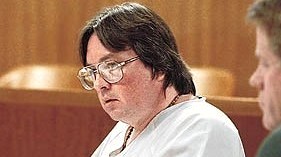
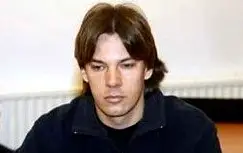
Floyd Tapson
Murderer? Richard Allen Williams
Murderer? · USA · 1992
Boone County Prosecutor Kevin Crane dismissed the charges in August 2003 after…
10 victims
Richard Allen Williams
Murderer? · USA · 1992
Boone County Prosecutor Kevin Crane dismissed the charges in August 2003 after…
10 victims
 Andre Minnitt
Murderer? · USA · 1992
Andre Minnitt was convicted of crimes connected to the El Grande Market slaying…
3 victims
Andre Minnitt
Murderer? · USA · 1992
Andre Minnitt was convicted of crimes connected to the El Grande Market slaying…
3 victims
 Michael Roy Toney
Murderer? · USA · 1985
Michael Roy Toney (December 29, 1965 – October 3, 2009) · Name as recorded: Mic…
3 victims
Michael Roy Toney
Murderer? · USA · 1985
Michael Roy Toney (December 29, 1965 – October 3, 2009) · Name as recorded: Mic…
3 victims
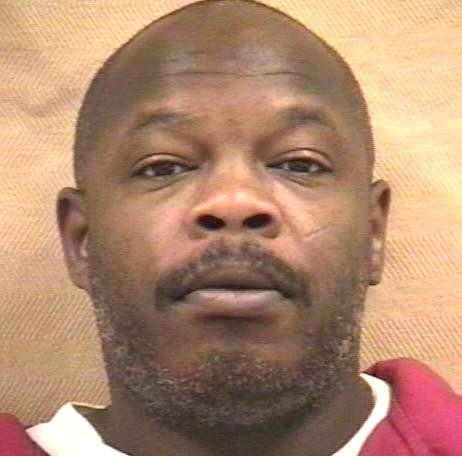 Glen Edward Chapman
Murderer? · USA · 1992
Defendant: Glen Edward Chapman Legal case references: In the Supreme Court of N…
2 victims
Glen Edward Chapman
Murderer? · USA · 1992
Defendant: Glen Edward Chapman Legal case references: In the Supreme Court of N…
2 victims
 James Campbell
Murderer? · USA · 1997
September 1997 — James Campbell’s first trial ended with a hung jury. · January…
2 victims
James Campbell
Murderer? · USA · 1997
September 1997 — James Campbell’s first trial ended with a hung jury. · January…
2 victims
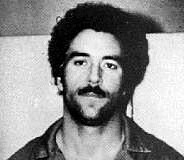 Randall Woodfield
Serial killer · USA · 1979
Randall Woodfield was an American serial killer dubbed The I-5 Killer or The I-…
18 victims
Randall Woodfield
Serial killer · USA · 1979
Randall Woodfield was an American serial killer dubbed The I-5 Killer or The I-…
18 victims
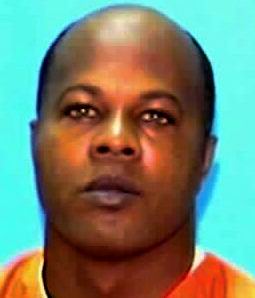 Anthony Neal Washington
Murderer · USA · 1989
Name: Anthony Neal Washington · Date of birth: 09/27/56 · Court (opinion): Supr…
1 victim
Anthony Neal Washington
Murderer · USA · 1989
Name: Anthony Neal Washington · Date of birth: 09/27/56 · Court (opinion): Supr…
1 victim
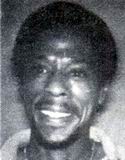 John Parish
Mass murderer · USA · 1982
John Parish (July 4, 1933 – August 9, 1982) was an American mass murderer. He s…
6 victims
John Parish
Mass murderer · USA · 1982
John Parish (July 4, 1933 – August 9, 1982) was an American mass murderer. He s…
6 victims
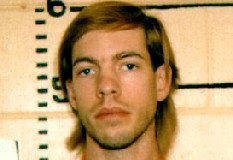 Andrew Allen Cook
Murderer · USA · 1995
Andrew Allen Cook was convicted in the Superior Court of Monroe County, Georgia…
2 victims
Andrew Allen Cook
Murderer · USA · 1995
Andrew Allen Cook was convicted in the Superior Court of Monroe County, Georgia…
2 victims
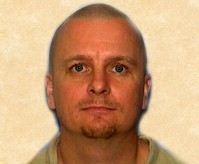 Christopher Richee
Murderer · USA · 1996
Christopher Richee was a former hotel handyman and the maintenance manager of t…
1 victim
Christopher Richee
Murderer · USA · 1996
Christopher Richee was a former hotel handyman and the maintenance manager of t…
1 victim
- Gender
- male
- Country
- USA
- Location
- Minnesota/North Dakota, USA
- Date of birth
- 1961
- Age at first offence
- 26
- Characteristics
- rape
- Victim profile
- Carla Beth Anderson, 23 / Renae Lynn Nelson, 22 / Kristi Nikle, 19 ( women who were mentally retarded)
- Method of murder
- Shooting
- Date(s) of murder
- 1987 / 1994 / 1996
- Years active
- 1987–1996
- Date of arrest
- —
- Status
-
Reversed and remanded for further proceedings consistent with this opinion
Case details
Floyd Tapson was convicted by a jury in the Thirteenth Judicial District Court, Yellowstone County, of attempted deliberate homicide and sentenced to life in prison. He appealed his judgment and conviction. The appellate court reversed and remanded for further proceedings consistent with this opinion.
Timeline
- October 8, 1998 — An incident occurred involving Josephine Red Star, a developmentally disabled woman.
- October 14, 1998 — The State charged Floyd Tapson with three felony counts: sexual intercourse without consent, aggravated kidnaping, and attempted deliberate homicide.
- March 26, 1999 — The case proceeded to trial.
- April 8, 1999 — The second full day of jury deliberations occurred.
- August 10, 1999 — The court sentenced Tapson to life imprisonment.
- 2000 — The appellate decision addressed Tapson’s appeal.
Background
The State charged Tapson based on an incident that occurred on October 8, 1998. The incident involved Josephine Red Star, a developmentally disabled woman.
Red Star alleged that Tapson duped her into coming to his house, threatened her with a gun, handcuffed her, and locked her in his basement for seven or eight hours. Red Star said she knew Tapson because he worked at the group home where her former boyfriend lived.
Red Star further alleged that when Tapson released her from the basement, he took her to his bedroom where he sexually assaulted her. She alleged that Tapson then drove her to a secluded area outside of town and shot her twice—once in the cheek and once in the hand—before she ran to a neighboring house for help.
When law enforcement officers questioned Tapson, he told them that he had not seen Red Star since late August and that he had been at work when the incident allegedly occurred. Tapson later changed his story, alleging that Red Star arrived at his house on her own, that they ate pizza and drank beer while watching movies, and that they had consensual sex. He also stated that afterwards, they went target shooting at Red Star’s request and that she was shot either by accident or that she shot herself.
The offence
The State charged Tapson with three felony counts:
- sexual intercourse without consent, in violation of § 45-5-503, MCA
- aggravated kidnaping, in violation of § 45-5-303(1)(c), MCA
- attempted deliberate homicide, in violation of §§ 45-4-103 and 45-5-102, MCA
Investigation
Law enforcement questioned Tapson, who initially denied seeing Red Star since late August and stated he had been at work when the incident allegedly occurred. Tapson later changed his story to allege that Red Star came to his house voluntarily and that their sex was consensual, and he alleged that the shooting occurred either by accident or that Red Star shot herself.
Trial
Jury selection and voir dire
Because the case had received considerable pre-trial publicity, the State and defense counsel agreed to an extended jury selection process including individual voir dire.
On the second day of voir dire, prospective jurors revealed that they had either close friends or family members who had been victims of crimes similar to those charged against Tapson. One prospective juror had a friend who was kidnaped, raped and murdered. Two other prospective jurors revealed that each had a daughter who was the victim of a violent rape.
Defense counsel did not challenge these prospective jurors for cause and did not use peremptory challenges to remove these individuals. Both prospective jurors whose daughters were raped ended up serving on the final jury panel.
Jury deliberations and in-jury-room communication
On April 8, 1999, during the second full day of jury deliberations, the District Court met with counsel on the record to notify them that the jury had reached a verdict on one of the three counts but was unable to reach a verdict on the other two counts. The court recessed until Tapson could be present. Neither the court nor the parties knew which charge the jury had decided or how it had decided that charge.
After Tapson was present, the State suggested substituting the existing verdict form listing all three charges with six verdict forms—one “guilty” form and one “not guilty” form for each of the three charges. The State maintained that substituting verdict forms would avoid the problem of the jury switching its current verdict on the one charge for some sort of last minute compromise.
The State also suggested that the judge take the forms into the jury room rather than handling the matter in open court. Defense counsel did not oppose these suggestions. The judge took the forms into the jury room; neither counsel nor Tapson were present. The judge did not return to the courtroom until eleven minutes later. There was no record of whether the judge spent the entire eleven minutes with the jury or only a portion of that time. There was also no record of what the judge told the jury, whether the jury had any questions, or whether the judge gave any responses.
Verdict
The jury returned a verdict of “guilty” on the charge of attempted deliberate homicide.
The jury foreperson stated: “unanimous in the opinion that we could not reach a verdict in the others.”
The court dismissed the jury and set a time for sentencing.
Sentencing
On August 10, 1999, the court sentenced Tapson to life imprisonment.
Appeals
Issues raised on appeal
Tapson raised two issues, which were restated for clarity as follows:
- Whether defense counsel rendered deficient performance during voir dire by not questioning or challenging two prospective jurors whose daughters had been violently raped, and whether Tapson was prejudiced because these prospective jurors served on the final jury panel.
- Whether the District Court committed reversible error by entering the jury room alone, without counsel or Tapson present, and without a waiver by Tapson of his constitutional right to be present.
The appellate court concluded that Issue 2 was dispositive and did not address Issue 1.
Legal analysis: right to be present and public trial
The appellate court addressed the federal constitutional right to be present at all criminal proceedings and referenced Illinois v. Allen (1970). It also addressed Montana constitutional and case law regarding the right of a defendant to be present throughout the entire trial in felony cases, including citations to Art. II, Sec. 24, Mont. Const., and State v. Reed (1922).
The appellate court discussed the absence of reported Montana cases where a judge entered the jury room alone and instructed the jury off the record. It cited decisions from other jurisdictions indicating that judges should not enter jury rooms to speak privately with jurors, emphasizing that the jury room door must remain closed to judges to avoid extraneous influence.
The appellate court discussed United States v. United States Gypsum Co. (1978) regarding the dangers of ex parte meetings or communications between a judge and the foreman of a deliberating jury, and held that unrecorded meetings warranted reversal in that context because it was impossible to gauge how the meeting affected the verdict.
The appellate court rejected the State’s contention that Gypsum did not apply because the jury in Gypsum was still deliberating while the jury in Tapson’s case was not. The appellate court stated that no one knew the status of the jury’s deliberations in Tapson’s case and noted comments by the judge and prosecutor reflecting that status was uncertain.
The appellate court also discussed Tapson’s argument that the jury could have asked questions about lesser charges and could have forged a compromise depending on what the judge told them, and it held that the deficit in the record made it impossible to conclude beyond a reasonable doubt that there was no prejudice.
The appellate court concluded that reversal was required due to the judge’s intrusion into the jury room during deliberations without counsel, Tapson, and the court reporter, and without a contemporaneous, personal, knowing, voluntary, intelligent and on-the-record waiver by Tapson of his constitutional rights to a public trial and to be present at all critical stages of the trial.
Colloquy included in appellate discussion
The appellate court included the following colloquy as part of its discussion:
THE PROSECUTOR: It was not my intent to have the jury removed from the jury room. I thought maybe we would have them submit the verdict form signed back to you, whichever one it was, and then we would assemble them. THE COURT: Okay. THE PROSECUTOR: The point is, I think we want to make clear that the Allen instruction would only be germane or relevant to those counts that have been decided. It has nothing to do with the one they have already reached a verdict on. THE COURT: Right. Let them return a verdict and then- THE PROSECUTOR: “Go back and deliberate on your other two counts.” THE COURT: Well, however we proceed, what we need to do first is have them return the verdict that they do have. They can do that on the form they have got. If we send them back, we could send them back with separate verdict forms on the other two. THE PROSECUTOR: I guess my whole point is, we didn't want them negotiating or determining or deciding on anything except the two counts they have. Again, we believe that highly-protected, fundamental constitutional rights deserve more safeguard than to be off-handedly waived as a matter of convenience to counsel.
Appellate outcome
The appellate court held that the District Court committed reversible error in this case by entering the jury room with the jury present but without counsel, Tapson and the court reporter, and without a contemporaneous, personal, knowing, voluntary, intelligent and on-the-record waiver by Tapson of his constitutional rights to a public trial and to be present at all critical stages of the trial.
Other details
Parties and counsel listed in the appellate proceedings
- Chad Wright (argued), Appellate Defender, Helena, MT, for Appellant.
- Mike McGrath, Montana Attorney General.
- Jim Wheelis (argued), Assistant Montana Attorney General, Helena, MT, for Respondent.
- Dennis Paxinos, Yellowstone County Attorney, Billings, MT.
- Billings, MT is associated with Dennis Paxinos in the listed counsel for Respondent.
Concurring/dissenting opinions and remarks preserved in the record
The appellate material included an “I respectfully dissent” section and a discussion in which a dissenting justice addressed waiver, preservation, and the referenced cases, including State v. LaDue, United States v. Gagnon, and State v. Harris.
KARLA M. GRAY, C.J., and TERRY N. TRIEWEILER, PATRICIA COTTER, JIM REGNIER, W. WILLIAM LEAPHART, JJ., concur.

Spotted an error, or have more information about this case?