
Michael Tisius
Murderer Russell Ellwood
Murderer · USA · 1991
Russell Ellwood was a former taxi driver. Authorities suspected him of killing…
20 victims
Russell Ellwood
Murderer · USA · 1991
Russell Ellwood was a former taxi driver. Authorities suspected him of killing…
20 victims
 Robert Martines Perez
Murderer · USA · 1994
Name: Robert Martines Perez · Other name used in proceedings: Robert Martinez P…
15 victims
Robert Martines Perez
Murderer · USA · 1994
Name: Robert Martines Perez · Other name used in proceedings: Robert Martinez P…
15 victims
 Billy Frank Vickers
Murderer · USA · 1993
Billy Frank Vickers Vickers was executed by lethal injection in Texas on Januar…
14 victims
Billy Frank Vickers
Murderer · USA · 1993
Billy Frank Vickers Vickers was executed by lethal injection in Texas on Januar…
14 victims
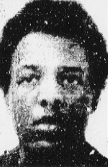 Ivon Ray Stanley
Murderer · USA · 1976
Ivon Ray Stanley was convicted in the Decatur County, Georgia Superior Court of…
1 victim
Ivon Ray Stanley
Murderer · USA · 1976
Ivon Ray Stanley was convicted in the Decatur County, Georgia Superior Court of…
1 victim
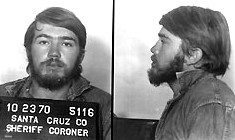 John Linley Frazier
Mass murderer · USA · 1970
John Linley Frazier was from Soquel and was later arrested in connection with t…
5 victims
John Linley Frazier
Mass murderer · USA · 1970
John Linley Frazier was from Soquel and was later arrested in connection with t…
5 victims
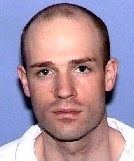 Randy Halprin
Murderer · USA · 2000
Randy Halprin (Randy Ethan Halprin), TDCJ Number 999453 · Date of birth: 09/13/…
1 victim
Randy Halprin
Murderer · USA · 2000
Randy Halprin (Randy Ethan Halprin), TDCJ Number 999453 · Date of birth: 09/13/…
1 victim
 Gary Gilmore
Murderer · USA · 1976
Gary Gilmore was born on December 4, 1940. He was an American career criminal w…
2 victims
Gary Gilmore
Murderer · USA · 1976
Gary Gilmore was born on December 4, 1940. He was an American career criminal w…
2 victims
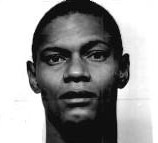 Norman Evans Green
Murderer · USA · 1985
Norman Evans Green was executed by lethal injection in Texas on February 24, 19…
1 victim
Norman Evans Green
Murderer · USA · 1985
Norman Evans Green was executed by lethal injection in Texas on February 24, 19…
1 victim
- Gender
- male
- Country
- USA
- Location
- Randolph County, Missouri, USA
- Date of birth
- February 16, 1981
- Age at first offence
- 19
- Characteristics
- escape attempt, rape
- Victim profile
- Leon Egley and Jason Acton (jail officers)
- Method of murder
- Shooting ( .22 caliber pistol)
- Date(s) of murder
- June 22, 2000
- Years active
- 2000
- Date of arrest
- Same day
- Status
-
Sentenced to death
Sentenced to death on October 1, 2001
Case record: Michael A. Tisius
Timeline
- early June 2000 — Michael A. Tisius and Roy Vance were cellmates at the Randolph County Jail in Huntsville, Missouri.
- June 13, 2000 — Tisius was released from the Randolph County Jail.
- four days later — Tracie Bulington drove from Macon to Columbia with Heather Douglas to pick up Tisius and drive him back to Macon; Tisius and Bulington stayed at Douglas’ home for four or five days.
- June 17, 2000 — Tisius and Bulington began visiting the Randolph County Jail several times over the following days.
- at or around 1:30 a.m. or 2 a.m. (during a visit) — Tisius and Bulington were admitted in the front door and delivered a pack of cigarettes to an on-duty officer, requesting that it be given to Vance.
- a day or two later (during a visit) — Tisius and Bulington returned with a pair of socks for Vance and asked questions about his upcoming court date.
- June 21, 2000 — Tisius tested a .22 caliber pistol by firing it outside Bulington’s car window while driving on country roads; later that evening, they listened to a rap song with the refrain “mo murda” while preparing to get Vance out of jail.
- June 22, 2000, 12:15 a.m. — Tisius and Bulington returned to the Randolph County Jail, rang the doorbell, and were admitted; Tisius carried the pistol in his pants and shot the two officers.
- later on June 22, 2000 — After passing through St. Joseph and crossing the Kansas state line, Bulington’s car broke down; police apprehended Tisius and Bulington, and the keys and gun were recovered.
- October 1, 2001 — Tisius was sentenced to death.
- December 10, 2002 — The Missouri Supreme Court decision affirmed the judgment.
- Jan. 11, 2007 — Michael Tisius displayed his tattoos during an interview at Potosi Correctional Center, Missouri’s maximum security prison, where condemned men lived in the general prison population.
Background
Michael A. Tisius was released on June 13, 2000. He had previously been sentenced for thirty days, and his cellmate Roy Vance told him Vance would be in jail for some fifty years. Tisius and Vance discussed schemes where Tisius would return to jail to help Vance escape.
Tisius planned to return to the jail with a firearm, force the guards into a cell, and give the gun to Vance, who would then take charge and release all of the inmates.
Roy Vance’s girlfriend, Tracie Bulington, said she wanted to go through with the escape plan. Bulington drove from Macon to Columbia with Heather Douglas to pick up Tisius and drive him back to Macon. Tisius and Bulington stayed at Douglas’ home for four or five days.
Douglas testified that she heard Tisius and Bulington discuss various ways of breaking Vance out of jail, including the idea of locking the jailers in a cell, and that they told Douglas they were joking. Douglas also testified that she heard Tisius and Bulington say they were “on a mission,” but they would not elaborate. Douglas testified that Tisius and Bulington described taking cigarettes to Vance at the jail and having gotten information from a “stupid deputy.” Douglas testified that Tisius and Bulington kept a stereo, clothing and camping gear in Bulington’s car and that she also saw a pistol in Bulington’s car.
The Randolph County Jail was a two-story brick building converted from a house. The front door was kept locked, and officers could remotely open the door when visitors rang a doorbell. Inside the front door was a small foyer, and to the right behind a counter was a dispatch area where officers were stationed. A hall led from the dispatch area to the jail cells in the rear of the building.
The offence
On the night of the murders, Tisius and Bulington were admitted to the Randolph County Jail and delivered cigarettes to Vance.
At 12:15 a.m. on June 22, 2000, Tisius and Bulington returned to the Randolph County Jail, rang the doorbell, and were admitted. Tisius carried a pistol in his pants. Tisius and Bulington told the officers they were delivering cigarettes to Vance. The two officers present were Leon Egley and Jason Acton.
Tisius made small talk with one officer for about ten minutes, discussing what he was planning to do with his life and how he was doing. Bulington testified that she was about to tell Tisius she was ready to leave but froze as she noticed Tisius had the gun drawn beside his leg.
Tisius raised his arm with the pistol drawn and, from a distance of two to four feet, shot Acton in the forehead above his left eye, killing him instantly. Egley began to approach Tisius, and about ten seconds after Acton was killed, Tisius shot Egley one or more times from a distance of four or five feet until Egley fell to the ground. Both officers were unarmed.
Tisius took some keys from the dispatch area and went to Vance’s cell. Tisius could not open the cell, so he returned to the dispatch area to search for more keys. While Tisius was in the dispatch area, Egley grabbed Bulington’s legs from where he was lying on the floor, and Tisius shot him several more times at a distance of two or three feet.
Egley suffered five gunshot wounds: three to the forehead, a graze wound to the right cheek, and a wound to the upper right shoulder. Police found Egley gasping for air and hearing a gurgling sound; he was surrounded by a pool of blood, and Egley died shortly afterwards.
Tisius and Bulington fled in her automobile. Tisius threw the keys from the dispatch area out of the car window while leaving town. Bulington threw the pistol from the car window while crossing a bridge on Highway 36.
After passing through St. Joseph and crossing the Kansas state line, Bulington’s car broke down. Later that day, the two were apprehended, and the keys and gun were recovered.
After having waived his Miranda rights, Tisius gave oral and written confessions to the murders.
Investigation
Tisius and Bulington fled in Bulington’s automobile. Tisius threw the keys from the dispatch area out of the car window on the way out of town. Police later apprehended the two after Bulington’s car broke down beyond St. Joseph at the Kansas state line, and the keys and gun were recovered.
Arrest
After the car broke down following the crossing of the Kansas state line, police apprehended Tisius and Bulington later that day, and recovered the keys and gun.
Trial
Tisius was convicted of two counts of first-degree murder, section 565.020. He was sentenced to death for each murder. The Missouri Supreme Court had exclusive appellate jurisdiction pursuant to Mo. Const. art. V, sec. 3. The judgment of the trial court was affirmed.
Theory at trial
Tisius’s theory at trial was that he was guilty at most of second-degree murder because although he admitted shooting and killing the two officers, he argued he did so without deliberation.
Sentencing
Tisius received a death sentence for each of two murders.
The Missouri Supreme Court described statutory aggravating factors found by the jury. It stated that each victim was a peace officer engaged in the performance of his official duties under section 565.032.2(8). As to Egley, the jury found two additional statutory aggravating factors: (1) that the murder was committed while Tisius was engaged in the murder of Acton under section 565.032.2(2); and (2) that the murder was vile, horrible or inhuman in that it involved depravity of mind under section 565.032.2(7). The court found the evidence supported those determinations, including that Egley was shot several times, at close range, in two separate incidents, and that during the second incident he was fully conscious and aware that he and his co-worker had been shot.
Appeals
The Missouri Supreme Court affirmed the conviction and sentence.
Motion and evidentiary issues in penalty phase
Tisius argued the trial court erred in overruling his objection to the introduction of a rap song with the refrain of “mo' murda” (more murder), which was played to the jury in the penalty phase. The song was played while Bulington testified about what Tisius was doing and saying immediately before the murders.
Bulington testified that she and Tisius were driving around in her car the night of the murders while Tisius listened over and over to that song by the rap group Bone, Thugs ’n Harmony. The court described Bulington’s testimony that while listening to the song over and over, Tisius said:
“it was getting about time”
“he was going to go in and just start shooting”
“he had to do what he had to do.”
“go in with a blaze of glory.”
The court stated it had sustained an objection to the State’s offer of the song’s written lyrics.
Tisius argued that admitting the song violated his First and Fourteenth Amendment rights and that it was irrelevant to the proceedings. The Missouri Supreme Court held the evidence was logically relevant and properly aided the State in arguing that the death sentence was appropriate. The court also concluded the trial court did not abuse its discretion in admitting the song. The court stated the song was admitted in context of Bulington’s testimony about what Tisius was doing and saying immediately before he killed the two officers.
Tisius also argued that the trial court abused its discretion in allowing the song to be played because he lacked notice of the specific song, allegedly violating discovery rules. The Missouri Supreme Court described that in a deposition a month or so before trial, Bulington had testified that Tisius listened over and over to a song by Bone, Thugs ’n Harmony and that she could not identify the name of the song, only that the chorus had “mo murda” in it. The court stated that before the penalty phase began, Tisius’s defense obtained a copy of the album and determined that the words “mo murda” appeared in two songs; the State played the album to Bulington the morning before the penalty phase and she identified the song in question, and the song was then played to the jury over an objection of “surprise.” The Missouri Supreme Court concluded Tisius had not shown a reasonable likelihood that denial of knowing the specific song with the lyrics “mo murda” affected the outcome of the trial.
Tisius argued the trial court erred in sustaining the State’s motion to strike venireperson Patti Lou Grant in the penalty phase. The Missouri Supreme Court described that during the State’s portion of voir dire, Grant indicated she could not impose the death penalty and said that was her “final answer.” Later, the defense attempted to rehabilitate Grant by asking about circumstances under which she could impose the death penalty. The court described that Grant indicated she could impose the death penalty if the crime was “horrendous” or “terrible.” The Missouri Supreme Court concluded the trial court’s decision to strike Grant for cause was not a clear abuse of discretion.
Deliberation and evidence sufficiency
Tisius argued the evidence was insufficient beyond a reasonable doubt to establish that he deliberated on killing the two officers. The Missouri Supreme Court held the evidence was sufficient to support the jury’s verdict that Tisius deliberated before committing two counts of first-degree murder.
The Missouri Supreme Court described its reasoning about the first-degree murder elements, including that the crime consisted of knowingly causing the death of another person after deliberation, and that deliberation meant “cool reflection for any length of time no matter how brief,” quoting the intent element as described in section 565.002(3). The court stated that deliberation could be proven from circumstances and that absent deliberation, an intentional killing would be second-degree murder.
The court described the State’s argument emphasizing Tisius’s knowledge of how the jail works, visits to Vance before the attempt to break him out, test-firing the gun the day of the murders, proximity of the murder weapon to the officers’ heads, the number of shots fired, and the number of victims.
The Missouri Supreme Court stated it viewed the evidence and all reasonable inferences in the light most favorable to the verdict, disregarding contrary inferences. It stated Tisius shot Officer Egley five times in two separate incidents, that the multiple wounds and multiple victims helped support an inference of deliberation, and that Tisius’s conduct after the murders supported a finding of deliberation, including that after Acton was shot, Tisius turned his gun and immediately shot Egley, fired another round after learning Egley was conscious and did not die from the first round, and disposed of the murder weapon and keys, while focusing on freeing his friend and escaping.
Tisius argued that errors in admission and exclusion of evidence at the penalty phase, plus alleged lack of evidentiary support for deliberation and mitigating evidence, undermined the reliability of the death verdict. The Missouri Supreme Court treated the argument as raising its duty under section 565.035.3 for independent review of proportionality. It stated there was no evidence the sentence was imposed under the influence of passion, prejudice, or any other arbitrary factor. It also stated the record supported the jury’s statutory aggravating factor findings and that the death sentences were neither excessive nor disproportionate in similar cases, considering the crime, the strength of the evidence, and the defendant.
Information and sentencing jurisdiction; hearsay; jury instructions; cameras; other evidentiary points
Tisius argued the trial court erred in overruling his motion to quash the information and exceeded its jurisdiction in sentencing him to death because the information failed to plead aggravating circumstances. The Missouri Supreme Court stated it previously broached and rejected the argument in State v. Cole.
Tisius argued the trial court erred in sustaining hearsay objection to punishment-phase testimony of his mother that Tisius told her after arrests that he was “sorry.” The Missouri Supreme Court concluded the issue was not properly preserved because the grounds asserted on appeal were not the grounds raised at trial, and it found no manifest injustice.
Tisius argued the trial court erred in sustaining the State’s objections to exclude a letter from co-defendant Roy Vance to “Karl,” soliciting help to break Vance out of jail. The Missouri Supreme Court described the letter as: “I know what Tracie is talking about sounds crazy but if done right it could be really simple with at least an hour or two to get away. There's no button for help and the cameras don't record anything so they wouldn't even have a clue who did it. Under normal circumstances I would never ask but we're family, me you and Tracie and I need to be together as one....”
The Missouri Supreme Court concluded Tisius’s point was not properly preserved for two reasons: he did not make a proper offer of proof with sufficient relevance, and the reasons asserted on appeal were not presented to the trial court.
Tisius argued duplicative aggravating factors in jury instructions. The Missouri Supreme Court noted Tisius conceded the argument had been considered and rejected in State v. Anderson, and it concluded no error appeared.
Tisius argued the trial court erred in overruling his objection to cameras in the courtroom. The court described Supreme Court Operating Rule 16.03(b) requirements for media requests and notice. It described that the trial judge realized he had not notified either party as required, and allowed both parties a chance to object on the record. The State made no objection. Tisius argued the camera put “undue pressure” on the jury, and that objection was overruled. On appeal, he argued the cameras violated due process and that the absence of notice entitled him to a new trial. The Missouri Supreme Court concluded there was no due process violation and no reversible error under Rule 16.03(b).
Tisius argued the trial court erred in overruling his objection to punishment-phase testimony about whether he would be a future danger if sentenced to life imprisonment. The Missouri Supreme Court concluded there was no objection to sustain because he withdrew his line of questioning, and it found no plain error.
Tisius argued the trial court erred in overruling his objection to Instruction No. 28 and 33 (MAI-CR3d 313.48A), the “verdict mechanics” instructions, asserting the instructions omitted a step directing the jury to weigh mitigating evidence. The Missouri Supreme Court stated he conceded the argument had been recently considered and denied, and it found no error of law.
Outcome
The Missouri Supreme Court affirmed the trial court’s judgment. Michael A. Tisius remained sentenced to death for each of two counts of first-degree murder. The judgment was affirmed, and all concurred.
Other details
Tisius tested the gun by firing it outside of Bulington’s car window while they were driving on country roads on June 21, 2000.
Later that evening on June 21, 2000, Tisius rewound the cassette and played the “mo murda” song over and over as he prepared to get Vance out of jail. Tisius told Bulington:
After the murders, police found Egley gasping for air and hearing a gurgling sound; Egley was surrounded by a pool of blood and died shortly afterwards.
In an interview at Potosi Correctional Center, Missouri’s maximum security prison, Michael Tisius displayed his tattoos during Jan. 11, 2007. Condemned men lived in the general prison population at that facility.
Spotted an error, or have more information about this case?