Earl Daughtrey
Murderer? James DeBardeleben
Murderer? · USA · 1965
James DeBardeleben (James Mitchell “Mike” DeBardeleben), born March 20, 1940, w…
8 victims
James DeBardeleben
Murderer? · USA · 1965
James DeBardeleben (James Mitchell “Mike” DeBardeleben), born March 20, 1940, w…
8 victims
 Thomas McCormick
Murderer? · USA · 1975
Thomas McCormick recruited homeless men from a Denver church mission to work on…
8 victims
Thomas McCormick
Murderer? · USA · 1975
Thomas McCormick recruited homeless men from a Denver church mission to work on…
8 victims
 Todd Warzecha
Murderer? · USA · 1972
Todd Warzecha was a prime suspect in two unsolved Mid-Michigan murders. Michiga…
6 victims
Todd Warzecha
Murderer? · USA · 1972
Todd Warzecha was a prime suspect in two unsolved Mid-Michigan murders. Michiga…
6 victims
 Larry Hicks
Murderer? · USA · 1978
Larry Hicks · Larry Hicks was sentenced to death on September 1, 1978. · At ret…
2 victims
Larry Hicks
Murderer? · USA · 1978
Larry Hicks · Larry Hicks was sentenced to death on September 1, 1978. · At ret…
2 victims
 Sterling Spann
Murderer? · USA · 1981
Sterling Spann was a former death row inmate whose death sentence was overturne…
1 victim
Sterling Spann
Murderer? · USA · 1981
Sterling Spann was a former death row inmate whose death sentence was overturne…
1 victim
 Richard Allen Williams
Murderer? · USA · 1992
Boone County Prosecutor Kevin Crane dismissed the charges in August 2003 after…
10 victims
Richard Allen Williams
Murderer? · USA · 1992
Boone County Prosecutor Kevin Crane dismissed the charges in August 2003 after…
10 victims
 Jerry Martin
Murderer · USA · 2007
Jerry Duane Martin was an inmate at the Texas Department of Criminal Justice (“…
1 victim
Jerry Martin
Murderer · USA · 2007
Jerry Duane Martin was an inmate at the Texas Department of Criminal Justice (“…
1 victim
 Gabriel Socley
Murderer · France · 1935
Gabriel Socley was sentenced to death for the rape, and the later status of the…
1 victim
Gabriel Socley
Murderer · France · 1935
Gabriel Socley was sentenced to death for the rape, and the later status of the…
1 victim
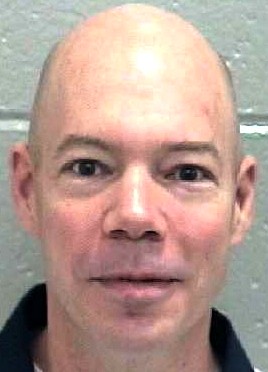 Robert Dale Conklin
Murderer · USA · 1984
Defendant: Robert Dale Conklin · Gender: Male · Race: White · Date of birth: 02…
1 victim
Robert Dale Conklin
Murderer · USA · 1984
Defendant: Robert Dale Conklin · Gender: Male · Race: White · Date of birth: 02…
1 victim
- Gender
- male
- Country
- USA
- Location
- Alabama/Georgia, USA
- Date of birth
- 1949
- Age at first offence
- 22
- Characteristics
- mentally ill, rape
- Victim profile
- Betty Renfroe / Cheryl Fletcher / Beverly Kaster
- Method of murder
- Ligature strangulation
- Date(s) of murder
- 1971 / 1985 / 1987
- Years active
- 1971–1987
- Date of arrest
- —
- Status
-
Never convicted of murder.
Overview
Earl Daughtrey was publicly named as a probable murderer despite never being convicted of murder. Federal Bureau of Investigation and state authorities treated him as a suspect in at least three serial slayings, and their investigation remained continuing with an eye toward prosecution. Daughtrey served time in Florida and Georgia for attacks on women. He had been an ex-con and had been sent to a state hospital.
Timeline
- late 1960s — A female classmate accused Daughtrey on campus of trying to choke her; no charges were filed, and Daughtrey dropped out of school in his senior year to find work.
- March 1971 — Daughtrey married.
- September 1971 — Daughtrey moved back to Ray City, Georgia, and was charged with assault after choking Jo Ann Peters in her Ray City home.
- April 19, 1972 — Daughtrey was released as “cured” from the state hospital at Milledgeville.
- 1972 — Harvie Renfroe won his appeal for a new trial for the killing of Betty Renfroe.
- 1974 — Earl Daughtrey was confined in Florida starting September 16, 1974.
- 1980 — Daughtrey was confined in Florida through February 19, 1980 and was then delivered to Georgia authorities.
- January 7, 1984 — Police found Daughtrey trying to strangle 34-year-old Brenda Debruhal at a public park in Tift County, Georgia.
- January 23, 1984 — Daughtrey’s parole was revoked.
- February 24, 1985 — Daughtrey was ultimately released.
- October 29, 1985 — Cheryl Fletcher was found dead at her home in Ocilla, Georgia.
- March 12, 1987 — Beverly Kaster was killed in her Lenox, Georgia home.
- May 13, 1987 — Louise Spotanski alerted the sheriff and invited the “buyer” to drop by; police arrived to find Daughtrey advancing on her with a towel wrapped around his fists.
- October 22, 1985 — A telephone call occurred from Daughtrey’s phone to Cheryl Fletcher’s number, discovered during later investigation.
- November 1987 — State investigators sought a warrant to search Daughtrey’s home.
- December 1987 — Harvie Renfroe filed suit against Daughtrey for the wrongful death of Betty Renfroe seeking $32.5 million in punitive damages.
- January 1988 — Daughtrey responded with a countersuit asserting Alabama’s statute of limitations had run out and calling the suit “frivolous” harassment.
- Twelve years later (after 1972) — A report from state investigators named Earl Daughtrey as a “possible suspect” in the slaying of Betty Renfroe; prosecutors suppressed the document.
- Three and a half years later (after February 1980 delivery to Georgia authorities) — Daughtrey was released by a parole board that “honestly believed he had gotten his act together.”
- Two months later (after Louise Spotanski began suspicion) — Another want-ad related killing was recorded, described in the case as following Kaster’s slaying.
Background
Earl Daughtrey was a native of Berrien County, Georgia, and was born in 1949. His long history of crimes against women did not include a murder conviction so far. Federal and state authorities publicly declared him a suspect in at least three serial slayings, and their investigation continued with an eye toward prosecution. His case included public naming as an ex-con/mental patient probable murderer.
Daughtrey had problems with violence traceable to high school in the late 1960s, when a female classmate accused him of trying to choke her on campus. No charges were filed, and he dropped out of school in his senior year to find work.
In March 1971, he married. He moved to Anniston, Alabama, where he was hired by a local construction crew.
The offence
Killing of Betty Renfroe
Harvie and Betty Renfroe lived in Lincoln, near where Daughtrey’s landscaping crew was working. Harvie found his wife dead in their kitchen partially clothed and strangled; one of Harvie’s own shirts was double-knotted around her neck. Harvie Renfroe was convicted of murder on the testimony of a local sheriff. Harvie later won his appeal for a new trial in 1972.
Twelve years later, a report from state investigators named Earl Daughtrey as a “possible suspect” in Betty Renfroe’s slaying. Prosecutors suppressed the document, and Renfroe was convicted again in 1980, of first-degree manslaughter, ultimately serving 17 months of a five-year prison term. The case narrative described Renfroe after release as embittered and determined to clear his name.
Assaults and attempted murder
After moving back to Ray City, Georgia in September 1971, Daughtrey was charged with assault after choking Jo Ann Peters in her Ray City home. The assault was interrupted when her parents arrived and chased Daughtrey away.
On January 7, 1984, police found Daughtrey trying to strangle 34-year-old Brenda Debruhal at a public park in Tift County, Georgia. He was captured after ramming two patrol cars in a high-speed chase. Daughtrey was charged with aggravated assault, reckless driving, and attempting to evade arrest. He failed to notify his parole officer of the case, leading to parole revocation.
While still in prison, he was convicted of simple assault in the Tift case and received a one-year term of probation.
Shot and wounded incidents in Florida and Georgia
On August 3, 1973, 27-year-old Emma Rogers was forced off the road and shot six times while driving through Madison County, Florida just over the Georgia state line. Rogers was nine months pregnant at the time and survived to provide a description of the man who shot her and then stole her purse from the car. Earl Daughtrey was named as a suspect, but no charges were filed at the time.
Four months later, in Cook County, Georgia, Doris Register was chased down in her car and wounded by a shotgun blast to the head. She survived after facing the gunman who peered through a window and laughed in her face. She also saw his license number, traceable to Earl Daughtrey, and paint samples from his car matched specimens recovered in the Rogers case.
Life sentence cases and robbery/aggravated assault
Conviction for attempted murder earned Daughtrey a life sentence in Florida, plus fifteen years for robbery and aggravated assault with intent to kill. A second trial in Georgia added ten more years, to run consecutively with the time Daughtrey owed to Florida.
He was confined in Florida from September 16, 1974 through February 19, 1980, and was then delivered to Georgia authorities.
Subsequent killings connected to want ads and strangulation
On October 29, 1985, Cheryl Fletcher was found dead in her home at Ocilla, Georgia, northeast of Tifton. She had been strangled with a lamp cord, and tied with double knots around her neck. Investigators learned she had advertised articles for sale through a local newspaper, the Tiftarea Shopper, receiving at least one call from an unidentified male “customer.” The trail went cold.
On March 12, 1987, Beverly Kaster was killed in her Lenox, Georgia home. She had been strangled with a blouse double-knotted around her neck. Kaster had placed ads in the Shopper and received several calls from an unidentified man expressing interest in visiting her home.
Louise Spotanski grew suspicious of the man who phoned in response to her Shopper ad offering a pair of recliner chairs for sale. She alerted the sheriff, then invited the “buyer” to drop by on May 13, 1987. Officers arrived and found Earl Daughtrey advancing on the woman in a menacing fashion, with a towel wrapped around his fists. When asked his name, he gave the officers an alias. He was sentenced to thirty days for making false statements to police and served a week in jail before he was released.
State authorities had also taken a look at telephone records, discovering a call from Daughtrey’s phone to Cheryl Fletcher’s number on October 22, 1985, a week before Fletcher’s death.
Three known murders used “double knots,” which investigators said rang a bell, leading to further action.
FBI behavioral analysis and church incident
In November 1987, state investigators sought a warrant to search Daughtrey’s home, filing an affidavit that read in part:
“Careful analysis by Special Agents of the FBI Behavioral Science Unit and the Georgia Bureau of Investigation of crimes known and suspected to have been committed by Earl L. Daughtrey, Jr., strongly suggest that Daughtrey exhibits the behavioral traits and tendencies of a serial killer.”
The affidavit cited an incident that had taken place since the Kaster slaying in March. The female organist at a Tift County church service turned around to find Daughtrey standing behind her, grinning, his hands curled in a “choking posture.” As she turned to face him, Daughtrey backed away and said:
“I could have killed you easy.”
A search of Daughtrey’s home revealed no solid evidence, but the investigation continued.
Investigation
Earl Daughtrey was named as a suspect in Emma Rogers’ shooting on August 3, 1973, but no charges were filed at the time. In Doris Register’s case, she provided a license number traceable to Daughtrey and paint samples matching specimens recovered in the Rogers case.
In later killings linked to newspaper want ads, investigators used telephone records, discovering that a call from Daughtrey’s phone to Cheryl Fletcher’s number occurred on October 22, 1985, one week before her death.
Double-knotted strangulation methods in three known murders supported investigators’ assessment, which included FBI and Georgia Bureau of Investigation behavioral analysis referenced in the warrant affidavit.
A search of Daughtrey’s home revealed no solid evidence, but investigation continued.
Arrest, prosecution, and confinement
After choking Jo Ann Peters in September 1971, Daughtrey’s assault was interrupted when her parents arrived and chased him away. In lieu of criminal prosecution, he was sent to the state hospital at Milledgeville, where he was diagnosed as an hysterical neurotic with a “good” prognosis for recovery. He was released as “cured” on April 19, 1972.
After the later Florida conviction, Daughtrey was confined in Florida from September 16, 1974 through February 19, 1980 and was then delivered to Georgia authorities.
Three and a half years after delivery to Georgia authorities, a parole board released Daughtrey that “honestly believed he had gotten his act together.”
On January 7, 1984, Daughtrey was captured after ramming two patrol cars in a high-speed chase while police found him trying to strangle Brenda Debruhal. His parole was revoked on January 23, and he remained incarcerated until his ultimate release on February 24, 1985.
He was sentenced to thirty days for making false statements to police after the May 13, 1987 want-ad incident involving Louise Spotanski; he served a week in jail before being released.
Trial and sentencing
Georgia manslaughter appeal and outcome for Harvie Renfroe
Harvie Renfroe’s murder conviction was overturned when he won his appeal for a new trial in 1972. In 1980, Renfroe was convicted of first-degree manslaughter and served 17 months of a five-year prison term.
Florida and Georgia imprisonment for Daughtrey
Daughtrey’s conviction for attempted murder in Florida earned him a life sentence in Florida, plus fifteen years for robbery and aggravated assault with intent to kill. A second trial in Georgia added ten more years, to run consecutively with the time he owed to Florida.
Appeals
No appeal information was provided regarding Earl Daughtrey’s convictions; the case narrative described Harvie Renfroe’s appeal outcome for the Betty Renfroe killing.
Outcome
Daughtrey was never convicted of murder. Despite FBI and state authorities publicly naming him as a suspect in at least three serial slayings, the investigation continued with an eye toward prosecution.
Aftermath
Civil litigation over wrongful death of Betty Renfroe
In December 1987, Harvie Renfroe filed suit against Daughtrey for the wrongful death of Betty Renfroe, seeking $32.5 million in punitive damages.
Daughtrey responded with a countersuit in January 1988, asserting that Alabama’s statute of limitations had run out on the charge and denouncing Renfroe’s suit as a “frivolous” example of harassment.
At the time the case narrative ended, both lawsuits were still before the courts, and the wrongful death suit remained unresolved.
Other details
- Daughtrey was diagnosed as an hysterical neurotic with a “good” prognosis for recovery at the state hospital at Milledgeville.
- Daughtrey moved back to Ray City, Georgia in September 1971.
- The case narrative described Daughtrey’s first suspected murder victim’s husband, Harvie Renfroe, as “twice convicted for the crime himself,” including the initial conviction and the later first-degree manslaughter conviction.
- Telephone records and paint comparisons were used to link Daughtrey to the Emma Rogers and Doris Register incidents.
- Daughtrey gave an alias when asked his name during the May 13, 1987 incident involving Louise Spotanski.
- The newspapers tied to the killing pattern included the Tiftarea Shopper.
- The case narrative included the names Cheryl Fletcher, Beverly Kaster, and Louise Spotanski connected to the want-ad pattern and strangulation methods.
- The case narrative included the name “Michael Newton” associated with the modern serial killers encyclopedia entry details.

Spotted an error, or have more information about this case?