Dennis Counterman
Murderer? Richard Allen Williams
Murderer? · USA · 1992
Boone County Prosecutor Kevin Crane dismissed the charges in August 2003 after…
10 victims
Richard Allen Williams
Murderer? · USA · 1992
Boone County Prosecutor Kevin Crane dismissed the charges in August 2003 after…
10 victims
 Andre Minnitt
Murderer? · USA · 1992
Andre Minnitt was convicted of crimes connected to the El Grande Market slaying…
3 victims
Andre Minnitt
Murderer? · USA · 1992
Andre Minnitt was convicted of crimes connected to the El Grande Market slaying…
3 victims
 Floyd Tapson
Murderer? · USA · 1987
Floyd Tapson was convicted by a jury in the Thirteenth Judicial District Court,…
3 victims
Floyd Tapson
Murderer? · USA · 1987
Floyd Tapson was convicted by a jury in the Thirteenth Judicial District Court,…
3 victims
 Michael Roy Toney
Murderer? · USA · 1985
Michael Roy Toney (December 29, 1965 – October 3, 2009) · Name as recorded: Mic…
3 victims
Michael Roy Toney
Murderer? · USA · 1985
Michael Roy Toney (December 29, 1965 – October 3, 2009) · Name as recorded: Mic…
3 victims
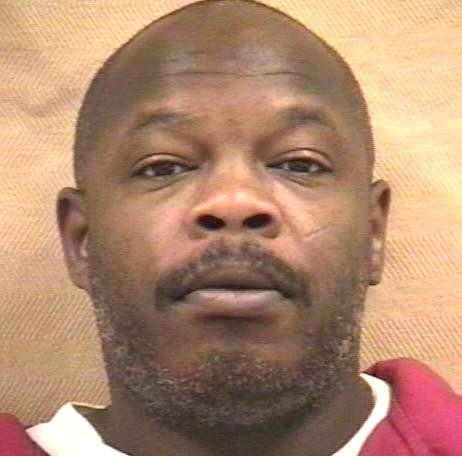 Glen Edward Chapman
Murderer? · USA · 1992
Defendant: Glen Edward Chapman Legal case references: In the Supreme Court of N…
2 victims
Glen Edward Chapman
Murderer? · USA · 1992
Defendant: Glen Edward Chapman Legal case references: In the Supreme Court of N…
2 victims
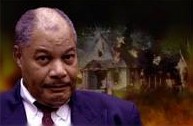 James Campbell
Murderer? · USA · 1997
September 1997 — James Campbell’s first trial ended with a hung jury. · January…
2 victims
James Campbell
Murderer? · USA · 1997
September 1997 — James Campbell’s first trial ended with a hung jury. · January…
2 victims
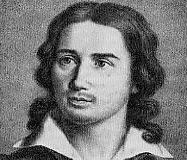 Karl Ludwig Sand
Murderer · Germany · 1819
Karl Ludwig Sand was a German university student and a member of a liberal Burs…
1 victim
Karl Ludwig Sand
Murderer · Germany · 1819
Karl Ludwig Sand was a German university student and a member of a liberal Burs…
1 victim
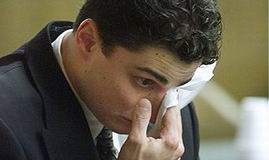 Raffi Kodikian
Murderer · USA · 1999
Raffi Kodikian Raffi Kodikian and David Coughlin were best friends since colleg…
1 victim
Raffi Kodikian
Murderer · USA · 1999
Raffi Kodikian Raffi Kodikian and David Coughlin were best friends since colleg…
1 victim
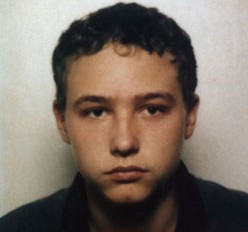 Joshua Phillips
Homicide · USA · 1998
November 3, 1998 — Maddie Clifton vanished from her Jacksonville, Fla., neighbo…
1 victim
Joshua Phillips
Homicide · USA · 1998
November 3, 1998 — Maddie Clifton vanished from her Jacksonville, Fla., neighbo…
1 victim
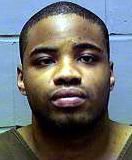 Reginald & Jonathan Carr
Spree killers · Kansas · 2000
The Wichita Massacre, also known as “The Wichita Horror,” was a murder/assault/…
5 victims
Reginald & Jonathan Carr
Spree killers · Kansas · 2000
The Wichita Massacre, also known as “The Wichita Horror,” was a murder/assault/…
5 victims
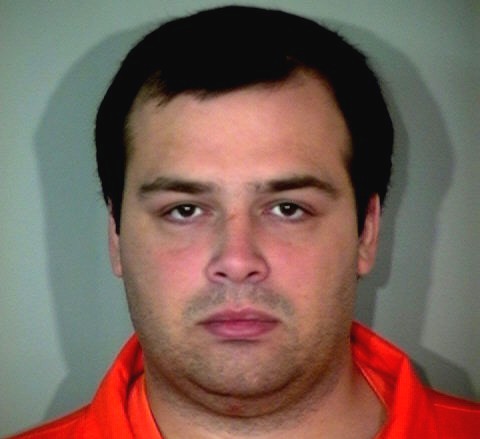 Kyle Sharp
Murderer · USA · 1995
Kyle Sharp was sentenced to death on April 7, 1997. Nine-year-old Brandon Cough…
1 victim
Kyle Sharp
Murderer · USA · 1995
Kyle Sharp was sentenced to death on April 7, 1997. Nine-year-old Brandon Cough…
1 victim
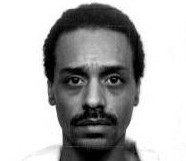 Windell Broussard
Murderer · USA · 1992
Windell Broussard was convicted of capital murder for the killing of Dianna Bro…
2 victims
Windell Broussard
Murderer · USA · 1992
Windell Broussard was convicted of capital murder for the killing of Dianna Bro…
2 victims
- Gender
- male
- Country
- USA
- Location
- Allentown, Pennsylvania, USA
- Date of birth
- 1960
- Age at first offence
- 28
- Characteristics
- arson
- Victim profile
- His three sons, Christopher, 6, James, 4, and Scott, 10 weeks
- Method of murder
- Fire
- Date(s) of murder
- July 25, 1988
- Years active
- 1988
- Date of arrest
- August 23, 1988
- Status
-
Released
Sentenced to death in 1990; conviction reversed; on 12 April 2007 Dennis Counterman entered Alford pleas to three counts of third degree murder, was sentenced to time served (18 years, 5 of them on death row), and was released
Case identification
Dennis Counterman
Timeline
- 25 July 1988 — A fire consumed 436 Chestnut Street in Allentown, Pennsylvania; Dennis Counterman’s wife, Janet, escaped; Dennis’s sons Christopher (6), James (4), and Scott (10 weeks) died; 5 firefighters were injured.
- 31 July 1988 — Detective James Stephens conducted hospital interviews with Janet Counterman using questions that could be answered by nods or written “yes” or “no”.
- 8 August 1988 — Janet Counterman gave this statement to Stephens: “Now wait a minute, there was one more, ah, his oldest boy Christopher had, was, I don't know, he either got hold of a lighter or matches or, and caught the curtains on fire, but Dennis put that one out.”
- 22 August 1988 — Dennis Counterman went to the hospital and had angry words with his wife.
- 23 August 1988 — Dennis Counterman was arrested for three counts of murder by arson for the deaths of his sons, 1 count of attempted murder by arson for the injuries to his wife, 2 counts of arson, and 2 counts of intimidating a witness.
- 22 January 1990 — Trial began.
- 9 February 1990 — Trial ended; the jury found Dennis Counterman guilty on all counts in six hours.
- 10 February 1990 — The jury returned death penalty verdict after four hours of deliberation the next day.
- 22 November 1996 — Post-trial motions were denied by the Lehigh County Court sitting en banc.
- 6 December 1996 — Dennis Counterman’s death sentence was finalized by Lehigh County Judge Lawrence Brenner.
- 13 October 1999 — Governor Tom Ridge signed a death warrant for a December 9, 1999 execution; the execution was stayed by a writ filed in November.
- 27 August 2001 — The Lehigh County Court of Common Pleas granted Dennis Counterman a new trial; his convictions were vacated.
- 11 December 2006 — Dennis Counterman’s retrial was scheduled to begin.
- 18 October 2006 — Dennis Counterman walked away from the Lehigh County Courthouse in Allentown, Pennsylvania after time served on a new disposition.
- 12 April 2007 — Dennis Counterman entered Alford pleas to three counts of third degree murder, was sentenced to time served (18 years, 5 of them on death row), and was released.
- 2006 — Dennis Counterman’s mother died before his release.
- 2003 — Janet Counterman made this statement: “My name is Janet Counterman. This statement is being handwritten by Attorney James Moreno, one of Dennis' lawyers who along with Victor Abreu interviewed me at my home. They asked me what I remember about the fire and my stay in the hospital. I told them it has been so long that I do not remember what happened. Last year I told Detective Stephens the same thing when he talked to me at my home. It has been so long I don't know how the fire started.”
- 2 February 2004 — Allentown Morning Call report published (as quoted) about George Umberger’s testimony and the prosecution’s theories.
- 2 October 2004 — Allentown Morning Call report quoted: Umberger said certain opinions were speculation and the prosecution’s experts did not have “truly provable” theories.
Background
Dennis Counterman was 28 at the time of the fire on July 25, 1988. He lived with his wife, Janet (26), and his sons Christopher (6), James (4), and Scott (10 weeks). Dennis worked at HAB Industries, a local textile plant, and took home about $160 a week. He had a 9th grade education with learning disabilities that were either caused or exacerbated by beatings in his early years, before his father left his family when he was 9. Dennis was unable to obtain a driver’s license because he could not pass the written portion of the test. Janet had an IQ under 70.
The house at 436 Chestnut Street had a history of fires: one several years earlier and another just weeks earlier when Christopher set fire to curtains with a lighter; Dennis had managed to put out that fire.
The offence
On 25 July 1988, a fire consumed 436 Chestnut Street in Allentown, Pennsylvania. The initial account given by Janet Counterman on July 25 to Sergeant Kochan of the Allentown Police Department was: “I also interviewed the wife, Janet Counterman. She stated the oldest son, Christopher, woke her up and told her there was a fire downstairs. She woke her husband up. That was all she remembered.”
Detective James Stephens later conducted interviews with Janet while she was sedated with morphine and anti-anxiety medications and intubated. On August 8, 1988, Janet gave Stephens this statement: “Now wait a minute, there was one more, ah, his oldest boy Christopher had, was, I don't know, he either got hold of a lighter or matches or, and caught the curtains on fire, but Dennis put that one out.”
At trial, the prosecution’s theory was that Dennis had set the fire to get rid of his family because he no longer wanted a family life. Evidence was presented that he had made remarks to the effect that he was “sick” of his children. The prosecution also presented evidence about his pot smoking and supposed he stood to gain from the rental insurance.
Dennis Counterman denied that he set the fire that killed his children and burned his wife.
Investigation
Sergeant Kochan recorded Dennis Counterman’s statement as related to him on the day of the fire. Dennis’s statement, as related to Sergeant Kochan, was: “En route to Lehigh Valley Hospital, I got the husband's name, Dennis Counterman. I spoke to him briefly in the car, but I interviewed him at the hospital. Dennis stated he was sleeping in the front bedroom, second floor, with his wife and baby Scott. He said his son Christopher woke him up and told him there was a fire downstairs. His other son James was with Christopher. He went down to try to put the fire out. The fire was in the sofa in the living room. He was trying to put it out with water from the kitchen sink with a bucket. The smoke pushed him out the door. He climbed on the roof to try to get the children out but couldn't. He jumped off the roof. He also stated the when he was trying to put the fire out he was calling to his wife but she did't answer. I asked him if he knew how the fire started. He said the children must have had matches or a lighter. They did that before. She woke her husband up. That was all she remembered.”
Detective James Stephens visited Janet during her stay in the hospital and conducted various interviews. The first was on July 31, and it used questions that could only be answered with nods or written “yes” or “no” because Janet was still on a breathing tube. Stephens elicited statements that Janet feared Dennis, that Dennis was physically violent, and that Dennis started the fire. Stephens followed with other interviews in August.
A later statement by Janet Counterman in 2003 was: “My name is Janet Counterman.
Madeline Rothermel made a statement to Officer John Kerrigan on July 25, 1988. The statement was: “She knows the mother of the children 436Chestnut Street. States the mother told her the older boy, "Chris" had lit the curtains in the children bedroom with a cigaretter lighter approximately one month ago. The family had been able to put it out. Rothermel states that she saw the boys fingers and they appeared to have minor burns. She knows not if this was due to the fire or possible punishment. She felt this should be reported to the Children's Bureau. For all the good this will do now.”
5 firefighters were injured in the fire.
The initial narrative of escape and observations included: Minutes before the fire swept through their home, 2 of the boys entered Janet Counterman’s bedroom and told her, “Daddy is downstairs starting a fire,” according to court testimony. Janet Counterman and the boys went downstairs and saw Dennis Counterman in the dining room with a bucket and a lighter. They went back upstairs after he told them he would set them on fire if they didn't. Dennis Counterman started the fire with a flammable liquid that was first poured onto the dining room floor, then up the stairs to the second floor. Flames on the stairway prevented the boys from escaping. Their mother was unable to rescue them. Janet Counterman escaped onto the roof through a second-story window and was helped into a neighbor's home.
An account of Dennis’s actions and injuries also included that he tried to reenter to save his family: he was driven out by smoke, climbed on the back roof, tried to enter to save his family but was not able to get back in the house, broke his heel jumping off the roof, and was screaming and crying and had to be restrained from entering the house.
The fire department believed the fire was set and accelerants must have been used because of the speed with which the fire spread through the house. The Chief of the Allentown Fire Department, Joseph D'Annibale, testified that the fire was set with an accelerant, although no evidence of an accelerant was discovered.
Arrest
On August 23, 1988, Dennis Counterman was arrested for three counts of murder by arson for the deaths of his sons (Christopher, 6; James, 4; Scott, 10 weeks), 1 count of attempted murder by arson for the injuries to his wife, Janet, 2 counts of arson, and 2 counts of intimidating a witness, for his encounters with his wife on the 22nd and 23rd.
Trial
The trial ran from January 22 to February 9, 1990. Dennis was represented by public defenders Robert Long and Karen Schular. The prosecution case was brought by Assistant District Attorney Richard Tomsho. At trial, the District Attorney, William Platt, sought the death penalty.
The jury found Dennis Counterman guilty on all counts, of three first degree murders, attempted murder, arson and intimidating a witness. Detective James Stephens was quoted saying, “I feel justice has been served.” The next day, the jury returned a death penalty after four hour deliberation.
Tomsho’s final summation before the jury included: “Counterman may have decided he no longer wanted to be a husband and father, Tomsho said, and gotten to the point where he said, 'I can't take it anymore, I don't want it anymore.' For the average person, those may not be reasons enough to kill, the prosector said. “But doesn't the evidence suggest they may be reason enough for the defendant?' Tomsho asked the jury. “Preposterous as it may seem, and maybe, for the reason I suggested, strange. But they are valid reasons, and they are the reasons in this case.” “Tomsho told the jury. (Allentown Morning Call, 2/9/90, Debbie Garlicki)”
Sentencing
Dennis Counterman was convicted in 1990 and sentenced to death. On November 22, 1996, post-trial motions were denied by the Lehigh County Court sitting en banc. On December 6, 1996, Lehigh County Judge Lawrence Brenner finalized Dennis Counterman’s death sentence.
Governor Tom Ridge signed a death warrant on October 13, 1999, for a December 9, 1999 execution, which was stayed by a writ filed in November.
Appeals
Dennis Counterman’s conviction was upheld by the state Supreme Court in October 1998.
After the convictions were vacated, his case returned to litigation about evidence and retrial. Since his key witness could no longer testify, District Attorney Martin tried to get Judge Brenner to allow transcript testimony of Janet Counterman before a new jury; Brenner said no and Martin appealed to the Superior Court. In August 2004, the Superior Court agreed with Judge Brenner.
Allentown Morning Call quoted testimony about a prosecution fire expert, George Umberger, including: “Umberger said that some of D'Annibale's and Wenzler's opinions and those of a defense expert were speculation. Indications of other fires at the house and reports that the children played with matches 'certainly has to add some credence to the possibility that this fire may have been a juvenile act'By today's fire investigation standards, he said, the prosecution's experts do not have 'truly provable' theories of how and where the fire started.” (Allentown Morning Call, 10/2/2004, Debbie Garlicki)
Outcome
On August 27, 2001, Judge Brenner granted Dennis Counterman a new trial and vacated his convictions. The record quoted Judge Brenner stating: “Finally, it is beyond reproach that the Assistant District Attorney responsible for the numerous Brady violations detailed above engaged in a pattern of conduct that at best, was misguided, and at worst, deceitful.”
In the meantime, Dennis Counterman denied setting the fire. He had spent years in prison after his conviction was reversed and while retrial was pending.
On December 11, 2006, the retrial was scheduled to begin, and Dennis Counterman spent over 5 years in the local jail after his conviction was reversed, waiting for retrial, while the local prosecutor mounted appeal after appeal, trying to get evidence into the record. On April 12, 2007, Dennis Counterman entered Alford pleas to three counts of third degree murder and was sentenced to time served (18 years, 5 of them on death row). He was released.
Dennis Counterman’s statement to the press on the day of his sentencing was: “I'm more frustrated than angry. I spent all this time for something I didn't even do.”
Aftermath
Dennis Counterman walked away from the Lehigh County Courthouse in Allentown, Pennsylvania on October 18, 2006, after serving 18 years in prison, five of them on death row. He had endured a death warrant signed by then-Governor Tom Ridge. In 2001, he had been sitting in Lehigh County Prison waiting for a new trial as James Martin, the Lehigh County District Attorney, pursued attempts to introduce evidence at trial. The disposition in 2007 required Alford pleas to three counts of third degree murder. He was sentenced to 18 years in prison and five years probation, and since he had already served the 18 years, he was released to probation.
Dennis Counterman lived with his niece Melissa Borrero and her family, including Melissa’s three children, Andrew (15 months), Cesario (6 years), and Aixa (10 years). Melissa testified during the 1988 trial when she was 12 years old. Dennis was living in Allentown about two blocks from 436 Chestnut Street.
Dennis refused to admit guilt at the time of sentencing and maintained his innocence.
While on probation, Dennis was required to pay for weekly drug testing. A letter from a local Amnesty International chapter to Judge Lawrence Brenner brought relief from the drug tests. He was still required to pay court costs of $1900. Dennis could not get identification papers from authorities, stating: “I can't get my ID's, my social security card, or anything. I have my birth certificate, but no ID. It's like I have to prove I'm alive, you know.”
Melissa interjected: “It's like that old joke about the man who was reported to be dead, and he showed up at a government office, told them he was alive, and they demanded ID to prove it.”
Dennis said: “That's been the toughest thing, to get my ID.”
Court costs were scheduled at $45 a month.
Dennis said a Lehigh County collections official told him, “‘If you miss a payment, we'll bring you to Court'”, and he said he tried to get the amount less, but the system set a certain price.
Dennis could not bear to attend his mother’s funeral; his mother died in 2006. Dennis stated: “It would have broke me up too much, I really broke up at my sister's (funeral), and I just couldn't stand my mother's”
The case history included that key prosecution players in the first trial were rewarded: Richard Tomsho became a staff attorney in the Pennsylvania State Attorney General’s office, and William Platt became President Judge of Lehigh County. Dennis came within weeks of a lethal injection.
Other details
Dennis Counterman had been on death row for 5 years as part of his 1990 death sentence before his conviction was reversed.
A fire investigator Richard L. P. Custer was hired by Attorneys James Moreno and Victor J. Abreu, Defender Association of Philadelphia, and concluded that the fire is “unlikely to have started with ignitable liquid spread on the stairs, dining room carpet, out to the kitchen”, and “the scenario of a fire starting on the sofa and extending to the rest of the structure is consistent with the damage seen”, and further that “there is no fire scene evidence to support the use of an ignitable liquid in this fire.”
Attorneys Moreno and Abreu presented a claim of prosecutorial misconduct and suppression of exculpatory evidence, stating in a court petition: “In this case, the Commonwealth's behavior was nothing short of unethical, unconstitutional and clearly intended to deprive Petitioner of a fair trial. The Commonwealth also presented evidence it knew to be false and misleading, such as the testimony of Detective Stephens and Mrs. Counterman that there was no evidence of prior fire setting behavior on the part of Christopher testimony directly contradicted by evidence sitting in the prosecutor's file at the time of trial and by Detective Stephen's investigation, including his contact with the Lehigh County Office of Children and Youth Services concerning this case. In short, every piece of evidence that fell into their hands indicating Petitioner was innocent was suppressed. A more deliberate denial of a capital defendant's right to a fair trial has never been presented to the courts of this Commonwealth.”
Stephens said Counterman had denied setting the fire but had told him he went outside and saw a fire after smelling smoke, then jumped onto the roof with a hose when he couldn't get back in the house. Stephens later believed that story until forensic evidence indicated that injuries Counterman sustained more likely came from starting a fire than trying to reenter his burning home. Stephens said: “I don't think we ever got to” his motivation for starting the fire, and “I think that there was anger there, and I think that anger turned on his wife and his family. And I think he was a very selfish person. He didn't like not having his way with things.”
Stephens described the case as tough for him and said: “I have 3 children and they were the same age as those children at that time, so it was tough for me -- having to go to the autopsy of those three children who were burned beyond recognition,”
On whether he thought Counterman’s sentence was just, Stephens said: “It's not our job to say this guy deserves to die, this guy deserves to live. My job is to prosecute him to the fullest extent of the law. After that, it's up to the jury.”
The day before the fire, Counterman smoked marijuana and played video games, according to trial testimony.
Early the next day, he tried to have sex with his wife, but she rebuffed him because of his marijuana use; he slapped her and went downstairs.
Five firefighters were injured.
Janet Counterman’s injuries included burns over half of her body: 2nd and 3rd degree burns over 50% of her body, and she was placed in a burn unit in critical condition; she was later intubated.
Dennis Counterman was taken to the hospital, treated for smoke inhalation and his broken heel.

Spotted an error, or have more information about this case?