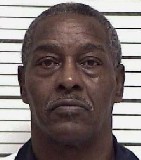
Floyd Ernest Hill
Murderer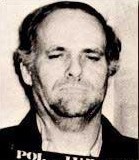 Ervil LeBaron
Murderer · USA · 1972
Ervil Morrell LeBaron (1925 to August 16, 1981) was the leader of a polygamous…
35 victims
Ervil LeBaron
Murderer · USA · 1972
Ervil Morrell LeBaron (1925 to August 16, 1981) was the leader of a polygamous…
35 victims
 Brian Kevin Rosenfeld
Murderer · USA · 1985
Brian Kevin Rosenfeld Brian Kevin Rosenfeld was sentenced to three concurrent l…
23 victims
Brian Kevin Rosenfeld
Murderer · USA · 1985
Brian Kevin Rosenfeld Brian Kevin Rosenfeld was sentenced to three concurrent l…
23 victims
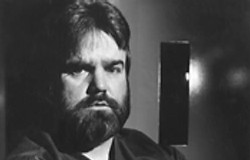 Marvin Gray
Murderer · USA · 1975
Marvin Gray was convicted killer who claimed responsibility for 23 slayings and…
23 victims
Marvin Gray
Murderer · USA · 1975
Marvin Gray was convicted killer who claimed responsibility for 23 slayings and…
23 victims
 Yahweh ben Yahweh
Murderer · USA · 1980
Yahweh ben Yahweh was born and legally named Hulon Mitchell Jr. (October 27, 19…
23 victims
Yahweh ben Yahweh
Murderer · USA · 1980
Yahweh ben Yahweh was born and legally named Hulon Mitchell Jr. (October 27, 19…
23 victims
 Russell Ellwood
Murderer · USA · 1991
Russell Ellwood was a former taxi driver. Authorities suspected him of killing…
20 victims
Russell Ellwood
Murderer · USA · 1991
Russell Ellwood was a former taxi driver. Authorities suspected him of killing…
20 victims
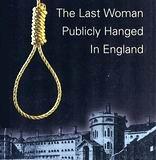 Frances Kidder
Murderer · United Kingdom · 1867
Frances Kidder (c. 1843 – 2 April 1868) was executed by hanging in front of Mai…
1 victim
Frances Kidder
Murderer · United Kingdom · 1867
Frances Kidder (c. 1843 – 2 April 1868) was executed by hanging in front of Mai…
1 victim
 Pamela Phillips
Murderer · USA · 1996
Pamela Phillips was tried in Tucson, Arizona, for the 1996 car-bomb murder of h…
1 victim
Pamela Phillips
Murderer · USA · 1996
Pamela Phillips was tried in Tucson, Arizona, for the 1996 car-bomb murder of h…
1 victim
 Li Hao
Murderer · China · 2009
Li Hao was convicted of murder, rape, illegal detention, organized prostitution…
2 victims
Li Hao
Murderer · China · 2009
Li Hao was convicted of murder, rape, illegal detention, organized prostitution…
2 victims
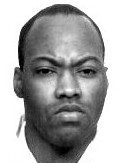 Clyde Smith
Murderer · USA · 1992
Clyde Smith was a Black male who was scheduled to be executed on February 15, 2…
2 victims
Clyde Smith
Murderer · USA · 1992
Clyde Smith was a Black male who was scheduled to be executed on February 15, 2…
2 victims
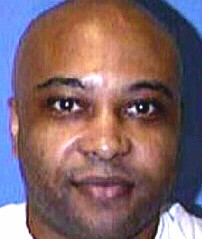 Keith Bernard Clay
Murderer · USA · 1993
Keith Bernard Clay was a defendant in the capital murder case of Melathethil To…
4 victims
Keith Bernard Clay
Murderer · USA · 1993
Keith Bernard Clay was a defendant in the capital murder case of Melathethil To…
4 victims
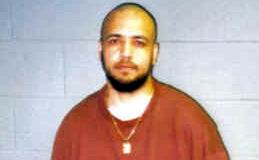 Jose DeJesus
Murderer · USA · 1997
Jose DeJesus was convicted of first-degree murder in July 1998 for the 1997 sho…
1 victim
Jose DeJesus
Murderer · USA · 1997
Jose DeJesus was convicted of first-degree murder in July 1998 for the 1997 sho…
1 victim
- Gender
- male
- Country
- USA
- Location
- Cobb County, Georgia, USA
- Date of birth
- 1936
- Age at first offence
- 46
- Characteristics
- —
- Victim profile
- Gregory Mullinax (police officer)
- Method of murder
- Shooting (.38 caliber pistol)
- Date(s) of murder
- February 8, 1982
- Years active
- 1982
- Date of arrest
- Same day (wounded by police)
- Status
-
Acquitted / overturned
Sentenced to death on July 24, 1982; overturned on federal appeal in December 1997
Case record: Floyd Ernest Hill
Status
Floyd Ernest Hill was sentenced to death in July 1982. His death sentence was overturned on federal appeal in December 1997.
Timeline
- February 8, 1982 — Officer Gregory Mullinax was sent to a trailer park on a domestic disturbance call; multiple shootings occurred, and Officer Mullinax later died from gunshot wounds.
- July 24, 1982 — Floyd Ernest Hill was sentenced to death in Cobb County.
- 1985 — Hill filed an application for a writ of habeas corpus in state court.
- 1992 — The state habeas court granted Hill relief from his conviction and death sentence.
- December 1997 — Hill’s death sentence was overturned on federal appeal.
Background
On the evening of February 8, 1982, Floyd Ernest Hill, age 60, was at home, drinking and listening to music in his car with a friend, Wayne Lockette. A violent domestic dispute erupted between Hill’s neighbors, Virginia Barber and Edward Saffo, who lived together in a trailer behind Hill’s residence. In connection with the dispute, Saffo twice fired a .32 caliber pistol outside the trailer and then left the area "to cool off."
Barber went back inside the trailer, called the police, and then "set out after Saffo," armed with a pair of scissors.
Janice Miller, another neighbor and a friend of Barber’s, approached Hill and asked for his help in breaking up the fight. Hill declined, stating that he was too drunk to intercede.
After Miller left, Hill asked his daughter, Anita, to retrieve his gun from the house for protection. When Anita returned, she handed Hill a flap-type holster, which, according to Hill, was empty. Lockette watched Anita give Hill the holster but could not see whether the holster contained a gun. Lockette then went into the Hill residence with Hill’s children.
While Barber caught up to Saffo along the road in front of their residence, two police officers arrived on the scene in response to Barber’s emergency call: Greg Thames and Greg Mullinax. Miller and several of Barber’s children were also present when the officers arrived.
The offence
Officer Thames attempted to subdue Barber; however, as he was placing her in the rear of the patrol car, Barber’s 15-year old son Stanley, armed with a butcher knife, began to fight with Thames. When the officers responded to this new threat, Barber left the patrol car and rejoined the fight.
The confrontation drew a number of bystanders, including Daryl Toles and Hill. Hill drove his car down his driveway to the scene, parked immediately behind the police vehicle, and exited his car. Upon seeing Hill, Officer Thames twice requested Hill’s help, asking him to get the children out of the way of the fighting.
As Officer Thames was attempting to apprehend Miller, who had joined the confrontation, he heard Mullinax yell "watch out," then one loud shot, then a series of shots that "sounded like a string of firecrackers." Thames did not see who fired any of the shots.
Barber, Miller, and two of Barber’s children claimed to have seen Hill fire once into the air, but did not see who fired the subsequent shots.
Apart from Mullinax and Toles, both of whom had been wounded in the shooting, and Thames, who radioed for help upon seeing Mullinax fall, everyone else at the scene scattered.
Mullinax and Toles both died from their gunshot wounds: Mullinax at the scene, and Toles in the hospital.
It was later determined that Mullinax had fired the two bullets that struck and killed Toles, and that the bullets that killed Mullinax had been fired from a .38 caliber pistol.
Investigation
Investigators arrived and followed a trail of blood leading from the street, to Hill’s home, into and out of the Hill residence, back to the Saffo/Barber trailer, and into the woods behind the trailer where they found Hill lying on the ground suffering from several gunshot wounds.
The police seized a .32 caliber pistol from Hill, advised him of his rights, and arrested him.
Investigators also seized a holster that fit a .38 caliber gun from Hill’s car, which had been left at the scene.
Later that evening, investigators spoke to many of those who had been present at the shooting, and none identified Hill as Officer Mullinax’s assailant. These witnesses also gave conflicting accounts of the events leading up to the shooting.
Several days later, the .38 caliber pistol from which the shots that killed Mullinax had been fired was found next to a tree between the Hill and Saffo residences.
Arrest
Trial
Hill was subsequently indicted for the malice murder of Officer Mullinax and the felony murder of Toles.
Hill was convicted on both counts and was sentenced to death for the murder of Officer Mullinax and to life imprisonment for Toles’s murder.
Appeals
On direct appeal, the Georgia Supreme Court affirmed Hill’s conviction and death sentence for the murder of Officer Mullinax, but reversed Hill’s conviction and life sentence for Toles’s murder. The Georgia Supreme Court found that Hill had not "caused" Toles’s death within the meaning of the Georgia felony murder statute.
The U.S. Supreme Court denied Hill’s petition for certiorari.
Approximately two years later, in 1985, Hill filed an application for a writ of habeas corpus in state court. In 1992, the state habeas court granted Hill relief from his conviction and death sentence, finding that he had been denied the effective assistance of counsel because of his trial counsel’s simultaneous representation of a witness for the prosecution.
The Georgia Supreme Court subsequently reversed the grant of habeas relief as to Hill’s conflict of interest claim and affirmed the denial of relief on all other grounds.
Hill then filed this petition for federal habeas corpus relief, again challenging the validity of both his conviction and his death sentence on various grounds.
After considering Hill’s claims, the district court vacated Hill’s death sentence. The district court found that the jury’s consideration of Hill’s subsequently reversed felony murder conviction impermissibly tainted the sentencing deliberations. The district court denied relief as to Hill’s remaining claims pertaining to his death sentence and as to all claims pertaining to his conviction. We reverse. We conclude that, under the facts of this case, the district court erred in denying Hill habeas relief on his claim that the prosecutor’s comment on his post- Miranda exercise of his rights to remain silent and to seek the assistance of counsel violated his due process rights under the Fourteenth Amendment.
Sentencing
Hill was sentenced to death for the murder of Officer Mullinax and to life imprisonment for Toles’s murder.
Outcome
Hill’s death sentence was overturned on federal appeal in December 1997.
Other details
- Names present in the events included Floyd Ernest Hill, Wayne Lockette, Virginia Barber, Edward Saffo, Janice Miller, Anita (Hill’s daughter), Greg Thames, Greg Mullinax, Stanley (Barber’s 15-year old son), Daryl Toles.
- Officer Mullinax yelled "watch out," and Officer Thames heard one loud shot followed by a series of shots that "sounded like a string of firecrackers."
- Hill was described as being too drunk to intercede when Janice Miller asked for his help in breaking up the fight.
- The district court vacated Hill’s death sentence based on the jury’s consideration of the subsequently reversed felony murder conviction impermissibly tainting sentencing deliberations.
Spotted an error, or have more information about this case?