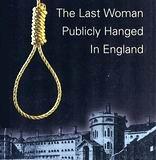
Frances Kidder
Murderer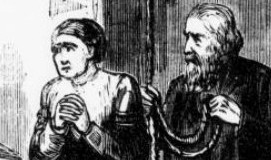 Margaret Waters
Murderer · United Kingdom · 1866
Margaret Waters was an English murderess who was hanged by executioner William…
19 victims
Margaret Waters
Murderer · United Kingdom · 1866
Margaret Waters was an English murderess who was hanged by executioner William…
19 victims
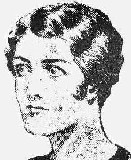 Christiana Edmunds
Murderer · United Kingdom · 1871
Christiana Edmunds (3 October 1828–1907) was an Englishwoman known as The Choco…
1 victim
Christiana Edmunds
Murderer · United Kingdom · 1871
Christiana Edmunds (3 October 1828–1907) was an Englishwoman known as The Choco…
1 victim
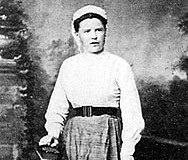 Marguerite Dixblanc
Murderer · United Kingdom · 1872
Marguerite Dixblanc was a Belgian cook. She entered the Park Lane household of…
1 victim
Marguerite Dixblanc
Murderer · United Kingdom · 1872
Marguerite Dixblanc was a Belgian cook. She entered the Park Lane household of…
1 victim
 Catherine Wilson
Murderer · United Kingdom · 1854
Catherine Wilson was a British nurse who poisoned victims after befriending the…
7 victims
Catherine Wilson
Murderer · United Kingdom · 1854
Catherine Wilson was a British nurse who poisoned victims after befriending the…
7 victims
 Shawn Bentler
Mass murderer · USA · 2006
Shawn Bentler (born 1983 or 1984) was a convicted murderer from Bonaparte, Iowa…
5 victims
Shawn Bentler
Mass murderer · USA · 2006
Shawn Bentler (born 1983 or 1984) was a convicted murderer from Bonaparte, Iowa…
5 victims
 Vernon Sattiewhite
Murderer · USA · 1976
Vernon Sattiewhite, executed by lethal injection in Texas on August 15, 1995, h…
2 victims
Vernon Sattiewhite
Murderer · USA · 1976
Vernon Sattiewhite, executed by lethal injection in Texas on August 15, 1995, h…
2 victims
 Dominic Culpepper
Homicide · USA · 2001
Dominic Culpepper was 14 years old when he fatally beat 16-year-old Frank Wesle…
1 victim
Dominic Culpepper
Homicide · USA · 2001
Dominic Culpepper was 14 years old when he fatally beat 16-year-old Frank Wesle…
1 victim
 Raymond Oscar Butler
Murderer · of Los Angeles · 1994
Raymond Oscar Butler was sentenced to death on July 29, 1996. The killings invo…
3 victims
Raymond Oscar Butler
Murderer · of Los Angeles · 1994
Raymond Oscar Butler was sentenced to death on July 29, 1996. The killings invo…
3 victims
- Gender
- female
- Country
- United Kingdom
- Location
- New Romney, Kent, England, United Kingdom
- Date of birth
- 1843
- Age at first offence
- 24
- Characteristics
- jealousy, abuse
- Victim profile
- Her 11-year-old stepdaughter, Louisa Kidder-Staples
- Method of murder
- Drowning
- Date(s) of murder
- August 25, 1867
- Years active
- 1867
- Date of arrest
- Same day
- Status
-
Executed
Executed by hanging in front of Maidstone Gaol on April 2, 1868
Case overview
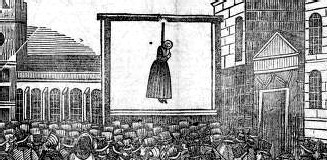
Frances Kidder (c. 1843 – 2 April 1868) was executed by hanging in front of Maidstone Gaol. She was described as the last woman to be publicly hanged in Britain.
Timeline
- 25 August 1867 — Frances Kidder was arrested at her parents' house in New Romney.
- 12 March 1868 — Frances Kidder was convicted of murder.
- 2 April 1868 — Frances Kidder was executed by hanging in front of Maidstone Gaol at midday.
The offence
Frances Kidder was accused of murdering her 11-year-old stepdaughter, Louisa Kidder-Staples. It was alleged that she drowned Louisa in a ditch at New Romney.
Frances married William Kidder in 1865. The marriage included two children from William Kidder’s previous relationship with a woman called Staples. Louisa was one of those children and was born in Hythe. The source also identified Louisa’s birth mother as Eliza Staples (born in Hothfield in 1837) and stated that Eliza’s father, Richard, was recorded in the Hothfield Church register of Baptisms as the illegitimate son of Sarah.
The source described a “volatile relationship” between Frances Kidder and Louisa, attributing it to jealousy. It further described that Frances Kidder inflicted extreme cruelty on the 11-year-old, which continued until it culminated in the drowning in “just 300mm of ditch water.” It also stated that Frances was fined for cruelty and that Louisa was sometimes excluded from the house and made to sleep in the cellar with old sacks for bedding. The source described Frances beating Louisa with anything that came to hand, making her wear rags, depriving her of food, and forcing her into an environment where she was described as becoming withdrawn and sullen over the following two years.
The source stated that on 24 August 1867 Frances Kidder took Louisa to visit her parents in New Romney and took Frances’s own daughter, Emma. It stated that she told her parents’ neighbour, Mrs. Evans, of her feelings towards Louisa and that she intended to get rid of her before returning to Hythe.
It stated that after her parents left, Frances suggested to Louisa that they visit a nearby fair and told her to change into their old clothes before going. The two then started out on foot for New Romney, reached Cobb’s Bridge, and the source stated that Frances grabbed Louisa and forced her into the stream under Cobb’s Bridge, holding the girl face down and drowning her in less than a foot of water.
Investigation and custody
Frances Kidder’s father and her husband, William Kidder, started searching for Frances and Louisa after returning to her parents’ house. The source stated that Frances returned just before William returned and that William immediately noticed Louisa was not with her.
It stated that neither William nor his mother could get a satisfactory explanation from Frances about Louisa’s whereabouts. It further stated that Frances ran upstairs and was discovered by her father having changed into dry clothes, and that her previous clothes were wet and muddy. It said that her father and William decided to go to the police due to the history of violence towards Louisa.
The source stated that Constable Aspinall returned with Frances’s father and husband and took Frances into custody on suspicion of Louisa’s murder. The source stated that a search was organised and Louisa’s body was soon discovered, and that it was removed to the Ship Inn to await an inquest.
The source stated that Frances was charged with murder. It said that a coroner’s inquest opened the next day and heard witness testimony leading to a verdict that Louisa had been murdered by her mother. It further stated that Frances was taken before magistrates for a committal hearing, where she was remanded in custody to appear at the Kent Spring Assizes at Maidstone.
The source stated that Frances was transported to Maidstone prison the following day, suffering fits during the journey. It said the journey required a stop at Ashford Police Station until the fits subsided. It stated that she remained on remand for over six months.
Trial
Frances Kidder’s trial took place at Maidstone on 12 March 1868 before Mr. Justice Byles. The trial was described as lasting six hours. It stated that Frances had a court appointed barrister, Mr. Channell, to defend her.
The prosecution evidence included evidence of widespread abuses of Louisa and of previous threats to kill her. A local doctor examined Louisa at the Ship Inn and told the court that Louisa had died from drowning but that he had found no marks of violence on her body.
Mr. Channell suggested to the jury that some of the witness evidence against Louisa, “whilst not actually lies,” may have been exaggerated, and he made little of the injuries described from the accident with the horse and cart and the effect on Louisa’s mental and physical health, and also of the doctor’s findings of no marks of violence on Louisa’s body.
Frances Kidder clung to her defence that the two of them had been frightened by a horse and that Louisa fell into the water, from where she claimed she tried to rescue her.
Mr. Justice Byles made a summing up and told the jury that they were to give Frances Kidder the benefit of the doubt if they were not wholly satisfied with the largely circumstantial evidence against her.
The source stated that all of this was rejected by the jury after just twelve minutes of deliberation.
Sentencing
Frances Kidder was sentenced to death after the jury’s verdict. The source stated that she was calm when she was sentenced to death and walked unaided from the dock.
Aftermath and execution
The source stated that in the condemned cell, Frances Kidder confessed the murder to Reverend Fraser. It stated she was visited twice by William whilst in the condemned cell and that on both occasions they quarrelled over his relationship with her younger sister, which he denied at the first meeting and admitted at the second. It stated that she was also visited by her parents and Emma. It further stated that she frequently became hysterical while awaiting her death, and that the behaviour continued until the moment she was hanged.
The execution was set for midday on Thursday 2 April 1868. The source stated that William Calcraft officiated. It described the gallows that had been used to execute Ann Lawrence the year before being erected again outside the main gate in County Road. Around noon, the under sheriff of the county, the chaplain, Calcraft, and other prison officers formed up outside her cell. The source stated that Calcraft went in to pinion her with a strap around her body and arms at elbow level and another around her wrists. She was led out across the yard to the main gate and helped up the steps onto the platform, held on the trapdoors by two warders.
The source stated that she prayed intently while Calcraft made the final preparations, and gave her last words as: “Lord Jesus forgive me”. The source stated that when the trap released she dropped some eighteen inches, struggled hard for two or three minutes, and writhing in “the agonies of strangulation.” It stated that a crowd of around 2,000 people, “a lot of them women,” watched her final moments though only the top half of her body above the platform was visible. The source stated that her body was left hanging for an hour before being taken down and buried in an unmarked grave within the prison.
Other details
The source described jealousy as a driver of the conflict between Frances Kidder and Louisa and stated that corporal punishment in the home was considered normal in the 1860s.
It described an accident in July 1867 in which Frances Kidder was thrown from their horse and cart due to the horse bolting, and stated that she was quite seriously injured. It said the accident may have caused brain damage and that she took some time to recover.
It stated that while Frances Kidder was in custody, William Kidder started a relationship with Frances’s younger sister who was helping him look after Emma, and said this affected public opinion.
The source stated that the jury’s verdict was returned in only 12 minutes following her conviction on 12 March for murder, and also stated that her trial lasted six hours.
The source stated that Frances Kidder’s husband, William Kidder, was reported to have witnessed the execution. It also stated that there was some sympathy for her in the press and among the public, and that The Times commented on the way William had treated her and deserted her in prison while taking up with her sister. It also stated that an effigy of William was burned in Hythe after the execution.
The source stated that on 29 May 1868 Parliament passed the Capital Punishment Within Prisons Bill ending fully public hanging, and that six more men were to die in public before the Act came into force. It stated that the last of these men was Michael Barrett, who was hanged at Newgate on 26 May for his part in the Fenian bomb outrage in Clerkenwell.

Spotted an error, or have more information about this case?