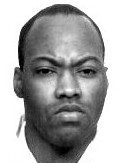
Clyde Smith
Murderer Brian Kevin Rosenfeld
Murderer · USA · 1985
Brian Kevin Rosenfeld Brian Kevin Rosenfeld was sentenced to three concurrent l…
23 victims
Brian Kevin Rosenfeld
Murderer · USA · 1985
Brian Kevin Rosenfeld Brian Kevin Rosenfeld was sentenced to three concurrent l…
23 victims
 Russell Ellwood
Murderer · USA · 1991
Russell Ellwood was a former taxi driver. Authorities suspected him of killing…
20 victims
Russell Ellwood
Murderer · USA · 1991
Russell Ellwood was a former taxi driver. Authorities suspected him of killing…
20 victims
 Robert Martines Perez
Murderer · USA · 1994
Name: Robert Martines Perez · Other name used in proceedings: Robert Martinez P…
15 victims
Robert Martines Perez
Murderer · USA · 1994
Name: Robert Martines Perez · Other name used in proceedings: Robert Martinez P…
15 victims
 Billy Frank Vickers
Murderer · USA · 1993
Billy Frank Vickers Vickers was executed by lethal injection in Texas on Januar…
14 victims
Billy Frank Vickers
Murderer · USA · 1993
Billy Frank Vickers Vickers was executed by lethal injection in Texas on Januar…
14 victims
 John Patrick Henretta
Murderer · USA · 1988
John Patrick Henretta was sentenced to death in Tennessee on April 6, 2002. · N…
2 victims
John Patrick Henretta
Murderer · USA · 1988
John Patrick Henretta was sentenced to death in Tennessee on April 6, 2002. · N…
2 victims
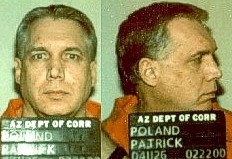 Patrick Poland
Murderer · USA · 1977
Patrick Poland was convicted in Arizona state court of first-degree murder and…
2 victims
Patrick Poland
Murderer · USA · 1977
Patrick Poland was convicted in Arizona state court of first-degree murder and…
2 victims
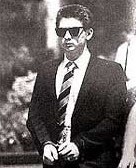 John Raymond Travers
Murderer · Australia · 1986
John Raymond Travers (born February 27, 1967) was an Australian murderer. He wa…
1 victim
John Raymond Travers
Murderer · Australia · 1986
John Raymond Travers (born February 27, 1967) was an Australian murderer. He wa…
1 victim
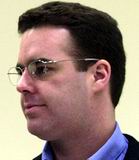 Shane Ragland
Murderer · USA · 1994
Shane Ragland was convicted of murder for the sniper-style shooting death of Un…
1 victim
Shane Ragland
Murderer · USA · 1994
Shane Ragland was convicted of murder for the sniper-style shooting death of Un…
1 victim
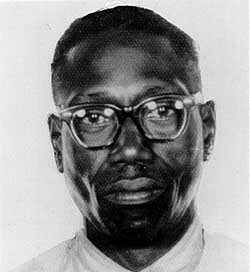 Monroe Hickson
Spree killer · USA · 1946
Monroe Hickson was a native of South Carolina. He was nicknamed "Blue Boy". He…
4 victims
Monroe Hickson
Spree killer · USA · 1946
Monroe Hickson was a native of South Carolina. He was nicknamed "Blue Boy". He…
4 victims
- Gender
- male
- Country
- USA
- Location
- Harris County, Texas, USA
- Date of birth
- August 31, 1973
- Age at first offence
- 19
- Characteristics
- armed robbery, alcohol, drug addict, history of mental illness, serial rapist
- Victim profile
- David Jacobs, 45 (cab driver) / Victor Bilton, 51 (cab driver)
- Method of murder
- Shooting ( .38-caliber Smith & Wesson)
- Date(s) of murder
- February 7 /March 22, 1992
- Years active
- 1992
- Date of arrest
- April 5, 1992
- Status
-
Executed
Executed by lethal injection in Texas on February 15, 2006
Case details
Clyde Smith was a Black male who was scheduled to be executed on February 15, 2006.
Smith was sentenced to death for the 1992 capital murder of Yellow Cab driver David Jacobs in Houston.
Background
Smith had 9 years of education and earned a GED. He had worked in security.
During the appeals described in federal court proceedings, Smith claimed childhood abuse as a mitigating factor and argued that his trial counsel was ineffective for failing to discover and present evidence of that abuse at the punishment phase. In connection with that claim, appellate and habeas litigation described that affidavits and letters were available from Smith’s brother and mother describing Smith’s childhood abuse, and that trial counsel acknowledged he knew Smith had a difficult relationship with his mother and that abusive childhood information might have been important at the punishment phase.
Smith told interviewers from death row that he had not been present when Jacobs was killed and that he arrived afterward. Smith also said the confession he made to detectives was made under duress from police.
The offence
On Feb. 7, 1992, Jacobs’ body was found in his cab in the parking lot of a Houston apartment complex.
An autopsy revealed Jacobs died after being shot three times in the back of his neck with a .38 caliber pistol.
Smith was charged in Jacobs’ death after an April 5, 1992, incident in which Smith shot himself in the leg at another apartment complex in Houston.
While police were investigating that incident, they found a .38-caliber pistol. Ballistic tests linked the pistol to the fatal shootings of Jacobs and another cab driver, Victor Bilton. Bilton was shot three times during a March 22, 1992, robbery.
Smith confessed to shooting both Jacobs and Bilton.
Investigation
A woman testified at the punishment phase that she accompanied Smith when he robbed cab driver Victor Biltong.
Smith’s tape-recorded statement was introduced into evidence at the punishment phase. It offered his confession to shooting Bilton and taking $120 and a watch from the cabbie.
In reporting about the execution, Smith was described as having confessed to the Feb. 7, 1992 slaying of the 45-year-old Jacobs and a similar shooting and robbery six weeks later of another cab driver, identified as Victor Bilton. Smith later said the confession was made after police pressured him.
Arrest
Smith was charged after the April 5, 1992 incident in which Smith shot himself in the leg at another apartment complex in Houston.
Trial
Clyde Smith was convicted in late 1993 of capital murder in David Jacob’s death.
On Dec. 6, 1993, the jury found that David Jacobs should receive the death penalty, and the court sentenced Smith to death.
At the punishment phase of Smith’s capital murder trial, a woman testified that she accompanied Smith when he robbed cab driver Victor Biltong.
In later discussion of the trial, one account stated that defense attorneys presented no witnesses.
Sentencing
On Dec.
Appeals
Smith filed a provisional application for state writ of habeas corpus on April 23, 1997, and an amended application on December 8, 1997.
The Texas Court of Criminal Appeals adopted the trial court’s findings and conclusions and denied relief on January 17, 2001.
Smith filed a federal habeas petition and brief in support in U.S. district court on December 6, 2001. On March 7, 2003, the federal district court denied Smith’s petition for federal habeas relief.
Smith applied for a certificate of appealability (“COA”) in the 5th U.S. Circuit Court of Appeals on January 7, 2004. The appeals court issued an order granting COA in part and denying it in part.
Smith’s petition for certiorari review concerning the issues on which the 5th Circuit Court denied COA was filed in the U.S. Supreme Court on May 12, 2004, and certiorari review was denied on October 4, 2004.
On October 4, 2005, Smith petitioned for certiorari review on the remaining issues on which the 5th Circuit granted COA. On Dec. 5, 2005, the 5th Circuit denied the petition.
Smith v. Johnson (Sec. 1983)
Smith sought injunctive relief under 42 U.S.C. § 1983, alleging that Texas’ lethal injection method caused excruciating pain in violation of the Eighth Amendment.
The United States District Court for the Southern District of Texas dismissed the suit. Smith appealed.
The Court of Appeals affirmed dismissal and denied a motion for a stay of execution. The appellate holding stated that Smith’s delay in bringing the method-of-execution challenge was not excusable and that Smith was not entitled to a stay pending the U.S. Supreme Court’s decision in a related case involving a challenge to the method of execution.
The Court noted that Smith filed the § 1983 complaint five days before his scheduled execution after direct review had been final for more than nine years.
Smith v. Dretke (Habeas)
Smith petitioned for a writ of habeas corpus after being convicted of capital murder and sentenced to death.
The United States District Court for the Southern District of Texas denied the petition and denied a COA. The Court of Appeals granted a COA in part and denied it in part.
The Court of Appeals affirmed summary judgment and held that (1) Smith sufficiently exhausted his ineffective assistance of counsel claim in state court, (2) the district court was statutorily precluded from holding an evidentiary hearing on the ineffective assistance of counsel claim, and (3) trial counsel’s performance at the punishment phase was not deficient.
The Court of Appeals described evidence submitted with federal habeas proceedings, including affidavits from Smith’s brother and mother and letters documenting Smith’s childhood abuse, and it discussed why certain additional evidence could not change the disposition because Smith failed to show deficient performance of trial counsel.
Outcome
Smith was executed by lethal injection in Texas on February 15, 2006.
Seven minutes after lethal drugs began to flow, Smith was pronounced dead at 6:17 p.m. CST.
The execution occurred in Huntsville.
Aftermath
The Texas Board of Pardons and Paroles rejected requests to commute Smith’s sentence to life and to issue a 180-day reprieve.
The U.S. Supreme Court rejected a request for a stay about an hour before the scheduled execution.
At the time of execution reporting, it was described as Texas’ fourth execution of the year and the second of three scheduled executions for that month.
Smith’s lawyers had challenged the constitutionality of the lethal combination of drugs used in the injection. Similar appeals in recent weeks were described as failing to halt two other executions carried out in Texas.
Other details
Victim information
David Jacobs was identified as a Yellow Cab driver. The reporting described Jacobs as 45 years old in some accounts.
Victor Bilton was identified as another Houston cab driver. The reporting described Bilton as 51 years old in one account.
A number of accounts described Jacobs being shot four times in the head and robbed of about $100 or about $110; other parts described Jacobs dying after being shot three times in the back of his neck with a .38 caliber pistol. Smith was described as convicted for Jacobs’ death.
Defendant information
Smith was described as 32 at the time of execution and as 18 at the time of the slayings.
A legal and biographical listing described: hair color Black, eye color Brown, height 6 ft 00 in, weight 191.
Smith was described as a Charlotte, N.C., native and as having been in Houston about 10 months.
It was stated that his father lived in Houston and his mother lived in Mississippi. Reporting stated Smith dropped out of the ninth grade in Laurel, Miss., and once worked as a security guard.
Smith had four brothers and a sister. From death row, Smith stated that the last time he saw a relative was 1991.
Smith had a daughter, about 18, who had no contact with him. Smith said, “I didn’t want her to be exposed to this.”
Smith said from death row: “I wasn’t there when he was killed.” Smith also said: “I got there afterward.”
Smith said to friends who watched from a nearby window: “I want to thank you all for being here and for your love and support,” which was quoted in reporting.
Smith did not acknowledge the relatives of another slain cab driver who were present for the execution.
Quotes and attributions
Smith said:
- “I want to thank you all for being here and for your love and support,”
Smith said about the similarity of the two deaths:
- “I realize how bad that looked, because the two were so similar,”
- “But at the same time, I still maintain I didn't kill those persons.”
Smith said:
- “I wasn't there when he was killed,”
- “I got there afterward.”
Smith said in a recent interview at the Texas Department of Criminal Justice Polunsky Unit:
- “I had no idea how the system worked,”
- “All I knew was what I saw on TV. It's much different.”
Smith said from death row:
- “I didn't actually kill anyone, but it's possible I could be killed by the state.”
Clint Broden said:
- “Nevertheless, ... courts concluded that Smith must shoulder the consequences,”
Joe Owmby said:
- defense lawyers “had nothing to work with except ... to discredit the witnesses that we did have.”
Owmby also said:
- “He is a cold-blooded, remorseless individual who could have contributed to society, but decided to take the lives of two people who were important to a lot of people just by being who they were — hardworking people who drove cabs and lived good lives in Houston,”
Smith said in an execution reporting quote:
- “Things always went wrong when I was associated with people,”
Smith’s mother Ruth Maye said:
- “I told him ... I did not put you there. You chose,”
Pamela Bilton Beard said:
- “My daddy wouldn't pass judgment on anybody,”
Bilton Beard also said:
- “She (the girlfriend) testified that they dressed up nice so people would pick them up,”
- “It was premeditated, it was calculated, (he) knew exactly what he was doing.”
Assistant District Attorney Lynn Hardaway said:
- “The fact is, while Clint Broden didn't like the way habeas counsel handled things, Mr. Smith has had all the due process consideration he should have and a full review of his conviction,”
- “highly unlikely” that evidence about his childhood would have spared Smith the death sentence, in light of the overwhelming evidence presented against him.
Kenneth Bilton said:
- “smokescreen” to hide the malice of the man who took his father away,
- “I miss the fatherly life, that person to talk to that you can confide in about things,”
- “Life in prison would not have been enough.”
Family and attendance at execution (as described)
It was stated that Jacobs’ relatives were present for the execution, and Smith did not acknowledge them.
It was stated that no one from Smith’s family attended.
Smith’s mother Ruth Maye said she and other family members in Mississippi had planned to go to the execution “one last time,” and claim his body, and that she never visited him in prison.
Legal scheduling context mentioned in reporting
Reporting described the execution as scheduled for “Wednesday, Feb. 15, 2006” after 6 p.m., and it described the lethal injection beginning and Smith being pronounced dead at 6:17 p.m. CST.
Spotted an error, or have more information about this case?