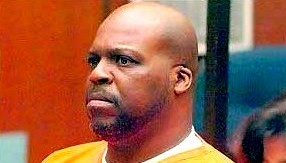
Ivan Hill
Serial killer Donald Henry Gaskins
Serial killer · USA · 1969
Donald Henry Gaskins, also known as Donald “Pee Wee” Gaskins, was a serial kill…
200 victims
Donald Henry Gaskins
Serial killer · USA · 1969
Donald Henry Gaskins, also known as Donald “Pee Wee” Gaskins, was a serial kill…
200 victims
 Carl Eugene Watts
Serial killer · USA · 1974
Carl Eugene Watts (born November 7, 1953; died September 21, 2007), also known…
100 victims
Carl Eugene Watts
Serial killer · USA · 1974
Carl Eugene Watts (born November 7, 1953; died September 21, 2007), also known…
100 victims
 Rodney Alcala
Serial killer · USA · 1977
Rodney James Alcala (born August 23, 1943) was also known as Rodrigo Jacques Al…
100 victims
Rodney Alcala
Serial killer · USA · 1977
Rodney James Alcala (born August 23, 1943) was also known as Rodrigo Jacques Al…
100 victims
 Donald Harvey
Serial killer · USA · 1970
Donald Harvey was known as an American serial killer and a self-professed “Ange…
87 victims
Donald Harvey
Serial killer · USA · 1970
Donald Harvey was known as an American serial killer and a self-professed “Ange…
87 victims
 Donald Leroy Evans
Serial killer · USA · 1975
Donald Leroy Evans (born July 5, 1957) was an American serial killer who murder…
60 victims
Donald Leroy Evans
Serial killer · USA · 1975
Donald Leroy Evans (born July 5, 1957) was an American serial killer who murder…
60 victims
 Michael Swango
Serial killer · USA · 1981
Michael Swango (Joseph Michael Swango) was a physician and American serial kill…
60 victims
Michael Swango
Serial killer · USA · 1981
Michael Swango (Joseph Michael Swango) was a physician and American serial kill…
60 victims
 Michael Zabawa
Murderer
Michael Zabawa was a Minnesota man who lived in Matawan, and he worked at a hog…
2007 victims
Michael Zabawa
Murderer
Michael Zabawa was a Minnesota man who lived in Matawan, and he worked at a hog…
2007 victims
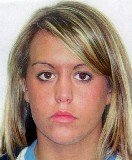 Noura Jackson
Murderer · USA · 2005
Noura Jackson (born March 17, 1987) was an American criminal convicted of commi…
1 victim
Noura Jackson
Murderer · USA · 2005
Noura Jackson (born March 17, 1987) was an American criminal convicted of commi…
1 victim
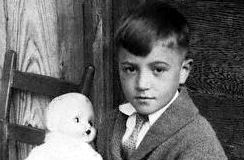 Carl Newton Mahan
Homicide · USA · 1929
Name: Carl Newton Mahan Carl Newton Mahan was described as a 6-year-old from Pa…
1 victim
Carl Newton Mahan
Homicide · USA · 1929
Name: Carl Newton Mahan Carl Newton Mahan was described as a 6-year-old from Pa…
1 victim
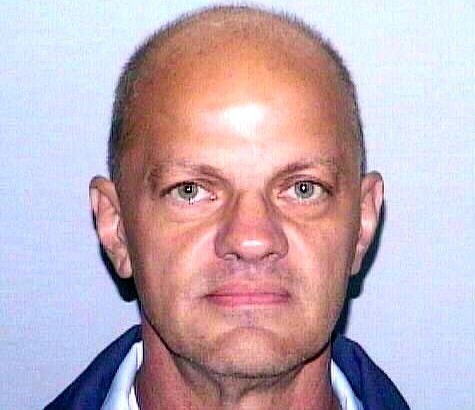 Major Morris
Serial killer? · USA · 1972
Major Morris was a male with the motive listed as sex. He was described as a “l…
6 victims
Major Morris
Serial killer? · USA · 1972
Major Morris was a male with the motive listed as sex. He was described as a “l…
6 victims
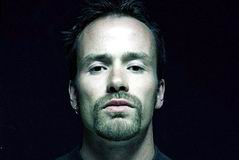 Bârd Eithun
Murderer · Norway · 1992
Bård G. "Faust" Eithun was a Norwegian drummer. He was best known for his work…
1 victim
Bârd Eithun
Murderer · Norway · 1992
Bård G. "Faust" Eithun was a Norwegian drummer. He was best known for his work…
1 victim
 Sheila LaBarre
Murderer · USA · 2005
Sheila LaBarre was convicted of first-degree murders of Kenneth Countie and Mic…
2 victims
Sheila LaBarre
Murderer · USA · 2005
Sheila LaBarre was convicted of first-degree murders of Kenneth Countie and Mic…
2 victims
- Gender
- male
- Country
- USA
- Location
- California, USA
- Date of birth
- 1961
- Age at first offence
- 18
- Characteristics
- robbery, rape
- Victim profile
- A male clerk / Lorna Reed, 35 / Rhonda Jackson, 23 / Roxanne Bates, 31 / Betty Sue Harris, 37 / Helen Ruth Hill, 36 / Donna L. Goldsmith, 35 / Cheryl Sayers, 34 / Debra Brown, 33
- Method of murder
- Shooting / Strangulation
- Date(s) of murder
- 1979 / 1986-87 / 1993-94
- Years active
- 1979–1993
- Date of arrest
- 2003
- Status
-
Sentenced to death
Sentenced to death on March 22, 2007
Case record: Ivan Hill
Background
Ivan Hill was known as the “60 Freeway Killer” and the “60 Freeway Slayer.” He was a former forklift operator and was later serving time in prison for unrelated crimes.
His mother, Bessie Hill, testified in the penalty phase that he grew up in an abusive home. She said Ivan was the second oldest of her five children and that he was the eldest boy. She said he regularly received savage beatings from his father, William, and that he was forced to become “the man of the house” by age 10.
Bessie Hill testified that the abuse started when Hill was only a few weeks old. She said he cried a lot as an infant and that his father placed a heavy pillow over his head at night to drown out the noise. She said that as a toddler, William Hill whipped him with belts and tree branches for even trivial infractions, including wetting his pants, and that he whipped the children on their bare bottoms. She testified that “The more they cried, the longer he whipped,” and described approaching William Hill and saying, “That’s enough,” and that William Hill would “turn on” her.
Bessie Hill testified that Ivan also saw regular fights between his parents, “most of which ended with his father punching his mother in the face.”
Bessie Hill testified that violence peaked on Christmas night 1968. She said that when Hill was about 7 years old, William and Bessie got into another fight while the children were in a nearby bedroom. She testified that after “the typical slapping and punching,” William Hill pulled out a .22-caliber rifle and shot his wife in the face. She testified that the incident landed William Hill in jail and her in the hospital, and that she refused to press charges so that her father came back home.
Bessie Hill testified that her parents later separated. She said she worked two jobs, leaving Ivan to tend to his siblings when he was 9. She said one of few places he could escape was at his grandparents’ house, but she testified that even those getaways were abnormal because his grandmother took the children to the local funeral parlor to look at dead bodies.
During Hill’s sentencing, family members of victims condemned him. Toni Goldsmith said: “I can never forgive you and I will never forget,” and that “I hate you. I hope you rot in hell,” while her daughter, Precious, told Hill: “... You look as if there’s no hurt in you.” Hill was asked by the judge if he had anything to say but replied, “No, your honor.”
Defense attorney Jennifer Friedman later disputed the prosecution’s claim that Hill killed intentionally. She said:
“Compulsive acts are not deliberate acts. ... They're not done after careful thought and weighing,” Friedman told the jury.
“Look at those killings. Listen to that phone call.”
Prosecutors argued that the killings were planned. Deputy District Attorney John Monaghan said:
“We may not ever understand why he did what he did. But we do know the result of what he did,” the prosecutor said.
Prosecutors also said the killings were “well-thought out acts by Mr. Hill.”
The offence
Ivan Hill was convicted of six counts of first-degree murder for the strangulation killings of six women whose bodies were found along the 60 Freeway route east of Los Angeles.
The victims were:
- Roxanne Bates of Montclair, aged 31
- Betty Sue Harris of Pomona, aged 37
- Helen Ruth Hill of West Covina, aged 36
- Donna Goldsmith of Pomona, aged 35 (Donna L. Goldsmith, 35)
- Cheryl Sayers of Ontario, aged 34
- Debra Denise Brown of Los Angeles, aged 33
The bodies were dumped in cities along the 60 Freeway corridor, including Diamond Bar, Walnut, Pomona, Chino and Ontario. During a three-month span in 1993 and 1994, the women were killed and their bodies were left in cities along the freeway route.
In court, prosecutors presented evidence that the victims were strangled, with some killed by hand and others with ligatures around their necks. Prosecutors also argued that some victims were tied up and strangled with ligature, with some having duct tape over their mouths, and others with ankles or wrists bound. They argued that Hill planned the killings based on ligatures.
Jurors heard recorded telephone calls to a police dispatcher in which Hill acknowledged killing a woman and described where he said her body was located. In a second call, he warned police to catch him before he killed again.
Hill acknowledged placing the calls and his defense attorney acknowledged that Hill killed the women. The dispute at trial was whether the killings were intentional first-degree murder or compulsion rather than deliberate acts.
Investigation
Authorities discovered the slayings remained unsolved until DNA linked Hill. Investigators worked together across the Pomona, Upland and Ontario police departments and the Los Angeles County Sheriff’s Department.
When Pomona police detectives discovered the body of Sayers, 36, in the Ganesha Park section of Pomona in early December 1993, they described it as a moment of clarity, because Sayers was the third woman found dead in Pomona in less than a month with a similar background. Authorities then believed they were dealing with a serial killer.
The investigation linked two other homicides:
- Harris, 37, found dead Nov. 1 in a business park in Diamond Bar
- Bates, 31, found Nov. 5 on a rural road in Chino
Even with the links, authorities did not have a suspect.
In March 2003, a DNA sample from biological evidence gathered in the Harris slaying was linked to Hill, followed by five other “cold hits.”
Deputy District Attorney John Monaghan was expected to introduce tape of a 911 call made by Hill to Pomona police that led authorities to the body of victim Brown on Jan. 12, 1994. Brown was found face down in San Antonio Park in Ontario.
Hill also wrote a letter to a relative from jail during an interview about the killings in late 2003. The letter included: “I knew this day would come when they came with the DNA samples.”
Jurors later heard recorded telephone calls in court Monday as Deputy District Attorney John Monaghan gave his opening statements. Hill was heard telling a 911 dispatcher:
“I did, um, what's this, number five or six, I forget, but she's out there,” Hill said.
In a second call, Hill asked why it was taking so long for officers to reach the scene and said:
“Y'all better catch me before I kill again,” he said.
Hill’s taunt was also described as: “better catch me before I kill again,” and he described the location where officers could find the body.
Arrest
Hill was charged in November 2003 after DNA evidence linked him to the killings while he was serving time in state prison for unrelated crimes.
At the time he was linked by DNA, Hill was in prison for robbery, attempted robbery and assault with a deadly weapon, and had been set to be released in three months.
Trial
A trial was held in which jurors deliberated about three days before announcing verdicts Friday afternoon in a downtown Los Angeles courtroom.
Jurors convicted Hill of six counts of first-degree murder for the strangulation killings. The verdicts also found true special circumstances that Hill committed multiple murders and had a prior murder conviction.
Hill’s lawyers conceded during a three-week trial that he killed the women, but they argued that the killings did not amount to first-degree murder. They asked jurors to convict Hill of second-degree murder, saying Hill strangled his victims in acts of cocaine-fueled compulsion that were beyond his control. The defense argued that Hill would not have faced the death penalty if jurors convicted him of second-degree murder.
Defense attorney Jennifer Friedman disputed prosecutors’ claim that Hill killed intentionally, which would make him eligible for the death penalty. Friedman also told jurors:
Prosecutors portrayed Hill as a heartless killer who took joy in his victims’ suffering and argued the killings were deliberate. They asserted that prosecutors had evidence that one victim was strangled by hand and the other five had ligatures around their necks, indicating planned killings.
Prosecutors planned to present evidence in a penalty phase that Hill killed at least two additional women. Relatives of many of the victims were also allowed to testify about the effect the killings had upon them.
The judge asked Hill if he had anything to say at sentencing and Hill replied:
“No, your honor.”
During the penalty phase, jurors heard Bessie Hill’s testimony.
Bessie Hill testified at trial regarding Ivan’s childhood abuse, describing the family environment and beatings and relating the Christmas night 1968 shooting of her wife by William Hill. She said she worked two jobs and left Ivan to tend to his siblings when he was 9, and she described abnormal visits to a funeral parlor to look at dead bodies.
Sentencing
At sentencing, Superior Court Judge Larry Fidler rejected a defense request to reduce the sentence to life in prison without opportunity of parole.
Judge Larry Fidler said there was “overwhelming” evidence that Ivan J. Hill murdered the women. He also said:
“Each of these victims was stalked, if you will,” the judge said.
The judge acknowledged the gravity and number of the crimes.
Defense attorney Jennifer Friedman argued that Hill was shaped by abuse he suffered as a child. Prosecutor John Monaghan countered with the argument quoted above.
The judge noted the abuse but said it was not enough of a mitigating circumstance to save Hill’s life.
Prosecutors had said Hill was suspected of several other killings for which he was not charged.
The judge noted Hill’s criminal history included robbery and assault with a deadly weapon. Hill was serving time in state prison for those crimes when he was charged with the killings.
Superior Court Judge Charles Horan sentenced Hill to life without the possibility of parole for two additional murders discussed later.
Appeals
No appeal outcomes were included.
Outcome
Ivan Hill was sentenced to death on March 22, 2007, for the murders of six prostitutes whose bodies were found in cities along the freeway route east of Los Angeles.
After Hill’s guilty verdict for the six murders, a penalty phase proceeded where jurors considered the death penalty versus life in prison without possibility of parole.
Later, after DNA linked him to two additional murders, Ivan Hill pleaded guilty to killing two more women. Superior Court Judge Charles Horan sentenced him to life without the possibility of parole for the strangulation murders of:
- Lorna Reed, 35, found dead in an open field in San Dimas in 1986
- Rhonda Jackson, 23, whose body was discovered in a trash bin in a parking lot in Pomona in 1987
Those convictions brought Hill’s known body count to nine.
Aftermath
Hill was dubbed the “60 Freeway Killer” because he left victims’ bodies along the 60 Freeway in Diamond Bar, Walnut, Pomona, Chino and Ontario.
Relatives of victims condemned Hill during sentencing and later proceedings.
Prosecutors planned to present evidence of additional killings in the penalty phase, including DNA suggestions that Hill strangled at least two other women.
Hill’s criminal history included robbery and assault with a deadly weapon, and he also had a 1979 murder conviction for the shooting death of a clerk during a Glendora liquor store robbery. He had six robbery convictions.
Spotted an error, or have more information about this case?