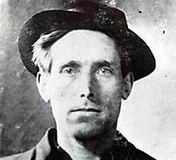
Joe Hill
Murderer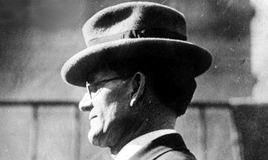 William Hale
Murderer · USA · 1921
Name: William Hale · Known as: the so-called "King of the Osage Hills" · Occupa…
24 victims
William Hale
Murderer · USA · 1921
Name: William Hale · Known as: the so-called "King of the Osage Hills" · Occupa…
24 victims
 John S. Williams
Murderer · USA · 1910
John S. Williams was convicted of murder and sentenced to life imprisonment on…
18 victims
John S. Williams
Murderer · USA · 1910
John S. Williams was convicted of murder and sentenced to life imprisonment on…
18 victims
 Edward Adams
Murderer · USA · 1920
Edward J. "Eddie" Adams was born in 1887 on a farm in Hutchinson, Kansas as W.J…
7 victims
Edward Adams
Murderer · USA · 1920
Edward J. "Eddie" Adams was born in 1887 on a farm in Hutchinson, Kansas as W.J…
7 victims
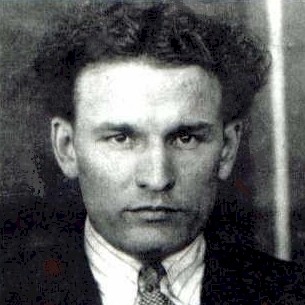 William Kenneth Wagner
Murderer · USA · 1924
William Kenneth (Kinnie) Wagner (born February 18, 1903 in Scott County, VA) wa…
6 victims
William Kenneth Wagner
Murderer · USA · 1924
William Kenneth (Kinnie) Wagner (born February 18, 1903 in Scott County, VA) wa…
6 victims
 Floyd Allen
Murderer · USA · 1912
Floyd Allen (July 5, 1856 – March 28, 1913) was an American landowner and patri…
5 victims
Floyd Allen
Murderer · USA · 1912
Floyd Allen (July 5, 1856 – March 28, 1913) was an American landowner and patri…
5 victims
 George Anderson Hopper
Murderer · USA · 1983
George Anderson Hopper was convicted of capital murder for the October 1983 str…
1 victim
George Anderson Hopper
Murderer · USA · 1983
George Anderson Hopper was convicted of capital murder for the October 1983 str…
1 victim
 Raymond Oscar Butler
Murderer · of Los Angeles · 1994
Raymond Oscar Butler was sentenced to death on July 29, 1996. The killings invo…
3 victims
Raymond Oscar Butler
Murderer · of Los Angeles · 1994
Raymond Oscar Butler was sentenced to death on July 29, 1996. The killings invo…
3 victims
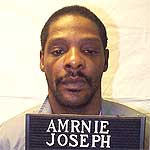 Joseph Amrine
Murderer ? · USA · 1985
Joseph Amrine was a death row inmate in Missouri. He was housed with the victim…
1 victim
Joseph Amrine
Murderer ? · USA · 1985
Joseph Amrine was a death row inmate in Missouri. He was housed with the victim…
1 victim
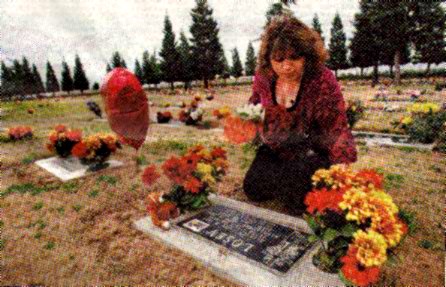 Vasily Petrovich Losev
Murderer · USA · 1999
Vasily Petrovich Losev, 45, was the father who killed his three sons and set th…
3 victims
Vasily Petrovich Losev
Murderer · USA · 1999
Vasily Petrovich Losev, 45, was the father who killed his three sons and set th…
3 victims
 Gerald Lee Mitchell
Homicide · USA · 1985
Gerald Lee Mitchell (offender, #838) was executed by lethal injection on Octobe…
2 victims
Gerald Lee Mitchell
Homicide · USA · 1985
Gerald Lee Mitchell (offender, #838) was executed by lethal injection on Octobe…
2 victims
- Gender
- male
- Country
- USA
- Location
- Salt Lake City, Utah , USA
- Date of birth
- October 7, 1879
- Age at first offence
- 35
- Characteristics
- anarchist, history of mental illness
- Victim profile
- John G. Morrison and his son Arling
- Method of murder
- Shooting ( .38 caliber automatic revolver)
- Date(s) of murder
- January 10, 1914
- Years active
- 1914
- Date of arrest
- 4 days after
- Status
-
Executed
Executed by firing squad in Utah on November 19, 1915
Overview
Joe Hill was a Swedish-American labor activist, songwriter, and member of the Industrial Workers of the World (IWW, also known as the Wobblies). He was executed for murder after a controversial trial.
He was known as Joe Hill, and was also known as Joseph Hillström and born as Joel Emmanuel Hägglund (October 7, 1879 – November 19, 1915).
Background
Hill was born in Gävle, a city in the province of Gästrikland, Sweden. He emigrated to the United States in 1902. He became a migrant laborer, moving from New York City to Cleveland, Ohio, and eventually to the west coast. He was in San Francisco, California, at the time of the 1906 earthquake.
Hill joined the Industrial Workers of the World (IWW) or Wobblies around 1910, when he was working on the docks in San Pedro, California. In late 1910 he wrote a letter to the IWW newspaper Industrial Worker, identifying himself as a member of the Portland, Oregon IWW local.
Hill rose in the IWW organization and traveled widely, organizing workers under the IWW banner, writing political songs and satirical poems, and making speeches. His songs frequently appropriated familiar melodies from songs of his time. He coined the phrase "pie in the sky", which appeared in his song "The Preacher and the Slave" (a parody of the hymn "In the Sweet Bye and Bye").
Other notable songs written by Hill included "The Tramp", "There is Power in the Union", "Rebel Girl", and "Casey Jones: Union Scab".
The offence
Early 1914 found Hill working as a laborer at the Silver King Mine in Park City, Utah, not far from Salt Lake City.
On January 10, 1914, John G. Morrison and his son Arling were killed in their Salt Lake City butcher store by two armed intruders masked in red bandannas. Arling had drawn a handgun from behind the counter and wounded one of the masked men before being killed.
After the killings, the police first thought it was a crime of revenge, for nothing had been stolen. The elder Morrison had been a police officer, possibly creating many enemies.
On the same evening, Hill appeared on the doorstep of a local doctor bearing a bullet wound. Hill said he had been shot in an argument over a woman, whom he refused to name. The doctor reported that Hill was armed with a pistol.
Investigation
The pistol purported to be in Hill’s possession at the doctor’s office was not found. A red bandanna was found in Hill’s room.
Considering Morrison's past as a police officer, several men he had arrested were initially considered suspects. Twelve people were arrested in the case before Hill was arrested and charged with the murder.
Arrest
Hill resolutely denied that he was involved in the robbery and killing of Morrison. He said that when he was shot, his hands were over his head, and the bullet hole in his coat—four inches below the bullet wound in his back—seemed to support this claim.
Hill did not testify at his trial. His lawyers pointed out that four other people were treated for bullet wounds in Salt Lake City that same night and that the lack of robbery and Hill’s unfamiliarity with Morrison left him with no motive.
A widely-circulated story included in the 1971 movie Joe Hill was that Hill was in bed with a married woman on the night of the murder. Hill refused to use this alibi, because in Utah in 1914 it would have ruined her reputation and her life.
Trial
The jury found Hill guilty of murder. The jury took just a few hours to find him guilty.
Hill would be tried in the courtroom of Judge Morris L. Ritchie, and the trial was set for June 17, 1914.
The prosecution produced a dozen eyewitnesses who said that the killer resembled Hill, including 13-year-old Merlin Morrison, the victims' son and brother. Merlin initially said, "that's not him at all" upon first seeing Hill, but later identified him as the murderer.
Legal representation and courtroom events
Hill rejected counsel at his arraignment appearance before Precinct Justice Harry S. Harper on January 27, 1914, rejecting counsel on the grounds that he couldn't afford it and desiring a Pro Se defense.
Hill obtained legal representation for the trial in a rather unusual way. Shortly after the preliminary hearing, E.D. McDougall visited Hill and explained that he was an attorney, a stranger in town, and interested in the case. He offered to handle Hills case free of charge. Hill accepted. Shortly thereafter, McDougall became partners in defense with F.B. Scott.
During the trial, Hill fired his attorneys. After debate in the judge’s mind as to whether Hill was serious, the judge ruled that Hill could represent himself, but that Scott and McDougall were to remain on staff as amicus curiae (friends of the court) to assist Hill in his defense.
At one point during the trial, Hill spoke to the court about discharging his counsel:
"The defendant (Abs. 171): May I say a few words, Your Honor?
The Court: You have the right to be heard in your behalf ordinarily.
The defendant: I have discovered that I have three prosecuting attorneys here. I intend to get rid of two of them, Mr. Scott and Mr. McDougal. Will you stay over there, you are fired too, see, and there is something I don't understand -
The Court: Mr. Hillstrom, you need not carry out in detail any difference you may have had with your counsel if there is any -
The defendant: I wish to announce that I have discharged my counsel, my two lawyers."
"His counsel then announced that if they were discharged that was there was to it, and the defendant said: "If the court will permit, I will act as my own attorney, and cross-examine all the witnesses, and I think I will make a good job of it, etc.
The Court: I think until the further order of court, counsel who have been representing the defendant may proceed, etc.
The defendant: Haven't I right to discharge my own counsel?
The Court: The court will make due inquiry into that, Mr. Hillstrom, and if the court is convinced that you really mean what you say, the court will accord you that right.
The defendant: Yes, sir; I mean what I say.
The Court: At present counsel may proceed, etc.
The defendant: Without my permission?
The Court: We will see that the orders of court are carried out.
The defendant: I am the defendant in this court.
The Court: The court directs you to sit down now.
The court will give you an opportunity if you want to cross-examine this witness, after counsel who have been representing you have completed."
"The case then proceed a little further, when the following occurred: "The Court: I wish to say to both counsel who have been representing the defendant that the court requests you to remain, for the present at least, and take such part in the trial as may seem advisable. The court will accord to the defendant the right to examine and cross-examine the witnesses himself. It is a constitutional right."
"And again: "The Court: I think the request of the defendant justifies the court in requesting counsel to remain at least until the further order of the court. They will at least have the status of amicii curiae if nothing more. The court requests you to use your best efforts for the protection of the defendant's interests, and the court will also accord to the defendant the right to cross-examine the witnesses or examine the witnesses or take any part in the trial that the defendant may under the constitution. (Abs. 176)."
Appeal to the Utah Supreme Court
Hill’s murder conviction was appealed to the Utah State Supreme Court with the backing of the Industrial Workers of the World.
Attorney O.N. Hilton argued that Hill's conviction was "utterly lacking in the essential, fundamental elements of proof." The three member court listened to arguments and handed down a unanimous verdict upholding the conviction.
A message attributed to Hill during the appeal stated:
"The main thing the state had on Hill was that he was an IWW and therefore sure to be guilty. Hill tried to keep the IWW out of [the trial]... but the press fastened it upon him".
Chief Justice Daniel Straup wrote that Hill’s unexplained wound was "a distinguishing mark," and that "the defendant may not avoid the natural and reasonable inferences of remaining silent."
In a letter to the court, Hill continued to deny that the state had a right to inquire into the origins of his wound, leaving little doubt that the judges would affirm the conviction. Hill wrote in an article for the socialist newspaper Appeal to Reason:
"Owing to the prominence of Mr Morrison, there had to be a 'goat' [scapegoat] and the undersigned being, as they thought, a friendless tramp, a Swede, and worst of all, an IWW, had no right to live anyway, and was therefore duly selected to be 'the goat'."
The narrative of the appeal included extensive statements about alleged errors in procedure and fairness, including arguments about identification, evidence, and expert testimony.
Quoted claims within the appeal material
The following quote was attributed to the Salt Lake Telegram publication by F.B. Scott:
"The foreman of the jury and several other jurymen tell me that we were conducting the defense so well that they were inclined to believe him innocent until the uncalled for outbreak…The jurymen say that had all the earmarks of guilt to their minds."
The appeal record included this quotation attributed to a witness at the preliminary hearing:
"Q. You want the court to understand you have an honest doubt as to the identity of this man and the one that was on Eighth Street, is that correct?
A. Yes. Did you so testify? A. Yes."
The appeal record also included the following quotation sequence about the defendant’s firearm, evidence, and witness questioning, including:
"Q. How does the nose of Mr. Hillstrom compare with the nose of the man you looked at there? A. Very much the same. Q. Have you had an opportunity of observing his neck and face since he has been in custody? A. Not until just now. Q. How do the marks, especially on the left hand side of his face and neck, that you have had an opportunity to observe, correspond with the marks on the man that you saw there at that time? A. Well, they look 'a great deal alike' to me as on the same man that I saw. Q. You simply say there was a scar, as I understood you to say, the man had scars on his neck? A. Yes, he had what I call a defection in his face."
A longer excerpt also included challenges to expert testimony and testimony about revolver powder smell, including:
"And these observations are especially applicable to the testimony of Thomas Higgs that he had "smelled the revolver and it smelled fresh, the fresh smell of powder" (Abs. 416). This is directly contradicted by the man who did have experience, Emerson John Miller (Abs. 487), who very truly said that no one was competent to tell when a revolver was fired."
Sentencing
Hill was executed by firing squad in Utah on November 19, 1915.
Timeline
- October 7, 1879 — Joe Hill (born Joel Emmanuel Hägglund) was born in Gävle, Sweden.
- 1902 — Hill emigrated to the United States.
- 1906 — Hill was in San Francisco, California, at the time of the earthquake.
- around 1910 — Hill joined the Industrial Workers of the World (IWW) while working on the docks in San Pedro, California.
- late 1910 — Hill wrote a letter to the IWW newspaper Industrial Worker identifying himself as a member of the Portland, Oregon IWW local.
- January 10, 1914 — John G.
- January 10, 1914 (6–9:00 p.m.) — Joseph Hillstrom (a.k.a. Joe Hill) left the Eselius home where he had been staying with friends.
- January 10, 1914 (9:30–10:00 p.m.) — Nellie Mahan heard shots and saw a man wearing a dark coat and a soft hat run from the store to the corner of 8th South.
- January 10, 1914 (10:00 p.m.) — John G. Morrison and sons Merlin and Arling were closing the Morrison grocery store; two men wearing red bandana handkerchiefs entered with pistols.
- January 10, 1914 (10:15 p.m.) — Policemen arrived and took Morrison to the police station hospital where he died without making a statement.
- January 10, 1914 (11:30 p.m.) — Hillstrom visited the home of Dr. Frank M. McHugh and said, "Doctor, I've been shot."
- January 11, 1914 (12:30–1:00 a.m.) — Dr. Bird drove Jill home at McHugh’s request; on the way Hill discarded his firearm and signaled with two shrill whistles.
- January 13, 1914 — Hill was recovering from his gunshot wound at the Eselius home.
- January 14, 1914 — Hill was in jail.
- January 15, 1914 — Hill stated that when Merlin was brought to confirm or disconfirm Hill’s identity, Merlin said, "No, that's not the man at all."
- January 20, 1914 — Hill was formally charged with Murder in the first-degree.
- January 27, 1914 — Hill entered a plea of Not Guilty at his arraignment appearance before Precinct Justice Harry S. Harper.
- January 28, 1914 — The preliminary hearing resulted in Justice Harper’s ruling that there was sufficient evidence against Hill to warrant a trial; the trial was set for June 17, 1914.
- Monday January 27, 1914 — Hill rejected counsel and desired a Pro Se defense.
- June 17, 1914 — The trial began; District Attorney Leatherwood indicated the state’s evidence was only circumstantial.
- June 18, 1914 — Merlin Morrison testified.
- June 19, 1914 — Herman Harms testified; Hill told the court he was firing his attorneys; the judge allowed self-representation with Scott and McDougall remaining as amicus curiae.
- 1917 — An envelope associated with Hill was seized by the United States Postal Service.
- May 1, 1916 — Ralph Chaplin said the envelopes were opened and their contents scattered to the winds.
- 1988 — Hills ashes (but not the envelope that contained them) were turned over to the IWW; an item about ashes was published in the weekly In These Times inviting readers to suggest what should be done.
- 1989 — A ceremony unveiled a monument to IWW coal miners in Lafayette, Colorado, where one small packet of ashes was scattered.
- November 19, 1915 — Hill was executed by firing squad in Utah.
- c. 1930 — A tribute poem about Hill, "I Dreamed I Saw Joe Hill Last Night," was written by Alfred Hayes.
- 1936 — Earl Robinson turned Hayes’s lyrics into a song.
- 1969 — Joan Baez performed "Joe Hill" at Woodstock.
- 2001 — The Swedish punk rock band Randy released an album containing the song "If We Unite".
- 2005 — Smithsonian Folkways released Don't Mourn — Organize!: Songs of Labor Songwriter Joe Hill.
Outcome
Hill was found guilty of murder by the jury and was executed by firing squad on November 19, 1915 in Utah. His last word was "Fire!"
Aftermath
After his death, Hill was memorialized by several folk songs.
Hill had written to Bill Haywood, an IWW leader, shortly prior to his execution:
"Goodbye Bill. I die like a true blue rebel. Don't waste any time in mourning. Organize... Could you arrange to have my body hauled to the state line to be buried? I don't want to be found dead in Utah."
Hill’s last will read:
My will is easy to decide,
For there is nothing to divide.
My kin don't need to fuss and moan, "Moss does not cling to a rolling stone."
My body? Oh, if I could choose I would to ashes it reduce,
And let the merry breezes blow, My dust to where some flowers grow.
Perhaps some fading flower then
Would come to life and bloom again.
This is my Last and final Will.
Good Luck to All of you, Joe Hill
His body was sent to Chicago where it was cremated. His ashes were purportedly sent to every IWW local. (“every state but Utah," according to the AFL-CIO biography, "as well as to supporters in every inhabited continent on the globe.”)
Members of the IWW in Chicago quickly laid claim to the contents of an envelope seized by the United States Postal Service in 1917 for its "subversive potential". After negotiations, the last of Hill’s ashes (but not the envelope that contained them) was turned over to the IWW in 1988.
The ashes were cast to the wind in the US, Canada, Sweden, Australia, and Nicaragua. The ashes sent to Sweden were only partly cast to the wind. The main part was interred in the wall of a union office in Landskrona, with a plaque commemorating Hill. That room became the reading room of the local city library.
One small packet of ashes was scattered at a 1989 ceremony which unveiled a monument to IWW coal miners buried in Lafayette, Colorado. Another notable event described was the Columbine Mine Massacre in 1927, in which six unarmed strikers were machine-gunned by Colorado state police. Another statement in the material was that until 1989 the graves of five of these men were unmarked, and that Carlos Cortez scattered Joe Hill’s ashes on the graves at the commemoration.
Other details
International attention and clemency
The case turned into a major media event and drew international attention. President Woodrow Wilson, Helen Keller, and people in Sweden became involved in a bid for clemency. Critics charged that the trial and conviction were unfair.
Family and contacts mentioned
Hill wrote to Bill Haywood (IWW leader) shortly prior to his execution.
The material named Orrin N. Hilton as Hill’s lawyer during the appeal.
Memorial and cultural references
Alfred Hayes wrote the tribute poem; Earl Robinson created a song version in 1936. Paul Robeson and Pete Seeger often performed the song and are associated with it, along with Irish folk group The Dubliners. Joan Baez recorded it multiple times, including a live version on her 2005 album Bowery Songs.
The Swedish socialist leader Ture Nerman wrote a biography of Joe Hill. Ralph Chaplin wrote a tribute poem/song called "Joe Hill" and referred to him in "Red November, Black November."
Phil Ochs wrote and recorded a song titled "Joe Hill" using a traditional melody found in "John Hardy" and included the lines: "It's the life of a rebel that he chose to live; It's the death of a rebel that he died". The song concluded with Hill's words: "This is my last and final will; Good luck to all of you, Joe Hill, Good luck to all of you."
Other named works and references included:
- Josh Joplin recorded "Joseph Hillstrom 1879-1915" as a tribute.
- Frank Tovey sang about Hill in his song "Joe Hill" (1989 album Tyranny and the Hired Hand).
- Bob Dylan’s songwriting inspiration was attributed to Hill’s story.
- Chumbawamba’s "By and By" appeared on the 2005 album A Singsong and a Scrap.
- Wallace Stegner published a fictional biography called Joe Hill in 1950.
- The Kings named their second child, Joseph Hillstrom King, after Joe Hill.
- Gibbs M. Smith wrote a biography "Joe Hill", later turned into the 1971 movie Joe Hill directed by Bo Widerberg.
- A chapter of John Dos Passos’s novel 1919 included a stylized biography of Joe Hill.
- Robert Hunter wrote an opening verse for "Down the Road" for Mickey Hart’s Mystery Box.
- The Nightwatchman (Tom Morello) referred to Joe Hill in "The Union Song."
- Joe Hill was invoked in Steve Earle’s "Christmas in Washington" and referred to in Justin Townes Earle’s "They killed John Henry."
- The Swedish punk rock band Randy referred to Joe Hill and the IWW in "If We Unite."
- Kev Carmody’s piece "Comrade Jesus Christ" included the line "he'd fight with Joe Hill".
- The song "Cannot Buy My Soul" referred to Joe Hill.
- Wayne Horvitz created a musical tribute for Joe Hill in 2008: "Joe Hill: 16 Actions for Orchestra, Voice and Soloist", premiered at Meany Hall in Seattle.
- "Calling Joe Hill" by Ray Hearne was frequently performed by Roy Bailey.
- A "Raise Your Banners" festival of political song was held in Sheffield inspired by the 90th anniversary of Hill’s death.
- Pennsylvania based hardcore band Wisdom In Chains ended their album Everything You Know with a young voice reading "Joe Hill's Last Will".
- Otis Gibbs made the "Joe Hill's Ashes " album in 2010.
- Hill’s last will was the lyrics to a song titled "Good Evening Mr. Q" appearing in 2002 on Memoirs by the Norwegian group The 3rd and the Mortal.
- Folksinger Jason Roseboom recorded the song "Joe Hill" for his album "Talkin Gotcha Blues".
Spotted an error, or have more information about this case?