John Billington
Murderer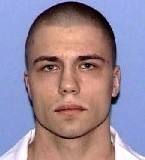 Clinton Lee Young
Murderer · USA
Clinton Lee Young (born July 19, 1983) was convicted of murdering two men in No…
2001 victims
Clinton Lee Young
Murderer · USA
Clinton Lee Young (born July 19, 1983) was convicted of murdering two men in No…
2001 victims
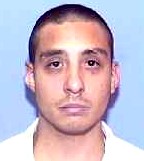 Ivan Abner Cantu
Murderer · USA
Name: Ivan Abner Cantu · TDCJ number: 999399 · Date of birth: 06/14/1973 · Age…
2000 victims
Ivan Abner Cantu
Murderer · USA
Name: Ivan Abner Cantu · TDCJ number: 999399 · Date of birth: 06/14/1973 · Age…
2000 victims
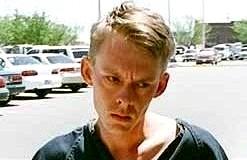 Michael John Yowell
Murderer · USA
Name: Michael John Yowell · TDCJ number: 999334 · Date of birth: 01/25/1970 · P…
1998 victims
Michael John Yowell
Murderer · USA
Name: Michael John Yowell · TDCJ number: 999334 · Date of birth: 01/25/1970 · P…
1998 victims
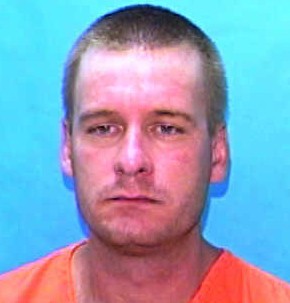 Michael Duane Zack
Murderer · USA
Michael Duane Zack was convicted and sentenced to death for the 06/13/96 murder…
1996 victims
Michael Duane Zack
Murderer · USA
Michael Duane Zack was convicted and sentenced to death for the 06/13/96 murder…
1996 victims
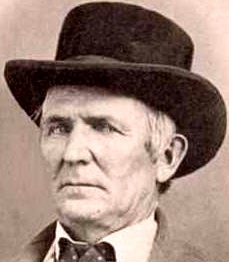 John Doyle Lee
Murderer · USA · 1857
Name: John Doyle Lee Lifespan: September 12, 1812 - March 23, 1877 Legal outcom…
120 victims
John Doyle Lee
Murderer · USA · 1857
Name: John Doyle Lee Lifespan: September 12, 1812 - March 23, 1877 Legal outcom…
120 victims
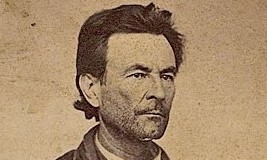 Champ Ferguson
Murderer · USA · 1861
Champ Ferguson was born November 29, 1821 in Clinton County, Kentucky, near the…
100 victims
Champ Ferguson
Murderer · USA · 1861
Champ Ferguson was born November 29, 1821 in Clinton County, Kentucky, near the…
100 victims
 Todd Hall
Homicide · USA · 1996
Todd Hall was described by neighbors as "mentally slow" and was said to have su…
9 victims
Todd Hall
Homicide · USA · 1996
Todd Hall was described by neighbors as "mentally slow" and was said to have su…
9 victims
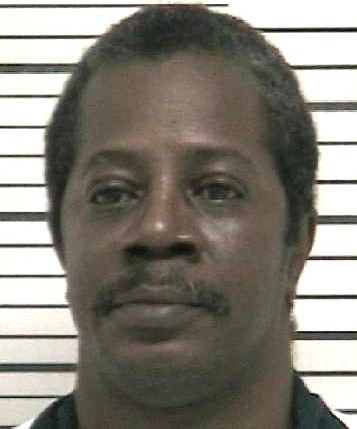 Johnny Lee Gates
Murderer · USA · 1976
Defendant: Johnny Lee Gates · Age: 41 · Court: Muscogee Superior Court · Judge:…
2 victims
Johnny Lee Gates
Murderer · USA · 1976
Defendant: Johnny Lee Gates · Age: 41 · Court: Muscogee Superior Court · Judge:…
2 victims
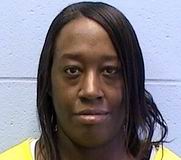 LaTosha Cunningham
Murderer · USA · 2011
LaTosha Cunningham was an Illinois woman from Belleville who was convicted of t…
1 victim
LaTosha Cunningham
Murderer · USA · 2011
LaTosha Cunningham was an Illinois woman from Belleville who was convicted of t…
1 victim
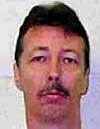 Michael Ronning
Murderer · USA · 1986
Michael Ronning was an inmate in Arkansas serving life in prison without parole…
7 victims
Michael Ronning
Murderer · USA · 1986
Michael Ronning was an inmate in Arkansas serving life in prison without parole…
7 victims
 Michelle Reynolds
Murderer · USA · 2004
Michelle Reynolds — defendant; pleaded guilty to voluntary manslaughter and bur…
1 victim
Michelle Reynolds
Murderer · USA · 2004
Michelle Reynolds — defendant; pleaded guilty to voluntary manslaughter and bur…
1 victim
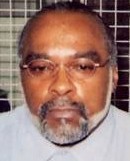 Stanley Williams
Murderer · USA · 1979
Stanley Williams was convicted and sentenced to death for murders committed dur…
4 victims
Stanley Williams
Murderer · USA · 1979
Stanley Williams was convicted and sentenced to death for murders committed dur…
4 victims
- Gender
- male
- Country
- USA
- Location
- Plymouth, Massachusetts, USA
- Date of birth
- 1580
- Characteristics
- rape
- Victim profile
- F ellow colonist John Newcomen
- Method of murder
- Shooting
- Date(s) of murder
- September 1630
- Years active
- 1630
- Date of arrest
- —
- Status
-
Executed
Executed by hanging on September 30, 1630
Overview
John Billington (c. 1580 – September 30, 1630) was executed in Plymouth, Massachusetts, after being convicted of murder. He was described as the first Englishman to be convicted of murder in what would become the United States and the first to be hanged for any crime in New England.
Timeline
- 1620 — John Billington arrived in the Plymouth Colony on the Mayflower with his wife and two sons.
- November 11, 1620 — The Mayflower Compact was adopted.
- December 5, 1620 — Francis Billington fired off “a squib near a powder keg” in the ship’s crowded cabin.
- 1621 — John Billington Jr. became lost in the woods and later turned up on Cape Cod.
- March 1621 — John Billington was convicted of contempt for insulting Captain Myles Standish and was ordered to have his heels tied to his neck; he apologized and was spared the penalty.
- 1622 — There was no basis other than suspicion to associate John Billington with an unexplained arson that destroyed four houses.
- 1624 — John Billington was at the center of controversy connected to the banishment of John Oldham and John Lyford; Lyford claimed that “Billington and some others had informed him of many things, which they now denied.”
- June 9, 1625 — Governor William Bradford wrote a letter to Deacon Robert Cushman in which he said Billington “still rails against you and threatens to arrest you, I know not wherefore. He is a knave, and so will live and die.”
- 1625 — Reverend John Lyford was banished from Plymouth Colony in 1625.
- September 1630 — After a heated argument over hunting rights, John Billington fatally shot fellow colonist John Newcomen in the shoulder with a blunderbuss.
- September 30, 1630 — John Billington was executed by hanging in Plymouth, Massachusetts.
- 1990 — An article in the Los Angeles Times claimed President James Garfield was a descendant of Billington.
Background
John Billington (elder) came to the Plymouth Colony on the Mayflower voyage in 1620 with his wife, Elinor, and his young sons John Jr. and Francis. Both John Sr. and Elinor were born around 1580, perhaps near Spaulding, Lincolnshire.
John Billington was not among passengers who professed separatist Puritanism (“Saints”); he belonged to the majority group of at least nominally Anglican passengers, known to colonial history as the “Strangers.” He was described as being recruited by the promoters of the Mayflower venture while living in London, with “uncertain occupation.”
He was described as one of the signatories of the Mayflower Compact and thereby forswore the aim of the mutineers to break free of the Puritan leadership.
John Billington was described as “unquestionably one of those mixed up in the mutiny on the Mayflower,” which was resolved on November 11, 1620 by adoption of the Mayflower Compact under which the settlers bound themselves to submit to a civil body politic to be governed by just and equal laws.
During the first winter at Plymouth, an epidemic (perhaps of typhus) halved the settlers’ population to about 50, leaving only the Billington family intact. Francis Billington found a small lake behind the town and it was given the name Billington Sea.
The offence
In September 1630, after a heated argument over hunting rights, John Billington fatally shot fellow colonist John Newcomen in the shoulder with a blunderbuss.
Governor William Bradford later described the charge against Billington as that he waylaid a young man, John Newcomin, about a former quarrel, and shot him with a gun, whereof he died. The narrative also stated that Billington fatally shot John Newcomen in the back with a blunderbuss.
The narrative included an oral-history account that the murder involved a former quarrel and may have involved either a woman or a tavern brawl, with Billington and Newcomin departing town separately before Newcomin’s dead body was soon discovered. It also stated that there were disputes about tracing the murder weapon and about the evidentiary basis for the conviction.
Investigation and trial
John Billington was arraigned and found guilty of willful murder by both grand and petty jury by plain and notorious evidence.
Governor William Bradford described that the trial took place in Plymouth and that the colonists consulted Mr. Winthrop and other leading men at the Bay of Massachusetts recently arrived. Bradford wrote that they concurred that Billington ought to die and that the land be purged of blood.
Bradford described that Billington was executed and that “This, the first execution among them was a great sadness to them. They took all possible pains in the trial, and consulted Mr. Winthrop, and the other leading men at the Bay of Massachusetts recently arrived, who concurred with them that he ought to die, and the land be purged of blood.”
Bradford also described that Billington and some relatives had often been punished for misconduct before and that he was “one of the profanest families among them.”
In the narrative, Glenn Billington, a Cleveland lawyer, recalled oral traditions of the family that challenged both jurisdictional and evidentiary bases of Billington’s condemnation.
The narrative described that there was a substantial legal question as to whether the local authorities governing the Plymouth colony possessed criminal jurisdiction sufficient to impose capital punishment, and that Bradford was able to persuade John Winthrop, newly-appointed Governor of the Massachusetts Bay Colony, to concur in the death sentence.
The narrative also stated that researchers for the Society of Mayflower Descendants questioned the accuracy of Bradford’s commentary on the trial, observing that the governor “obviously disliked and criticized the entire family from the beginning.” It stated that the Billingtons “were not in sympathy with the aims and tenets of the Plymouth church,” and that John Billington “stoutly supported individual independence and freedom of speech, raising the voice of opposition when he disagreed with the rule of government.” It further stated that Billington and his descendants “surely contributed to that integral part of the American character.”
Arrest
The narrative described that in September 1630 Billington was subject to trial and execution following the fatal shooting after a heated argument over hunting rights.
Sentencing and outcome
John Billington was convicted of murder and was executed by hanging at Plymouth, Massachusetts.
Governor William Bradford’s account described the execution as following jury findings and consultations, and stated that Billington was executed on the basis that “he ought to die, and the land be purged of blood.”
In addition to the murder charge, the narrative included earlier punishments for misconduct:
- In March 1621, Billington was condemned to be tied up by his neck and heels for making “opprobrious speeches” against Captain Myles Standish when called to perform military duty; he apologized profusely and was spared from the penalty.
- In another account, he was described as being convicted of contempt for insulting Captain Myles Standish, with punishment to have his heels tied to his neck; he apologized and was spared.
Appeals
No appeals were described.
Aftermath
A body of related family and historical claims followed Billington’s execution.
The inland pond known as Billington Sea was named after his son, Francis.
In 1990, an article in the Los Angeles Times claimed President James Garfield was a descendant of Billington.
The “brawling, turbulent” Billingtons were described as featuring in Stephen Vincent Benet’s posthumous narrative poem Western Star (1943), in which John is apostrophized in sorrow as “a man who came with the first and should have thriven.”
Other details
John Billington’s name appeared in the Mayflower Compact as a signatory.
The narrative described that John Billington had made enemies with many aboard the ship. He was known as a “foul mouthed miscreant” and “knave.”
The narrative stated that John Billington was not a member of the separatist Brownist congregation that dominated the colony’s life. It also stated that he fled England to escape creditors.
The narrative described that his sons were also seen as troublemakers.
The narrative described that Francis Billington fired off “a squib near a powder keg” on December 5, 1620, in the ship’s crowded cabin.
The narrative included statements regarding other controversies:
- It stated there was no basis other than suspicion to associate Billington with an unexplained arson that destroyed four houses in 1622.
- It stated that John Billington became a follower of Reverend John Lyford, who was banished from Plymouth Colony in 1625 for being a danger to the community.
- It stated that Billington was nearly convicted as Lyford’s accomplice, but was permitted to remain in Plymouth Colony.
The narrative quoted Lyford: “Billington and some others had informed him of many things, which they now denied.”
The narrative included a letter from Governor William Bradford to Deacon Robert Cushman on June 9, 1625: “Billington still rails against you and threatens to arrest you, I know not wherefore.
The narrative also said Billington’s insubordination was described as “the first offence since (the Pilgrims') arrival.”
The narrative included a statement that John Billington might have quarrelled with Newcomin over a woman or in a tavern brawl.
The narrative also described criticism of Bradford’s commentary: it stated that the governor “obviously disliked and criticized the entire family from the beginning.”
The narrative stated that the Billingtons “were not in sympathy with the aims and tenets of the Plymouth church.”
The narrative described that Billington “stoutly supported individual independence and freedom of speech, raising the voice of opposition when he disagreed with the rule of government”; it further stated that he and his descendants “surely contributed to that integral part of the American character.”
The narrative stated: “This year John Billington the elder, one of those who came over first, was arraigned, and both by grand and petty jury found guilty of willful murder by plain and notorious evidence, and was accordingly executed.” It continued: “This, the first execution among them was a great sadness to them. He and some of his relatives had often been punished for misconduct before, being one of the profanest families among them. They came from London, and I know not by what influence they were shuffled into the first body of settlers. The charge against him was that he waylaid a young man, one John Newcomin, about a former quarrel, and shot him with a gun, whereof he died.”
Spotted an error, or have more information about this case?