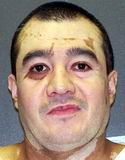
Edgar Arias Tamayo
Murderer Brian Kevin Rosenfeld
Murderer · USA · 1985
Brian Kevin Rosenfeld Brian Kevin Rosenfeld was sentenced to three concurrent l…
23 victims
Brian Kevin Rosenfeld
Murderer · USA · 1985
Brian Kevin Rosenfeld Brian Kevin Rosenfeld was sentenced to three concurrent l…
23 victims
 Russell Ellwood
Murderer · USA · 1991
Russell Ellwood was a former taxi driver. Authorities suspected him of killing…
20 victims
Russell Ellwood
Murderer · USA · 1991
Russell Ellwood was a former taxi driver. Authorities suspected him of killing…
20 victims
 Robert Martines Perez
Murderer · USA · 1994
Name: Robert Martines Perez · Other name used in proceedings: Robert Martinez P…
15 victims
Robert Martines Perez
Murderer · USA · 1994
Name: Robert Martines Perez · Other name used in proceedings: Robert Martinez P…
15 victims
 Billy Frank Vickers
Murderer · USA · 1993
Billy Frank Vickers Vickers was executed by lethal injection in Texas on Januar…
14 victims
Billy Frank Vickers
Murderer · USA · 1993
Billy Frank Vickers Vickers was executed by lethal injection in Texas on Januar…
14 victims
 John B. Taylor
Mass murderer · USA · 2000
John B. Taylor was 36 years old at the time of the Wendy's Massacre. The killin…
5 victims
John B. Taylor
Mass murderer · USA · 2000
John B. Taylor was 36 years old at the time of the Wendy's Massacre. The killin…
5 victims
 Carl Weiss
Murderer · USA · 1935
Carl Weiss died at the scene after being shot in the Capitol building in Baton…
1 victim
Carl Weiss
Murderer · USA · 1935
Carl Weiss died at the scene after being shot in the Capitol building in Baton…
1 victim
 Doyle Kelley
Murderer · USA · 1990
Doyle Kelley was the defendant and appellant. · September 25, 1990 — Doyle Kell…
2 victims
Doyle Kelley
Murderer · USA · 1990
Doyle Kelley was the defendant and appellant. · September 25, 1990 — Doyle Kell…
2 victims
 Delbert Teague
Murderer · USA · 1985
Delbert Teague was executed by lethal injection in Texas on September 9, 1998.…
1 victim
Delbert Teague
Murderer · USA · 1985
Delbert Teague was executed by lethal injection in Texas on September 9, 1998.…
1 victim
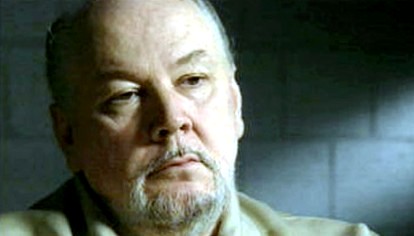 Richard Kuklinski
Serial killer · USA · 1949
Richard “Iceman” Kuklinski was sentenced to life in prison in 1988. He died in…
100 victims
Richard Kuklinski
Serial killer · USA · 1949
Richard “Iceman” Kuklinski was sentenced to life in prison in 1988. He died in…
100 victims
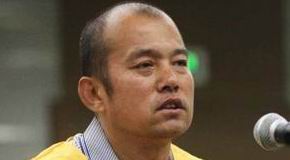 Wang Shujin
Serial killer · China · 1994
Wang Shujin was a death row prisoner who was convicted of raping and killing at…
4 victims
Wang Shujin
Serial killer · China · 1994
Wang Shujin was a death row prisoner who was convicted of raping and killing at…
4 victims
- Gender
- male
- Country
- USA
- Location
- Harris County, Texas, USA
- Date of birth
- J uly 22, 1967
- Age at first offence
- 27
- Characteristics
- escape attempt, rape, convicted rapist
- Victim profile
- Guy P. Gaddis, 24 (Houston police officer)
- Method of murder
- Shooting
- Date(s) of murder
- January 31, 1994
- Years active
- 1994
- Date of arrest
- Same day
- Status
-
Executed
Sentenced to death on November 18, 1994; executed by lethal injection on January 22, 2013
Case identification
Edgar Arias Tamayo
STATUS / disposition
Tamayo was sentenced to death on November 18, 1994. He was executed by lethal injection on January 22, 2013.
The offence
Tamayo and another man were arrested in the parking lot of a bar in Harris County, Texas on January 31, 1994, for robbing another patron. After the men were searched and handcuffed, Officer Guy Gaddis of the Houston Police Department placed them in a patrol car, with Tamayo seated behind Officer Gaddis.
When Officer Gaddis stopped to make a phone call, Tamayo revealed to the other passenger that he had a gun in his waistband. Tamayo managed to remove the gun from his waistband despite the fact that he was handcuffed. When Officer Gaddis returned to the vehicle and drove away, Tamayo shot Officer Gaddis multiple times.
The patrol car crashed into a residence, and Tamayo escaped through a broken window. The police were called to the scene and captured Tamayo as he ran down the street near the crash, still handcuffed. Officer Gaddis was taken to the hospital immediately, but he was pronounced dead upon arrival.
Tamayo gave two written statements admitting that he had the gun in the police car, that he shot Gaddis, and that he knew Gaddis was a police officer. At trial, the evidence indicated that Tamayo, rather than the other passenger, was the shooter. The State also presented evidence that Tamayo had purchased the gun several days before the murder.
Background and related dispute about consular rights and mental impairment
Tamayo’s case gained international attention because authorities failed to tell him that he could contact his nation’s consulate under provisions of a United Nations treaty. As his lawyers later argued, if Tamayo had talked with Mexican officials in Houston, efforts to locate witnesses in Mexico could have begun in a timely manner, and such testimony might have established mitigating circumstances during his trial’s punishment phase and saved his life.
The Mexican Consulate was apprised of Tamayo’s case about 10 days before his trial. Mexican and U.S. officials, including Secretary of State John Kerry, repeatedly called for a hearing. Mexican officials and Tamayo’s attorneys contended the State refused to give Tamayo a court hearing to determine how his lost chance to contact Mexican officials affected his trial, his lawyers said. The Texas attorney general’s office said it offered Tamayo a court review, but the killer rejected the offer. An international court ruled in 2004 that the cases of Tamayo and other prisoners whose treaty rights were violated should be granted hearings.
Another line of appeal addressed whether Tamayo was mentally impaired and ineligible for the death penalty. Tamayo’s lawyers went to the U.S. Supreme Court after the 5th U.S. Circuit Court of Appeals said an appeal renewing an earlier contention that Tamayo was mentally impaired and ineligible for execution was filed too late.
Investigation and arrest
Events leading to Gaddis’ death began early on the morning of Jan. 21, 1994, when a man flagged down the officer’s car to report that he had been robbed by two men in the parking lot of the Topaz Club in southwest Houston. Gaddis found Tamayo and the second man at the scene. The men repeatedly were subjected to pat-down searches, but police overlooked a pistol hidden in Tamayo’s waistband. Both were handcuffed and placed in the squad car's back seat.
After extricating the pistol, Tamayo told Gaddis he didn't want to go to jail. Then he opened fire. Two slugs shattered the policeman’s skull, a third lodged in his neck. Tamayo escaped by breaking a squad car window but was apprehended a short distance away. He was captured while running down the street near the crash, still handcuffed.
Tamayo later told police: “It's the police officer's fault for not having searched me good.”
During the execution-day reporting, details of Tamayo’s possession at arrest were described: he was captured a few blocks away, still in handcuffs, carrying the robbery victim’s watch and wearing the victim’s necklace.
Written admissions
Criminal history and trial punishment evidence
During the punishment phase of Tamayo’s trial, the State offered evidence of Tamayo’s criminal history and convictions, which included threatening bodily harm to several people. The State also offered evidence that Tamayo fired a gun in a mobile home park in the direction of other mobile homes and, on another occasion, was spotted chasing a man while in possession of a gun.
As mitigation evidence, Tamayo’s counsel offered the testimony of three bailiffs who escorted Tamayo to and from the courtroom; they stated that he was respectful and had never been violent. Two former co-workers testified that Tamayo worked with them and that they had no trouble with him. Tamayo’s parents testified that Tamayo had not been in trouble as a child and that he never wanted for food or shelter. Both parents indicated that they were sorry for the pain their son caused Gaddis’s family and pleaded with the jury to spare Tamayo’s life. In rebuttal, the State called a fourth bailiff who testified that Tamayo was aggressive and uncooperative.
Procedural history and appeals
On Sept. 27, 1994, a Harris County grand jury indicted Tamayo.
On Oct. 27, 1994, after a trial in the 209th District Court of Harris County, jurors found Tamayo guilty of capital murder.
On Nov. 1, 1994, after a punishment hearing, the court sentenced Tamayo to death.
On Dec. 11, 1996, the Court of Criminal Appeals affirmed Tamayo’s conviction and sentence.
On Feb. 23, 1998, Tamayo filed first state application for habeas corpus relief.
On June 11, 2003, the Court of Criminal Appeals denied Tamayo’s first state application for habeas corpus relief.
On June 17, 2003, Tamayo filed his first subsequent state writ application.
On Sept. 10, 2003, the Court of Criminal Appeals dismissed Tamayo’s first subsequent writ application.
On Sept. 11, 2003, Tamayo filed his petition for federal habeas corpus relief.
On Mar. 21, 2005, Tamayo filed his second subsequent state writ application.
On July 2, 2008, the Court of Criminal Appeals dismissed Tamayo’s second subsequent writ application.
On Mar. 8, 2010, Tamayo filed his third subsequent state writ application.
On June 9, 2010, the Court of Criminal Appeals dismissed Tamayo’s third subsequent writ application.
On Mar. 25, 2011, the federal district court for the Southern District of Texas denied habeas corpus relief.
On April 4, 2011, Tamayo filed his notice of appeal.
On July 20, 2011, Tamayo sought permission to appeal by filing his application for certificate of appealability in the Fifth Circuit.
On Dec. 21, 2011, the Fifth Circuit denied Tamayo’s application for a certificate of appealability.
On Jan. 17, 2012, Tamayo petitioned for rehearing.
On Feb. 15, 2012, Tamayo’s petition for rehearing was denied.
On May 14, 2012, Tamayo sought certiorari review with the U.S. Supreme Court.
On Nov. 13, 2012, the U.S. Supreme Court denied certiorari review.
Execution and aftermath
On Jan. 22, 2014, it was stated that pursuant to a court order from the 209th District Court of Harris County, Tamayo was scheduled for execution after 6 p.m. on Jan. 22, 2014.
The execution described took place in the state’s Huntsville death house. Tamayo was the first Texas killer to be executed that year and the first of four Harris County murderers set to die in the next four months, according to reporting. He was described as 46 at the time. The execution was delayed three hours as the U.S. Supreme Court considered whether to take up his final appeals based on mental retardation and the violation of his United Nations treaty rights to contact his consulate. The lethal injection was administered at 9:15 p.m., and Tamayo was declared dead 17 minutes later.
Tamayo made no final statement. Earlier Wednesday, he told prison officials: “ready to go.” He said: “Twenty years is too long.”
After the execution, members of the Gaddis family addressed the media. Gayle Gaddis, walking with apparent difficulty, approached the microphone and said: “A little bit of my shredded heart is feeling better.”
Officer Gaddis’s brother, Gary Gaddis, offered condolences to the Tamayo family, but said those gathered “should remember the real victim.”
Outside the death house, Tamayo’s supporters held aloft a framed picture of Jesus and prayed in Spanish. Their placards read: “Honor Dr. King Stop Executions.” Another placard read: “Father, Son, Brother. Edgar is Loved By Many.”
On the prison’s other end, about 50 policemen talked quietly, awaiting the execution hour.
The Mexican government expressed support for the killer’s family and decried the execution. The Mexican government said in a statement that it “strongly opposed” the execution and said failure to review Tamayo’s case and reconsider his sentence would be “a clear violation by the United States of its international obligations.”
Ray Hunt, president of the Houston Police Officers' Union, said: “Not one person is claiming the suspect didn't kill Guy Gaddis. He had the same rights as you and I would have. This has been looked at, heard, examined and it's time for the verdict of the jury to be carried out.”
The Texas Board of Pardons and Paroles rejected Tamayo’s request for clemency. Lucy Nashed, a Perry spokeswoman, said: “It doesn't matter where you're from. If you commit a despicable crime like this in Texas, you are subject to our state laws, including a fair trial by jury and the
Spotted an error, or have more information about this case?