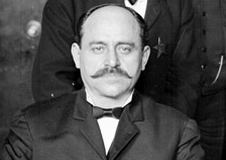
Johann Otto Hoch
Serial killer John Frank Hickey
Serial killer · USA · 1883
John Frank Hickey, “The Postcard Killer,” was one of the first known and captur…
3 victims
John Frank Hickey
Serial killer · USA · 1883
John Frank Hickey, “The Postcard Killer,” was one of the first known and captur…
3 victims
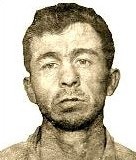 Donald Henry Gaskins
Serial killer · USA · 1969
Donald Henry Gaskins, also known as Donald “Pee Wee” Gaskins, was a serial kill…
200 victims
Donald Henry Gaskins
Serial killer · USA · 1969
Donald Henry Gaskins, also known as Donald “Pee Wee” Gaskins, was a serial kill…
200 victims
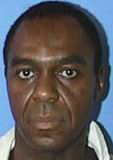 Carl Eugene Watts
Serial killer · USA · 1974
Carl Eugene Watts (born November 7, 1953; died September 21, 2007), also known…
100 victims
Carl Eugene Watts
Serial killer · USA · 1974
Carl Eugene Watts (born November 7, 1953; died September 21, 2007), also known…
100 victims
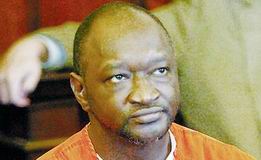 Bennie Adams
Murderer · USA · 1985
Bennie Adams was convicted and sentenced to death in Mahoning County Common Ple…
1 victim
Bennie Adams
Murderer · USA · 1985
Bennie Adams was convicted and sentenced to death in Mahoning County Common Ple…
1 victim
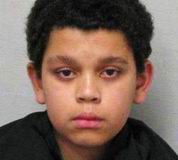 Cristian Fernandez
Homicide · USA · 2011
Cristian Fernandez was a juvenile when Jacksonville authorities charged him in…
1 victim
Cristian Fernandez
Homicide · USA · 2011
Cristian Fernandez was a juvenile when Jacksonville authorities charged him in…
1 victim
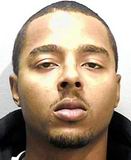 Lovelle Mixon
Murderer · USA · 2009
Lovelle Mixon was a convicted felon who was wanted on a no-bail warrant for a p…
4 victims
Lovelle Mixon
Murderer · USA · 2009
Lovelle Mixon was a convicted felon who was wanted on a no-bail warrant for a p…
4 victims
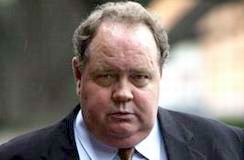 Bruce Burrell
Murderer · Australia · 1995
Bruce Allan Burrell was an Australian convicted double murderer who was sentenc…
2 victims
Bruce Burrell
Murderer · Australia · 1995
Bruce Allan Burrell was an Australian convicted double murderer who was sentenc…
2 victims
 Miles Evans
Murderer · United Kingdom · 1997
Miles Evans was the stepfather of Zoe Evans. · Zoe Evans was a nine-year-old sc…
1 victim
Miles Evans
Murderer · United Kingdom · 1997
Miles Evans was the stepfather of Zoe Evans. · Zoe Evans was a nine-year-old sc…
1 victim
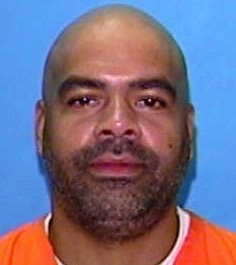 James Guzman
Murderer · USA · 1982
James Guzman was born on 04/27/64. The case was in the Seventh Judicial Circuit…
2 victims
James Guzman
Murderer · USA · 1982
James Guzman was born on 04/27/64. The case was in the Seventh Judicial Circuit…
2 victims
- Gender
- male
- Country
- USA
- Location
- Chicago, Illinois, USA
- Date of birth
- 1855
- Age at first offence
- 35
- Characteristics
- bluebeard, poisoner
- Victim profile
- Women
- Method of murder
- Poisoning (arsenic)
- Date(s) of murder
- 1890 - 1905
- Years active
- 1890–1905
- Date of arrest
- January 30, 1905
- Status
-
Executed
Sentenced to death on June 23, 1905; executed by hanging on February 23, 1906
Case record
Johann Otto Hoch (1855 - 1906) was the most famous and last-used alias of a German-born murderer and bigamist, John Schmidt.
Identity and aliases
Hoch was born John Schmidt in 1855, at Horweiler, Germany, and immigrated to the United States as a young man in the 1890s, dropping his surname in favor of assorted pseudonyms. He frequently took the name of his most recent victim.
Hoch used numerous aliases over the course of his activities, including “Jacob Huff,” “Henry Bartels,” “Henry Bartels,” “Henry F. Hartman,” “Dr. James,” “C. A. Meyer,” “H. Frick,” “Martin Dotz,” “C. A. Calford,” “Albert Buschberg,” “Count Otto van Kern,” “Dr. G.L. Hart,” “Leo Prager,” “Joseph Hoch,” “John Schmidt,” “John Joseph Adolf Schmidt,” “Jacob Erdorf,” “Schmitt,” “Jacob Duss,” “Dewitt C. Cuduey,” “John C. O. Schulze,” “Heinrich Valtz,” “Martiz Dotz,” “Adolf Hoch,” “Martin Dose,” “Jacob Huff,” “Jacob Adolph Hoch,” “Doesing,” and “Harry Bartells.”
Background
Hoch was described as marrying a string of women and taking the name of his most recent victim. He was said to have swindled the women of their money and then either left them or killed them with arsenic.
He was credited with a broad range of possible murders, but police were said to have been certain of 15, while the case ultimately proceeded to trial for a single homicide.
Hoch’s first and only legal wife was Christine Ramb, who bore him three children before he deserted her in 1887.
The offence
Hoch was charged with the murder of his wife Marie Walcker.
Prosecutors charged Hoch with murdering Marie Walcker, a Chicago widow who sold her candy store for $75. She had given Hoch her life savings of $350.
Medical examiners found poison in Marie Walcker’s system.
Investigation
Chicago police Inspector George Shippy suspected Hoch of bigamy, and murder was added to the list upon receipt of a letter from the Rev. Hermann Haas in West Virginia.
Shippy began investigating Hoch’s background and turned up reports of dozens of missing or deserted women from San Francisco to New York City, but solid evidence remained elusive.
In Wheeling, the body of Caroline Hoch was exhumed in a search for arsenic traces, but surgeons found her body gutted with all her vital organs missing.
After Shippy received a letter, the decision was made to exhume the body of Mrs. Caroline Hoch for autopsy, and her grave was opened on November 14, 1898. The coffin was hoisted out, its lid pried off, and it was discovered that the widow’s mid-section contained a gaping hole with vital organs removed.
A German inquiry returned a letter about a man as described in a note to the mayor of Hoexter, Westphalia. The reply stated that the police of Hoexter, Brackel, and Driburg had no success in finding a man as described, while the police of Bingen-on-the-Rhine were positive it was the merchant Jacob Schmidt from Herrweiler. The reply also gave background details including that Jacob Schmidt was born there on November 10, 1862, was the son of Adam and Anna Elizabeth Schmidt, and married Christine Phillippine Ramb, by whom he had four children. It further stated that he left his home and country on January 5, 1895, and was pursued under a warrant charging him with being a fraudulent bankrupt.
Arrest and seizure of evidence
After Hoch was exhumed for Marie Walcker’s body and poison was found, police placed his picture in circulation.
In New York City, a middle-aged landlady recognized Hoch by appearance as “Henry Bartels,” a new tenant who had proposed marriage about 20 minutes after renting a room. The landlady notified police.
Hoch was arrested in his boardinghouse room after detectives entered and found him smoking a cigar. Police recovered:
- a loaded revolver
- wedding rings with inscriptions filed off
- a fountain pen filled with arsenic (about 58 grams)
- multiple cash items including several one-hundred-dollar bills and five fives
- other possessions including clothing, a spare in a trunk with an inscription effaced, and suitcases
Hoch claimed that he was being framed and claimed an identity as “Henry Bartels,” describing himself as a drummer in Rhine wines for a vintner with home offices in Frankfort on Main. He later admitted his identity.
Trial
Hoch went to trial for the murder of Marie Walcker.
During the trial, he was described as whistling, humming, and twirling his thumbs throughout the prosecution’s case.
On conviction of Marie Walcker’s murder, he was sentenced to hang.
Hoch told the court: “it's all over with Johann. It serves me right.” He was found guilty in May 1905.
Sentencing
Hoch was sentenced to death on June 23, 1905.
Cora Wilson of Chicago advanced money so Hoch could appeal the sentence to the Illinois Supreme Court, which sustained the lower court and set an execution date.
Appeals
The Illinois Supreme Court sustained the lower court and set the execution date for August 25, 1905.
A later event recorded that the Illinois Supreme Court refused to intervene on December 16, 1905.
Outcome
Hoch was executed by hanging in Chicago on February 23, 1906.
Afterward, several cemeteries refused him burial, and Hoch was buried in a potter’s field adjoining the Cook County (Illinois) Farm at Dunning (Chicago).
One article detailing his burial appeared in the New York Times on February 24, 1906.
Part of the cemetery was preserved as the Read Zone-Dunning Memorial Park on Chicago’s Northwest side.
Aftermath and later findings
A later finding in 1935 reported that human bones were found inside the wall of a Chicago house once occupied by Hoch. The victim was unidentified, and the names and number of Hoch’s murdered wives were expected to remain a mystery.
Quotes
It serves me right.”
During his waiting period before execution, Hoch mouthed or said: “I am done with this world. I have done with everybody.”
As the trap was sprung, a local newsman quipped: “Mr. Hoch, but the question remains: What have you done with everybody?”
When told the sentence outcome, Hoch told the court or proceedings: “I am done with this world. I have done with everybody.”
Hoch declared at execution time: “I am done with this world. I have done with everybody.”
Hoch’s statement at conviction was: “It serves me right.”
Hoch said after his conviction: “It's all over with Johann .. it serves me right.”
Hoch also said to reporters after his arrest: “Believe me, all those women married me, not because they loved me, but because they thought I was wealthy … they gave me their money because they thought they would receive it back with more.”
Timeline
- April 18, 1895 — Johann Hoch (as Jacob Huff) married Caroline Hoch in Wheeling.
- June 14, 1895 — Rev. Hermann Haas watched “Huff” close his wife with a white powder; Caroline Hoch fell ill.
- June 15, 1895 — Caroline Hoch died.
- 1895 — Hoch faked his death, took Caroline’s surname HOCH, and went to Chicago.
- December 5, 1904 — Hoch married Marie Walcker in Chicago.
- January 12, 1905 — Marie Walcker-Hoch died.
- January 15, 1905 — Hoch married Marie’s sister Mrs. Fischer in Joliet, Illinois; Hoch left after denouncement as a murderer and swindler.
- January 30, 1905 — Hoch (as “Harry Bartells”) proposed to his landlady Mrs. Catherine Kimmerle in New York City; she refused; Hoch was arrested.
- May 19, 1905 — Hoch was tried and found guilty of murder of Marie Walcker.
- June 23, 1905 — Hoch was sentenced to death.
- 1905 — Cora Wilson of Chicago advanced money so Hoch could appeal; the Illinois Supreme Court sustained the lower court and set an execution date for August 25, 1905.
- August 25, 1905 — Execution was put off until October session of Illinois Supreme Court.
- December 16, 1905 — Illinois Supreme Court refused to intervene.
- February 23, 1906 — Hoch was executed by hanging in Chicago.
Other details
Hoch’s early investigation involved correspondence and exhumation of graves, including the exhumation on November 14, 1898.
Police Inspector George Shippy’s investigation included turning up reports of missing or deserted women across multiple cities, though evidence remained elusive until later events involving Marie Walcker.
The trial and prosecution involved a case in which Hoch was charged with murdering Marie Walcker and ultimately convicted.
Police in New York City seized multiple items including a fountain pen containing arsenic.
Hoch’s defense and claims included that the arsenic was purchased as a step toward suicide and that he was being framed.
Hoch was described as telling authorities or others that he was “a much abused man.”
Hoch was described as being hanged at Chicago’s county jail.
Hoch had a set of marriage rules published in the Chicago Sun:
- “Nine out of every ten women can be won by flattery”
- “Never let a woman know her own shortcomings”
- “Always appear to a woman to be the anxious one”
- “Women like to be told pleasant things about themselves”
- “When you make love, be ardent and earnest”
- “The average man can fool the average woman if he will only let her have her own way at the start”
In connection with his burial, some cemeteries refused him burial, and he was buried in a potter’s field adjoining the Cook County (Illinois) Farm at Dunning.
Additional reported alleged victims included:
- Mrs. John Hicks of Wheeling, West Virginia (died)
- Mrs. Emma Rencke of Chicago
- Mrs. Palinka of Batavia, Illinois
- Mrs. Fink of Aurora
- Natalie Irgang
- Hulda Stevens
- Schwatzman of Milwaulkee
- Justina Loeffler of Elkhart, Indiana (disappeared in Chicago in 1903)
It was also alleged that Hoch married twice in Cincinnati, Ohio under aliases “Henry Bartel” and “Fred Doess.”

Spotted an error, or have more information about this case?