
Dallas Bernard Holiday
Murderer Brian Kevin Rosenfeld
Murderer · USA · 1985
Brian Kevin Rosenfeld Brian Kevin Rosenfeld was sentenced to three concurrent l…
23 victims
Brian Kevin Rosenfeld
Murderer · USA · 1985
Brian Kevin Rosenfeld Brian Kevin Rosenfeld was sentenced to three concurrent l…
23 victims
 Yahweh ben Yahweh
Murderer · USA · 1980
Yahweh ben Yahweh was born and legally named Hulon Mitchell Jr. (October 27, 19…
23 victims
Yahweh ben Yahweh
Murderer · USA · 1980
Yahweh ben Yahweh was born and legally named Hulon Mitchell Jr. (October 27, 19…
23 victims
 Russell Ellwood
Murderer · USA · 1991
Russell Ellwood was a former taxi driver. Authorities suspected him of killing…
20 victims
Russell Ellwood
Murderer · USA · 1991
Russell Ellwood was a former taxi driver. Authorities suspected him of killing…
20 victims
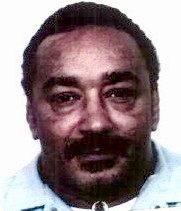 Manuel Pina Babbit
Murderer · USA · 1980
Manuel Pina Babbitt was convicted in Sacramento County of first degree murder w…
1 victim
Manuel Pina Babbit
Murderer · USA · 1980
Manuel Pina Babbitt was convicted in Sacramento County of first degree murder w…
1 victim
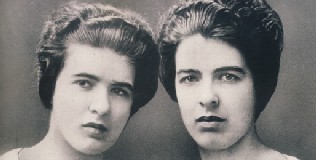 Christine & Léa Papin
Murderers · France · 1933
Christine Papin was born 8 March 1905 and died 18 May 1937. Léa Papin was born…
2 victims
Christine & Léa Papin
Murderers · France · 1933
Christine Papin was born 8 March 1905 and died 18 May 1937. Léa Papin was born…
2 victims
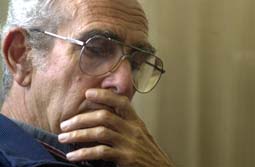 Ricardo Barreda
Mass murderer · Argentina · 1992
Ricardo Alberto Barreda (born 1936, in La Plata, Buenos Aires Province) was an…
4 victims
Ricardo Barreda
Mass murderer · Argentina · 1992
Ricardo Alberto Barreda (born 1936, in La Plata, Buenos Aires Province) was an…
4 victims
 Peter James Wilson
Murderer · USA · 2010
Peter James Wilson was 29 years old. He was from Abbotsford, B.C., and had both…
1 victim
Peter James Wilson
Murderer · USA · 2010
Peter James Wilson was 29 years old. He was from Abbotsford, B.C., and had both…
1 victim
 Ria Ramkissoon
Murderer · USA · 2007
Ria Ramkissoon was convicted for starving her one-year-old son to death on the…
1 victim
Ria Ramkissoon
Murderer · USA · 2007
Ria Ramkissoon was convicted for starving her one-year-old son to death on the…
1 victim
- Gender
- male
- Country
- USA
- Location
- Jefferson County, Georgia, USA
- Date of birth
- 1962
- Age at first offence
- 24
- Characteristics
- armed robbery, burglary, kidnapping, robbery
- Victim profile
- Leon Johnson Williams, 66
- Method of murder
- Shooting
- Date(s) of murder
- March 11, 1986
- Years active
- 1986
- Date of arrest
- Same day
- Status
-
Sentenced to death
Sentenced to death on December 23, 1986
Case identification
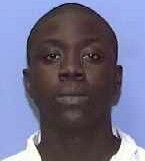
Dallas Bernard Holiday
STATUS and sentence
Holiday was sentenced to death for the murder.
The sentence of death was not imposed under the influence of passion, prejudice or any other arbitrary factor and was neither excessive nor disproportionate to the penalty imposed in similar cases, considering both the crime and the defendant. The similar cases listed in the Appendix supported the imposition of the death penalty in this case.
Timeline
- March 10, 1986 — The crimes were committed.
- March 11, 1986 — The victim, Leon Williams, went on his usual early-morning walk; Holiday attacked and later burglarized another house.
- May 12, 1986 — Holiday was indicted.
- November 10, 1986 — Holiday stated to Hattaway that he had thrown a gun and some coins into a pond.
- November 17, 1986 — The case was tried.
- November 21, 1986 — The case was tried.
- November 17 through November 21, 1986 — The trial took place.
- December 28, 1987 — A motion for new trial was denied.
- January 28, 1988 — The case was docketed in this court.
- April 11, 1988 — The case was argued orally.
- June 23, 1988 — Decided.
- July 13, 1988 — Reconsideration denied.
- December 23, 1986 — Holiday was sentenced to death on this date.
Background
Dallas Bernard Holiday, 34, was sentenced to death in November 1986 in Jefferson County for killing 66-year-old Leon Johnson Williams on March 11, 1986. Holiday had prior felony convictions.
Holiday’s case was returned to the trial court on the issue of mental retardation in June 1990. HOLIDAY v. THE STATE. 45440. (258 Ga. 393) (369 SE2d 241) (1988).
The offence
Victim and attack
On March 11, 1986, the victim, Leon Williams, went for his usual early-morning walk. His wife often accompanied him, but this time she remained home. Half an hour after he left, a nearby neighbor, Barbara Buckner, ran to the Williams’ house and asked to use the telephone because someone was breaking into her house. The Williams’ telephone was not working, so Mrs. Williams drove Mrs. Buckner to the police station.
Shortly after 5:00 p.m., the sheriff discovered signs of a struggle at an old pond site. The sheriff tracked blood drippings to the edge of a nearby woods, where he found Williams’ body. Williams had been hit on the head at least seven times with a blunt object. He had defensive wounds on his hands, including a laceration of one finger that almost completely severed the finger. The cause of death was a gunshot wound to the head.
The autopsist testified that the wounds were consistent with having been inflicted by the butt of a gun, or by a brick similar to one found near the body.
Weapons and ballistics
A ballistics comparison showed that a bullet recovered from under the victim’s scalp had been fired from the .32 caliber pistol dropped by Holiday as he attempted to elude the police. Pieces of another gun left at the scene of the struggle—a broken piece of the stock, a magazine spring and a follower—were compared to and fit the .380 automatic obtained from Holiday’s female companion. Blood on the .380 pistol and on the brick found near the body was consistent with that of the victim.
Robbery, burglary, and kidnapping with bodily injury
Holiday admitted that he decided to hit the victim on the head from the rear with one of the guns, knock him out, and take his money. The blow failed to render the victim unconscious, so Holiday ordered him toward the woods.
While Williams begged him not to kill him, Holiday took his wallet and his watch and ordered him to lie down. Then Holiday got a brick and hit him two or three times on the head. Williams was still alive, so Holiday took out his other gun and shot him.
Holiday stated that he then decided to burglarize another house. He rang the doorbell, and when no one answered (Mrs. Buckner was in the shower) he went to the rear, broke out the glass in a sliding-glass door, and entered the house. While he was looking for something to steal, the police arrived.
Victim pursuit and related burglary
The defendant was still in the Buckner home when the police arrived, but he ran out the back door and eluded capture for nearly an hour. A pistol he dropped during the chase turned out to have been one of two taken in another burglary the previous evening.
Investigation and arrest
Holiday was interrogated after his arrest. Upon arrest, Holiday was taken to jail. Investigator Hattaway talked to him briefly; Holiday stated that he was tired and asked for two aspirins. These were provided, and Holiday was taken to a cell and allowed to rest for over an hour.
Hattaway later talked to him again about the two burglaries. Holiday admitted committing them. Later that evening, after the body was found, the sheriff talked to Holiday for a few minutes. Holiday stated he was sleepy and wanted to go to bed. He was allowed to do so.
The sheriff and investigator Williamson talked to Holiday early the next morning, and Holiday admitted killing Leon Williams.
Early that afternoon, assistant district attorney McClain talked to Holiday for two reasons: to obtain more details about Holiday’s activities, and to discuss the recently-discovered fact that the victim had been shot, as well as beaten. The result of this interview was a lengthy written statement that was read into evidence at trial.
During interviews with Hattaway the afternoon of March 11, Holiday stated that he had thrown a gun and some coins into a pond. It was shown in a transcript of the hearing of November 10, 1986 at p. 135.
Statements and admissibility
The trial court conducted a pre-trial Jackson-Denno hearing and determined that the statements were voluntarily made after Holiday knowingly and intelligently waived his rights under Miranda v. Arizona, 384 U. S. 436 (86 SC 1602, 16 LE2d 694) (1966).
Holiday contended that the finding was erroneous, claiming that interrogators failed to honor “scrupulously” his invocation of his right to remain silent. The record showed that Holiday’s rights were honored and that he was given the opportunity to “control the time at which questioning occur [red], the subjects discussed, and the duration of the interrogation.” See Michigan v. Mosley, 423 U. S. 96 (96 SC 321, 46 LE2d 313) (1975).
Holiday also complained of testimony at trial in reference to custodial statements allegedly not dealt with at the Jackson-Denno hearing. Holiday did not object contemporaneously to any of this testimony. Absent a contemporaneous objection, the trial court was not required to conduct a Jackson-Denno hearing sua sponte. The court noted that, except for Holiday’s spontaneous statement upon capture that he “knew his rights,” the testimony was based on statements made during Holiday’s interview with investigator Hattaway on the afternoon of March 11 and that interview had been dealt with at the Jackson Denno hearing.
Charges and jury verdict
Before Judge Hartley, Holiday was convicted by a jury of:
- malice murder
- armed robbery
- two counts of burglary
- possession of a firearm by a convicted felon
A jury returned a verdict specifying that it found the defendant guilty of “malice murder,” and any issue of felony murder was treated as moot.
Trial proceedings and rulings
Motion for jurisdiction and appellate readiness
Holiday contended that the court lacked jurisdiction because a motion for reconsideration of the denial of his motion for new trial was pending in the trial court. The trial court did not grant a stay of its order denying the motion for new trial, and the case became ripe for appeal when the trial court denied the motion for new trial.
Severance
Absent a motion to sever, there was no error in trying together five of the six counts of the indictment.
Prospective juror
The trial court did not err by excusing a prospective juror who stated, after reflection, that she simply could not vote to impose a death sentence.
Voir dire
Holiday was not denied an effective and thorough voir dire examination. The contention that the trial court precluded defense counsel from asking jurors whether they could sentence Mr. Holiday to life imprisonment “even if there were aggravating circumstances there” was factually incorrect; that was not the question he asked and the trial court did not sustain the objection to the question that he did ask.
The court also did not err by finding both a husband and wife to be qualified to serve as jurors.
Evidence of wallet and bag
Law enforcement officers testified that based on certain, unspecified information uncovered during their investigation, they went to the home shared by the defendant and his brother, and obtained the victim’s wallet. They also went to the home of Rosa Gibbons, who gave them a bag containing items taken in the burglaries. The brother testified that he had found the wallet under the sofa in their house. Gibbons testified that she had been asked by Shirley Sanders (the defendant’s female companion) to hold the bag.
Gibbons’ testimony that she was keeping something at the request of someone else was not hearsay; it was a statement of fact. The brother’s testimony was not hearsay. The officers’ testimony was not hearsay because they testified only that they received certain information and, based on that information, took certain action without stating what that information was.
Disqualification of assistant district attorney McClain
Assistant district attorney McClain took the final pre-trial statement from Holiday and was listed as a witness on the list furnished to the defendant under OCGA 17-7-110. Holiday moved to disqualify McClain from acting as an attorney in the case. The district attorney consented, took McClain off the case, and stated that he would not be involved other than as a witness.
When McClain testified at trial, Holiday’s attorney attempted to cross-examine him about the motion for disqualification. In response to the state’s objection, the defense attorney told the court that he wished to ask McClain “whether [the motion] was granted and whether or not he agreed with it; whether it has anything to do with his partiality and testimony today . . .”
The trial court ruled that Holiday could ask McClain if he has any partiality in the case, and if he answered yes, then Holiday could ask him why. Otherwise, the court would not let Holiday “get into motions that were made now and the rulings of the Court on motions. . . .”
Holiday also contended that the district attorney and all of his staff should have been disqualified under imputed disqualification; the contention was answered adversely.
Serologist testimony and chain of custody
Holiday contended that the trial court erred by refusing to allow him to ask the state’s serologist whether the blood on his clothes was consistent with being his blood and not the victim’s. Holiday failed to establish a chain of custody as to the blood sample taken from him. Without this foundation, the question was improper.
The serologist’s report stated that in regard to type and all identifiable enzymes the defendant and the victim had the same kind of blood. At most, the serologist’s answer could establish that the blood on Holiday’s clothes was consistent with both the defendant and the victim.
Jury instructions and other trial issues
The trial court’s oath to prospective jurors referred to “recidivist” but did not read the recidivist count of the indictment; prior record was introduced in evidence to prove Count Five alleging possession of a firearm by a convicted felon. The brief reference to the recidivist count was treated as harmless error.
During preliminary instructions, when introducing attorneys and court personnel, the trial judge stated that Holiday’s lead attorney was a public defender; no prejudice was found.
Testimony that Holiday was yelling “about he knew his rights, he knew his rights” was elicited on cross-examination by Holiday, so Holiday could not complain of it.
There was no error in allowing in evidence Holiday’s statement even though there was a reference indicating he had possibly committed “also another and separate offense.”
The state’s evidence of flight was neither irrelevant nor unreliable.
Holiday did not raise at trial an objection under Booth v. Maryland, so merits were not addressed on appeal.
The trial court did not err by instructing the jury on felony murder as well as malice murder where the jury returned a verdict specifying “malice murder,” and felony murder issues were moot. The trial court did not err by failing to instruct on voluntary and involuntary manslaughter absent a request. The court’s instructions relating to the credibility of witnesses were upheld.
The court did not err in its response to the jury’s request to be reinstructed on the elements of malice and felony murder. The record did not show that Holiday was absent during a portion of the recharge.
The prosecutor did not argue improperly to the jury. The trial court did not err by refusing to sentence Holiday for non-capital felony offenses before commencement of the sentencing phase.
Sentencing phase
Aggravating circumstances found by the jury
The jury found as aggravating circumstances:
- the offense of murder was committed while the defendant was engaged in the commission of an armed robbery;
- the offense of murder was committed while the defendant was engaged in the commission of the offense of kidnapping with bodily injury; and
- the offense of murder was outrageously or wantonly vile, horrible, or inhuman in that it involved: (a) depravity of mind, and (b) torture to the victim prior to the death of the victim.
The evidence supported these findings.
Judicial instruction issues
The trial court did not err by telling the jury that it could “recommend” the sentence on the murder count, where it was clear from the instructions as a whole that the recommendation would be binding on the trial court.
The (b)(7) aggravating circumstance was not facially invalid. There was no lack of unanimity as to the (b)(7) finding because the jury returned this finding in the conjunctive, not the disjunctive.
Holiday’s requests to charge about the state’s burden to disprove mitigating circumstances, and that the jury must find a mitigating circumstance if there was evidence to support it (or substantial evidence), were not correct statements of law and were refused.
The trial court did not err by telling the jury that its verdict must be unanimous. It also refused other requests to charge whose principles were adequately addressed.
Holiday also alleged no improper restriction of mitigating evidence.
Appeals and decision
The case was decided June 23, 1988, and reconsideration was denied July 13, 1988.
Holiday maintained a standing objection at trial to the admission of “very same statements” covered by the Jackson-Denno hearing. No objections were raised as to any additional statements.
Holiday argued jurisdiction issues related to a pending motion for reconsideration. The court rejected the contention and held that the case became ripe for appeal when the trial court denied the motion for new trial and did not grant a stay. A defendant could not force the case to remain in the trial court indefinitely by continued filing of motions to reconsider.
People involved
- Dallas Bernard Holiday — defendant
- Leon Johnson Williams (Leon Williams) — victim (66-year-old)
- Barbara Buckner — neighbor
- Mrs. Williams — victim’s wife
- Rosa Gibbons — witness who provided a bag containing items taken in the burglaries
- Shirley Sanders — Holiday’s female companion
- Richard A. Malone — District Attorney (for appellee)
- William H. McClain — Assistant District Attorney; took the final pre-trial statement; later testified (for appellee)
- Michael J. Bowers — Attorney General (for appellee)
- Eddie Snelling, Jr. — Assistant Attorney General (for appellee)
- Alan P. Layne — counsel (for appellant)
- John J. Pilcher II — counsel (for appellant)
- Judge Hartley — judge
- Investigator Hattaway — investigator
- Investigator Williamson — investigator
- Sheriff — sheriff (talked with Holiday after the body was found)
- assistant district attorney McClain — McClain (separately referenced in the narrative)
Other details
Holiday was interrogated and admitted stealing the two guns in a burglary the previous evening. He stated he was riding his bicycle when he saw the victim walking and decided to hit him from the rear with one of the guns.
For the jury’s findings, the decision referenced OCGA 17-10-30 (b) (2) and (b) (7) and OCGA 17-10-35 (c) (2) as supportive of the findings.
The Appendix noted that the crimes were committed March 10 and 11, 1986; the defendant was indicted on May 12, 1986; the case was tried November 17 through November 21, 1986; a motion for new trial was timely filed and denied December 28, 1987; the case was docketed on January 28, 1988; and after extension to file enumerations of error, the case was argued orally April 11, 1988.

Spotted an error, or have more information about this case?