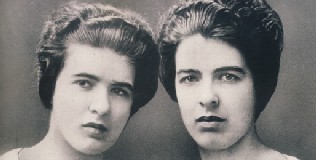
Christine & Léa Papin
Murderers Antoinette Scieri
Serial killer · France · 1924
Antoinette Scieri was born in Italy and emigrated to France as a child. In the…
12 victims
Antoinette Scieri
Serial killer · France · 1924
Antoinette Scieri was born in Italy and emigrated to France as a child. In the…
12 victims
 Marie Besnard
Serial killer? · France · 1927
Marie Besnard (also known as Marie Davaillaud) was born in Loudon, France, on A…
12 victims
Marie Besnard
Serial killer? · France · 1927
Marie Besnard (also known as Marie Davaillaud) was born in Loudon, France, on A…
12 victims
 Ashleigh & Holly Robinson
Murderers · United Kingdom · 2010
Antoni Robinson was a 61-year-old retired antiques dealer and French polisher.…
1 victim
Ashleigh & Holly Robinson
Murderers · United Kingdom · 2010
Antoni Robinson was a 61-year-old retired antiques dealer and French polisher.…
1 victim
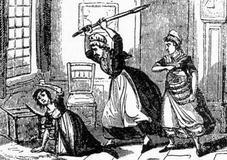 Elizabeth & Mary Branch
Murderers · United Kingdom · 1740
Elizabeth Branch (1673–1740) and her daughter Mary Branch (1716–1740) were Engl…
1 victim
Elizabeth & Mary Branch
Murderers · United Kingdom · 1740
Elizabeth Branch (1673–1740) and her daughter Mary Branch (1716–1740) were Engl…
1 victim
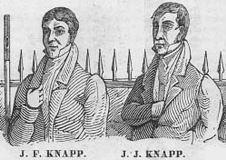 Francis & Joseph Knapp
Murderers · USA · 1930
Francis Knapp and Joseph Jenkins Knapp were the brothers known as the Knapps. T…
1 victim
Francis & Joseph Knapp
Murderers · USA · 1930
Francis Knapp and Joseph Jenkins Knapp were the brothers known as the Knapps. T…
1 victim
 Joan & Elizabeth Shannon
Murderers · USA · 2002
July 23, 2002 — Elizabeth Shannon shot and killed her father, Army Maj. David S…
1 victim
Joan & Elizabeth Shannon
Murderers · USA · 2002
July 23, 2002 — Elizabeth Shannon shot and killed her father, Army Maj. David S…
1 victim
 David Phillip Smith
Murderer · USA · 1995
David Phillip Smith was 20 years old when he was sentenced to death. He was sen…
1 victim
David Phillip Smith
Murderer · USA · 1995
David Phillip Smith was 20 years old when he was sentenced to death. He was sen…
1 victim
 Walter Storey
Murderer · USA · 1990
Walter Timothy Storey (also known as Walter Storey) was convicted in the case S…
1 victim
Walter Storey
Murderer · USA · 1990
Walter Timothy Storey (also known as Walter Storey) was convicted in the case S…
1 victim
 Anthony Braden Bryan
Murderer · USA · 1983
Anthony Braden Bryan was the petitioner and appellant in multiple proceedings,…
1 victim
Anthony Braden Bryan
Murderer · USA · 1983
Anthony Braden Bryan was the petitioner and appellant in multiple proceedings,…
1 victim
 Leonardas Zavistonovicius
Mass murderer · Lithuania · 1998
Leonardas Zavistonovičius went on a house-to-house shooting spree in Draučiai,…
9 victims
Leonardas Zavistonovicius
Mass murderer · Lithuania · 1998
Leonardas Zavistonovičius went on a house-to-house shooting spree in Draučiai,…
9 victims
 Andrew Allen Cook
Murderer · USA · 1995
Andrew Allen Cook was convicted in the Superior Court of Monroe County, Georgia…
2 victims
Andrew Allen Cook
Murderer · USA · 1995
Andrew Allen Cook was convicted in the Superior Court of Monroe County, Georgia…
2 victims
 Sharee Miller
Murderer · USA · 1999
Sharee Paulette Miller was an American woman who was accused of plotting the mu…
1 victim
Sharee Miller
Murderer · USA · 1999
Sharee Paulette Miller was an American woman who was accused of plotting the mu…
1 victim
- Gender
- female
- Country
- France
- Location
- Le Mans, Sharte department, France
- Date of birth
- Christine - March 8, 1905 / Léa - September 15, 1911
- Age at first offence
- 28
- Characteristics
- mutilation, abuse, child abuse
- Victim profile
- T heir employer's wife and daughter
- Method of murder
- Hitting with a hammer - Stabbing with knife
- Date(s) of murder
- February 2, 1933
- Years active
- 1933
- Date of arrest
- Same day
- Status
-
Died in custody
Sentenced to death; later commuted to life in prison; Christine died of cachexia on 18 May 1937
Background
Christine Papin was born 8 March 1905 and died 18 May 1937. Léa Papin was born 15 September 1911 and died in 2001.
Christine and Léa Papin grew up in villages south of Le Mans. They had an elder sister, Emilia, who became a nun. Both Christine and Léa spent time in institutions as a result of the breakdown of their parents' marriage. They worked as maids in various Le Mans homes, preferring, whenever possible, to work together.
In 1926, Christine and Léa became live-in maids in the home of Monsieur René Lancelin, a retired solicitor, in Le Mans. The household also included Monsieur Lancelin’s wife and an adult daughter who still lived with her parents. Another daughter was married.
The sisters were described as extremely quiet and retiring young women who kept to themselves and appeared to have no interests but each other. Their work references described them as honest, industrious and proper. They had no outside friends that anyone knew of. They were regular church-goers and appeared to have no vices and no criminal record. During the period leading up to the murders, an elder sister in the family history was raped by their father, Emilia had been raped when she was nine years old, and their parents' divorce followed that attack.
During the period leading up to the murders, there was a rift between Christine and Léa and their mother. Approximately two years before the murders, there was a complete rift between the girls and their mother, apparently caused by disagreements over money. Their mother wrote to them on occasion after this rift, but was ignored. While in prison awaiting their trial and later imprisonment, Christine and Léa were separated from each other.
The offence
On 2 February 1933, Monsieur Lancelin was supposed to meet his wife and adult daughter for dinner at the home of a friend. When they did not turn up, he became concerned and returned to their home.
Monsieur Lancelin was unable to get into the house because the doors were locked on the inside, but he could see the glow of a candle through the window of the maids' room. He went to the police, and one of the officers entered the house by climbing over the back wall.
Inside, the police found the bodies of Madame Lancelin and her daughter. The women had both been beaten to the point of being unrecognisable. One of the daughter’s eyes was found on the floor nearby. Madame Lancelin’s eyes had been gouged out and were found in the folds of the scarf around her neck.
The two maids were found upstairs, in their room, in bed together. They confessed to killing the two women. The weapons used were identified as a kitchen knife, a hammer, and a pewter pot that had stood at the top of the stairs. During the trial, there was testimony that blows and hacks were directed almost entirely to the victims’ heads, virtually obliterating their faces. The maids gouged the eyes out with their fingers.
The sisters described that an argument developed between Christine and the Lancelin women. Léa then joined the fray, and Christine yelled at Léa to “tear her eyes out” in reference to Madam Lancelin. The daughter received similar treatment, and Christine then went to the kitchen to get weapons used to finish the women off.
Victims
Madame Lancelin and her daughter were murdered. The daughter was later identified as Genevieve in the trial narrative.
Investigation
Monsieur Lancelin returned to the home, went to the police, and officers entered the house. Inside, officers discovered the bodies of Madame Lancelin and her daughter and also found Christine and Léa Papin in bed together.
The sisters were found after police forced entry. The women had electric lights that did not work in the later narrative, and a flashlight was used to illuminate the home while police crept upstairs.
Statements and episode
Christine became extremely distressed because she could not see Léa. At one stage authorities relented and allowed her to see her sister. Christine threw herself at Léa and spoke in ways that suggested a sexual relationship.
In July 1933, Christine experienced an episode in which she tried to gouge her own eyes out and was put in a straitjacket.
Christine made a statement to the investigating magistrate saying that on the day of the murders she had experienced an episode like the one she had just had in prison, and that this precipitated the murders. In a later account of her statement, Christine claimed she had not told the whole truth before and that she had killed the two women, Madame and Madamoiselle Lancelin, on her own after a “fit” coming over her, while Léa had not taken part. The judge dismissed the statement as an attempt to set Léa free, and the jury treated it with contempt.
Léa persisted in saying she had taken part in the murders.
Arrest
The sisters were arrested after the police discovery. They were marched off to the police station while still in their kimonos despite the February weather.
Trial
The women went on trial in September 1933.
Crowds gathered outside the Le Mans courthouse, and police were brought in to control them. During the trial, the girls stated that an argument had developed between Christine and the Lancelin women. Léa had joined in, and Christine had yelled at her to “tear her eyes out” in reference to Madam Lancelin. The daughter received similar treatment, after which Christine went to the kitchen to get weapons used to finish the women off.
The trial narrative included that medical testimony described Christine as of average intelligence and completely dominant in the relationship, and described Léa as of low intelligence whose personality had virtually disappeared into Christine's personality. There was also a history of mental illness in the family.
Verdicts and sentencing
The women were found guilty. Christine received the harshest sentence, death. Léa received a sentence of ten years in prison because she had been so dominated by Christine.
In another narrative, it was stated that Léa was found guilty of the murder of Madame Lancelin but had not been charged with the murder of the daughter, Genevieve, because doctors concluded that Genevieve had died before Lea joined in the murders. The younger sister was sentenced to ten years’ hard labour in that narrative.
Death sentence and commutation
Christine’s death sentence was later commuted to life imprisonment.
Appeals
No appeal details were provided in the case text.
Outcome
Christine Papin
While in prison, Christine showed acute signs of madness and a longing for Léa. She became severely depressed and frequently would not eat. She was transferred to a mental asylum at Rennes and died of cachexia on 18 May 1937.
Léa Papin
Léa was released from prison in 1941. Her sentence had been reduced to eight years because of good behaviour in the account that included sentence reduction on good behaviour. She then lived in the town of Nantes. She was joined by her mother and earned her livelihood as a hotel maid under a false name.
There was debate about the date of Léa’s death. It was thought for many years that Léa had died in 1982, and the age 70 was attributed in one narrative. This was questioned in 2000 by French filmmaker Claude Ventura, who made a documentary film, En Quête des Soeurs Papin (In Search of the Papin Sisters), claiming to have found Léa alive in a hospice in France. The hospice narrative stated that she was partly paralysed as the result of a stroke and could not speak, though she was shown in the film. That Léa died in 2001 was stated.
Aftermath
The murders were described as having a significant influence on French intellectuals Jean Genet, Jean-Paul Sartre and Jacques Lacan, who sought to analyse it. Some people considered it symbolic of class struggle, with the debate focusing on exploitation of the workers and the sisters working long hours.
The case formed the basis of multiple films and plays. Works relating to the case included:
- The Maids (Les Bonnes), a play by Jean Genet
- The Maids, a film based on the play directed by Christopher Miles
- My Sister in This House, a play by Wendy Kesselman
- Sister My Sister, a film version of the play directed by Nancy Meckler
- Les Abysses, a film directed by Nikos Papatakis
- Les Soeurs Papin, a book by R. le Texier
- Blood Sisters, a stage play and screenplay by Neil Paton
- L'Affaire Papin, a book by Paulette Houdyer
- La Solution du passage à l'acte, a book by Francis Dupré
- Paris Was Yesterday, a book by Janet Flanner
- La Ligature, a short film by Gilles Cousin
- Les Meurtres par Procuration, a book by Jean-Claude Asfour
- Lady Killers' , a book by Joyce Robins
- Minotaure #3, 1933, a magazine
- The Maids, an opera by Peter Bengtson
- Les Blessures assassines (English: Murderous Maids), a film by Jean-Pierre Denis
- En Quete des Soeurs Papin (In Search of the Papin Sisters), a documentary film by Claude Ventura
- Gros Proces des l'Histoire, a book by M. Mamouni
- L'Affaire Papin, a book by Genevieve Fortin
- The Papin Sisters, a book by Rachel Edwards and Keith Reader
A narrative described that Jean Genet’s play Les Bonnes was loosely based on the Papin sisters, highlighting dissatisfaction of the maids in their jobs and a hatred for their mistress.
A further narrative included additional contextual details about the crime scene: Monsieur Lancelin arrived at his home to pick up his wife and daughter, found the door bolted from the inside and no lights on other than a flickering candle in the attic window, returned to his brother-in-law Monsieur Renard’s home where he discovered the women had not arrived, brought police back, forced the window to the parlor, and discovered electric lights did not work. Police found the women beaten to a pulp with faces unrecognisable, fingernails uprooted, and their eyes gouged out, while blood stained the carpet. Police then discovered Christine and Léa Papin in one bed wearing kimonos, clutching each other, and the sisters were described as having confessed readily to the crime after being found.
Another narrative included that the sisters took off their clothes stained, washed their hands and faces, and cleaned the murder weapons including “a carving knife, hammer, and pewter pitcher which had been so damaged as to render it useless.” It also stated that the sisters had not attempted to escape and were found together in bed.
A narrative also included that in a separate context Lea was later interviewed by a journalist from France-Soir. It stated that in that interview she described vivid visions of Christine appearing before her in spirit form and being certain that her sister was in paradise, that she kept old photos of Christine and an old trunk crammed with beautiful dresses the girls had made for themselves before the murders, and that she intended to return to Le Mans and rejoin her other sister Emilia who had become a nun at the age of sixteen.


Spotted an error, or have more information about this case?