
Robert Holguin
Homicide Todd Hall
Homicide · USA · 1996
Todd Hall was described by neighbors as "mentally slow" and was said to have su…
9 victims
Todd Hall
Homicide · USA · 1996
Todd Hall was described by neighbors as "mentally slow" and was said to have su…
9 victims
 Joshua Jenkins
Homicide · USA · 1996
Joshua Jenkins was a 15-year-old American killer who killed five members of his…
5 victims
Joshua Jenkins
Homicide · USA · 1996
Joshua Jenkins was a 15-year-old American killer who killed five members of his…
5 victims
 Alex Baranyi
Homicide · USA · 1997
Alex Baranyi and David Anderson were 17-year-old high-school dropouts from Bell…
4 victims
Alex Baranyi
Homicide · USA · 1997
Alex Baranyi and David Anderson were 17-year-old high-school dropouts from Bell…
4 victims
 David Anderson
Homicide · USA · 1997
David Anderson was convicted by a jury of four counts of aggravated first-degre…
4 victims
David Anderson
Homicide · USA · 1997
David Anderson was convicted by a jury of four counts of aggravated first-degre…
4 victims
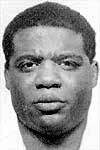 Jeffery Lee Griffin
Homicide · USA · 1978
Jeffery Lee Griffin was executed by lethal injection in Texas on November 19, 1…
3 victims
Jeffery Lee Griffin
Homicide · USA · 1978
Jeffery Lee Griffin was executed by lethal injection in Texas on November 19, 1…
3 victims
 Harvey Earvin
Murderer · USA · 1976
Harvey Earvin was convicted of capital murder by a jury and was sentenced to de…
1 victim
Harvey Earvin
Murderer · USA · 1976
Harvey Earvin was convicted of capital murder by a jury and was sentenced to de…
1 victim
 Frank Spisak
Serial killer · USA · 1982
Frank W. Spisak Jr. was a transvestite who was wanted to be Hitler. He was friz…
3 victims
Frank Spisak
Serial killer · USA · 1982
Frank W. Spisak Jr. was a transvestite who was wanted to be Hitler. He was friz…
3 victims
 Lawrence Moore
Mass murderer · USA · 1981
Lawrence Moore was 20 years old and had a brain defect. On 8 May 1981, Lawrence…
4 victims
Lawrence Moore
Mass murderer · USA · 1981
Lawrence Moore was 20 years old and had a brain defect. On 8 May 1981, Lawrence…
4 victims
 Richard Wayne Jones
Murderer · USA · 1986
Richard Wayne Jones was born on April 9, 1960. He was executed at age 40 and wa…
1 victim
Richard Wayne Jones
Murderer · USA · 1986
Richard Wayne Jones was born on April 9, 1960. He was executed at age 40 and wa…
1 victim
- Gender
- male
- Country
- USA
- Location
- San Luis Obispo County, California, USA
- Date of birth
- 1990
- Age at first offence
- 15
- Characteristics
- juvenile (14), abuse, history of mental illness
- Victim profile
- Gerald O'Malley, 87
- Method of murder
- Beating with a skateboard
- Date(s) of murder
- February 26, 2005
- Years active
- 2005
- Date of arrest
- —
- Status
-
Sentenced to the state's Division of Juvenile Justice, formerly known as the California Youth Authority, until his 25th birthday on May 5, 2006
Case record: Robert Holguin
Background
Robert Holguin was a 14-year-old boy convicted of murdering 87-year-old war veteran Gerald O'Malley.
Holguin had special needs, and he had been described as emotionally disturbed and extremely needy. Experts testified that he had brain damage, learning disabilities, and a very low IQ, and that he needed to learn skills to cope. A psychologist who testified for the defense, Robert Halon, added that Holguin must be punished for beating the victim to death.
The court records described Holguin’s father as an abusive alcoholic. Defense experts testified that Holguin desperately wanted a father figure and would be drawn to any strong man, good or bad.
The offence
Gerald O'Malley was beaten to death with a skateboard.
After the attack, Holguin went home, got a padlock, and locked O'Malley in his San Luis Obispo house to die in a pool of his own blood on the kitchen floor.
Investigation
Arrest
Trial
Juvenile Court Judge Teresa Estrada-Mullaney stated during sentencing that while Holguin looked shy and gentle, he was a murderer, and she said he posed a danger to society without the long term treatment he would receive in the Division of Juvenile Justice.
As Estrada-Mullaney read her ruling, Holguin hung his head low, nearly resting his forehead on the table before him, and his normally tanned face was red.
Defense attorney Theresa Klein argued after the ruling that it was “very concerning that he'll be put in a system that says it is broken by its own standards.” Klein said she planned to appeal Holguin’s conviction.
The judge allowed cameras in the courtroom because of the crime’s serious nature.
Sentencing
On May 5, 2006, a judge sentenced 14-year-old Robert Holguin to the state's Division of Juvenile Justice, formerly known as the California Youth Authority, until his 25th birthday.
Judge Teresa Estrada-Mullaney rejected claims that the agency couldn't rehabilitate the boy. She said: “I could say he doesn't look like a murderer," but "he is."
Defense attorney Theresa Klein had argued that Holguin, who had special needs, would benefit more from specialized treatment at a boys' home. Prosecutors and defense attorneys disagreed about how the system would shape Holguin after he was released.
A deputy district attorney, Andy Baird, said: “The Youth Authority is saving almost no one, even by their own experts analysis, and we're very afraid that he's not going to get the rehabilitation he'll need and that he's going to turn into a hardened criminal when he gets out.”
Deputy District Attorney Andy Baird also said: “It will be up to this young man to decide which way his life is going to turn,” and added that if he did not choose for whatever reason, any program would fail and he would come out and re-offend and be locked up again for a lot longer.
Prosecutor Andrew Baird said after the ruling that placing Holguin in alternatives such as a group home would seem like getting off easy.
Appeals
Defense attorney Theresa Klein planned to appeal Holguin’s conviction and the sentence.
Outcome
Holguin was sentenced to remain in the Division of Juvenile Justice until his 25th birthday.
Division authorities could hold Holguin until his 25th birthday, and depending on his behavior, he would likely be released by his 19th or 21st birthday. Both Baird and Klein said rehabilitation was important.
The Tribune did not name Holguin because he was a minor.
Aftermath
Holguin was scheduled to be transferred from Juvenile Hall to the DJJ's reception center. After he was evaluated there, he would be assigned to a specific facility somewhere in the state. The judge planned to recommend that Holguin be placed in the Paso Robles facility, where the average age of a ward was 17.
Division of Juvenile Justice parole board decision-making would determine whether Holguin could be released before his 25th birthday based on his rehabilitation.
After the ruling, Holguin and his mother spent time alone together. Klein said Holguin was “He's worried,” about her.
Defense attorney Theresa Klein stated that at the county Juvenile Services Center, Holguin had requested counseling services more than 100 times and was put on suicide watch three times. Klein also said Holguin once pounded on the doors of his room with his hands until they were bruised enough to require medical attention. Klein said Holguin had flourished with good behavior in the county center, which resulted in improving grades in school, but Klein said that help would not be available in a correctional facility.
Psychologist Robert Halon testified for the defense and said: “He doesn't know how to be.”
Halon also said that the boy must be punished for beating 87-year-old O'Malley with a skateboard on Feb. 26 of last year.
“This young man needs punishment,” prosecutor Andrew Baird said after the ruling, noting Halon's warning that an alternative sentence such as a group home would, for the boy, seem like getting off easy. “I am hopeful he will learn to make the right choice,” Baird said. “And if he does not choose so for whatever reason, any program is going to fail and he's going to come out and re-offend, and be locked up again for a lot longer.” “It will be up to this young man to decide which way his life is going to turn,” said Deputy District Attorney Andy Baird. “The Youth Authority is saving almost no one, even by their own experts analysis, and we're very afraid that he's not going to get the rehabilitation he'll need and that he's going to turn into a hardened criminal when he gets out, ” said defense attorney Theresa Klein. “I could say he doesn't look like a murderer," Juvenile Court Judge Teresa Estrada-Mullaney said, "but he is.” “He doesn't know how to be,” Halon said.
Timeline
- May 2, 2006 — Attorneys tried to convince the judge where Robert Holguin should spend the next several years after beating to death 87-year-old war veteran Gerald O'Malley.
- May 5, 2006 — A judge sentenced 14-year-old Robert Holguin to the state's Division of Juvenile Justice until his 25th birthday.
- May 6, 2006 — A judge ruled after rejecting claims the agency couldn't rehabilitate Holguin, and ordered him to a corrections center for children, with the next several years at a state corrections facility for children.

Spotted an error, or have more information about this case?