George Holman
Mass murderer Howard Unruh
Mass murderer · USA · 1949
Howard Barton Unruh (born January 21, 1921, Camden, N.J.) carried out a shootin…
13 victims
Howard Unruh
Mass murderer · USA · 1949
Howard Barton Unruh (born January 21, 1921, Camden, N.J.) carried out a shootin…
13 victims
 Clarence Bertucci
Mass murderer · USA · 1945
Clarence V. Bertucci was an American soldier, Private Clarence V. Bertucci, who…
9 victims
Clarence Bertucci
Mass murderer · USA · 1945
Clarence V. Bertucci was an American soldier, Private Clarence V. Bertucci, who…
9 victims
 Ernest Ingenito
Mass murderer · USA · 1950
Ernest Ingenito (1924–1995) was an American mass murderer who shot nine people,…
5 victims
Ernest Ingenito
Mass murderer · USA · 1950
Ernest Ingenito (1924–1995) was an American mass murderer who shot nine people,…
5 victims
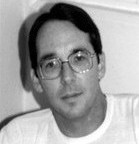 William Zeigler
Mass murderer · USA
William Thomas Zeigler Jr. was prosecuted in Florida for the murders of four pe…
1975 victims
William Zeigler
Mass murderer · USA
William Thomas Zeigler Jr. was prosecuted in Florida for the murders of four pe…
1975 victims
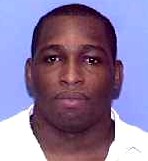 Robert Lee Woodard
Murderer · USA · 2000
Robert Lee Woodard (TDCJ Number 999388) was born on 06/17/1980. He was a black…
2 victims
Robert Lee Woodard
Murderer · USA · 2000
Robert Lee Woodard (TDCJ Number 999388) was born on 06/17/1980. He was a black…
2 victims
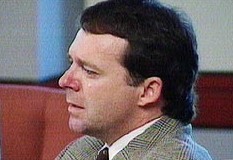 Royle Kipp
Murderer · USA · 2000
Royle Kipp joined the Collier County Sheriff's Office in 1981 when he was just…
2 victims
Royle Kipp
Murderer · USA · 2000
Royle Kipp joined the Collier County Sheriff's Office in 1981 when he was just…
2 victims
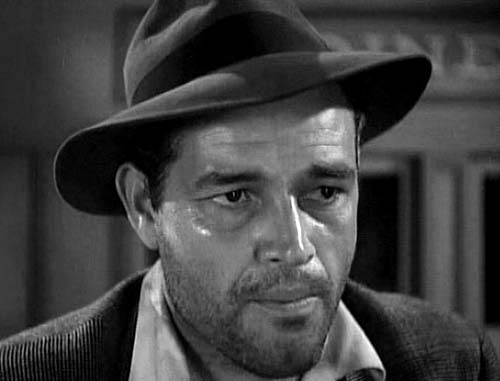 Thomas Neal
Murderer · USA · 1965
Thomas Neal (January 28, 1914 – August 7, 1972) was an American actor and convi…
1 victim
Thomas Neal
Murderer · USA · 1965
Thomas Neal (January 28, 1914 – August 7, 1972) was an American actor and convi…
1 victim
 Laurie Tackett
Homicide · USA · 1992
Mary Laurine “Laurie” Tackett was born in Madison, Indiana on October 5, 1974.…
1 victim
Laurie Tackett
Homicide · USA · 1992
Mary Laurine “Laurie” Tackett was born in Madison, Indiana on October 5, 1974.…
1 victim
- Gender
- male
- Country
- USA
- Location
- San Francisco , California, USA
- Date of birth
- ???
- Characteristics
- arsonist, arson
- Victim profile
- Men, women and children
- Method of murder
- Fire
- Date(s) of murder
- March 28, 1944
- Years active
- 1944
- Date of arrest
- —
- Status
-
Life imprisonment
Sentenced to 22 consecutive life terms
Case record: George Holman
Background
George Holman was described as a pyromaniac and an arsonist blamed for a deadly hotel fire.
The offence
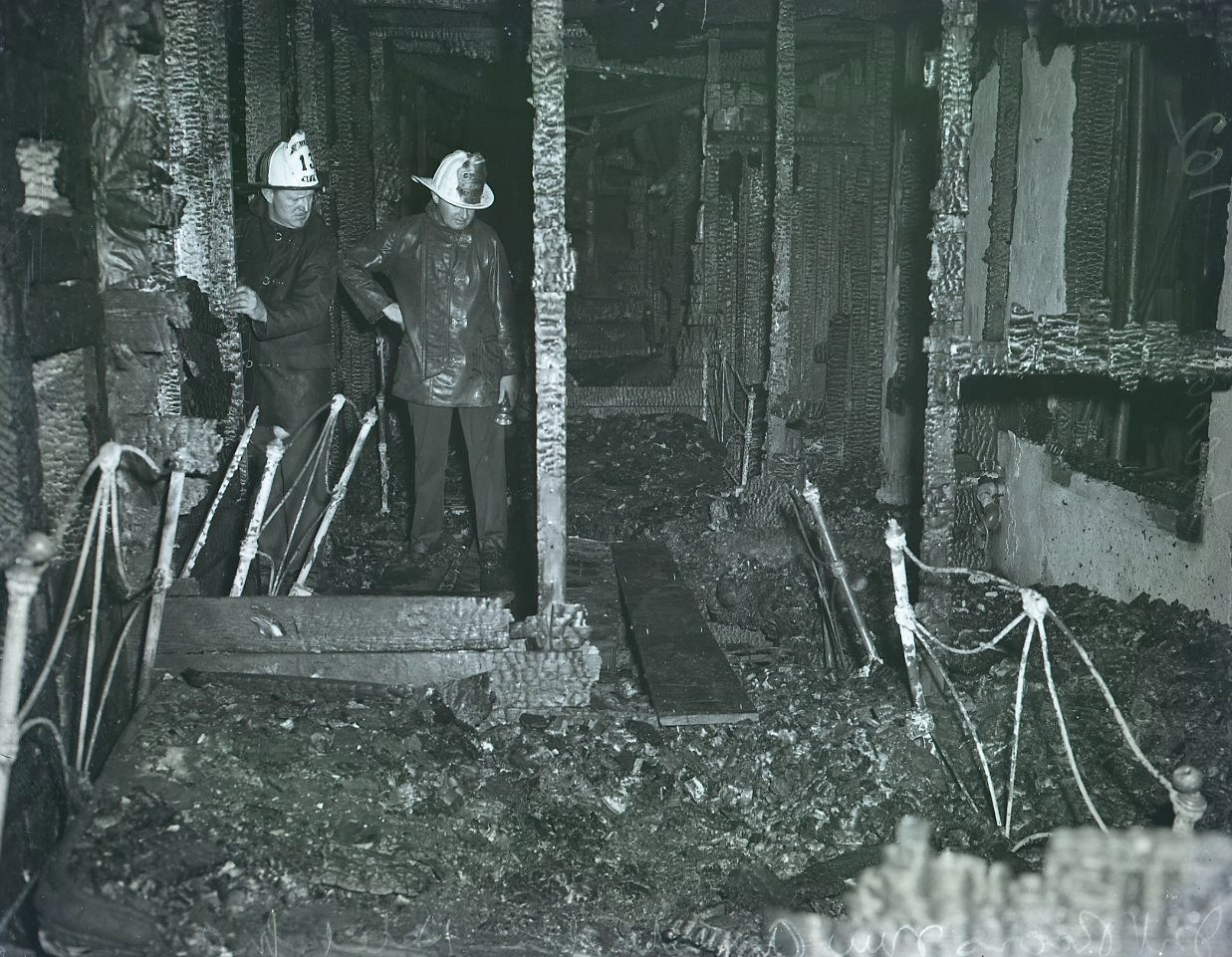
A flash of fire reduced the interior of the New Amsterdam hotel at 273 Fourth street to a heap of ashes. At least 22 persons died and 27 persons were injured after flames trapped people in bedrooms and hallways.
The New Amsterdam fire was reported to have burst into flames shortly after five other hotel fires had been reported in the same area within a four-hour period. Police and fire department officials stated that the arsonist was believed responsible not only for the San Francisco fires but also for a series of 11 blazes that broke out in Oakland hotels last weekend. Authorities noted an odor of kerosene or gasoline about last night’s fires.
Officials stated that the New Amsterdam fire “undoubtedly” was the work of the same person who set fire to 11 hotels in Oakland last Saturday. In both cities, the fires broke out in the same type of district and in the same type of building.
The Oakland fires were estimated to have total damages of $10,000.
The Amsterdam fire was also said to have followed by one week a $100,000 fire that destroyed a restaurant, a laundry and several flats in the residential district of San Francisco. That earlier fire was believed to have been caused by defective wiring in an ice cream freezer.
Investigation
Firemen conducted a search through the embers in search of more bodies after the blaze burned itself out. Fire department officials questioned William Bernhoff, 33, the tenant of the hotel, at San Francisco hospital. Police began a hunt for an arsonist believed responsible for the San Francisco fires and for a series of 11 hotel blazes in Oakland the previous weekend.
Veteran firemen stated they had never seen a crowd gather so quickly as it did at the New Amsterdam holocaust. One fireman said: “They seemed to sense instantly that there was death throughout the building.”
Arrest
William Bernhoff, 33, was questioned at San Francisco hospital. He was picked up at the Palace hotel, seven blocks from the scene of the fire. His hair was singed and his knees bruised. He was examined by physicians at the hospital psychopathic ward.
Trial
The case materials provided did not include trial proceedings, court names, or trial dates.
Sentencing
George Holman was sentenced to 22 consecutive life terms.
Outcome
The New Amsterdam hotel fire was described as San Francisco’s deadliest fire since the great earthquake and fire in 1906. The dead were burned beyond recognition, and the process of identification was described as slow and uncrtain [sic].
At least 22 persons died. Twenty-seven persons were injured. Rescue workers found bodies all through the building, with most of them found on the third floor where victims had been caught in their rooms and in the hallways. Three bodies, charred beyond recognition, were found huddled together in an interior lightwell outside a third floor room.
Aftermath
Firemen and rescue workers handled ongoing rescue and medical care for victims. The first of three alarms was believed to have been given by a sailor who had just paid for his room and taken off his shoes when the fire broke out. Asked for his name, he shouted: “Hell no man! I've got another guy's liberty card.”
Father Leo Powelson, pastor of nearby St. Patrick’s church, walked among the dead, giving conditional absolution. When the bodies were carried from the building in tarpaulins, the crowd fell silent, and the bodies were laid in rows along the curb while the morgue wagon moved back and forth.
Extra police reserves were summoned, including every radio car in the city, to hold back onlookers and prevent them from hampering the work of the firefighters. Huge crowds poured out of bars and night clubs at the time the fire was discovered and followed the fire trucks through downtown traffic to the scene. Predominant in the crowds were sailors on their way back to Treasure Island naval base.
Southern station policemen on the scene said witnesses reported seeing two men fleeing from the building minutes before the flames were discovered.
Other details
The New Amsterdam was located in the skidrow district south of Market street and was described as a three-story frame building. Authorities described the district as one of pawn shops, saloons and cheap rooming houses, nearly all of wood construction and ready tinder for a blaze. The Amsterdam fire broke out in all four floors at the same time and spread with lightning rapidity. For the two hours the flames were at their height, the downtown area was overcast by a rosy glow reflected by nearby skyscrapers.
The hotel contained about fifty rooms, according to police records, most of which were occupied by sleeping shipyard workers. Many occupants fled to the nearest windows and attempted to land in nets held beneath them by firemen. A woman was believed to have broken her back when she landed. One man, Leslie McKinney, 30, described as a Negro stevedore employed by the United States marine corps, saved his life by leaping from his blazing third story room to a telephone pole across the sidewalk. Others were brought down rescue ladders and snatched from death as puffs of fire drove them to the windows. Some were carried out suffering serious burns or unconscious from smoke inhalation and were taken to emergency hospitals.
Gertrude Boyd, 37, described as a Negro factory worker, said she first learned of the fire when she heard a “terrible pounding noise.” Boyd said: “I opened the door to my basement room and saw the fire in the hallways,” and she said she managed to make her escape through a side entrance.
Spotted an error, or have more information about this case?