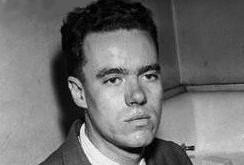
Howard Unruh
Mass murderer John Gilbert Graham
Mass murderer · USA · 1955
John “Jack” Gilbert Graham was born on January 23, 1932, at Denver, Colorado. H…
44 victims
John Gilbert Graham
Mass murderer · USA · 1955
John “Jack” Gilbert Graham was born on January 23, 1932, at Denver, Colorado. H…
44 victims
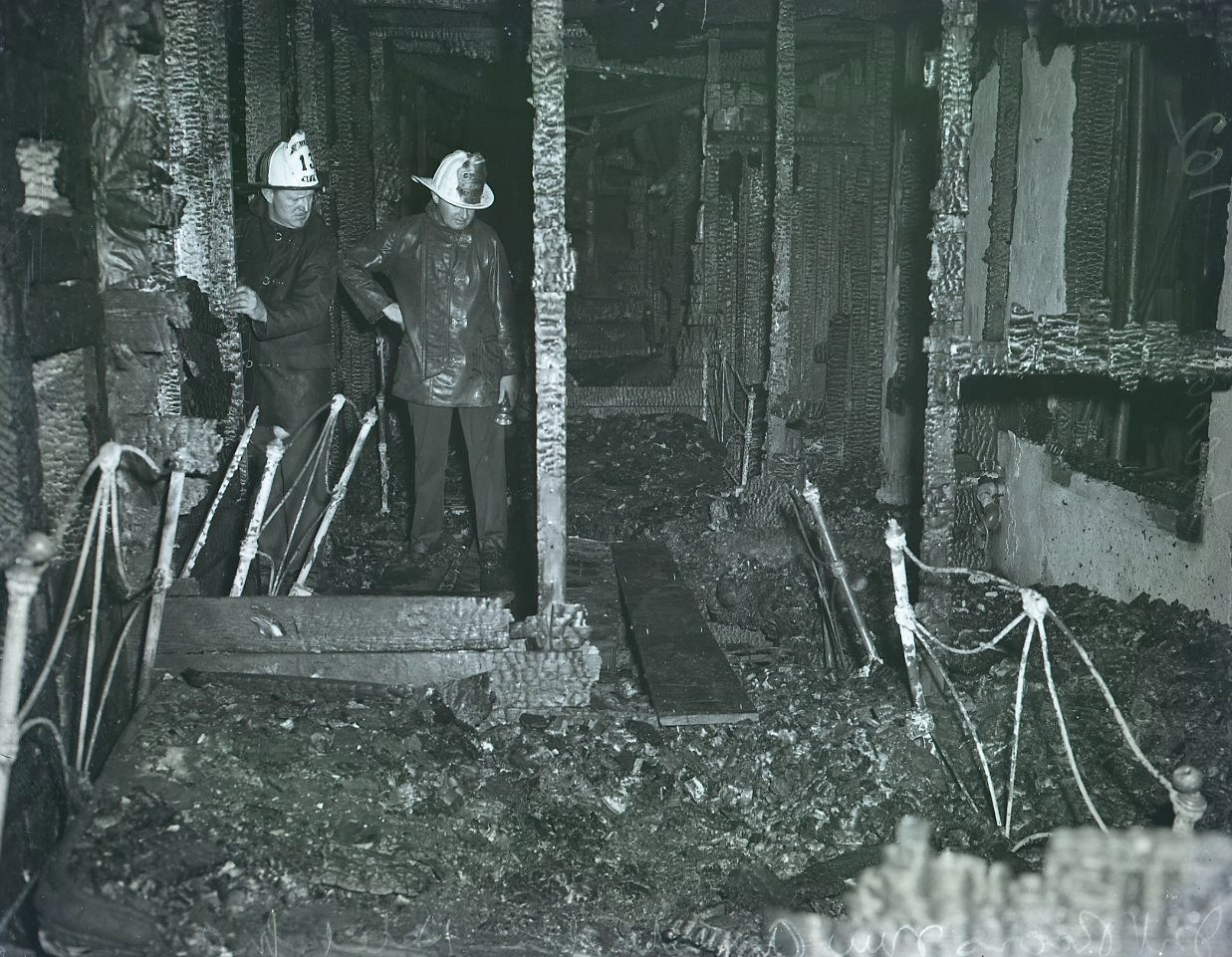 George Holman
Mass murderer · USA · 1944
George Holman was described as a pyromaniac and an arsonist blamed for a deadly…
22 victims
George Holman
Mass murderer · USA · 1944
George Holman was described as a pyromaniac and an arsonist blamed for a deadly…
22 victims
 Clarence Bertucci
Mass murderer · USA · 1945
Clarence V. Bertucci was an American soldier, Private Clarence V. Bertucci, who…
9 victims
Clarence Bertucci
Mass murderer · USA · 1945
Clarence V. Bertucci was an American soldier, Private Clarence V. Bertucci, who…
9 victims
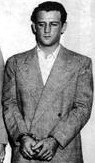 Ernest Ingenito
Mass murderer · USA · 1950
Ernest Ingenito (1924–1995) was an American mass murderer who shot nine people,…
5 victims
Ernest Ingenito
Mass murderer · USA · 1950
Ernest Ingenito (1924–1995) was an American mass murderer who shot nine people,…
5 victims
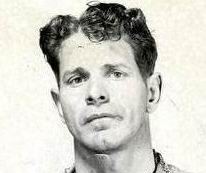 Paul Harold Orgeron
Mass murderer · USA · 1959
Paul Harold Orgeron died in the explosion. Paul Harold Orgeron was an ex-convic…
5 victims
Paul Harold Orgeron
Mass murderer · USA · 1959
Paul Harold Orgeron died in the explosion. Paul Harold Orgeron was an ex-convic…
5 victims
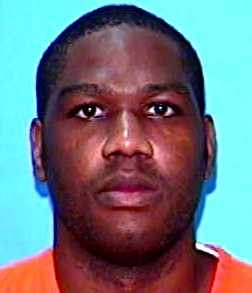 Lenard Philmore
Murderer · USA · 1997
Lenard Philmore · 11/14/1997 — Offence: Lenard Philmore was convicted in the mu…
1 victim
Lenard Philmore
Murderer · USA · 1997
Lenard Philmore · 11/14/1997 — Offence: Lenard Philmore was convicted in the mu…
1 victim
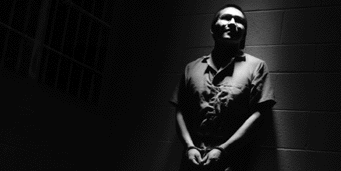 Lester Kills On Top
Murderer · USA · 1987
Lester Kills On Top No A027079 was incarcerated at Montana State Prison in Deer…
1 victim
Lester Kills On Top
Murderer · USA · 1987
Lester Kills On Top No A027079 was incarcerated at Montana State Prison in Deer…
1 victim
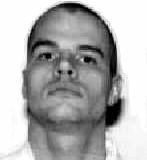 Aaron Foust
Murderer · USA · 1997
Aaron Christopher Foust (TDCJ #999268) was convicted for the capital offense of…
1 victim
Aaron Foust
Murderer · USA · 1997
Aaron Christopher Foust (TDCJ #999268) was convicted for the capital offense of…
1 victim
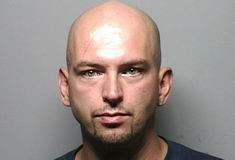 Scott Eby
Murderer · USA · 2004
Scott Eby — defendant · Riley Fox — victim; three-year-old girl · Kevin Fox — R…
1 victim
Scott Eby
Murderer · USA · 2004
Scott Eby — defendant · Riley Fox — victim; three-year-old girl · Kevin Fox — R…
1 victim
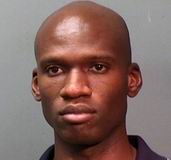 Aaron Alexis
Mass murderer · USA · 2013
Aaron Alexis was a lone gunman who carried out a mass shooting at the headquart…
12 victims
Aaron Alexis
Mass murderer · USA · 2013
Aaron Alexis was a lone gunman who carried out a mass shooting at the headquart…
12 victims
- Gender
- male
- Country
- USA
- Location
- Camden, New Jersey, USA
- Date of birth
- January 21, 1921
- Age at first offence
- 28
- Characteristics
- revenge, history of mental illness
- Victim profile
- 6 men , 4 women and 3 children
- Method of murder
- Shooting (Luger P08 pistol)
- Date(s) of murder
- September 6, 1949
- Years active
- 1949
- Date of arrest
- Same day
- Status
-
Pronounced insane; sentenced for the remainder of his life to the Vroom Building, the unit for the criminally insane; died October 19, 2009
Case overview
Howard Barton Unruh (born January 21, 1921, Camden, N.J.) carried out a shooting spree in Camden, New Jersey, on September 6, 1949, killing 13 people and injuring three.
He was regarded as one of the first of the “lone gunmen” to go on an indiscriminate shooting spree. He was described as a reserved man who became a recluse in the three months before the spree. He lived with his mother and was unemployed.
Timeline
- January 21, 1921 — Howard Barton Unruh was born in Camden, N.J.
- January 1939 — He graduated from Woodrow Wilson High School.
- 1942 — He enlisted in the army during World War II.
- 1945 — He was honorably discharged from the United States Army and returned home.
- September 6, 1949 — He carried out the shooting spree in Camden, New Jersey.
- October 19, 2009 — He died.
Background
Unruh was the son of Samuel Shipley Unruh and Freda E. Unruh. He had a younger brother, James.
His parents separated and he was raised by his mother after the separation. He grew up in East Camden and attended Cramer Junior High School. He graduated from Woodrow Wilson High School in January 1939. His ambition was described as becoming a government employee.
Unruh was described as shy and reserved, and he preferred reading his Bible to the company of others. He was also described as having trouble getting along with his neighbors, with his interactions deteriorating in the three months before the spree.
Unruh lived with his mother. His mother supported him by working at a factory while Howard stayed around the house and attended daily church services. He accompanied his mother to St. Paul’s Evangelical Lutheran Church and was described as a frequent reader of his Bible.
He briefly attended a pharmacy course at Temple University in Philadelphia but dropped out after three months.
During World War II, he served in the Battle of the Bulge and was described as a brave tank soldier who kept meticulous notes of every German killed, including details of the corpse. After the war, he returned with medals and firearms. He decorated his bedroom with military items and set up a target range in his basement. He was described as unemployed and living with his mother.
He had trouble with neighbors and was considered a “mama’s boy,” and he was subjected to teasing. Neighborhood teens harassed him because they thought he was gay and made fun of him. He was reported to have been depressed about having had “homosexual liaisons” in a Philadelphia movie theater.
He had only one brief relationship with a girl prior to his arrest.
Investigation
Unruh was taken into interrogation after he surrendered. Policemen and Mitchell Cohen, Camden County prosecutor, questioned him for more than two hours.
He told police that he had spent the previous evening sitting through three showings of a double feature, The Lady Gambles and I Cheated the Law, and had thought that actress Barbara Stanwyck was one of his hated neighbors. He provided a meticulous account of his actions during the killings. Only at the end of the interrogation did they discover he had been wounded and kept secret a gunshot wound in the left thigh.
After interrogation, he was taken to Cooper Hospital for treatment.
Arrest and standoff
Unruh engaged in a standoff with police after returning to his apartment when he heard the sirens. Over 60 police surrounded his home, and a shootout ensued. A cordon of between 50 and 60 police officers surrounded the two-story gray stucco building that housed Unruh’s apartment at 3202 River Road, behind and next to the Cohens’ pharmacy and residence.
He shot at them from a window. The police armed themselves with rifles and machine guns. During the siege, Philip W. Buxton, a reporter from the Camden Evening Courier, phoned Unruh’s home and spoke briefly with him.
Unruh surrendered several minutes later and was taken in for interrogation.
During his arrest, a policeman reportedly asked, “What’s the matter with you. You a psycho?” In response, he said, “I’m no psycho. I have a good mind.”
He was later described as having surrendered without a word to motorcycle officer Charles Hance.
Charges
Charges were filed for 13 counts of “willful and malicious slayings with malice aforethought” and three counts of “atrocious assault and battery.”
Trial and mental health findings
He was eventually pronounced insane, making him immune to criminal prosecution. He was incarcerated in a unit for the criminally insane.
He was diagnosed with paranoid schizophrenia by psychologists, and was found to be hopelessly insane.
When he was able to leave Cooper Hospital, he was sent to the New Jersey Hospital for the Insane (now Trenton Psychiatric Hospital) and installed into a bed in a private cell in the maximum-security Vroom Building.
The offence
Unruh left his house on September 6, 1949, and carried out a shooting spree in his Camden neighborhood. He left at 9:20 a.m., armed with a German Luger looking for his first victims. In only twelve minutes he shot at a total of 26 people, killing 13 and wounding several others.
He arrived home from a movie theater at 3 a.m. on September 6 to discover that the gate he had just built in front of his house had been stolen, which was described as the final trigger.
At some point before the killings, he threatened his mother with a wrench, and she left for a friend’s home.
Claims and statements during the spree
When Buxton phoned Unruh, their conversation included the following quoted statements:
- “What are they doing to you?”
- “They haven’t done anything to me yet, but I’m doing plenty to them.”
- “How many have you killed?”
- “I don’t know yet. I haven’t counted them. But it looks like a pretty good score.”
- “Why are you killing people?”
- “I don’t know. I can’t answer that yet. I’m too busy. I’ll have to talk to you later. A couple of friends are coming to get me.”
During the siege, he was also quoted as saying, “Okay, I give up. I’m coming down.”
Later, his last public words, made during an interview with a psychologist, were:
- “I'd have killed a thousand if I had bullets enough.”
After police found him during the incident, he was also quoted as telling an officer:
- “I’m no psycho.”
- “I have a good mind.”
Victims and injuries
During his spree, Unruh killed 13 victims and injured three.
The killed victims were:
- John Joseph Pilarchik, age 27
- Orris Martin Smith, 6
- Clark Hoover, 33
- James Hutton, 45
- Rose Cohen, 38
- Minnie Cohen, 63
- Maurice J. Cohen, 39
- Alvin Day, 24
- Thomas Hamilton, 2
- Helga Kautzach Zegrino, 28
- Helen Wilson, 37
- Emma Matlack, 68
- John Wilson, 9
Sentencing
He was pronounced insane and sentenced for the remainder of his life to the Vroom Building, the unit for the criminally insane.
Appeals
No appeal information was included in the provided material.
Outcome
Unruh did not stand trial. He remained confined in the high-security Vroom Building for the criminally insane at Trenton Psychiatric Hospital until 1993, when he was transferred across the grounds to less restrictive wards in a geriatric unit.
Aftermath
As of 2005, he was reported to still reside in Trenton Psychiatric Hospital.
He died October 19, 2009 at a nursing home in Trenton. He was described as having been 88 and as having been in state custody since his arrest.
His death was announced by Warren W. Faulk, the Camden County prosecutor. Jason Laughlin, a spokesman for the prosecutor, said Mr. Unruh had been in state custody since his arrest.
Spotted an error, or have more information about this case?