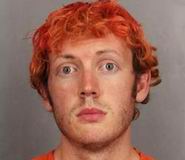
James Holmes
Mass murderer Omar Mateen
Mass murderer · USA · 2016
Omar Mir Seddique Mateen was an American mass murderer who killed 49 people and…
49 victims
Omar Mateen
Mass murderer · USA · 2016
Omar Mir Seddique Mateen was an American mass murderer who killed 49 people and…
49 victims
 Seung-Hui Cho
Mass murderer · USA · 2007
Seung-Hui Cho was a mass murderer who shot and killed 32 people and wounded man…
32 victims
Seung-Hui Cho
Mass murderer · USA · 2007
Seung-Hui Cho was a mass murderer who shot and killed 32 people and wounded man…
32 victims
 Adam Lanza
Mass murderer · USA · 2012
Adam Lanza, 20, fatally shot twenty children and six adult staff members in a m…
27 victims
Adam Lanza
Mass murderer · USA · 2012
Adam Lanza, 20, fatally shot twenty children and six adult staff members in a m…
27 victims
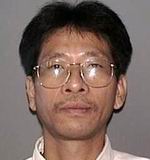 Jiverly Wong
Mass murderer · USA · 2009
December 8, 1967 — Jiverly Antares Wong was born. · late 1980s — Wong first cam…
13 victims
Jiverly Wong
Mass murderer · USA · 2009
December 8, 1967 — Jiverly Antares Wong was born. · late 1980s — Wong first cam…
13 victims
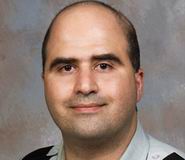 Nidal Hasan
Mass murderer · USA · 2009
Nidal Malik Hasan (born September 8, 1970) was a former United States Army Medi…
13 victims
Nidal Hasan
Mass murderer · USA · 2009
Nidal Malik Hasan (born September 8, 1970) was a former United States Army Medi…
13 victims
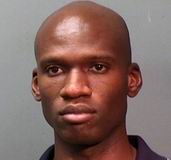 Aaron Alexis
Mass murderer · USA · 2013
Aaron Alexis was a lone gunman who carried out a mass shooting at the headquart…
12 victims
Aaron Alexis
Mass murderer · USA · 2013
Aaron Alexis was a lone gunman who carried out a mass shooting at the headquart…
12 victims
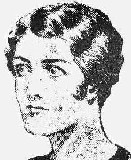 Christiana Edmunds
Murderer · United Kingdom · 1871
Christiana Edmunds (3 October 1828–1907) was an Englishwoman known as The Choco…
1 victim
Christiana Edmunds
Murderer · United Kingdom · 1871
Christiana Edmunds (3 October 1828–1907) was an Englishwoman known as The Choco…
1 victim
 Dennis Miller
Murderer · USA · 1995
Dennis "Chubb'' Miller Miller served jail time in 1995 for holding a gun to his…
1 victim
Dennis Miller
Murderer · USA · 1995
Dennis "Chubb'' Miller Miller served jail time in 1995 for holding a gun to his…
1 victim
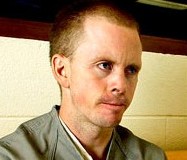 Sean Paul Hanify
Murderer ( claims to be a serial killer) · USA · 1989
Sean Paul Hanify described himself as a serial killer. He was convicted of firs…
8 victims
Sean Paul Hanify
Murderer ( claims to be a serial killer) · USA · 1989
Sean Paul Hanify described himself as a serial killer. He was convicted of firs…
8 victims
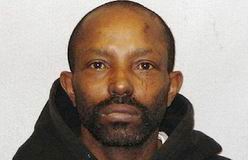 Anthony Sowell
Serial killer · USA · 2007
Anthony Edward Sowell (born August 19, 1959) was an American serial killer iden…
11 victims
Anthony Sowell
Serial killer · USA · 2007
Anthony Edward Sowell (born August 19, 1959) was an American serial killer iden…
11 victims
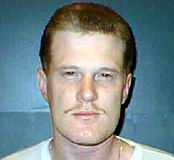 Don William Davis
Murderer · USA · 1990
Don William Davis was sentenced to death on March 6, 1992. Trial counsel for Do…
1 victim
Don William Davis
Murderer · USA · 1990
Don William Davis was sentenced to death on March 6, 1992. Trial counsel for Do…
1 victim
- Gender
- male
- Country
- USA
- Location
- Aurora, Colorado , USA
- Date of birth
- December 13, 1987
- Age at first offence
- 25
- Characteristics
- history of mental illness, mentally ill, school shooting, shooting spree
- Victim profile
- Jonathan Blunk, 24 / Alexander J. Boik, 18 / Jesse Childress, 29 / Gordon Cowden, 51 / Jessica Ghawi, 24 / John Larimer, 27 / Matt McQuinn, 27 / Micayla Medek, 23 / Veronica Moser-Sullivan, 6 / Alex Sullivan, 27 / Alexander C. Teves, 24 / Rebecca Wingo, 32
- Method of murder
- Shooting ( multiple firearms)
- Date(s) of murder
- July 20, 2012
- Years active
- 2012
- Date of arrest
- Same day
- Status
-
Acquitted / overturned
Plea of not guilty by reason of insanity accepted by Judge Carlos Samour Jr. on June 4, 2013; transferred to the Colorado Mental Health Institute in Pueblo on August 5, 2013
Case identification
James Eagan Holmes (born December 13, 1987) was the admitted perpetrator of a mass shooting that killed 12 people at a Century movie theater in Aurora, Colorado, on July 20, 2012.
Timeline
- July 20, 2012 — A mass shooting occurred at a Century movie theater in Aurora, Colorado, during a midnight screening of The Dark Knight Rises.
- July 20, 2012 — Police arrested Holmes outside the cinema minutes after the shooting.
- July 22, 2012 — A candlelight vigil was held at the site in Colorado; President Barack Obama ordered flags at government buildings flown at half-staff in tribute to the victims until July 25.
- July 23, 2012 — Holmes made his first court appearance in Centennial, Colorado before Judge William B. Sylvester.
- July 30, 2012 — Colorado prosecutors filed formal charges against Holmes that included 24 counts of first degree murder and 116 counts of attempted murder.
- August 9, 2012 — Holmes’s attorneys said their client is mentally ill and they needed more time to assess the nature of his illness.
- September 19, 2012 — The prosecution filed a motion to add 10 new charges against Holmes and asked to amend 17 others.
- September 20, 2012 — Prosecutors dropped their request to gain access to a notebook written by Holmes.
- September 21, 2012 — Three victims sued Cinemark in the U.S. District Court for the District of Colorado.
- October 11, 2012 — Holmes’s attorneys asked Judge William Sylvester to postpone a preliminary hearing scheduled for November.
- October 25, 2012 — The preliminary hearing was set for the week of January 7.
- November 14, 2012 — Holmes’s lawyers filed an emergency motion to delay a pre-trial hearing citing an unspecified condition that left him unable to appear in court.
- November 15, 2012 — Holmes made various suicide attempts referred to as “half-hearted” in days before the scheduled hearing on November 15.
- November 16, 2012 — The Aurora Victim Relief Fund announced each claimant will receive $220,000.
- January 7, 2013 — Holmes returned to court; 9-1-1 phone call recordings and videos from the cineplex were presented as evidence.
- January 8, 2013 — The preliminary hearing notes published reporting Day 1 of the preliminary hearing.
- January 9, 2013 — The preliminary hearing notes published reporting Day 2 of the preliminary hearing.
- January 10, 2013 — A judge ruled that evidence was sufficient for Holmes to face trial on all counts with which he had been charged.
- January 14, 2013 — Chantel Blunk filed a lawsuit against the University of Colorado in federal court.
- January 24, 2013 — A federal magistrate judge issued a recommendation that most claims be thrown out, with some claims alleging violations of the Colorado Premises Liability Act able to proceed.
- March 12, 2013 — A Colorado judge entered a plea of not guilty when Holmes’s attorney claimed his client was not prepared to enter a plea.
- March 27, 2013 — Holmes’s attorneys said he would be willing to plead guilty to avoid the death penalty; prosecutors later said they were not ready to accept the offer.
- March 28, 2013 — Prosecutors said they were not ready to accept the offer to plead guilty and avoid the death penalty and criticized the offer as a ploy.
- April 1, 2013 — Prosecutors announced they would seek the death penalty; District Attorney George Brauchler said “justice is death” for Holmes.
- May 7, 2013 — Holmes’s attorneys filed their intent for him to plead not guilty by reason of insanity; it would be changed in his plea on May 31.
- May 23, 2013 — Holmes’s attorneys called the state’s insanity-plea rules unconstitutional.
- May 29, 2013 — The judge ruled the laws about the insanity plea were not in violation of the Constitution.
- June 4, 2013 — The presiding judge accepted Holmes’s plea of insanity defense.
- August 5, 2013 — Holmes was transferred to the Colorado Mental Health Institute in Pueblo, Colorado; it was not known how long he would remain there.
- February 3, 2014 — The trial was scheduled to begin.
The offence
On July 20, 2012, a mass shooting occurred inside of a Century movie theater in Aurora, Colorado, during a midnight screening of the film The Dark Knight Rises. The gunman dressed in tactical clothing set off tear gas grenades and shot into the audience with multiple firearms, killing 12 people and injuring 70 others.
Location and theatre details
The shooting occurred in theater 9 at the Century 16 multiplex (operated by Cinemark), located at the Town Center at Aurora shopping mall at 14300 E. Alameda Avenue.
Police said the shooter bought a ticket, entered the theater, and sat in the front row; about 20 minutes into the film, he left the building through an emergency exit door, which he propped open. Police alleged that he then went to his car, which was parked near the exit door, changed into protective clothing, and retrieved his guns. About 30 minutes into the film, around 12:30 am, he reentered the theater through the exit door.
At the preliminary hearing, Aurora Det. Craig Appel said Holmes bought the ticket the night of July 7 and the purchase date shown on the printout errantly showed July 8; Appel also said Holmes’s ticket was actually purchased for theater 8, while Holmes went into theater 9.
Described appearance and equipment
Holmes was dressed in black and wore a gas mask, a load-bearing vest (not to be confused with a bulletproof vest), a ballistic helmet, bullet-resistant leggings, a bullet-resistant throat protector, a groin protector, and tactical gloves. Officers described that he was outfitted as if for a battle when police put him in handcuffs, including a helmet and gas mask, a bullet-resistant vest, a throat protector, a groin protector, and armored leggings; an officer testified he had at least one knife and that gun magazines fell from his pockets.
Timeline within the screening
Police said the shooting occurred around 12:30 am. Randy Hansen recreated the next few minutes to the second: at precisely 12:05, the theater played for patrons a commercial that lasted 2 minutes and 9 seconds; next came 13 minutes and 29 seconds worth of movie previews; the film started at 12:20:38 a.m. on July 20; the first 9-1-1 call came in at 12:38:37, and the shooting began roughly 18 minutes into the movie.
Weapons and reported effects
The shooter threw canisters emitting a gas or smoke that partially obscured the audience members’ vision and caused eye irritation and throat and skin itchiness. The account described multiple firearms used during the attack, including:
- A 12-gauge Remington 870 Express Tactical shotgun.
- A Smith & Wesson M&P15 semi-automatic rifle with a 100-round drum magazine, described as malfunctioning after reportedly firing about 45 rounds.
- A Glock 22 40-caliber handgun.
Witness accounts described that he fired first to the back of the room and then toward people in the aisles.
At the preliminary hearing, investigators believed the shooter fired his shotgun inside the theater only six times, and spent shotgun shells found on the theatre floor supported that count. Investigators found 65 .223-caliber shell casings used in the rifle and five shell casings from bullets fired from the handgun; the count was described as 76 shots total. Investigators also found 204 live rounds of rifle ammunition and several full handgun magazines in the theater; detectives said there were indications that at least one of the shooter’s weapons jammed.
A bullet passed through the wall and hit three people in the adjacent theater 8, which screened the same film. Witnesses said the fire alarm system began sounding soon after the attack began and staff told people in theater 8 to evacuate; one witness said she was hesitant to leave because someone yelled that there was someone shooting in the lobby and that they should not leave.
Investigation and evidence
Investigators say the shooter acted alone and was not part of a larger group or terrorist organization. Police interviewed more than 200 witnesses.
Arrest details and items recovered
Police arrested an unresisting Holmes next to his car behind the Century 16 theater moments after the 2012 Aurora shooting, at about 12:45 am according to the account. Responding officers recovered several guns from inside the car and the theater.
According to two federal authorities, Holmes had dyed his hair orange and had called himself “The Joker”. It was also noted that Holmes’s calling himself “The Joker” was later retracted to news sources by police.
Explosive devices and apartment search
Holmes told police that he booby-trapped his apartment with explosive devices before heading to the theater. Police later confirmed the presence of explosives in the apartment.
The apartment complex was limited to University of Colorado Medical Center students, patients, and employees and was described as about 5 miles (8 km) north of the cinema.
Officials evacuated five buildings surrounding Holmes’s Aurora residence. One day after the shooting, officials disarmed an explosive device wired to the apartment’s front entrance and allowed a remotely controlled robot to enter and disable other explosives. The apartment held more than 30 homemade grenades wired to a control box in the kitchen and 10 gallons of gasoline.
A law enforcement official said a Batman mask was found inside the apartment. Police finished collecting evidence from the apartment on July 23. Two days later, residents were allowed to return to the four surrounding buildings, and six days later, residents were allowed to move back into the formerly booby-trapped building.
At least one officer described that Holmes used the term “improvised explosive devices” and wanted to give information.
Search for mental state information
Holmes’s defense attorneys claimed he was a psychiatric patient of the medical director of Anschutz’s Student Mental Health Services prior to the Aurora shooting, while the prosecution disagreed; the judge required this information to be blacked out.
CBS News later reported that Holmes met with at least three mental health professionals at the University of Colorado prior to the massacre. One of Holmes’s psychiatrists suspected prior to the shooting that Holmes suffered from mental illness and could be dangerous. Dr. Lynne Fenton reported to campus police a month before the shooting that he had made homicidal statements indicating he was a threat to the public; despite that, she decided not to hospitalize him and her reasoning was stated as unknown. Other acquaintances also feared Holmes was violent.
Two weeks prior to the shooting, Holmes sent a text message asking a graduate student if they had heard of the disorder dysphoric mania and warning the student to stay away from him “because I am bad news.”
The narrative said that Holmes was a big fan of superheroes including Batman and that his apartment was decorated with Batman paraphernalia.
Seized items and admissibility dispute
At the preliminary hearing, it was reported that investigators seized four prescription bottles and immunization records from Holmes’s apartment when it was searched in July 2012. The account stated that it was not revealed what the prescriptions were or what they were for. The judge ruled in October that prosecutors could keep the items.
A judge ruled on August 30 that a notebook written by Holmes, in which he allegedly described a violent attack, was covered by physician–patient privilege and was inadmissible as evidence unless Holmes’s mental health became an issue in the case. Prosecutors dropped their request to gain access to the notebook on September 20, 2012.
Arrest and detention
Holmes was initially jailed at Arapahoe Detention Center under suicide watch. He was held in solitary confinement to protect him from other inmates, described as a routine precaution for high-profile cases.
Holmes made his first court appearance in Centennial, Colorado on July 23, before Judge William B. Sylvester. He was read his rights and no bond was given. A mandatory protection order was issued by the judge, and the judge appointed a public defender. Holmes said nothing and never looked at the judge. His appearance was described as “dazed” and “confused,” fueling speculation about his mental state.
At arraignment, he refused to enter a plea and Judge William Sylvester entered a plea of not guilty over the objection of Holmes’s attorneys, citing a law giving judges the authority to enter pleas for a defendant who “refuses to plead.”
Charges and court proceedings
Colorado prosecutors filed formal charges on July 30, 2012 that included 24 counts of first degree murder, 116 counts of attempted murder, possession of explosive devices, and inciting violence. The narrative said multiple charges expanded the opportunities for prosecutors to obtain convictions.
For each person killed, Holmes faced one count of murder with deliberation and one count of murder with extreme indifference. The account also described that two counts were filed for each victim in the murder and attempted-murder counts based on different legal theories.
In total, the account described that Holmes faced 141 felonies and additional counts, including 24 counts of first-degree murder, 116 counts of attempted murder, one count of possession of an explosive device, and one “sentence
Spotted an error, or have more information about this case?