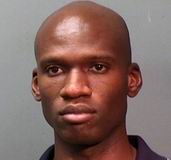
Aaron Alexis
Mass murderer Omar Mateen
Mass murderer · USA · 2016
Omar Mir Seddique Mateen was an American mass murderer who killed 49 people and…
49 victims
Omar Mateen
Mass murderer · USA · 2016
Omar Mir Seddique Mateen was an American mass murderer who killed 49 people and…
49 victims
 Seung-Hui Cho
Mass murderer · USA · 2007
Seung-Hui Cho was a mass murderer who shot and killed 32 people and wounded man…
32 victims
Seung-Hui Cho
Mass murderer · USA · 2007
Seung-Hui Cho was a mass murderer who shot and killed 32 people and wounded man…
32 victims
 Adam Lanza
Mass murderer · USA · 2012
Adam Lanza, 20, fatally shot twenty children and six adult staff members in a m…
27 victims
Adam Lanza
Mass murderer · USA · 2012
Adam Lanza, 20, fatally shot twenty children and six adult staff members in a m…
27 victims
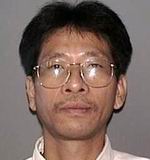 Jiverly Wong
Mass murderer · USA · 2009
December 8, 1967 — Jiverly Antares Wong was born. · late 1980s — Wong first cam…
13 victims
Jiverly Wong
Mass murderer · USA · 2009
December 8, 1967 — Jiverly Antares Wong was born. · late 1980s — Wong first cam…
13 victims
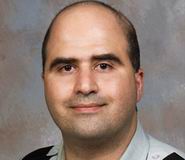 Nidal Hasan
Mass murderer · USA · 2009
Nidal Malik Hasan (born September 8, 1970) was a former United States Army Medi…
13 victims
Nidal Hasan
Mass murderer · USA · 2009
Nidal Malik Hasan (born September 8, 1970) was a former United States Army Medi…
13 victims
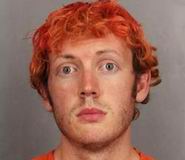 James Holmes
Mass murderer · USA · 2012
James Eagan Holmes (born December 13, 1987) was the admitted perpetrator of a m…
12 victims
James Holmes
Mass murderer · USA · 2012
James Eagan Holmes (born December 13, 1987) was the admitted perpetrator of a m…
12 victims
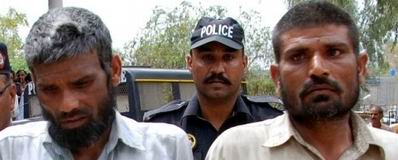 Arif and Farman Ali
Cannibals · Pakistan · 2011
Mohammad Arif Ali and Mohammad Farman Ali were brothers from the town of Darya…
0 victims
Arif and Farman Ali
Cannibals · Pakistan · 2011
Mohammad Arif Ali and Mohammad Farman Ali were brothers from the town of Darya…
0 victims
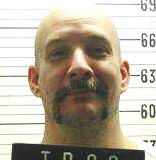 David Keen
Murderer · USA · 1990
David M. Keen was the appellant in State v. Keen in the Tennessee Supreme Court…
1 victim
David Keen
Murderer · USA · 1990
David M. Keen was the appellant in State v. Keen in the Tennessee Supreme Court…
1 victim
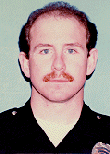 Alan Winterborne
Mass murderer · USA · 1993
Alan Winterborne (33) wanted a job and became involved in a long dispute with u…
4 victims
Alan Winterborne
Mass murderer · USA · 1993
Alan Winterborne (33) wanted a job and became involved in a long dispute with u…
4 victims
 Christopher Goins
Mass murderer · USA · 1994
Christopher Goins · October 14, 1994 — Christopher Goins and his friend Barry S…
5 victims
Christopher Goins
Mass murderer · USA · 1994
Christopher Goins · October 14, 1994 — Christopher Goins and his friend Barry S…
5 victims
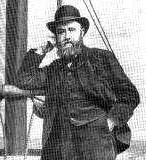 Thomas Dudley
Homicide · On the high seas · 1884
Thomas Dudley was sentenced to the statutory death penalty with a recommendatio…
1 victim
Thomas Dudley
Homicide · On the high seas · 1884
Thomas Dudley was sentenced to the statutory death penalty with a recommendatio…
1 victim
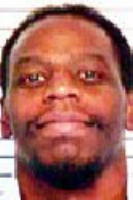 Ernest Marvin Carter
Murderer · USA · 1990
Ernest Marvin Carter was executed by lethal injection in Oklahoma on December 1…
1 victim
Ernest Marvin Carter
Murderer · USA · 1990
Ernest Marvin Carter was executed by lethal injection in Oklahoma on December 1…
1 victim
- Gender
- male
- Country
- USA
- Location
- Washington D.C., USA
- Date of birth
- May 9, 1979
- Age at first offence
- 34
- Characteristics
- shooting spree
- Victim profile
- Michael Arnold, 59 / Martin Bodrog, 53 / Arthur Daniels, 51 / Sylvia Frasier, 53 / Kathy Gaarde, 62 / John Roger Johnson, 73 / Mary Francis Knight, 51 / Frank Kohler, 50 / Vishnu Pandit, 61 / Kenneth Bernard Proctor, 46 / Gerald Read, 58 / Richard Michael Ridgell, 52
- Method of murder
- Shooting
- Date(s) of murder
- September 16, 2013
- Years active
- 2013
- Date of arrest
- —
- Status
-
Died in custody
Killed by police on 16 September 2013
Case identification
Aaron Alexis was a lone gunman who carried out a mass shooting at the headquarters of the Naval Sea Systems Command (NAVSEA) inside the Washington Navy Yard.
Timeline
- 25 August 2013 — Alexis arrived in the Washington, D.C., area on or around this date.
- 7 September 2013 — Alexis began staying at a Residence Inn hotel in southwest Washington.
- 14 September 2013 — Alexis visited the Sharpshooters Small Arms Range in Lorton, Virginia, tested an AR-15 semi-automatic rifle, purchased ammunition, test-fired the AR-15, and selected a Remington 870 Express 12-gauge shotgun after asking about buying a handgun.
- 16 September 2013 (around 8:20 a.m. EDT) — The attack began in Building 197.
- 16 September 2013 (8:23 a.m. EDT) — The first calls to 9-1-1 were made.
- 16 September 2013 (around 8:29 a.m. EDT) — A four-person active-shooter response team was deployed into the building.
- 16 September 2013 (around 9:00 a.m. EDT) — Alexis was killed by police around this time.
- 16 September 2013 (11:50 a.m.) — Alexis’s death was later confirmed.
- 19 September 2013 — The Navy Yard reopened and resumed usual operations on Thursday; Building 197 remained closed indefinitely.
- 20 September 2013 — Flags were ordered flown at half-staff until sunset on this date.
- 22 September 2013 — President Obama attended a memorial service for the victims.
Background
Aaron Alexis (May 9, 1979 – September 16, 2013) was a 34-year-old civilian contractor identified by police as the sole gunman. He had worked for a subcontractor on a Hewlett-Packard Enterprise Services contract and stayed with five other civilian contractors at the time of the massacre. At the time of his death, he was working online on a bachelor's degree in aeronautics from Embry-Riddle Aeronautical University.
Alexis grew up in Brooklyn and was a resident of Fort Worth, Texas. He was born in the New York City borough of Queens. He joined the United States Navy in 2007 and served in Fleet Logistics Support Squadron 46 at Naval Air Station Joint Reserve Base Fort Worth. His rating was aviation electrician's mate and he attained the rank of petty officer third class when he was honorably discharged from the Navy on January 31, 2011, although the Navy originally intended for him to receive a general discharge.
A Navy official said Alexis was cited on at least eight occasions for misconduct. In 2010, he was arrested in Fort Worth for discharging a weapon within city limits. He was also arrested in Seattle, Washington, in 2004 for malicious mischief, after shooting out the tires of another man's vehicle; Alexis later described it to detectives as an anger-fueled “blackout.” In 2008 in DeKalb County, Georgia, he was arrested for disorderly conduct. Authorities did not prosecute Alexis for the Seattle and Fort Worth cases.
From September 2012 to January 2013, Alexis worked in Japan “refreshing computer systems” on the Navy Marine Corps Intranet network for a Hewlett-Packard Enterprise Services subcontracting company called The Experts. After returning from Japan, he expressed frustration to a former roommate that he hadn’t been paid properly for the work he performed. Another roommate said Alexis frequently complained about being the victim of discrimination. In July 2013, he resumed working for The Experts in the United States.
Alexis had mental health issues including paranoia and a sleep disorder and he had been hearing voices. Since August 2013, he had been treated by the Veterans Administration for mental problems. Family members told investigators that Alexis was being treated for mental issues. In August, he had been prescribed trazodone, described as a generic antidepressant widely prescribed for insomnia. Authorities did not detail his motive.
Alexis had a Secret-level security clearance and a Common Access Card (C.A.C.) that allowed him to enter the Navy Yard. Military security clearances were described as designed to detect whether a recruit was susceptible to disloyalty or bribery. The clearance lasted 10 years.
The offence
On September 16, 2013, Alexis carried out a mass shooting at the headquarters of the Naval Sea Systems Command (NAVSEA) inside the Washington Navy Yard in Southeast Washington, D.C. The attack began around 8:20 a.m. E.D.T. in Building 197.
Alexis arrived at the Navy Yard in a rental car sometime before 8:20 a.m. using a valid pass to enter the Yard. He entered Building 197 carrying the disassembled shotgun (with the barrel and stock sawed off) in a bag on his shoulder. He assembled the shotgun inside a bathroom on the fourth floor, then emerged with the gun and began shooting. Many people on the fourth floor were shot at close range in the head. He continued firing on the third floor and the lobby.
At some point, Alexis shot and killed a security officer and took the officer's Beretta 9mm semiautomatic pistol. He used the pistol after running out of ammunition for his shotgun. Initial reports that Alexis claimed most victims by firing from a fourth-floor walkway onto people entering a first-floor cafeteria were later stated to be incorrect.
As the shooting unfolded:
- At 8:23 a.m., the first calls to 9-1-1 were made.
- Six minutes later, a four-person active-shooter response team was deployed into the building.
- Around that time, Alexis was still firing shots on both the third and fourth floors.
- A NAVSEA employee described encountering a gunman in all-blue clothing in a third-floor hallway, saying: "He just turned and started firing."
- One man was hit by a "stray bullet" in an alleyway.
After police began responding:
- Alexis opened fire on police within seven minutes of the first shootings.
- He hit Officer Scott Williams in the leg.
- Alexis engaged several law enforcement personnel in a gunfight lasting more than 30 minutes.
At around 9:20 a.m., Alexis was fatally shot in the head by police on the third floor. His death was later confirmed at 11:50 a.m.
Investigation
The agency treated the shooting as a criminal investigation, not one related to terrorism. Officials said they were still searching for a motive and posted pictures of Alexis on the F.B.I. Web site.
During the attack and in the hours that followed, police had searched for other armed men after surveillance video suggested two other armed men in different military uniforms were involved. At 7:00 p.m., officials ruled out the possibility of other shooters besides Alexis, while still seeking one person for possible involvement.
Arrest / use of force
Alexis was killed by police the same day as the attack.
Victims
There were 13 fatalities. The suspect and 11 of the victims were killed at the scene, while a 12th victim died later at George Washington University Hospital.
Eight others were injured, three of them from gunfire. The survivors wounded by gunshots (police officer Scott Williams and two female civilians) were described as in critical condition at Washington Hospital Center.
Fatalities listed:
- Michael Arnold, age 59
- Martin Bodrog, age 53
- Arthur Daniels, age 51
- Sylvia Frasier, age 53
- Kathy Gaarde, age 62
- John Roger Johnson, age 73
- Mary Francis Knight, age 51
- Frank Kohler, age 50
- Vishnu Pandit, age 61
- Kenneth Bernard Proctor, age 46
- Gerald Read, age 58
- Richard Michael Ridgell, age 52
A 12th victim also mentioned as dying later at George Washington University Hospital was Vishnu Pandit, described as 61 years old, who died after being shot in the head. One victim was described as having a head injury that was “not survivable” by hospital staff.
Victim context: All victims killed were described as civilian employees or contractors. No active duty military personnel were reported killed.
Injured people and injuries mentioned:
- Officer Scott Williams was shot in the leg and underwent several hours of surgery.
- One victim was shot in the shoulder.
- A bullet grazed a third victim’s head but did not penetrate her skull.
- Other injured people suffered injuries from falls or complained of chest pains.
Other named people and details about the incident
Security officer
Alexis killed a security officer and took the officer's Beretta 9mm semiautomatic pistol.
NAVSEA employee quote
A NAVSEA employee described encountering a gunman wearing all-blue clothing in a third-floor hallway, saying: "He just turned and started firing."
Witness and first aid accounts
Bertillia Lavern
Bertillia Lavern was inside the Navy Yard during the attack and gave an account of events. Lavern was described as a 39-year-old navy medical specialist (a corpsman) who had training operations with marines. She said she recognized the snap of gunfire, hit the ground, and scurried under a desk with her supervisor. She described screaming “Get down!” and mentioned a bright flash of light with glass shattered near her head.
Lavern described her supervisor as Andy Kelly. She said they ducked down again and waited, and she stated: "We realized then we had to get out of the building." She crawled to her desk to grab her identification badge and her purse and saw her colleague, Vishnu Pandit, who she said was down. She pressed her hand against Pandit’s head with tissues from her desk and prayed. She stated: "I felt him breathe," and she felt for his pulse. She described telling Kelly: "We need help now!" Lavern said she did not know where the gunman was and told her supervisor and Pandit: "Stay with me," and: "I'm right here." She said she told him that God loved him, that his friends loved him, and that they wanted him to stay with them, including: "We don't want you to go," and: "We need help now!"
Lavern said three security guards arrived and carried Pandit to an office chair, rolled him to the stairs and strapped him into an evacuation chair that would not roll. She said: "We lifted, dragged the chair down the stairs." She stated she checked his pulse at each floor and that it remained strong. When they reached the second floor, Lavern said the security guards’ radios came to life, and she quoted the response: "The shooter was on the first floor," and: "On the west side."
Lavern said they continued downstairs and escaped through a side door, where they found a security guard in an unmarked car, and she stated a gunman was on the loose and the security guard was worried about leaving his post. She said the security guard took her and Pandit into the car and raced off to escape the grounds, and that they got to a street corner a few blocks away. Lavern described easing Pandit to the pavement; she said his pulse was gone. Lavern later asked to go to the hospital with him but a detective told her she needed to provide a police report instead. She described removing Pandit’s badge and giving it to rescue workers so they would know who he was.
Lavern said Pandit was pronounced dead on arrival at George Washington University Hospital. Lavern described Pandit as a good friend and stated: "He was a good friend," and: "He was the sweetest man." Lavern’s husband, navy lieutenant commander Randall Lavern, was quoted: "That's my wife," and: "She's always the one running to help."
James Birdsall
James Birdsall was described as observing events from his office at Parsons, an engineering company. He was in an 11th-floor office and watched police cars screaming toward the Navy Yard. He noticed a man lying down in the street and assumed someone had had a heart attack. Birdsall described that his company had trained him to use a defibrillator and he ran. He said: "But I thought, 'If don't do this now, I'm going to look back and say I should have,'" and he later said he saw the gunshot wound to Pandit’s head.
Birdsall and Lavern provided CPR and used the defibrillator without a shock, according to Lavern. Birdsall described attending within minutes and stated an ambulance arrived within two minutes of being dispatched.
Escape / police response and security precautions
Within minutes of the first reports of shots, hundreds of police officers and naval officers surrounded the Naval Sea Systems Command headquarters. Military helicopters circled the facility. A helicopter lowered a basket to the roof of one of the buildings and appeared to be taking away victims.
The Navy Yard had a high wall but an official with access could drive a car into the parking lot without a trunk inspected. Cmdr. Tim Jirus was described as being on the fourth floor when he heard gunshots, saw people run, and later said a man approached asking about the shooting and was shot in the head. Jirus was quoted: “Luck. Grace of God. Whatever you want to call it.”
Security and closures described:
- On September 16, many roadways and bridges were temporarily closed, and flights out of Ronald Reagan Washington National Airport were temporarily suspended.
- Eight schools were locked down.
- Shortly after 3:00 p.m., United States Senate buildings went on lock-down for about an hour “out of an abundance of caution,” according to the Senate Sergeant at Arms.
- The Washington Nationals baseball team postponed their scheduled evening game due to the proximity to the Navy Yard area.
- The Navy Yard reopened and resumed usual operations on Thursday, September 19.
- Building 197 remained closed indefinitely.
Perpetrator: military service and security clearance issues
Alexis was given a general discharge in 2011 after exhibiting a “pattern of misbehavior.” In June 2007, he declared on a security questionnaire that he had never been arrested. A fingerprint check on an FBI database revealed that he had been arrested three years previously in Seattle. He was still granted a special security clearance after attending an interview and claiming he did not think he needed to declare the arrest.
An internal inquiry was described as establishing that when Alexis first enlisted, in June 2007, he declared he had never been arrested, and that Alexis had claimed in interviews he did not think he needed to declare the arrest. The inquiry recommended future OPM background checks “include any available police documents,” rather than relying solely on the account given by the person applying for clearance.
The Seattle incident was described as an altercation with a construction worker, with a report that Alexis retaliated by deflating the tires. It was described that Alexis told interviewers he chose not to declare the arrest because the charge had by then been dismissed and that his lawyer told him the incident would be removed from his record. A question on the application form specifically asked whether an individual had been arrested in the previous seven years, irrespective of charge or conviction. The OPM report concluded: "The subject committed this offense because he was retaliating for being intimidated by the male person," and: "The subject does not intend to repeat this type of behavior because he would avoid any confrontation and notify authorities if a similar situation were to occur in the future."
The inquiry also established that Alexis’s commander had been on the cusp of throwing him out of the navy in late 2010 after an arrest over a second firearm incident in Fort Worth in which he fired a bullet into a neighbor’s apartment after a dispute over noise. Alexis told police he discharged his gun by accident while cleaning it. Alexis left the navy of his own accord and requested to leave toward the end of 2010 under a scheme designed to downsize sections of the military considered overmanned. He was honorably discharged in January 2011 after telling commanders he wanted to go to college.
Reactions
United States President Barack Obama pledged to ensure the perpetrators would be held responsible. On the day of the shooting, Obama ordered flags flown at half-staff until sunset on September 20 at the White House, all public buildings and all military and naval posts, stations and vessels.
On September 17, Department of Defense officials laid a wreath at the Navy Memorial plaza in honor of the victims. President Obama attended a memorial service for the victims on September 22.
Thomas Hoshko, CEO of the company Alexis worked for, was quoted in an email sent to Navy Secretary Ray Mabus, saying: "[M]y heart and prayers go out to the families and friends of those innocent victims." An additional reaction described that the shooting sparked a discussion on the adequacy of security at U.S. military facilities.
Defense Secretary Chuck Hagel ordered a review of security procedures at military facilities around the world. Foreign Policy was described as reporting that Common Access Card holders can enter many military facilities “without being patted down or made to go through a metal detector.”
Gun control activists and relatives of victims of shootings at Sandy Hook Elementary School, Aurora, Colorado, and the Oak Creek, Wisconsin Sikh temple went to Washington to protest for stricter gun control on September 17.
Aftermath and facility status
Spotted an error, or have more information about this case?