Robert Hoolhouse
Murderer Buck Ruxton
Murderer · United Kingdom · 1935
Buck Ruxton (21 March 1899, Bombay – 12 May 1936, Manchester) was also known as…
2 victims
Buck Ruxton
Murderer · United Kingdom · 1935
Buck Ruxton (21 March 1899, Bombay – 12 May 1936, Manchester) was also known as…
2 victims
 Neville Heath
Murderer · United Kingdom · 1946
Neville George Clevely Heath (1917–46) was born in Essex, England, and later li…
2 victims
Neville Heath
Murderer · United Kingdom · 1946
Neville George Clevely Heath (1917–46) was born in Essex, England, and later li…
2 victims
 Daphne Wright
Murderer · USA · 2006
Daphne Wright was deaf and was described as lesbian. She lived with her girlfri…
1 victim
Daphne Wright
Murderer · USA · 2006
Daphne Wright was deaf and was described as lesbian. She lived with her girlfri…
1 victim
 Michael Nawee Blair
Murderer ? · USA · 1993
Michael Nawee Blair was sentenced to death for the 1993 murder of 7-year old As…
1 victim
Michael Nawee Blair
Murderer ? · USA · 1993
Michael Nawee Blair was sentenced to death for the 1993 murder of 7-year old As…
1 victim
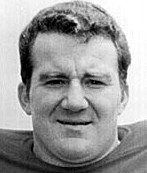 James Efflo Tyrer
Murderer · USA · 1980
James Efflo Tyrer (February 25, 1939 – September 15, 1980) was an American foot…
1 victim
James Efflo Tyrer
Murderer · USA · 1980
James Efflo Tyrer (February 25, 1939 – September 15, 1980) was an American foot…
1 victim
 Steven Hayes
Murderer · USA · 2007
Steven Hayes Steven Hayes was sentenced to death in Connecticut on December 2,…
3 victims
Steven Hayes
Murderer · USA · 2007
Steven Hayes Steven Hayes was sentenced to death in Connecticut on December 2,…
3 victims
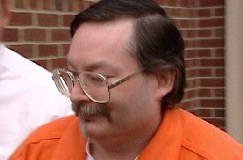 Anthony James Dick
Murderer · USA · 2006
Anthony James Dick was sentenced to death on August 22, 2007 after the shooting…
2 victims
Anthony James Dick
Murderer · USA · 2006
Anthony James Dick was sentenced to death on August 22, 2007 after the shooting…
2 victims
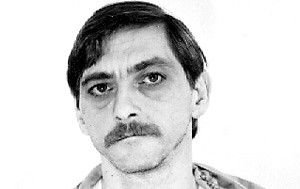 Larry Bellmore
Murderer · USA · 1985
Larry Bellmore Bellmore and Wesley went to Denney's home near Martinsville. Aft…
1 victim
Larry Bellmore
Murderer · USA · 1985
Larry Bellmore Bellmore and Wesley went to Denney's home near Martinsville. Aft…
1 victim
- Gender
- male
- Country
- United Kingdom
- Location
- Wolviston, County Durham, England, United Kingdom
- Date of birth
- 1916
- Age at first offence
- 22
- Characteristics
- rape, revenge
- Victim profile
- Margaret Jane Dobson, 67
- Method of murder
- St abbing with knife
- Date(s) of murder
- January 18, 1938
- Years active
- 1938
- Date of arrest
- 2 days after
- Status
-
Executed
Executed by hanging at Durham Gaol on May 26, 1938
Background
Robert Hoolhouse was the husband of no one in the case; Margaret Dobson was his victim. Margaret Dobson left her home at High Grange Farm, while her husband Henry expected her to return at about six o'clock but she failed to appear. Henry decided to walk into the village of Wolviston after checking that his workers had enough work to do.
The Hoolhouse family had worked for Mr Dobson five years before. An argument had cost Mr Hoolhouse and his son their jobs and the family their tied cottage. When the authorities became aware that Robert Hoolhouse had new scratches on his face, they decided to have a word with him.
A later account stated that medical reports had shown that Robert Hoolhouse had a mental age of less than fourteen. It also stated that his parents were deeply shocked by the verdict and were convinced that Robert was innocent. It stated that a taxi cab was waiting outside the courthouse to take their son home.
The offence
Margaret Dobson was found as a body in one of Henry Dobson's fields. She was described as having been brutally raped and then stabbed. Police believed they had a likely suspect in Robert Hoolhouse.
Investigation
After Henry Dobson discovered his wife’s body, he set off to the nearest police station. Police believed Robert Hoolhouse was involved after finding bloodstains on his clothing and determining that his alibi did not check out.
Pathological examination of Margaret Dobson's stomach contents put her time of death before four o'clock. Police held that Robert Hoolhouse had lied deliberately to hide the fact that he was killing Mrs Dobson at that time.
Percy Swales had seen a man standing in the field at five thirty. The account stated that this man was not Robert Hoolhouse and that it seemed to indicate that the true time of death was probably closer to five thirty, by which time Robert Hoolhouse was at home in Haverton Hill.
The account described evidence about scratches on Robert's face. When Margaret Dobson was found, she still wore her heavy woollen gloves. Police had experimented with these gloves, trying to cause scratches on a volunteer's face, but they did not succeed.
The account said Hoolhouse explained away the bloodstains on his clothing by saying that he had suffered from a boil which had burst.
The account described footprint evidence. Henry Dobson had walked around his wife's body and his footprints were plainly visible. Beneath one of Mr Dobson's boot prints was a different print. Plaster casts were taken of this and it was shown not to belong to Robert Hoolhouse. The account stated that the defence barrister completely missed the significance of this clue because it was beneath Henry Dobson's, so it must have been there first and almost certainly belonged to the killer.
The account also described semen stain evidence. Hoolhouse went to the police station in the same clothing he had worn on the day of the murder. This clothing was extensively tested, and no trace of semen staining was found, while it stated that Mrs Dobson had been raped and there was extensive semen stains on her body.
The account stated that two important witnesses were never called at Robert's trial: Margaret Barker and Doris Teale. Margaret Barker knew Robert well and had travelled by bus to Wolviston on January 18th. Robert was on the same bus, going to meet Dolly Lax so that he could take her to the cinema. Margaret spoke to Robert for part of the journey and gave a statement to the police that Robert had no scratches on his face at that time, when Margaret Dobson already lay dead. Doris Teale, who lived next door to the Hoolhouses, said she had seen Robert outside his house at about the time he was supposed to be murdering Margaret Dobson.
Arrest
At quarter past one in the morning of January 20th, Robert Hoolhouse was taken into custody.
Trial
Robert Hoolhouse was eventually charged with murder.
The account described the jury returning a verdict. The jury were out for over four hours before returning their guilty verdict. It said Hoolhouse's parents were deeply shocked by the verdict.
Sentencing
Hoolhouse's appeal was lost on May 9th.
Appeals
The account stated that despite a petition of 14,000 signatures, his execution proceeded. It also stated that his appeal was lost on May 9th.
Outcome
Despite the petition of 14,000 signatures, Robert Hoolhouse was executed at Durham on May 26th, 1938.
It stated that Robert Hoolhouse was just twenty one years old when he died on the scaffold at Durham.
Aftermath
The account stated that his parents were deeply shocked by the verdict and convinced Robert was innocent.
The account concluded that whatever else Robert Hoolhouse may have been, it was highly unlikely that he was also a murderer.
Other details
Missing person and discovery
On Tuesday, January 18th, 1938, Margaret Dobson left her home at High Grange Farm at four thirty in the afternoon. Her husband Henry expected Margaret to return at about six o'clock. When she failed to appear, he thought she might have stayed overnight at their daughter's home in Newcastle. The following day, Henry was up at dawn; by eight o'clock, a number of his workers had arrived and the farm was described as a hive of activity. Henry passed down the trackway that led to the main road and saw something in one of his fields, and he was horrified to discover the body.
Henry saw the body after it was found in a field, and he walked around the body before setting off to the nearest police station.
Robert Hoolhouse’s movements and alibi
Robert Hoolhouse claimed that on the day of the murder, January 18th, he had been at home at 6, Pickering Street, Haverton Hill, until about twelve thirty. He said that he then cycled to Wolviston where he visited the home of a friend, William Husband, and stayed until three thirty. He said he cycled home via Cowpen and arrived home at about four. That evening, at six thirty, he caught the bus to Wolviston where he again visited William Husband, and where he also saw John Lax and his sister Dolly. He said he and Dolly caught a bus for Billingham where they went to the pictures. At eleven o'clock, he saw Dolly onto the bus for Wolviston; after that he caught his own bus for Haverton, arriving home at around eleven thirty.
On January 19th, he was again at home until quarter to eleven, when he visited the Labour Exchange and signed on. He took a walk before returning home for lunch, then cycled to Wolviston again, falling off his bicycle on the way and sustaining scratches to his face. He stayed at William Husband's house until quarter past two, then cycled home.
When police checked his extensive timetable, the account said they found a discrepancy: the Husbands and the Laxs said he had arrived later on January 18th. It stated that Robert made a second, brief statement in which he admitted that he must have got the times wrong and had left an hour later, arriving at Wolviston at three forty five instead of two forty five.
Family and employment links
The account said the Hoolhouse family had worked for Mr Dobson five years before, and that an argument had cost Mr Hoolhouse and his son their jobs and the family their tied cottage.
Concerning motive
The account stated that this perhaps was reason enough to kill, and it also described that it was held that Robert Hoolhouse had lied deliberately to hide the fact that he was killing Mrs Dobson at that time.
Persons mentioned
Henry Dobson, Margaret Dobson, Robert Hoolhouse, William Husband, John Lax, Dolly Lax, Percy Swales, Margaret Barker, Doris Teale, and Mr Dobson were mentioned.
Locations mentioned
High Grange Farm, Newcastle, Wolviston, Haverton Hill, Pickering Street, Cowpen, Billingham, Durham, Durham Gaol, and the courthouse were mentioned.
Dates mentioned
January 18th, 1938; January 19th; January 20th; May 9th; May 26th, 1938; and “Tuesday, January 18th, 1938” were mentioned.
Age mentioned
Robert Hoolhouse was twenty one years old when he died on the scaffold at Durham.
Spotted an error, or have more information about this case?