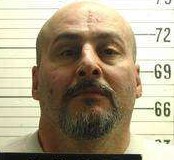
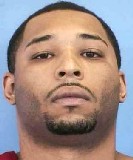
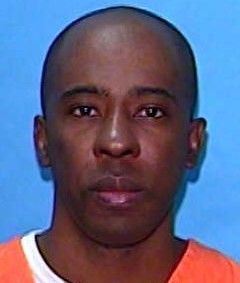
Michael Wayne Howell
Murderer Brian Kevin Rosenfeld
Murderer · USA · 1985
Brian Kevin Rosenfeld Brian Kevin Rosenfeld was sentenced to three concurrent l…
23 victims
Brian Kevin Rosenfeld
Murderer · USA · 1985
Brian Kevin Rosenfeld Brian Kevin Rosenfeld was sentenced to three concurrent l…
23 victims
 Yahweh ben Yahweh
Murderer · USA · 1980
Yahweh ben Yahweh was born and legally named Hulon Mitchell Jr. (October 27, 19…
23 victims
Yahweh ben Yahweh
Murderer · USA · 1980
Yahweh ben Yahweh was born and legally named Hulon Mitchell Jr. (October 27, 19…
23 victims
 Russell Ellwood
Murderer · USA · 1991
Russell Ellwood was a former taxi driver. Authorities suspected him of killing…
20 victims
Russell Ellwood
Murderer · USA · 1991
Russell Ellwood was a former taxi driver. Authorities suspected him of killing…
20 victims
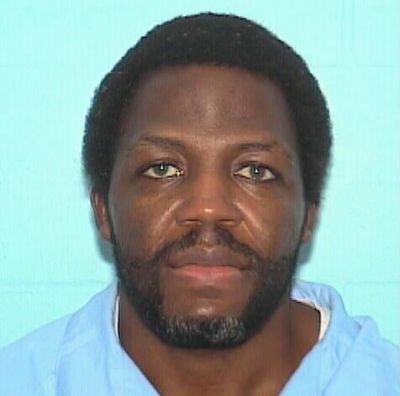 Hubert Geralds
Serial killer · USA · 1994
Hubert Geralds Jr. was mentally retarded and was described as having a sexual c…
5 victims
Hubert Geralds
Serial killer · USA · 1994
Hubert Geralds Jr. was mentally retarded and was described as having a sexual c…
5 victims
 Bernard Bolender
Murderer · USA · 1980
January 7, 1980 — Bernard Bolender and two codefendants, Paul Thompson and Jose…
4 victims
Bernard Bolender
Murderer · USA · 1980
January 7, 1980 — Bernard Bolender and two codefendants, Paul Thompson and Jose…
4 victims
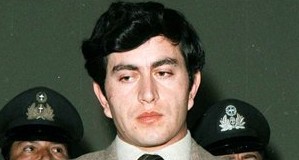 Kyriakos Papaxronis
Serial killer · Greece · 1981
Kyriakos Papaxronis (Κυριάκος Παπαχρόνης) was a serial rapist and murderer, kno…
3 victims
Kyriakos Papaxronis
Serial killer · Greece · 1981
Kyriakos Papaxronis (Κυριάκος Παπαχρόνης) was a serial rapist and murderer, kno…
3 victims
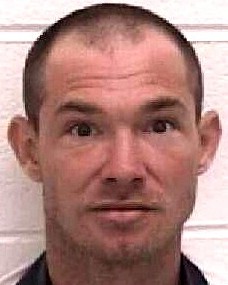 Timothy Don Carr
Murderer · USA · 1992
Timothy Don Carr, a white male, was executed by lethal injection in Georgia on…
1 victim
Timothy Don Carr
Murderer · USA · 1992
Timothy Don Carr, a white male, was executed by lethal injection in Georgia on…
1 victim
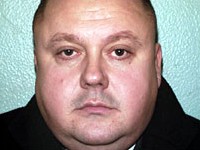 Levi Bellfield
Murderer · United Kingdom · 2003
Levi Bellfield (born 17 May 1968) was a British murderer. He was described by p…
3 victims
Levi Bellfield
Murderer · United Kingdom · 2003
Levi Bellfield (born 17 May 1968) was a British murderer. He was described by p…
3 victims
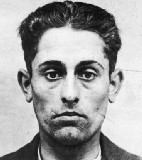 Tony Mancini
Murderer · United Kingdom · 1934
Tony Mancini was the resident of the house at number 52 Kemp Street in Brighton…
1 victim
Tony Mancini
Murderer · United Kingdom · 1934
Tony Mancini was the resident of the house at number 52 Kemp Street in Brighton…
1 victim
- Gender
- male
- Country
- USA
- Location
- Shelby County, Tennessee/Oklahoma, USA
- Date of birth
- October 6, 1959
- Age at first offence
- 28
- Characteristics
- robbery, attempt to collect insurance money
- Victim profile
- Alvin Kennedy (store clerk) / Charlene Calhoun
- Method of murder
- Shooting ( Smith & Wesson .38 revolver)
- Date(s) of murder
- November 1/2, 1987
- Years active
- 1987
- Date of arrest
- November 29 , 1987
- Status
-
Sentenced to death
Sentenced to death on October 26, 1989
Case record: Michael Wayne Howell
Background
Michael Wayne Howell was convicted of killing Memphis convenience store clerk Alvin Kennedy in 1987.
Howell and his girlfriend, Mona Lisa Watson, went on a three-state crime spree that ended in a shootout with police in Panama City, Florida. Howell and Watson had also been charged with another murder in Oklahoma.
Howell had previously been convicted of first-degree murder and sentenced to death in Oklahoma.
The offence
On Saturday, October 31, 1987, between 10:00 a.m. and 1:00 p.m., Howell and his girlfriend Mona Lisa Watson walked to the house of his brother's girlfriend, Cheri Goff. After arriving, Howell showed Goff a set of keys to the Lynn Whitsett Corporation property in Memphis where he had previously worked, and announced that "he was going to go get him a truck." Howell also said, "he was going down hard this time, and he was going to take some people with him." After making these statements, Goff said Howell used her telephone to call someone about getting a gun for him. Goff testified that she had previously seen Howell carrying a silver handgun with a white, or bone, handle.
Later that same night, sometime after 8:00 p.m., Terry Lee Ellis drove Howell and Watson to Raines Road and left them at the Ryder Truck Terminal near the Lynn Whitsett property.
Earlier, around 7:30 p.m., Howell and Watson stopped by the home of Robert Brink, the husband of one of Watson's friends. Brink said Howell asked to borrow some money and used the telephone, but did not stay long.
Around 2:30 a.m. on Sunday, November 1, 1987, Howell and Watson purchased a candy bar at the Quick-Shop Food Store on Macon in Memphis.
Cassandra Henderson, the clerk on duty, testified that Howell was driving a white pickup truck with writing on the door and a workman's rack on the back, which he had parked on the blind side of the store. Henderson said that as Howell was leaving the store, he bumped into another customer, Rodney Graves, who was entering the store, and a fight broke out between the two men. After the fight, Henderson said she saw Howell in the store parking lot with a silver pistol. Rodney Graves testified that after the fight, Howell went outside and returned to the front door of the store carrying a silver gun with bone handle, but nothing happened and Howell left the premises.
Later that day, sometime in the evening of November 1, 1987, Howell and Watson drove the Whitsett truck to Stanley Johnson's house. Johnson testified that Howell was waving around a nickel-plated .38 caliber pistol with a bone handle, which Howell referred to as "Jesus Christ." Johnson said Howell told him that "anybody messes with us, I'll introduce them to Jesus Christ."
Between 9:00 and 10:00 p.m., Cheri Goff testified she was returning home from a movie with some friends when she saw Howell driving a white truck with a Lynn Whitsett logo on the side and red sideboards on the back.
At 11:05 p.m. on November 1, 1987, Tennessee Highway Patrol Officer Aaron Chism stopped at Loeb's 7-Eleven Market on Whitten Road off Interstate 40 in Shelby County, and saw the victim, Alvin Kennedy, working at his job on the midnight shift.
Between 12:20 and 12:40 a.m. that same night, Brian Moser said he entered Loeb's store to purchase a six-pack of beer, but there was no clerk in the store. After waiting a few minutes, Moser said he went across the street to the Southland 7-Eleven and purchased his beer.
At 12:45 a.m., Charles Allen stopped at Loeb's 7-Eleven to purchase gasoline. Allen found Kennedy's body lying behind the counter in a pool of blood, the cash register drawer open, and all of the paper money missing. Allen ran across the street and asked the clerk to call the police.
Upon investigation, it was discovered that Kennedy had been shot once from close range in the upper right forehead. The wound immediately rendered him unconscious, and he died within a short time. It was also discovered that $111.16 was missing from the store. The cash register tape indicated that the last transaction had occurred at 12:24 a.m.
Susan Bauer, the clerk at the Southland 7-Eleven across the street, testified that she remembered Watson and Howell purchasing beer and a candy bar at her store around 12:20 a.m., approximately 20 minutes before Allen came in asking her to call the police. Bauer said she remembered when they came in because they parked the Whitsett truck on the blind side of the store, which she thought was suspicious for that time of night.
Later that day, Monday, November 2, 1987, at approximately 9:00 p.m., Charlene Calhoun was shot in the parking lot of her apartment complex near Interstate 40 in Dell City, Oklahoma, and her 1987 Toyota Tercel was stolen. A witness who heard the shooting said the witness saw a man and a woman get into a light-colored Toyota hatchback and drive away after the shots were fired. The Lynn Whitsett truck was found only 125 feet from the scene of the shooting, with its interior on fire, and Howell's left palm prints on the truck's fenders.
On the morning of Tuesday, November 3, 1987, Stanley Johnson said he saw Howell and Watson in Memphis and they were driving a small compact car. Howell asked Johnson for money and said that "he had a little heat on him [and] had to get out of town." Johnson said he gave Howell $20, and promised to try to raise a couple of hundred dollars more by that evening. That night, Howell and Watson came to Johnson's house. After Johnson told Howell he had not been able to raise any money, Howell asked Johnson to sell his gun for him. When Johnson said he couldn't get $5 for the gun, Howell decided to keep it.
Johnson testified that he told Howell the story of the killing was being broadcast, his picture was being shown on TV, and it was reported that he killed a man for $17. Johnson said he asked Howell, "Why $17?" and Howell replied:
"Yeah, he wouldn't open the safe, so I told him I'd introduce him to Jesus Christ if he wouldn't open the safe. You know how I am, Stan. If they're old enough to talk, I wasn't going to leave a witness. They're old enough to die."
After giving Howell $30 and promising to try to find $200 for him by the next night, Johnson said Howell and Watson left and Johnson never saw them again.
Almost a month later, on November 29, 1987, Howell and Watson were arrested in Panama City, Florida, after a shoot-out with police and a high-speed chase. They were driving the stolen Toyota from Oklahoma, but had replaced the Oklahoma tags with Tennessee plates from another vehicle. Florida police found a nickel-plated Smith & Wesson .38 revolver with a bone handle on the floorboard of the passenger's side where Howell had been seated. Ballistics tests indicated that the bullet that had killed Alvin Kennedy had been fired from this gun, as had the bullet taken from the body of Charlene Calhoun in Oklahoma.
Investigation
Ballistics tests indicated that the bullet that had killed Alvin Kennedy had been fired from the nickel-plated Smith & Wesson .38 revolver with a bone handle found during the November 29, 1987 arrest. The same gun had also fired the bullet taken from the body of Charlene Calhoun in Oklahoma.
The tape from the cash register indicated that the last transaction at Loeb's 7-Eleven occurred at 12:24 a.m., and Kennedy was shot once from close range in the upper right forehead.
Arrest
On November 29, 1987, Howell and Watson were arrested in Panama City, Florida, after a shoot-out with police and a high-speed chase.
Trial
Procedural history
Howell was convicted of grand larceny and felony murder in September 1989 and was sentenced by the jury to death for the felony murder. The death sentence was ordered to run consecutively with a death sentence Howell received in Oklahoma as well as a 25-year sentence for attempted murder in Florida. These out-of-state convictions arose out of events that occurred shortly after the Tennessee homicide.
The Tennessee Supreme Court affirmed Howell's conviction and death sentence in November 1993: State v. Howell, 868 S.W.2d 238 (Tenn. 1993).
The United States Supreme Court denied certiorari in March 1994: Howell v. Tennessee, 510 U.S. 1215, 114 S. Ct. 1339, 127 L. Ed. 2d 687 (1994).
In February 1995, Howell filed his petition for post-conviction relief.
The trial court denied this petition on March 3, 1997, and Howell appealed.
Guilt phase
At trial, Howell was tried and convicted of first-degree murder in the perpetration of a felony and grand larceny, but found not guilty of premeditated first-degree murder.
The State incorporated evidence presented at the guilt phase for sentencing.
The jury found the defendant guilty of first-degree murder in the perpetration of a felony and grand larceny, but not guilty of premeditated first-degree murder.
Sentencing phase
In the sentencing phase, the State introduced proof that Howell had been convicted of:
- armed robbery in Wyoming in 1980,
- first-degree murder in Oklahoma in 1988, and
- armed robbery and attempted first-degree murder in Florida in 1988.
In mitigation, Howell's main theory was that he suffered from brain damage, so his ability to appreciate the wrongfulness of his conduct or conform his conduct to the requirements of the law was impaired.
Howell's mother testified that Howell was a loving son who had come from a very poor family. She testified that Howell's father drank heavily and Howell grew up witnessing his father beating her. Howell's mother testified that Howell, the fifth of nine children, had been born prematurely as a result of one such beating. She testified that Howell had been diagnosed as a slow learner and placed in special education classes, that Howell dropped out of school in the eighth grade, and then worked on his father's garbage truck.
Howell's sister and mother testified that Howell suffered four head injuries during his life:
- while working on the garbage truck, Howell was hit in the head by the truck compactor door and his skull fractured,
- during a fight, one of Howell's brothers hit him in the head and knocked him out with a bumper jack,
- while working on a river boat, a winch cable broke loose and knocked him unconscious, and
- in a boxing match in the Wyoming prison, Howell was knocked unconscious after taking several left hooks.
Dr. Phillip Murphy, a clinical psychologist, testified that he administered a battery of psychological tests to Howell in November 1988. Dr. Murphy testified:
"definite evidence of brain damage,"
Dr. Murphy testified that brain abnormalities impaired Howell's ability to appreciate the wrongfulness of his conduct or conform his conduct to the requirements of the law to the extent that his judgment was substantially affected. Dr. Murphy diagnosed Howell with chronic organic brain syndrome and a resultant personality disorder. Dr. Murphy also testified that extensive medical testing failed to show evidence of brain damage.
The jury found two aggravating circumstances beyond a reasonable doubt:
- Howell was previously convicted of one or more felonies which involved the use or threat of violence to the person, Tenn. Code Ann. § 39-2-203(i)(2) (1982),
- the murder was committed while Howell was engaged in committing a felony, Tenn. Code Ann. § 39-2-203(i)(7) (1982).
The jury found that there were no mitigating circumstances sufficiently substantial to outweigh the two aggravating circumstances, and sentenced Howell to death.
Evidence presented at the guilt phase
The last evidence introduced by the State was the redacted testimony of co-defendant Mona Lisa Watson given in April 1988 at Howell's Oklahoma preliminary hearing for the murder of Charlene Calhoun. Watson agreed to testify against Howell in return for a life sentence. Watson later decided not to testify at both the Tennessee trial and the Oklahoma trial. Watson testified in the Oklahoma preliminary hearing that she and Howell drove Interstate 40 from Memphis to Oklahoma in the Lynn Whitsett truck on November 1 and 2, 1987. Watson said they drank beer and shot cocaine on the trip. Watson testified that when they got to Dell City, Oklahoma, they got off the interstate and stopped at an apartment complex to walk around. After walking around, Watson said Howell shot Charlene Calhoun, Howell and Watson took Calhoun's car, and they set fire to the Lynn Whitsett truck by igniting lighter fluid that Calhoun had thrown on the front seat. Watson testified Howell and Watson then drove back to Memphis in Calhoun's car and thereafter to Florida on November 3, 1987.
On cross-examination during the Oklahoma preliminary hearing, the Oklahoma public defender representing Howell asked Watson questions about a shooting in Memphis prior to their trip to Oklahoma. Watson testified that before going to Oklahoma, Watson and Howell had gone into a convenience store in Memphis to purchase a six-pack of beer. Watson testified that Howell handed her the beer and told her to go to the car, then Howell pulled a gun and shot the clerk in the head, using the same gun Howell had shown Watson earlier.
At Howell's Tennessee trial, Howell's defense counsel tried to impeach Watson's former testimony by attempting to introduce testimony from Watson's Oklahoma lawyer and Howell's Oklahoma lawyer that Watson later stated she had lied during the preliminary hearing to escape the death penalty herself. The Memphis trial judge sustained the State's objection that the evidence was hearsay and self-serving, and ruled it inadmissible.
Except for the attempt to impeach Watson's former testimony, Howell presented no testimony on his behalf at the guilt phase of the trial.
Post-conviction proceedings
Appeal: issues presented
At the Court of Criminal Appeals of Tennessee, on a post-conviction appeal, the court reviewed whether Howell received effective assistance of counsel at his original trial and whether the refusal to allow evidence at his sentencing hearing of his co-defendant's recantation constituted a wrongful denial of his right to present mitigating evidence.
The Court of Criminal Appeals found that Howell failed to establish his claim of ineffective assistance of counsel and found that the recantation issue had previously been determined; it affirmed the trial court's judgment.
The Court of Criminal Appeals decision was delivered by Joe G. Riley, Judge, with Gary R. Wade and David G. Hayes, Judges concurring.
Trial counsel’s testimony at post-conviction hearing
At the post-conviction hearing, Howell was represented by Assistant Public Defenders Edward G. Thompson and Robert Jones. Thompson was associated with the Public Defender's Office since 1964 and was a member of the office's Capital Defense Team at the time of trial. Jones had been with the Public Defender's Office for nineteen (19) years and with the Capital Defense Team for seventeen (17) years. Both had been involved in hundreds of capital cases.
Along with counsel, Howell received investigative services from Ralph Naly, Mike Owens, and Christine Glenn. Naly had been assigned to the Capital Defense Team for seventeen (17) years, and Owens handled interviewing witnesses, investigating facts, and gathering evidence. Glenn had a background in social work and had been with the Capital Defense Team for nineteen (19) years, and conducted a background check that included interviewing family members and friends and obtaining medical and prior prison records.
Counsel testified that before the Tennessee proceedings, Howell had been convicted of first degree murder and sentenced to death in Oklahoma. Counsel testified that they were in constant contact with the Oklahoma defense team and had access to their trial and investigative files, and that the Oklahoma attorneys were cooperative and helpful.
Counsel testified that in the Oklahoma trial Howell asserted an insanity defense and relied on Drs. Phillip J. Murphy and Jonathan Joseph Lipman. After reviewing the experts' testimony and files and discussing strategy with the Oklahoma attorneys, counsel concluded there was not enough evidence for an insanity defense in Tennessee. Counsel stated that because the State's case was largely circumstantial, their strategy was to rebut the evidence, challenge reasonable doubt, and present as much mitigation as possible. Counsel utilized Dr. Murphy’s testimony during sentencing but did not call Dr. Lipman.
Jones testified that counsel used expert testimony for mitigation since diminished capacity was not a viable defense to the indicted charge of felony murder. Jones also testified that in his experience, there must be at least a tacit admission for an insanity defense to be successful; in Howell's case, Howell was not willing to acknowledge anything related to guilt.
Counsel testified that they believed juries would discount mental defenses associated with drug and alcohol abuse. They believed the jury would more readily accept Dr. Murphy's opinion that head injuries caused Howell's mental disease or defect. Jones testified that juries were more receptive to involuntary disorders resulting from injuries than voluntarily instigated problems associated with drug abuse. Counsel chose this approach despite Dr. Lipman’s opinion in Oklahoma that Howell was insane at the time of the offense, noting that the insanity defense had failed in Oklahoma.
Counsel testified they were aware of Watson's recantation of her preliminary hearing testimony in Oklahoma regarding the circumstances of the crimes and Howell's involvement. They attempted to elicit testimony about this during trial from the Oklahoma attorneys, but the trial court sustained the State's objection that the testimony was hearsay.
The Supreme Court had determined on direct appeal that the exclusion of this testimony was harmless error.
Testimony of Dr. Murphy at post-conviction hearing
Howell introduced the testimony of Dr. Phillip J. Murphy, a clinical psychologist, during the post-conviction hearing as well as during sentencing.
Dr. Murphy testified that neuropsychological tests indicated Howell suffered from some form of brain damage. Projective personality tests showed Howell was not suffering from significant other psychiatric problems other than those related to long-term drug abuse. Dr. Murphy testified that Howell’s IQ was 91 on the full scale and was not significantly below normal.
Dr. Murphy opined there could have been a viable insanity offense. Dr. Murphy testified that he was unaware that Howell told an acquaintance immediately after the murder in Memphis that he was going to kill any witnesses old enough to talk, and that he admitted this statement might affect his opinion about Howell’s state of mind at the time of the offense.
Dr. Murphy testified that Howell was competent to stand trial, understood what was happening, and was capable of making his own decisions during the trial. Dr. Murphy also testified that he had been contacted by the Memphis attorneys solely for use in mitigation.
Testimony of Dr. Lipman at post-conviction hearing
Dr. Jonathan Joseph Lipman testified at the post-conviction hearing. As a neuropharmacologist specializing in the effects of drugs upon the brain, Lipman conducted a clinical interview of Howell about a year after the crimes but just two days before the Oklahoma trial. Lipman testified in support of an insanity defense at the Oklahoma trial.
Lipman testified he was contacted by the Memphis attorneys but was never called as a witness in the Tennessee case. Lipman stated that counsel did not ask him any details about his evaluation or the insanity defense to which he testified in Oklahoma.
Lipman opined Howell was insane at the time of the offense in Oklahoma. Lipman testified that Howell's mental state was exacerbated by drug use.
Lipman testified at the post-conviction hearing that Howell told him Howell believed he was a member of an underground organization at war with another underground organization, and that Howell would kill members of the other organization if given the chance. Lipman testified that Howell kept seeing a red car pass by while he was confronting the victim in Oklahoma and believed Howell was being targeted or set up, so Howell killed the victim. Lipman testified that this was irrational or delusional behavior and that Howell suffered from a mental disease or defect.
Lipman stated, however, that he did not give these same facts during the Oklahoma trial. Instead, Lipman testified that Howell told him he was running drugs and killed the victim during a drug deal. Lipman testified that like Dr. Murphy, he was not aware that Howell stated he would kill any witnesses old enough to talk. Lipman testified that this was significant but would have to be examined in the overall context.
Ineffective assistance of counsel
Strickland framework
The post-conviction court applied the standard for ineffective assistance of counsel requiring proof that counsel's advice or services were not within the range of competence demanded of attorneys in criminal cases, and that but for counsel’s deficient performance the result of the trial would have likely been different. The review also reflected principles about not second-guessing tactical and strategic choices unless uninformed due to inadequate preparation, and applying a strong presumption of reasonable professional assistance. The burden was on Howell to prove allegations by a preponderance of the evidence.
Failure to utilize insanity defense
Howell claimed trial counsel failed to fully investigate and that counsel were aware of expert testimony regarding an insanity defense but neglected to discuss it with Drs. Murphy and Lipman. Howell argued counsel did not pursue the insanity defense.
Counsel testified they had been provided all investigative files and transcripts from the Oklahoma case, consulted Oklahoma counsel, and had investigators interview witnesses and compile personal and medical information in Tennessee.
Counsel testified that they concluded there was not enough evidence for an insanity defense in Tennessee and that their strategy was to challenge the State’s case and present mitigation. Counsel testified that because the insanity defense had failed in Oklahoma, they decided not to pursue it. Counsel testified that they believed a tacit admission of guilt was necessary for an insanity defense to work and that Howell did not admit anything. Counsel also testified that Dr. Murphy and Dr. Lipman were not aware Howell stated shortly after the crime in Memphis that he was willing to kill witnesses old enough to talk, and that Dr. Murphy testified this statement might have influenced his evaluation.
The court found that the evidence did not preponderate against the trial court’s finding that counsel was well-prepared and acted reasonably and competently in planning trial strategy. It also found Howell failed to establish prejudice, including a lack of a reasonable probability that the outcome would have been different had an insanity defense been pursued. The issue was found without merit.
Failure to introduce co-defendant’s recantation transcript
Howell claimed counsel was ineffective by failing to attempt to introduce the transcript of Watson’s recantation of her preliminary hearing testimony in Oklahoma.
During trial, counsel sought to introduce proof from Oklahoma attorneys that Watson said she had lied and placed blame on Howell to escape the death penalty herself. The State objected and the trial judge ruled the evidence inadmissible hearsay. Counsel did not seek to introduce the actual transcript.
On direct appeal, the Supreme Court held the trial court erred in ruling the evidence inadmissible hearsay and held the testimony was proffered to impeach Watson’s former testimony. The Supreme Court found there was "ample [circumstantial evidence] to point the finger of guilt unerringly at the defendant alone," and held the error was harmless beyond a reasonable doubt.
Howell argued counsel should have attempted to introduce the certified transcript and that denial would not have been harmless error. The post-conviction court found that even if counsel should have introduced the transcript, Howell could not satisfy the prejudice prong because the Supreme Court already considered the substance of the evidence and concluded the exclusion would not have affected the outcome. The suggestion that the form of the evidence would have produced a different ruling was found without merit.
Exclusion of mitigating evidence (recantation at sentencing)
At sentencing, Howell sought to introduce evidence that Watson lied during the Oklahoma preliminary hearing to escape the death penalty and argued it supported Tenn. Code Ann. § 39-2-203(j)(5) (1982) by showing his role was relatively minor.
The trial court sustained the State's objection for relevance and hearsay, ruling that the recantation did not relate to mitigation and was instead an attempt to re-litigate innocence.
On appeal, the Supreme Court held it was not error to exclude at the penalty phase Watson’s statement that she lied when she identified Howell as the killer. The Supreme Court noted that evidence overwhelmingly proved Howell was the person who killed Alvin Kennedy, and there was no proof in the record that Watson pulled the trigger. The Supreme Court found the recantation irrelevant to the mitigating circumstance, Howell's character, and the circumstances of the crime.
Howell argued that State v. Teague, 897 S.W.2d 248 (Tenn. 1995) required reversal of his sentence. The post-conviction court disagreed, finding the issue regarding admissibility had already been determined by the Supreme Court and Teague did not apply to the facts.
In quoting Teague, the court repeated:
"Both the statute and prior case law dictate that the defendant has the right to present at the sentencing hearing, whether by the jury which heard the guilt phase or by a jury on resentencing, evidence relating to the circumstances of the crime or the aggravating or mitigating circumstances, including evidence which may mitigate his culpability.
Evidence otherwise admissible under the pleadings and applicable rules of evidence, [sic] is not rendered inadmissible because it may show that the defendant did not kill the victim, so long as it is probative on the issue of the defendant's punishment."
The post-conviction court concluded that the issue had previously been determined under Tenn. Code Ann. § 40-30-112(a) (repealed 1995), because the Supreme Court had already affirmed the trial court’s exclusion and found the recantation not relevant to mitigation or the character and circumstances of the crime.
Outcome
The judgment of the trial court was AFFIRMED.
Howell’s sentence of death by electrocution was to be carried out on March 16, 1998, unless otherwise stayed by an appropriate order.
Timeline
- October 31, 1987 — Howell and Mona Lisa Watson walked to Cheri Goff’s house and Howell showed keys to Lynn Whitsett Corporation property; Howell told Goff he would “go get him a truck” and “he was going down hard this time,” and said he would “take some people with him.”
- November 1, 1987 — Howell and Watson purchased a candy bar at the Quick-Shop Food Store on Macon in Memphis; Howell and Watson drove to the Loeb’s 7-Eleven area and Alvin Kennedy worked the midnight shift.
- December 3, 1997 — The Court of Criminal Appeals of Tennessee decided the post-conviction appeal: Howell v. State of Tennessee (post-conviction: death penalty); the court affirmed the trial court.
- September 1989 — Howell was convicted of grand larceny and felony murder and sentenced by the jury to death for the felony murder.
- November 1993 — Tennessee Supreme Court affirmed Howell’s conviction and death sentence in State v. Howell, 868 S.W.2d 238 (Tenn. 1993).
- March 1994 — United States Supreme Court denied certiorari in Howell v. Tennessee, 510 U.S. 1215.
- February 1995 — Howell filed his petition for post-conviction relief.
- March 3, 1997 — Trial court denied Howell’s petition for post-conviction relief.
- March 16, 1998 — Howell’s death sentence by electrocution was scheduled to be carried out unless stayed by an appropriate order.
- October 26, 1989 — Sentenced to death on October 26, 1989.
- April 1988 — Mona Lisa Watson gave redacted testimony in Oklahoma at Howell’s preliminary hearing for the murder of Charlene Calhoun.
- November 2, 1987 — Charlene Calhoun was shot in Dell City, Oklahoma, and her 1987 Toyota Tercel was stolen; the Lynn Whitsett truck was found 125 feet from the scene with its interior on fire and Howell’s left palm prints on the fenders.
- November 3, 1987 — Howell and Watson were seen in Memphis in a small compact car; Howell asked Stanley Johnson for money; Howell asked Johnson to sell his gun for him.
- November 29, 1987 — Howell and Watson were arrested in Panama City, Florida, after a shoot-out with police and a high-speed chase.
Other details
- Howell had been charged with another murder in Oklahoma involving Charlene Calhoun, and he and Mona Lisa Watson were charged in connection with Oklahoma events.
- The jury found Howell had previously been convicted of felonies involving the use or threat of violence to the person under Tenn. Code Ann. § 39-2-203(i)(2) (1982).
- The jury found the murder was committed while Howell was engaged in committing a felony under Tenn. Code Ann. § 39-2-203(i)(7) (1982).
- The post-conviction court referenced Strickland v. Washington, 466 U.S. 668, and other Tennessee cases regarding ineffective assistance, deference to counsel’s strategy, and standards for relief.
Spotted an error, or have more information about this case?