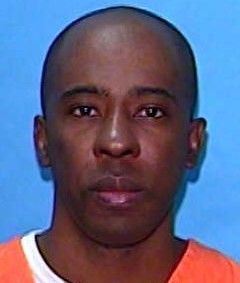
Paul Augustus Howell
Murderer Brian Kevin Rosenfeld
Murderer · USA · 1985
Brian Kevin Rosenfeld Brian Kevin Rosenfeld was sentenced to three concurrent l…
23 victims
Brian Kevin Rosenfeld
Murderer · USA · 1985
Brian Kevin Rosenfeld Brian Kevin Rosenfeld was sentenced to three concurrent l…
23 victims
 Russell Ellwood
Murderer · USA · 1991
Russell Ellwood was a former taxi driver. Authorities suspected him of killing…
20 victims
Russell Ellwood
Murderer · USA · 1991
Russell Ellwood was a former taxi driver. Authorities suspected him of killing…
20 victims
 Robert Martines Perez
Murderer · USA · 1994
Name: Robert Martines Perez · Other name used in proceedings: Robert Martinez P…
15 victims
Robert Martines Perez
Murderer · USA · 1994
Name: Robert Martines Perez · Other name used in proceedings: Robert Martinez P…
15 victims
 Billy Frank Vickers
Murderer · USA · 1993
Billy Frank Vickers Vickers was executed by lethal injection in Texas on Januar…
14 victims
Billy Frank Vickers
Murderer · USA · 1993
Billy Frank Vickers Vickers was executed by lethal injection in Texas on Januar…
14 victims
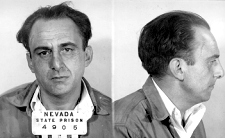 Albert Everette Sala
Murderer · USA · 1945
Albert Everette Sala was a native of Oakland, California, and he was 38 years o…
1 victim
Albert Everette Sala
Murderer · USA · 1945
Albert Everette Sala was a native of Oakland, California, and he was 38 years o…
1 victim
 James Roy Knox
Murderer · USA · 1982
James Roy Knox murdered pharmacist Joseph Sanchez during a robbery at Joe’s Pha…
1 victim
James Roy Knox
Murderer · USA · 1982
James Roy Knox murdered pharmacist Joseph Sanchez during a robbery at Joe’s Pha…
1 victim
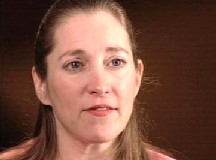 Celeste Beard
Murderer · USA · 1999
Celeste Beard Johnson (born February 13, 1963) was a convicted American murdere…
1 victim
Celeste Beard
Murderer · USA · 1999
Celeste Beard Johnson (born February 13, 1963) was a convicted American murdere…
1 victim
 Judy Valot
Murderer · USA · 1998
Judy Valot was convicted of second-degree murder in the killing of her boyfrien…
1 victim
Judy Valot
Murderer · USA · 1998
Judy Valot was convicted of second-degree murder in the killing of her boyfrien…
1 victim
- Gender
- male
- Country
- USA
- Location
- Jefferson County, Florida, USA
- Date of birth
- J une 25, 1965
- Age at first offence
- 27
- Characteristics
- —
- Victim profile
- Jimmy Fulford, 35 (Florida Highway Patrol trooper)
- Method of murder
- Pipe bomb (massive trauma caused by explosion)
- Date(s) of murder
- February 1, 1992
- Years active
- 1992
- Date of arrest
- Same day
- Status
-
Executed
Sentenced to death on January 10, 1995; executed by lethal injection in Florida on February 26, 2014
Case information
Paul Augustus Howell was a Florida death row prisoner identified as Black, male, with hair color Black and eye color Brown, height 5'08", and weight 172 lbs. His birth date was 06/25/1965. He had aliases including PAUL HOWELL, PAUL A HOWELL, PAUL AGUSTIS HOWELL, PAUL AUGUSTUS HOWELL, and AUGUSTUS PAUL. His DC number was 123792. The case was in the Second Judicial Circuit, Jefferson County, with Case # 92-22.
Background
Howell, Tammie Bailey, and Howell's brother, Patrick, were part of a drug ring involving a number of other individuals in which drugs were obtained in Fort Lauderdale and then sold in Marianna, Florida. Howell intended to eliminate Bailey as a witness because she had knowledge that could link Howell and his brother to a prior murder.
In January of 1992, Howell constructed a bomb for the specific purpose of killing Tammie Bailey at her home in Marianna, Florida. The bomb was placed inside a microwave oven which was gift-wrapped and placed in a rental car.
Howell rented a car for the delivery trip. Lester Watson was the driver hired to drive and deliver the microwave to Bailey. Watson testified that he saw Howell wrapping the box that contained the microwave oven but he never knew it was a bomb, thinking instead it held drugs. Watson was accompanied on the trip by Curtis Williams. Watson also gave Florida Highway Patrol Trooper Jimmy Fulford a false name and birthdate because Watson did not have a valid driver’s license.
Howell's brother Patrick helped him build the bomb and was convicted of first-degree murder and sentenced to life.
The offence
In January of 1992, Howell intended to kill Tammie Bailey at her home in Marianna, Florida. He constructed a bomb and placed it inside a microwave oven that was gift-wrapped. Howell paid Lester Watson to drive and deliver the microwave to Bailey. The delivery was intended to take place at Bailey's home in Marianna.
While traveling on I-10 toward Marianna, Watson was stopped by Trooper Jimmy Fulford for speeding. After Fulford ran a registration check and asked for Watson’s license, the dispatcher contacted the car rental company and then Howell. Howell advised the dispatcher that he had loaned the car to Watson.
A massive explosion occurred at the scene when Trooper Fulford retrieved or opened the gift-wrapped microwave. The explosion killed Deputy Harrell instantly as he retrieved the gift-wrapped microwave. Trooper Fulford also died instantly due to massive trauma caused by the explosion, and testimony at trial indicated that Trooper Fulford had been holding the microwave in his hands when the bomb detonated.
The blast occurred along Interstate 10 just east of Tallahassee. Authorities stated that Bailey’s friend Yolanda McAllister was also an intended target. Bailey had previously told Howell she needed a microwave oven to heat her baby's bottles.
Investigation
Fulford stopped Watson for speeding and performed checks including a registration check and a license check. Dispatch contacted the car rental company and then Howell. Howell told the dispatcher he had loaned the car to Watson but that he did not know Watson would be traveling so far from Fort Lauderdale. The dispatcher informed Howell that Watson was going to be taken to the Jefferson County Jail. Howell did not give warning to the dispatcher regarding the bomb.
Deputies Harrell and Blount arrived at the scene and Watson gave them permission to search the vehicle. Trooper Fulford and the deputies observed the gift-wrapped microwave in the trunk of the car.
Watson was arrested for speeding and driving without a valid driver’s license and was transported along with Williams to the jail. Deputy Blount transported Watson and Williams to the jail. Deputy Harrell also proceeded to the jail, leaving Trooper Fulford alone with the rental car. Shortly thereafter, a massive explosion took place.
Testimony presented at Howell's trial by the State's explosives expert indicated that Trooper Fulford had been holding the microwave in his hands when the bomb went off.
Arrest
Howell was arrested and charged with Trooper Fulford's murder.
Trial
Frank Sheffield, a private attorney, was appointed to represent Howell due to a conflict of interest asserted by the Public Defender's Office for the Second Judicial Circuit.
Because an impartial jury could not be impaneled in Jefferson County where Trooper Fulford was killed, the venue of the trial was transferred to Escambia County.
Charges and verdict
In the trial, Howell was indicted with the following counts:
- Count I: First-Degree Murder
- Count II: Making, Possessing, Placing, or Discharging a Destructive Device
- Count III: Making, Possessing, Placing, or Discharging a Destructive Device
- Count IV: Possession of an Explosive Device
The jury found Howell guilty of Counts I and II. The jury also returned a special verdict finding that first-degree murder was established by both proof of premeditated design and felony murder.
The jury recommended death by a vote of ten to two.
At sentencing, the trial court sentenced Howell as follows:
- Count I: First-Degree Murder — Death
- Count II: Making, Possessing, Placing, or Discharging a Destructive Device — Death
- Count III: Making, Possessing, Placing, or Discharging a Destructive Device — Nolle Prosequi
- Count IV: Possession of an Explosive Device — Nolle Prosequi
Codefendants
Lester Watson was convicted of second-degree murder and was serving a 40-year sentence. Watson was the driver of the vehicle who delivered the gift-wrapped microwave and testified that he thought it contained drugs.
Patrick Howell, Howell's brother, helped Howell build the bomb. Patrick Howell was convicted of first-degree murder and sentenced to life. He was serving a life sentence without eligibility of parole for 25 years.
Sentencing findings
In the penalty phase, the trial court found that the following aggravating circumstances applied:
- Howell knowingly created a great risk of death to many persons.
- The murder was committed while Howell was engaged in the unlawful making, possessing, placing, or discharging of a destructive device or bomb.
- The murder was committed for the purpose of avoiding or preventing a lawful arrest.
- The victim was a law enforcement officer engaged in the performance of his official duties.
- The murder was committed in a cold, calculated, and premeditated manner without any pretense of moral or legal justification (CCP).
The trial court found mitigating circumstances including:
- Howell had no significant history of prior criminal activity (no assignment of weight).
- The murder was committed while Howell was under the influence of extreme mental or emotional disturbance (given little weight).
- Howell had served in the military and received an honorable discharge (given little weight).
- Howell displayed good behavior as a pretrial detainee (no assignment of weight).
- Howell was a good family man (deemed inconsequential).
The trial court found that the aggravating circumstances far outweighed the mitigating circumstances and imposed the death penalty in conformance with the jury's recommendation.
Appeals
Direct appeal (Florida Supreme Court)
Howell v. State, 707 So.2d 674 (Fla. 1998).
- The Florida Supreme Court affirmed Howell’s conviction of first-degree murder and sentence of death.
- The opinion rejected Howell’s guilt-phase claim that the trial court erred in refusing to appoint different counsel or a second attorney.
- The opinion also rejected Howell’s challenge to aggravating circumstances including the great risk of death to many persons, the avoid or prevent arrest factor, CCP, and the law-enforcement aggravator.
- The opinion addressed Howell's contention that he did not knowingly kill a law enforcement officer and stated that Howell had knowledge that Lester Watson had been arrested and that law enforcement officers had custody of the car, and that Howell chose not to warn the officers of the lethal bomb in the trunk. The court found that Howell knew or could have reasonably foreseen that law enforcement personnel would search the vehicle and its contents and thereby detonate the bomb.
- The opinion held that the death sentence was proportional to Howell's culpability.
Howell v. State, 877 So.2d 697 (Fla. 2004) (PCR).
- The Florida Supreme Court affirmed the denial of Howell’s motion for postconviction relief under Florida Rule of Criminal Procedure 3.850.
Direct appeal and postconviction procedural history with dates
- 02/20/95 — Appeal filed.
- 02/12/98 — Florida Supreme Court affirmed the conviction and sentence.
- 03/16/98 — Mandate issued.
- 05/11/98 — Petition filed to the U.S. Supreme Court.
- 06/26/98 — Petition denied.
- 08/30/99 — 3.850 motion filed.
- 01/02/03 — 3.850 motion denied.
- 01/22/03 — 3.850 appeal filed with the Florida Supreme Court.
- 05/06/04 — Florida Supreme Court affirmed denial of 3.850 motion.
- 06/25/04 — Rehearing denied.
- 07/26/04 — Mandate issued.
Federal habeas corpus (U.S. District Court and 11th Circuit)
- 07/26/04 — Petition for a writ of habeas corpus filed with the U.S. District Court, Northern District (USDC# 04-299).
- 12/01/04 — U.S. District Court dismissed petition.
- 12/22/04 — Petition for writ of habeas corpus appeal filed with the U.S. Court of Appeals, 11th Circuit (USCA# 04-16542).
- 07/06/05 — U.S. Court of Appeals affirmed dismissal of petition.
- 08/16/05 — Mandate issued.
U.S. Supreme Court certiorari after habeas (with dates)
- 10/28/05 — Petition filed to the U.S. Supreme Court (USSC# 05-7406).
- 01/09/06 — U.S. Supreme Court denied petition.
Outcome
Howell was convicted and sentenced to death. The verdict included guilty findings for first-degree murder and making, possessing, placing, or discharging a destructive device or bomb. The jury’s recommendation of death by a vote of ten to two was accepted by the trial court.
Howell’s death sentence remained affirmed through direct appeal and postconviction proceedings.
Final / execution
Howell was incarcerated from 01/11/1995 to 02/26/2014. He was executed by lethal injection in Florida on February 26, 2014. He was pronounced dead at 6:32 p.m. EST.
Final / Special Meal: Peanut butter and jelly sandwich.
Final Words: Asked if he had any words, he apologized to Fulford's family and gave a two-minute statement detailing the events of the crime and placing blame on a friend for letting the bomb go off.
Other details
Trial attorneys and judges
- Sentencing judge: The Honorable F. E. Steinmeyer.
- Trial attorney: Frank Sheffield (private attorney).
- Direct appeal: Robert A. Norgard (private attorney).
- Collateral appeals: Clyde Taylor.
- Attorney Frank Sheffield was appointed due to a conflict of interest asserted by the Public Defender's Office for the Second Judicial Circuit.
- The trial venue was transferred from Jefferson County to Escambia County.
Defense issues described in appellate opinions
In Howell’s direct appeal, the Florida Supreme Court rejected the claim that the trial court erred by refusing to appoint different counsel or a second attorney.
In Howell’s postconviction appeal, Howell asserted that trial counsel was ineffective in declining to present evidence of an intervening cause in the guilt phase and as nonstatutory mitigation in the penalty phase related to alleged violation of Florida Highway Patrol procedures in opening the package containing the bomb. The Florida Supreme Court affirmed the denial of postconviction relief.
In Howell’s federal habeas corpus proceedings, Howell argued for equitable tolling based on the failure of counsel to file a petition for state postconviction relief within one year after Howell’s conviction and sentence became final. The U.S. District Court dismissed the petition as untimely, and the U.S. Court of Appeals affirmed that dismissal.
Prior federal sentencing detail
The appeals record described that Howell was sentenced to life on federal drug charges.
Execution-related drug detail described during proceedings
The federal proceedings described that Howell's court challenges involved use of a new sedative drug, midazolam hydrochloride. The state Department of Corrections maintained in court that the drug fully anesthetizes prisoners so they do not suffer when the second and third drugs are injected.
People and relationships mentioned
- Tammie Bailey was the intended victim and had knowledge that could link Howell and his brother to a prior murder.
- Patrick Howell was Howell’s brother and helped him build the bomb.
- Lester Watson drove and delivered the microwave and was convicted of second-degree murder and sentenced to 40 years.
- Curtis Williams accompanied Watson on the trip.
- Trooper Jimmy Fulford was the Florida Highway Patrol trooper who stopped Watson for speeding and died when the bomb detonated.
- Deputies Harrell and Blount of the Jefferson County Sheriff's Department arrived at the scene; Deputy Harrell died instantly as he retrieved the gift-wrapped microwave.
- Yolanda McAllister was described as an intended target.
- Frank Sheffield was appointed to represent Howell.
- William Pfeiffer testified during postconviction proceedings regarding representation in federal drug conspiracy trial.
- Judge William Stafford denied Sheffield's motion to withdraw as counsel in federal court.
Administrative details and docket numbers included
- Jefferson County, F.E. Steinmeyer, J., Case # 92-22.
- Florida Supreme Court direct appeal: FSC #85,193.
- Florida Supreme Court postconviction appeal: FSC #SC03-103.
- U.S. Supreme Court certiorari: USSC #97-9042 and USSC #05-7406.
- U.S. District Court habeas: USDC# 04-299.
- U.S. Court of Appeals habeas: USCA# 04-16542.
- Florida capital case listing included: Second Judicial Circuit, Jefferson County, Case # 92-22; DC # 123792; Date of Offense: 02/01/92; Date of Sentence: 01/10/95.
Execution-related location detail
Howell was executed at Florida State Prison. An article reference described execution at Stark, Florida, and it stated that Howell was executed by lethal injection.
Spotted an error, or have more information about this case?