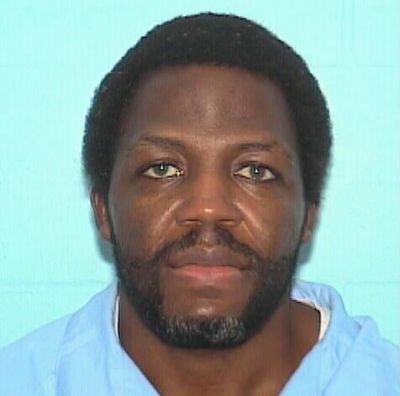
Hubert Geralds
Serial killer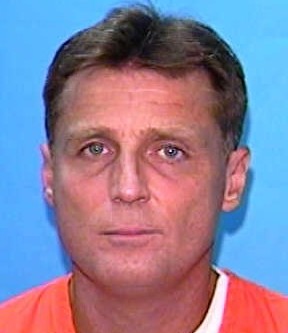 Glen Edward Rogers
Serial killer · USA · 1993
Glen Edward Rogers was a spree killer whose cross-country rampage in 1994-95 le…
70 victims
Glen Edward Rogers
Serial killer · USA · 1993
Glen Edward Rogers was a spree killer whose cross-country rampage in 1994-95 le…
70 victims
 Efren Saldivar
Serial killer · USA · 1989
Efren Saldivar (born 30 September 1969) was an American serial killer who murde…
50 victims
Efren Saldivar
Serial killer · USA · 1989
Efren Saldivar (born 30 September 1969) was an American serial killer who murde…
50 victims
 Charles Cullen
Serial killer · USA · 1984
Charles Cullen (born February 22, 1960) was a former nurse and the most prolifi…
45 victims
Charles Cullen
Serial killer · USA · 1984
Charles Cullen (born February 22, 1960) was a former nurse and the most prolifi…
45 victims
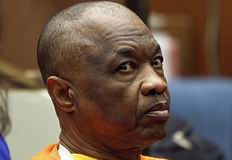 Lonnie Franklin
Serial killer · USA · 1985
Lonnie Franklin was convicted as the “Grim Sleeper” serial killer, a nickname u…
25 victims
Lonnie Franklin
Serial killer · USA · 1985
Lonnie Franklin was convicted as the “Grim Sleeper” serial killer, a nickname u…
25 victims
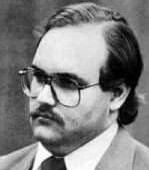 Richard Angelo
Serial killer · USA · 1987
Richard Angelo was 26 years old when he went to work at Good Samaritan Hospital…
25 victims
Richard Angelo
Serial killer · USA · 1987
Richard Angelo was 26 years old when he went to work at Good Samaritan Hospital…
25 victims
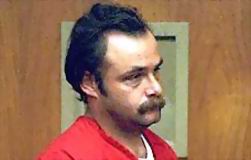 Wesley Shermantine
Serial killer · USA · 1984
Wesley Shermantine Wesley Shermantine was sentenced to death in California on M…
24 victims
Wesley Shermantine
Serial killer · USA · 1984
Wesley Shermantine Wesley Shermantine was sentenced to death in California on M…
24 victims
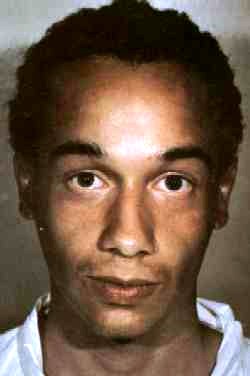 Kenneth Erskine
Serial killer · United Kingdom · 1987
Kenneth Erskine (born 1962) was an English serial killer known as the “Stockwel…
7 victims
Kenneth Erskine
Serial killer · United Kingdom · 1987
Kenneth Erskine (born 1962) was an English serial killer known as the “Stockwel…
7 victims
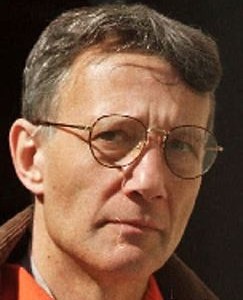 Thomas Capano
Murderer · USA · 1996
Thomas J. Capano was a disbarred American lawyer from Wilmington, Delaware. He…
1 victim
Thomas Capano
Murderer · USA · 1996
Thomas J. Capano was a disbarred American lawyer from Wilmington, Delaware. He…
1 victim
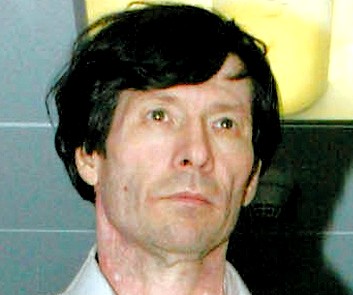 Ernest Wholaver
Murderer · USA · 2002
In July 2002, Ernest R. Wholaver, Jr. was charged with multiple sexual offenses…
3 victims
Ernest Wholaver
Murderer · USA · 2002
In July 2002, Ernest R. Wholaver, Jr. was charged with multiple sexual offenses…
3 victims
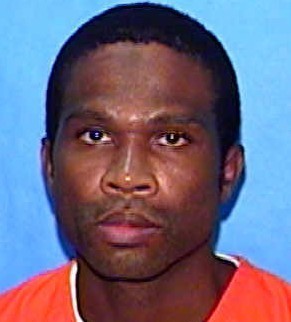 Chadwick Banks
Murderer · USA · 1992
Chadwick Banks was a Black male who was born on June 15, 1971. His aliases incl…
2 victims
Chadwick Banks
Murderer · USA · 1992
Chadwick Banks was a Black male who was born on June 15, 1971. His aliases incl…
2 victims
- Gender
- male
- Country
- USA
- Location
- Chicago, Illinois, USA
- Date of birth
- November 13, 1964
- Age at first offence
- 30
- Characteristics
- mentally retarded, sexual assault
- Victim profile
- Women (drug-addicted prostitutes)
- Method of murder
- Asphyxia due to suffocation
- Date(s) of murder
- 1994 - 1995
- Years active
- 1994–1995
- Date of arrest
- Summer 1995
- Status
-
Sentenced to death
Sentenced to death in December 1997
Case record: Hubert Geralds Jr.
Background
Hubert Geralds Jr. was mentally retarded and was described as having a sexual compulsion to have sex with women who were unconscious or asleep.
Geralds was a former South Sider.
The offence
Hubert Geralds Jr. was accused of killing six prostitutes and drug addicts on Chicago’s South Side. The killings began in December 1994 and continued through mid-June 1995.
A Criminal Court jury convicted Geralds of first-degree murder for killing six women. The jury also found him linked by DNA to a seventh woman.
Prosecutors said Geralds smothered his victims by covering their noses while pressing his thumb on their throats.
Geralds also was convicted of sexually assaulting one victim.
Geralds was convicted of the attempted murder of a seventh woman who was choked unconscious and then awoke and managed to break free.
Prosecutors presented evidence that Geralds’ DNA was found in the body of a seventh woman who was strangled and dumped in a trash bin.
Assistant State’s Atty. Nick Ford and co-prosecutor Jeanne Bischoff presented evidence that Geralds admitted helping dispose of a murder victim’s body in 1982 in Staten Island, N.Y., where he then lived.
Investigation
Chicago police kept a database with information on 66 women who had died in the city since 1989. Investigators stated that what linked the women was not necessarily the manner of their deaths, but “the manner in which they lived”: abusing drugs and supporting their addiction by selling their bodies or stealing and sneaking off with men they may not even know.
Chief of Detectives Michael J. Malone described how Geralds said he did not kill all the women:
“He said, `Wait a minute. I didn’t kill all these women. There’s other people out there killing women,’ ”
Police stated that Geralds’ confession to six suffocation murders would make the streets safer, but hardly safe. Investigators also stated that they did not have evidence that Geralds committed the murders to which he confessed, and that they were awaiting the results of DNA tests to connect him to other victims.
Police said they would have to eliminate Geralds as a suspect in many cases because he was in jail during most of the time he had lived in the area.
As of the investigation period discussed, since the beginning of 1994, 11 others had been charged with killing nine women who fit the same profile in the same area of the South Side where Geralds allegedly operated, and another 13 cases in the same area were unsolved.
The investigation also included mention that Geralds must be eliminated as a suspect in many cases because he was in jail.
The investigation described the work of Sgt. Jack Ridges, a homicide investigator who worked some of the deadliest neighborhoods on Chicago’s South Side. Ridges worked Area 1 where most of the killings occurred and continued to follow the problem. As cases piled up, six Area 1 detectives were assigned part-time to help him track the problem, later switching to exclusively work with Ridges on the female addict murders and moving to an 8 p.m. to 4 a.m. shift.
Lt. John Regan, commander of Area 1 Violent Crimes, stated that the assignment came in mid-May.
Sgt. Ridges’ database effort was described as beginning in 1992, when he was assigned to assist Los Angeles police investigating the murder of a prostitute by a sailor who had lived in Chicago. Los Angeles police wanted to know whether a connection might exist between the sailor and any unsolved homicides in Chicago, and Ridges never found a link that would help Los Angeles, but came to the realization that there were many unsolved cases that fit a pattern.
Chief of Detectives Michael J. Malone said police had no reason to believe there was a multiple murderer before the apprehension of Geralds, and later said there was no evidence to suggest somebody else like him was responsible for more than one of the 13 cases, while also not ruling it out.
Malone also stated:
“We didn’t miss anything. I’m telling you.”
Police described many murders as difficult to solve because the bodies gave no apparent indication of foul play, and they said Geralds left none of the marks usually associated with a strangling.
Police said they were still investigating whether Geralds was responsible for some of the 13 unsolved killings.
Arrest and confession
Geralds was arrested in the summer of 1995. The arrest followed a tip from his sister.
The sister found one victim’s decomposed body in a trash can near her home.
The break in the case came June 17, when Geralds’ sister, Angela, told police that she believed he might have been involved in the death of her friend, Mary Blackman.
A detective recognized Geralds’ name as the person who, in March, had reported the murder of Joyce Wilson, 28, whose body was found in a truck on South Racine.
Geralds confessed to the killings after his sister turned him in.
On Sunday, Geralds confessed to the Blackman murder, police said. On Monday, police said he admitted killing Wilson, Rhonda King, Dorthea Withers and Millicent Jones. The next day, police said he added Alonda Tart to his list.
Police stated that because many of the victims were weakened by ill health related to their drug addictions, they hardly put up a fight with their attackers.
Chief of Detectives Michael J. Malone said:
“The lifestyle makes these women very, very vulnerable,”
Trial
Geralds’ criminal trial involved a two-week trial and was before a Chicago jury.
The jury convicted Geralds of first-degree murder on November 13, 1997, the day of his 33rd birthday, after 12 hours of deliberation.
During the trial, defense lawyers argued that Geralds had a mental age of 8, and the defense stated that Geralds nodded off through much of the two-week trial and had a low IQ and suffered a childhood of savage abuse at the hands of his mother’s boyfriend.
Prosecutors said Geralds was “an ugly, violent force.”
Prosecutors’ psychiatrist Dr. Albert Stipes testified that Geralds was “a malingerer” who had faked mental illness and “played dumb” to avoid punishment.
Sentencing
After nearly three hours of deliberation on Friday, an eight-woman, four-man jury voted the death penalty for Hubert Geralds Jr.
The jury rejected defense pleas to sentence Geralds, 33, to life in prison without parole.
Judge Michael Toomin set Dec. 17 for the filing of post-trial motions.
Geralds didzed during much of the three-week trial and was portrayed as a mentally retarded man with the mind of an 8-year-old.
Prosecutors presented evidence at the penalty hearing and in closing argument.
Assistant State’s Atty. Nick Ford made a closing argument in which Ford said sending Geralds to prison for life would be far too lenient, stating:
“Life without parole is like sending Hubert Geralds to his room,”
“A place he has been in and out of since he was 15 years old. . . . Endless days of playing basketball, watching TV, lifting weights and hanging out with his buddies. . . . It’s like college without the classes.”
Ford said he scoffed at defense evidence and experts, including the $28,000 spent on defense experts, stating:
“For $28,000 I could take him to . . . my mechanic and for $28,000 he would say he needed a new carburetor,”
Ford declared.
Ford ridiculed defense evidence that the crimes may have been the result of Geralds smoking crack cocaine, stating:
“That’s not mitigation,”
he said.
“What mitigation on this Earth is enough to spare this man? If he found a cure for cancer one day and the next day took a bullet for the president of the United States, it wouldn’t be enough.”
Ford concluded:
“I think it’s time for Hubert Geralds to pay the price for what he did,”
Ford said.
“And the price is a ticket to Death Row.”
Defense lawyer Bernard Sarley urged the jury to spare Geralds’ life, stating:
“They were horrible crimes,”
he acknowledged, adding that, while the families of the victims “will never be the same, executing Hubert Geralds will not make them whole.”
“. . . He certainly deserves to be sent away for the rest of his life,” Sarley said.
“He certainly doesn’t deserve to die.”
The verdicts of death were read, and three of the women jurors, including the forewoman, wept as the verdicts were read.
Timeline
- December 1994 — The murders began.
- 1992 — Sgt. Jack Ridges began collecting information on the murders of female drug addicts.
- June 17, 1995 — Geralds’ sister, Angela, told police she believed he might have been involved in the death of her friend, Mary Blackman.
- January 27, 1993 — Geralds was charged with residential burglary in Chicago.
- June 19, 1992 — Geralds arrived in Chicago after being paroled from a New York prison.
- October 29, 1994 — Geralds was paroled.
- November 13, 1997 — Geralds was convicted of first-degree murder by a Chicago jury.
- December 1997 — Geralds was sentenced to death.
- Dec. 17 — Judge Michael Toomin set the filing of post-trial motions.
Other details
During discussions of the case, it was stated that Geralds joined 158 others on Death Row in Illinois.
It was also stated that since capital punishment was reinstated in 1977, eight inmates had been executed and two more were scheduled to die by lethal injection next week, and nine others were released after their convictions were set aside or vacated.
The case included mention of Derrick Flewellen, who was accused of strangling two women in the same vicinity in the same time period, but police said they had no evidence tying Geralds to those murders.
Police described the seventh woman as strangled and dumped in a trash bin.
Investigators said Geralds was linked to a seventh woman by DNA.
A 2000 statement from Cook County prosecutors announced that one of the six murders for which Geralds was convicted actually was committed by another inmate.
It was stated that three years before the 2000 announcement, Geralds was convicted of the 1994 murder of Rhonda King, and that investigators had already linked Geralds to four murders through DNA evidence, but built charges in the King killing and one other murder on his confessions.
The 2000 announcement stated that ten days before the announcement, police arrested Andre Crawford, who confessed to nearly a dozen murders, including King.
The same 2000 statement said prosecutors wanted to vacate or remove Geralds’ six murder convictions, one attempted murder conviction, and his death sentence, and that Geralds would be tried again but this time just for five murders and the attempted murder, all of which occurred in 1994 and 1995.
During the 1997 trial, experts testified that Geralds’ IQ was between 59 and 73, and Geralds’ attorneys claimed police could have gotten him to go along with anything because of his “extremely low intelligence”.
People named
- Hubert Geralds Jr. — defendant; convicted of first-degree murder for six murders; convicted of sexually assaulting one victim; convicted of attempted murder of a seventh woman; sentenced to death.
- Angela — Geralds’ sister; provided a tip to police.
- Mary Blackman — victim; death implicated in Geralds’ confession.
- Joyce Wilson, 28 — victim; body found in a truck on South Racine.
- Rhonda King — victim; murder linked in the investigation and referenced as a 1994 murder.
- Dorthea Withers — victim; implicated in Geralds’ admissions.
- Millicent Jones — victim; implicated in Geralds’ admissions.
- Alonda Tart — victim; implicated in Geralds’ confession.
- Andre Crawford — another inmate arrested in a later development who confessed to nearly a dozen murders, including Rhonda King.
- Sgt. Jack Ridges — homicide investigator.
- Chief of Detectives Michael J. Malone — Chicago police official quoted.
- Lt. John Regan — commander of Area 1 Violent Crimes.
- Nick Ford — Assistant State’s Atty.; co-prosecutor in penalty hearing closing argument.
- Jeanne Bischoff — co-prosecutor at penalty hearing.
- Bernard Sarley — defense lawyer.
- Judge Michael Toomin — judge who set Dec. 17 for filing post-trial motions.
- Dr. Albert Stipes — psychiatrist for the prosecution.
- Nic Howell — state Corrections Department spokesman.
- Derrick Flewellen — accused of strangling two women in the same vicinity in the same time period.
Spotted an error, or have more information about this case?