Randall Hubbard
Murderer Russell Ellwood
Murderer · USA · 1991
Russell Ellwood was a former taxi driver. Authorities suspected him of killing…
20 victims
Russell Ellwood
Murderer · USA · 1991
Russell Ellwood was a former taxi driver. Authorities suspected him of killing…
20 victims
 Robert Martines Perez
Murderer · USA · 1994
Name: Robert Martines Perez · Other name used in proceedings: Robert Martinez P…
15 victims
Robert Martines Perez
Murderer · USA · 1994
Name: Robert Martines Perez · Other name used in proceedings: Robert Martinez P…
15 victims
 Billy Frank Vickers
Murderer · USA · 1993
Billy Frank Vickers Vickers was executed by lethal injection in Texas on Januar…
14 victims
Billy Frank Vickers
Murderer · USA · 1993
Billy Frank Vickers Vickers was executed by lethal injection in Texas on Januar…
14 victims
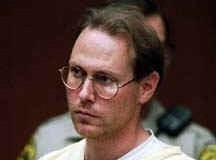 Charles Rathbun
Murderer · USA · 1989
Charles Rathbun was a freelance photographer who was sentenced to life in priso…
6 victims
Charles Rathbun
Murderer · USA · 1989
Charles Rathbun was a freelance photographer who was sentenced to life in priso…
6 victims
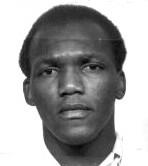 Carl Eugene Kelly
Murderer · USA · 1980
Carl Eugene Kelly Carl Eugene Kelly was a high school dropout. He had a drug pr…
2 victims
Carl Eugene Kelly
Murderer · USA · 1980
Carl Eugene Kelly Carl Eugene Kelly was a high school dropout. He had a drug pr…
2 victims
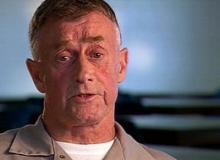 Michael Iver Peterson
Murderer · USA · 1985
Michael Iver Peterson was born October 23, 1943, near Nashville, Tennessee, USA…
2 victims
Michael Iver Peterson
Murderer · USA · 1985
Michael Iver Peterson was born October 23, 1943, near Nashville, Tennessee, USA…
2 victims
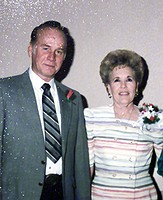 James Daniel Simpson
Mass murderer · USA · 1995
James Daniel Simpson was a former employee of the Walter Rossler Company, a ref…
5 victims
James Daniel Simpson
Mass murderer · USA · 1995
James Daniel Simpson was a former employee of the Walter Rossler Company, a ref…
5 victims
- Gender
- male
- Country
- USA
- Location
- Morgan County, Ind iana, USA
- Date of birth
- December 15, 1959
- Age at first offence
- 37
- Characteristics
- robbery
- Victim profile
- Two employees of a Martinsville VFW post
- Method of murder
- Shooting (nine millimeter handgun)
- Date(s) of murder
- November 27, 1996
- Years active
- 1996
- Date of arrest
- 3 days after
- Status
-
Sentenced to two consecutive terms of 60 years for the murders and a term of 45 years for the robbery on July 24, 1998
Case record
NAME
Randall Hubbard
STATUS / DISPOSITION
Randall Hubbard was sentenced to two consecutive terms of 60 years for the murders and a term of 45 years for the robbery on July 24, 1998.
Timeline
- November 27, 1996 — An employee of a Martinsville VFW post arrived at work and found two of his co-workers dead; both had been shot from behind with a nine millimeter handgun. Police determined that about $600 had been stolen from the post.
- December 1, 1996 — Randall Hubbard was charged with two counts of Murder and one count of Robbery.
- May 6, 1998 — A jury convicted Randall Hubbard on all counts, with judgment being entered on the two murder counts and the robbery count.
- January 16, 2001 — The Indiana Supreme Court issued its decision on direct appeal.
- July 24, 1998 — The trial court sentenced Randall Hubbard to two consecutive terms of 60 years for the murders and a term of 45 years for the robbery.
Background
On the morning of November 27, 1996, an employee of a Martinsville VFW post arrived at work and found two of his co-workers dead. Both had been working the previous evening and both had been shot from behind with a nine millimeter handgun. Police subsequently determined that about $600 had been stolen from the post.
Randall Hubbard was arrested and tried for the murders and the robbery.
A local bartender testified that Randall Hubbard was carrying a nine millimeter handgun on the night of the murders.
Dean Burpo testified that when Burpo left the post around midnight, Randall Hubbard was alone with the two victims. Burpo also testified that one of the victims was preparing to close the post and was counting out the night’s earnings.
After the murders, several witnesses saw Randall Hubbard in two Martinsville bars. He had recently changed clothes and taken a shower. Several witnesses testified that he was carrying a large sum of money although he had been penniless earlier in the evening.
The offence
Randall Hubbard was convicted of murder and robbery after shooting two employees of a VFW post in the back of their heads and taking about $600 from the post.
Investigation / evidence at trial
The State’s evidence included testimony that Randall Hubbard was at the VFW post when the murders were committed, had returned to the post to give Thacker a ride, and was spotted later that evening with an amount of cash similar to the amount taken from the post.
The trial court record included testimony about Randall Hubbard’s interactions with Gary Thacker, a former co-worker of Randall Hubbard. Witnesses testified that Randall Hubbard told them that Thacker shot the victims and that Thacker had threatened Randall Hubbard not to tell anyone about the killings, had spared his life, and had given him money. Randall Hubbard argued that Gary Thacker committed the murders while Randall Hubbard was merely a bystander.
Evidence supporting accomplice liability included:
- Randall Hubbard was acquainted with Thacker as the two had previously worked together.
- Witnesses saw Randall Hubbard have a brief conversation with Thacker early in the evening on the night of the murders.
- Randall Hubbard came to the VFW post around the time of the murders with the stated purpose of giving Thacker a ride.
- Thacker testified that Randall Hubbard had previously asked Thacker to join him in performing armed robberies.
Trial
Randall Hubbard was charged on December 1, 1996, with two counts of Murder, and one count of Robbery.
On May 6, 1998, a jury convicted Randall Hubbard on all counts, with judgment being entered on the two murder counts and the robbery count.
At trial, Randall Hubbard challenged the trial court’s instructions on accomplice liability and argued that Gary Thacker had committed the murders while Randall Hubbard was merely a bystander.
Sentencing
The trial court sentenced Randall Hubbard to two consecutive terms of 60 years for the murders and a term of 45 years for the robbery.
Appeals
Randall Hubbard appealed to the Indiana Supreme Court as:
- Randall L. Hubbard, Appellant (Defendant below), v. State of Indiana, Appellee (Plaintiff below)
- Supreme Court No. 55S00-9808-CR-428
- APPEAL FROM THE MORGAN CIRCUIT COURT
- The Honorable James E. Harris, Judge
- Cause No. 55C01-9612-CF-271
- ON DIRECT APPEAL — January 16, 2001
Sullivan, Justice issued the decision.
Grounds for appeal and ruling
Randall Hubbard’s challenge to the trial court’s instructions on accomplice liability failed because there was sufficient evidence to support it.
The Indiana Supreme Court also rejected Randall Hubbard’s request to abandon the long-held rule against the admissibility of polygraphs tests.
The Court stated it had jurisdiction over the appeal because the longest single sentence exceeded 50 years, citing Ind. Const. art. VII, § 4; Ind. Appellate Rule 4(A)(7).
Outcome
The Indiana Supreme Court affirmed the judgment of the trial court.
Other details
Charges and verdict
Randall Hubbard was convicted of murder and robbery.
Additional case identifiers and references
The decision included references to named cases and quotations, including:
- Benefiel v. State, 716 N.E.2d 906, 914 (Ind. 1999)
- “Jury instruction lies largely within the discretion of the trial court. On appeal, such issues are reviewed for abuse of discretion.”
- Smith v. State, 668 N.E.2d 661, 662 (Ind. 1996)
- “Instructing the jury is a matter assigned to the sound discretion of the trial court, and we review a trial court’s decisions only for an abuse of discretion.”
- White v. State, 547 N.E.2d 831, 835 (Ind. 1989)
- “so affects the entire charge that the jury was misled as to the law in the case.”
- Sherwood v. State, 702 N.E.2d 694, 698 (Ind. 1998)
- “this Court considers whether the instruction correctly states the law, whether there was evidence in the record to support the giving of the instruction, and whether the substance of the tendered instruction is covered by other instructions ... .”
- Perry v. State, 541 N.E.2d 913, 915 (Ind. 1989)
- Roach v. State, 695 N.E.2d 934, 939 (Ind. 1998)
- “[W]hile the right to present witnesses is of the utmost importance, it is not absolute.”
- Kellems v. State, 651 N.E.2d 326, 328 (Ind. Ct. App. 1995)
- “The right to present witnesses is of critical importance, but it is not absolute. In appropriate cases, the right must yield to other legitimate interests in the criminal trial process.”
- Huffman v. State, 543 N.E.2d 360, 375 (Ind. 1989)
- “[W]hen the defendant’s Sixth Amendment right to present a defense collides with the State’s interest in promulgating rules of evidence to govern the conduct of its trials, the merits of the respective positions must be weighed, [and] the State’s interest must give way to the defendant’s rights if its rules are “mechanistically” applied to deprive the defendant of a fair trial.”
- United States v. Scheffer, 523 U.S. 303, 118 S. Ct. 1261, 110 L.Ed.2d 413 (1998)
- “A defendant’s right to present relevant evidence is not unlimited, but rather is subject to reasonable restrictions.”
- “‘bow to accommodate other legitimate interests in the criminal trial process.’”
- “arbitrary”
- “disproportionate”
- “ensuring that only reliable evidence is introduced at trial, preserving the court members’ role in determining credibility, and avoiding litigation that is collateral to the primary purpose of the trial.”
- “Although the degree of reliability of polygraph evidence may depend upon a variety of identifiable factors, there is simply no way to know in a particular case whether a polygraph examiner’s conclusion is accurate, because certain doubts and uncertainties plague even the best polygraph exams.”
- “We cannot say, then, that presented with such widespread uncertainty, the [government] acted arbitrarily or disproportionately in promulgating a per se rule excluding all polygraph evidence.”
- “Individual jurisdictions therefore may reasonably reach differing conclusions as to whether polygraph evidence should be admitted.”
- “the merits of the respective positions must be weighed, [and] the State’s interest must give way to the defendant’s rights if its rules are “mechanistically” applied to deprive the defendant of a fair trial.”
- “all the relevant details of the charged offense from the perspective of the accused, and the Rule did not preclude him from introducing any factual evidence.”
- “there is simply no consensus that polygraph evidence is reliable.”
- “Some studies have concluded that polygraph tests overall are accurate and reliable.”
- “Others have found that polygraph tests assess truthfulness significantly less accurately – that scientific field studies suggest the accuracy rate of the ‘control question technique’ polygraph is ‘little better than could be obtained by the toss of a coin’ ... .”
- “unreliable evidence does not outweigh the State’s interest in ensuring that its trials are fair.”
- McGrew v. State, 682 N.E.2d 1289, 1292 (Ind. 1997)
- Smith v. State, 702 N.E.2d 668, 672 (Ind. 1998)
- “the relevant rules require that the expert be qualified to testify, the trial court be satisfied that the scientific principles upon which the expert testimony rests are reliable, and the testimony’s probative value is not substantially outweighed by the dangers of unfair prejudice.”
- Echols v. State, 722 N.E.2d 805, 807 (Ind. 2000)
- “A defendant’s mere presence at the crime scene is insufficient to establish accomplice liability. By itself, a defendant’s lack of opposition to the crime is also insufficient to establish accomplice liability. Nonetheless, both of these factors may be considered in conjunction with a defendant’s course of conduct before, during, and after the crime, and a defendant’s companionship with the one who commits the crime.”
- Wisehart v. State, 693 N.E.2d 23, 51 n.32 (Ind. 1998)
- “‘it was a possibility’ that [defendant] did not act alone in committing the crime.”
- McQueen v. State, 711 N.E.2d 503, 506 (Ind. 1999)
- “With evidence supporting the inference that either of the McQueens could have been the actual killer with the other aiding in the crime, we find the trial court justified in giving an instruction on accessory liability.”
Polygraph offer of proof
Defendant’s offer of proof showed that the polygraph examiner would have testified:
- “he believed Thacker was not ‘completely truthful. ... [I]t is unknown to this examiner if Mr. Thacker was involved in shooting either [victim] or if he is withholding information about this case.’”
Spotted an error, or have more information about this case?