
Michael Iver Peterson
Murderer Brian Kevin Rosenfeld
Murderer · USA · 1985
Brian Kevin Rosenfeld Brian Kevin Rosenfeld was sentenced to three concurrent l…
23 victims
Brian Kevin Rosenfeld
Murderer · USA · 1985
Brian Kevin Rosenfeld Brian Kevin Rosenfeld was sentenced to three concurrent l…
23 victims
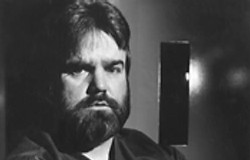 Marvin Gray
Murderer · USA · 1975
Marvin Gray was convicted killer who claimed responsibility for 23 slayings and…
23 victims
Marvin Gray
Murderer · USA · 1975
Marvin Gray was convicted killer who claimed responsibility for 23 slayings and…
23 victims
 Yahweh ben Yahweh
Murderer · USA · 1980
Yahweh ben Yahweh was born and legally named Hulon Mitchell Jr. (October 27, 19…
23 victims
Yahweh ben Yahweh
Murderer · USA · 1980
Yahweh ben Yahweh was born and legally named Hulon Mitchell Jr. (October 27, 19…
23 victims
 Russell Ellwood
Murderer · USA · 1991
Russell Ellwood was a former taxi driver. Authorities suspected him of killing…
20 victims
Russell Ellwood
Murderer · USA · 1991
Russell Ellwood was a former taxi driver. Authorities suspected him of killing…
20 victims
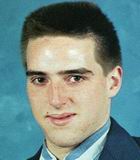 Dean Mellberg
Mass murderer · USA · 1994
Dean Mellberg killed four people and wounded at least 21 by opening fire for le…
4 victims
Dean Mellberg
Mass murderer · USA · 1994
Dean Mellberg killed four people and wounded at least 21 by opening fire for le…
4 victims
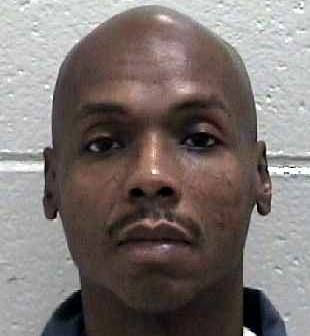 Alphonso Stripling
Murderer · USA · 1988
Alphonso Stripling was convicted by a jury in Douglas County of shooting four e…
2 victims
Alphonso Stripling
Murderer · USA · 1988
Alphonso Stripling was convicted by a jury in Douglas County of shooting four e…
2 victims
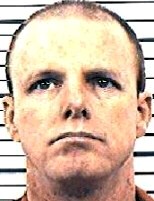 Earl Frederick
Murderer · USA · 1989
Earl Frederick was executed by lethal injection in Oklahoma on July 30, 2002. ·…
2 victims
Earl Frederick
Murderer · USA · 1989
Earl Frederick was executed by lethal injection in Oklahoma on July 30, 2002. ·…
2 victims
 Lois Jurgens
Murderer · USA · 1965
Lois Jurgens (born 1925) was an American convicted murderer in Minnesota. She w…
1 victim
Lois Jurgens
Murderer · USA · 1965
Lois Jurgens (born 1925) was an American convicted murderer in Minnesota. She w…
1 victim
 Jeffrey Dahmer
Serial killer · USA · 1978
Jeffrey Dahmer lived in Milwaukee and committed multiple murders in which he dr…
17 victims
Jeffrey Dahmer
Serial killer · USA · 1978
Jeffrey Dahmer lived in Milwaukee and committed multiple murders in which he dr…
17 victims
- Gender
- male
- Country
- USA
- Location
- Germany / Durham County, North Carolina, USA
- Date of birth
- October 23, 1943
- Age at first offence
- 42
- Characteristics
- parricide
- Victim profile
- Elizabeth Ratliff / Kathleen Peterson, 48 (his wife)
- Method of murder
- Blows with a blunt object
- Date(s) of murder
- 1985 / December 9, 2001
- Years active
- 1985–2001
- Date of arrest
- December 16, 2001
- Status
-
Life imprisonment
Sentenced to life in prison without the possibility of parole October 11, 2003
Case record
Michael Iver Peterson was born October 23, 1943, near Nashville, Tennessee, USA. He was a fiction writer and politician.
Background
Michael “Mike” Peterson graduated from Duke University with a bachelor's degree in political science. He attended classes at the law school of University of North Carolina at Chapel Hill. At Duke, he was the president of Sigma Nu fraternity and the editor of The Chronicle.
In 1965, Peterson married Patricia Sue Peterson. They had two children, Clayton and Todd Peterson.
In 1994, Clayton Peterson tried to bomb the main administration building at Duke. In 1968, Clayton voluntarily enlisted in the Marines but was discharged four years later when a car accident left him with a permanent disability.
Michael and Patricia lived in Germany for some time. They befriended Elizabeth and George Ratliff and their two children, Margaret and Martha. After George’s death in Grenada, the Peterson and Ratliff families became very close. When Elizabeth Ratliff died in 1985, her two children became Michael’s wards.
In 1989, Michael moved in with Kathleen Peterson, a successful business executive and socialite. They married in 1997. Kathleen’s daughter Caitlin and Michael’s sons Clayton and Todd joined the extended Peterson family.
Peterson wrote three novels: The Immortal Dragon, A Time of War, A Bitter Peace, and a biography: Charlie Two Shoes and the Marines of Love Company. He was a controversial editorial columnist for the Durham Herald newspaper, expressing opinions about the racial divide that existed in the town where he lived.
Over the years, Peterson made attempts to win public office. During his 1999 mayoral campaign, it was discovered that he had lied about his record of military honors.
The offence
Michael Peterson was convicted of the murder of his wife, Kathleen Peterson.
On December 9, 2001, Michael called the emergency line to report that he had just found Kathleen and suspected that she had fallen down “15 or 20 stairs.” Peterson maintained that Kathleen must have fallen down the stairs after consuming alcohol and valium.
Toxicology results showed Kathleen’s blood alcohol content was 0.07 percent.
The autopsy report concluded that the 48-year-old victim sustained a matrix of severe injuries, including a fracture of the thyroid neck cartilage and seven lacerations to the top and back of her head consistent with blows from a blunt object. Experts concluded that the injuries were inconsistent with an accidental fall down the stairs.
The Durham coroner concluded that Kathleen had died due to lacerations of the scalp caused by a homicidal assault. There were seven lacerations to the top and back of her head caused by repeated blows with a weapon similar to a fireplace poker.
The defence disputed this finding, stating that Kathleen’s skull had not been fractured by the blows and that the brain was not damaged. When asked by the defence if she knew of even one other similar assault that did not cause such injuries, the coroner stated she did not research criminal cases so could not comment.
As Michael Peterson was the only person at the residence at the time of Kathleen’s death, he was the prime suspect, and he was soon charged with her murder. He pleaded not guilty.
Investigation
Suspicion also fell on Elizabeth Ratliff’s death. Elizabeth Ratliff died in Germany in 1985 and was also found at the foot of her staircase with injuries to the head.
An autopsy at the time concluded Elizabeth had died from an intra-cerebral haemorrhage secondary to the blood coagulation disorder Von Willebrand’s disease. By all accounts, including his own, Peterson was the last person to see her alive.
Following a court-ordered exhumation of Elizabeth’s body, a second autopsy in April 2003 was conducted by the same person who had performed Kathleen Peterson’s autopsy. The second autopsy concluded instead that Elizabeth had died due to fractures of the skull caused by a homicidal assault. There were a total of seven lacerations to the top and back of her head.
The admissibility of this evidence in court was one of the grounds for the subsequent appeal against Peterson’s conviction, lodged by Peterson’s lawyers in 2005.
Other theories of Kathleen’s death were raised after the trial. Other supporters of Michael Peterson raised a new theory that she had been attacked by an owl in the home. Advocates of this theory alleged that two of the seven scalp wounds were tri-lobed and consistent with marks left by talons, and that Kathleen clutched a clump of her own hair in her left hand. Advocates alleged that owl feather was found entangled in this hair. A former prosecutor rejected the theory as preposterous, and the coroner stated:
the evidence shows it is unlikely that an owl or any other bird could be responsible for wounds as deep as they were . No motion for a new trial had yet been filed on this point.
Arrest
Peterson was charged with the murder of Kathleen Peterson and pleaded not guilty. The case drew media attention as details of Peterson’s life emerged.
Trial
The trial drew media attention as details of Peterson’s life emerged.
Prosecutors, including future District Attorney Mike Nifong, attacked Peterson’s credibility. They focused on alleged misreporting of his military service and what they described as a gay life he led and kept secret.
The prosecution contended that the Petersons’ marriage was far from happy and suggested that Kathleen had discovered Michael’s alleged secret gay life and wanted to end their marriage. This scenario was offered as the probable motive for Kathleen’s alleged murder.
The defence argued that Kathleen knew about and accepted Michael’s bisexuality and that the marriage was very happy, a position supported by the Peterson’s numerous friends and associates.
Kathleen’s daughter initially maintained Michael’s innocence and publicly supported him alongside his children, but she reconsidered after learning about the results of the autopsy and broke off from the rest of the family.
Verdict
On October 10, 2003, after one of the longest trials in North Carolina history, a Durham County jury found Michael Peterson guilty of the murder of Kathleen Peterson.
He was sentenced to life in prison without the possibility of parole.
A statement about the denial of parole described it as requiring premeditation, despite the jury also finding the murder was a “spur of the moment” crime. One juror explained premeditated as:
not only planning hours or days ahead but could also mean planning in the seconds before committing a spur of the moment crime. Peterson was housed at the Nash Correctional Institution near Rocky Mount.
Sentencing
Sentencing occurred on October 11, 2003, when Peterson was sentenced to life in prison without the possibility of parole.
Appeals
Peterson’s appeal was filed by his defence counsel Thomas Maher, now serving as his court-appointed attorney. The appeal was argued before the North Carolina Court of Appeals on April 18, 2006.
On September 19, 2006, the North Carolina Court of Appeals rejected Peterson’s arguments that he did not get a fair trial because of repeated judicial mistakes. The appeals ruling said the evidence was fairly admitted. The judges found defects in a search warrant but said they had no ill effect on the defence.
Because the Court of Appeals’ ruling was not unanimous, Peterson had the right to appeal to the North Carolina Supreme Court, which accepted the case. Oral argument was heard on September 10, 2007.
On November 9, 2007, the Court announced that it affirmed the decision of the Court of Appeals. Absent reconsideration of the ruling or raising of a federal issue, Peterson exhausted his appeal of the verdict. As of Tue, Mar. 10, 2009, the request for a new trial had been denied.
Arguments for a new trial
On November 12, 2008, J. Burkhardt Beale and Jason Anthony of Richmond, Va. filed a motion for a new trial in Durham County court on three grounds: that the prosecution withheld exculpatory evidence about a tire iron; that the prosecution used an expert witness whose qualifications are disputed; and that one juror based his judgment on racial factors not evidence.
On March 10, 2009, the Durham County Superior Court denied Peterson’s motion.
Outcome
Peterson was found guilty of the murder of Kathleen Peterson and received a life sentence without the possibility of parole.
Aftermath
In October 2002, acting as administrator of Kathleen’s estate, Caitlin filed a wrongful death claim against Michael.
In June 2006, he voluntarily filed for bankruptcy. Two weeks later Caitlin filed an objection to the bankruptcy.
On February 1, 2007, Caitlin and Michael settled the wrongful death claim for $25 million, pending acceptance by the courts involved. Finalization of the settlement by the court was announced on February 1, 2008.
In the settlement, Michael did not admit that he murdered Kathleen. Caitlin was unlikely to ever collect a significant amount of the judgment.
People related to the case and their later activities
Caitlin later graduated from Cornell University. Todd Peterson, Peterson’s younger son, lived in Dubai. Clayton Peterson, Peterson’s older son, was married in 2004.
Martha Ratliff lived in San Francisco. Margaret Ratliff was studying documentary filmmaking at Columbia College in Chicago.
After the trial, one of Peterson’s lawyers, Thomas Maher, resigned from the firm that bore his name (Rudolf, Maher, Widenhouse & Fialko). Maher was now Peterson’s court-appointed attorney.
Lead defence counsel David Rudolf mentioned the Peterson case on his website.
The case was featured in an episode of Forensic Files titled “A Novel Idea.” A documentary generated widespread interest, titled Soupçons (Suspicions), also known as The Staircase and Death on the Staircase. The film was released by Maha Productions in October 2004 and directed by French filmmaker Jean-Xavier de Lestrade. The documentary examined the role and behavior of the popular press as it covered aspects of the case, and it depicted defence preparations for the trial. The filmmakers began their project within weeks of the December 2001 murder and Peterson’s murder indictment. Jury selection took place in May 2003 with the case going to trial in July 2003. The six-hour documentary was assembled from over 600 hours of footage.
Spotted an error, or have more information about this case?