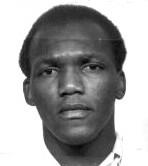
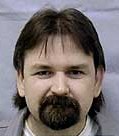
Carl Eugene Kelly
Murderer Ervil LeBaron
Murderer · USA · 1972
Ervil Morrell LeBaron (1925 to August 16, 1981) was the leader of a polygamous…
35 victims
Ervil LeBaron
Murderer · USA · 1972
Ervil Morrell LeBaron (1925 to August 16, 1981) was the leader of a polygamous…
35 victims
 Brian Kevin Rosenfeld
Murderer · USA · 1985
Brian Kevin Rosenfeld Brian Kevin Rosenfeld was sentenced to three concurrent l…
23 victims
Brian Kevin Rosenfeld
Murderer · USA · 1985
Brian Kevin Rosenfeld Brian Kevin Rosenfeld was sentenced to three concurrent l…
23 victims
 Marvin Gray
Murderer · USA · 1975
Marvin Gray was convicted killer who claimed responsibility for 23 slayings and…
23 victims
Marvin Gray
Murderer · USA · 1975
Marvin Gray was convicted killer who claimed responsibility for 23 slayings and…
23 victims
 Yahweh ben Yahweh
Murderer · USA · 1980
Yahweh ben Yahweh was born and legally named Hulon Mitchell Jr. (October 27, 19…
23 victims
Yahweh ben Yahweh
Murderer · USA · 1980
Yahweh ben Yahweh was born and legally named Hulon Mitchell Jr. (October 27, 19…
23 victims
 Alexander Spesivtsev
Serial killer · Rusia · 1991
Alexander Nikolayevich Spesivtsev (Russian: Александр Николаевич Спесивцев ), a…
19 victims
Alexander Spesivtsev
Serial killer · Rusia · 1991
Alexander Nikolayevich Spesivtsev (Russian: Александр Николаевич Спесивцев ), a…
19 victims
 Tia Skinner
Murderer · USA · 2010
Tia Skinner was convicted as the daughter of Paul Skinner and Mara Skinner and…
1 victim
Tia Skinner
Murderer · USA · 2010
Tia Skinner was convicted as the daughter of Paul Skinner and Mara Skinner and…
1 victim
 Frank Winfield Anderson
Murderer · USA · 1996
Frank Winfield Anderson was a defendant identified as Caucasian. The victims we…
3 victims
Frank Winfield Anderson
Murderer · USA · 1996
Frank Winfield Anderson was a defendant identified as Caucasian. The victims we…
3 victims
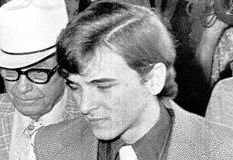 Elmer Henley
Serial killer · USA · 1972
Elmer Wayne Henley, Jr. was born May 9, 1956. He was convicted and incarcerated…
7 victims
Elmer Henley
Serial killer · USA · 1972
Elmer Wayne Henley, Jr. was born May 9, 1956. He was convicted and incarcerated…
7 victims
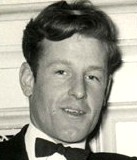 Brian Field
Murderer · United Kingdom · 1968
Brian Field was convicted of the murder, rape, and strangling of 14-year-old bo…
1 victim
Brian Field
Murderer · United Kingdom · 1968
Brian Field was convicted of the murder, rape, and strangling of 14-year-old bo…
1 victim
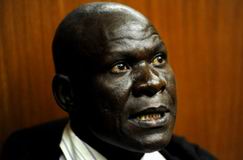 Madumetsa Jack Mogale
Serial killer · South Africa · 2008
Madumetsa Jack Mogale (born 1968/9) was a South African serial killer dubbed th…
16 victims
Madumetsa Jack Mogale
Serial killer · South Africa · 2008
Madumetsa Jack Mogale (born 1968/9) was a South African serial killer dubbed th…
16 victims
- Gender
- male
- Country
- USA
- Location
- McLennan County, Texas, USA
- Date of birth
- March 27, 1959
- Age at first offence
- 21
- Characteristics
- abduction, robbery
- Victim profile
- Steven Pryor (convenience store clerk) and David Riley (transient)
- Method of murder
- Shooting
- Date(s) of murder
- September 1, 1980
- Years active
- 1980
- Date of arrest
- Same day
- Status
-
Executed
Executed by lethal injection in Texas on August 22, 1993
Offender
Carl Eugene Kelly
Background
Carl Eugene Kelly was a high school dropout. He had a drug problem and a criminal record. Kelly was twenty-one or twenty-two years old at the time of trial. His step-father testified that Kelly dropped out of school after tenth or eleventh grade because "he just didn't have the knowledge to go through school like the average kid." His step-father also testified at trial.
Kelly confessed to the killings, but refused the plea bargain. He chose to go on trial instead.
The offence
Carl Eugene Kelly was convicted of capital murder of Steven Pryor, a convenience store clerk in Waco, Texas. The jury also considered the capital-murder special questions concerning whether the conduct was committed deliberately and with reasonable expectation that death would result, and whether there was probability the defendant would commit criminal acts of violence constituting a continuing threat to society.
Kelly and accomplice Thomas Graves robbed a 7-Eleven in Waco, Texas, and killed two young men on September 2, 1980. Kelly and Graves abducted the store clerk, Steven Pryor, stole his car and drove him out to Cameron Park. They shot Steven Pryor several times and threw his body off a 60-foot cliff. David Riley, a transient who was asleep in Pryor’s 1980 brown Camaro automobile, was also killed.
Kelly went back to the 7-Eleven to get his car, and later meet up with Graves to split the money.
During the sentencing phase of the trial, Kelly’s confession was introduced which indicated that he had taken drugs sometime prior to the murders.
Investigation
Diana Player testified she saw "three black males" escort the victim to his car outside the store and watched the victim drive toward Cameron Park. Player was soon joined at the unattended convenience store by Ed Torres, an off-duty policeman, who telephoned police to report the missing attendant. Shortly thereafter and before police arrived, Dewey Verona, a regular customer of Pryor’s, arrived at the site and testified he saw a man get out of the victim’s car, drop the man off, and then depart. Verona testified he followed the man’s path with his eyes and only "lost contact with him for a few minutes" until the same man approached the group and asked for assistance in starting his stalled automobile parked near the store.
The witnesses and two police officers testified that the man who requested assistance (later identified as the appellant) appeared to have blood on his shirt, his arm and his two-toned shoes. When police officers questioned the appellant about the blood, he replied that he had gotten into a fight earlier that evening. Upon asking for identification, appellant replied that he had none. Police officers characterized appellant as "belligerent" and testified appellant was found in the store, which had been sealed off to the public, twice after previously being asked to leave.
While in the store, appellant asked the investigator dusting for fingerprints whether he had found any and quickly told the officer that he had been in the store earlier "buying a slurpee" and wished to purchase another. After working on his stalled vehicle, appellant subsequently left the convenience store area.
An All-Points-Bulletin was issued for the victim's 1980 Camaro which was later stopped at approximately 6 a.m. by police officers outside Hillsboro. The driver, Thomas Graves, was arrested and a search of the car followed. Items retrieved in the trunk of the car included the appellant's billfold; two revolvers; a green canvas sack which contained money; a backpack which contained clothes and prescription bottles in the name of David Wade Riley; and blood-stained towels. Blood stains were found on the door and floormat of the automobile. Limestone dust found on the floorboard of the car led police officers to Cameron Park where the bodies were found at the bottom of a cliff in the park area.
Upon discovering the appellant's billfold in the trunk of the victim's car, an arrest warrant was issued.
Arrest
At approximately 10:00 a.m. appellant was arrested at his place of employment. Police had earlier questioned Kelly about the whereabouts of the store clerk and whether he had been in the store that night while police were already on the scene talking to two witnesses and taking fingerprints.
Trial
Verdict and special interrogatories
Kelly was scheduled to be executed before sunrise on February 25, 1985.
The jury found Kelly guilty on June 4, 1981, and the next day answered affirmatively the special interrogatories submitted pursuant to article 37.071 of the Texas Code of Criminal Procedure.
At sentencing, the court submitted three questions to the jury: (1) whether the conduct of the defendant that caused the death of the deceased was committed deliberately and with the reasonable expectation that the death of the deceased or another would result; (2) whether there is a probability that the defendant would commit criminal acts of violence that would constitute a continuing threat to society; and (3) if raised by the evidence, whether the conduct of the defendant in killing the deceased was unreasonable in response to the provocation, if any, by the deceased. Since Kelly raised no claim of provocation, only the first two questions were submitted to the jury.
Sentencing
Kelly was sentenced to death by the State of Texas.
Kelly’s counsel attacked the death penalty on moral and pragmatic grounds during the sentencing phase, and Kelly’s counsel put his step-father on the stand to ask the jury to spare Kelly’s life. Counsel also tried to capitalize on any residual doubt regarding the jury’s guilty verdict.
The State’s evidence in the sentencing phase consisted of testimony regarding Kelly’s bad reputation for being a peaceable and law-abiding citizen, as well as evidence of a prior conviction for theft, revocation of Kelly's probation, and a three-year prison term for robbery.
Kelly confessed that he shot at one of the victims, but later denied it, claiming it was Graves who fired the fatal shots. He did confess to being at the scene and throwing the bodies off the cliff.
Appeals
Direct appeal
The Texas Court of Criminal Appeals affirmed Kelly's conviction and sentence on April 25, 1984. Rehearing was denied, and the United States Supreme Court denied certiorari.
Kelly v. State, 669 S.W.2d 720 (Tex.Crim.App.) (en banc), reh'g. denied, (May 23, 1984), cert. denied, 469 U.S. 963, 105 S.Ct. 362, 83 L.Ed.2d 298 (1984).
State habeas
Kelly filed an application for writ of habeas corpus with the Texas courts on February 6, 1985. The Texas Court of Criminal Appeals denied the writ application and a motion for stay of execution. Ex parte Kelly, Application No. 14,711, slip op. (Tex.Crim.App. Jan 11, 1985).
Federal habeas and appellate litigation
Kelly sought federal relief in his first request for federal habeas. The United States Court of Appeals, Fifth Circuit decided the case. The United States District Court granted the State's motion for summary judgment and denied the writ, and the Fifth Circuit affirmed.
The case information included: 862 F.2d 1126 Carl Eugene KELLY, Petitioner-Appellant, v. James A. LYNAUGH, Director, Texas Department of Corrections, Respondent- Appellee. No. 87-1520. United States Court of Appeals, Fifth Circuit. Dec. 22, 1988.
Kelly argued that his right against self-incrimination was denied when his right to terminate questioning was not scrupulously honored. The court discussed Michigan v. Mosley and addressed whether Kelly’s right to cut off questioning was scrupulously honored. The court found that police scrupulously honored Kelly’s decision to terminate questioning.
Kelly also argued he did not voluntarily waive his right to remain silent. The state trial court found Kelly "voluntarily waived the rights of which he was advised." The court stated that this finding was supported by the record and entitled to a presumption of correctness under 28 U.S.C. Sec. 2254(d).
Kelly argued trial counsel was ineffective in two respects. First, counsel failed to object to the trial court's failure to instruct the jury to disregard "the illegally obtained evidence," presumably Kelly's confession. The trial court instructed the jury regarding voluntariness in compliance with the Texas Criminal Code. The court instructed the jury that to consider the confession it had to find both that the confession was given voluntarily and that Kelly had waived his rights voluntarily. Second, counsel allegedly failed to request a charge on mitigation of punishment due to voluntary intoxication. The court held Kelly failed to show prejudice under Strickland v. Washington.
Kelly also alleged his appellate counsel was ineffective for failing to raise the admissibility of the confession on appeal. The court found no prejudice because the en banc Texas Court of Criminal Appeals specifically reviewed the confession issue.
Kelly attacked the constitutionality of Texas' capital punishment scheme. Kelly argued that the scheme was flawed because the jury was prevented from considering mitigating evidence except on issues of deliberateness of the murder and probability of future dangerousness. The court discussed Jurek v. Texas and Franklin v. Lynaugh and took as the rule of Franklin the described test in Justice O’Connor’s concurrence. The court concluded that Kelly pointed specifically to one item of potentially mitigating evidence: the confession introduced in the guilt phase indicating drugs sometime prior to the murders. The court stated that even if evidence of voluntary intoxication was considered mitigating, it could be given full effect by the jury in deciding whether Kelly acted deliberately. The court also addressed additional arguments about withholding mitigating evidence.
Kelly also attacked the constitution of the jury, arguing that Aron Foster was excluded for cause contrary to Witherspoon v. Illinois. The court addressed Witherspoon and Wainwright v. Witt and held Kelly failed to adduce clear and convincing evidence that the state court’s factual determination was erroneous. The court stated it was persuaded that Mr. Foster properly was excused.
Kelly argued that the jury was unconstitutionally conviction-prone and did not reflect the "contemporary standards of decency" required by the Constitution. The court rejected these arguments and other general attacks on the death penalty scheme.
The Fifth Circuit concluded "AFFIRMED." Johnson, J. concurred in the judgment.
Other details
Last statement
Kelly’s last statement was: "I’m an African warrior, born to breathe, and born to die."
Miranda and confession-related proceedings
Waco police first questioned Kelly at the station house on September 2, 1980 shortly after taking him before a justice of the peace who at 10:57 a.m. gave him Miranda warnings. Kelly answered "no" when asked if he wanted to talk. Questioning stopped and Kelly was taken to the city jail.
Officer Bobby Luedke removed Kelley from the jail at 4:00 p.m. that same afternoon. The police told Kelly of the charges against him and gave Miranda warnings. When Kelly refused to answer questions, questioning stopped and he was returned to jail.
Officer Luedke next removed Kelly from jail that same evening somewhere between 8:30 and 10:00 p.m. to conduct a gun powder residue test. Luedke told Kelly that Kelly's co-defendant, Thomas Graves, had given a statement implicating Kelly. Kelly indicated a willingness to talk if he was shown Graves' signature at the bottom of a statement. After seeing the signature, and without new Miranda warnings, Kelly orally confessed. When the confession was reduced to writing, the Miranda warnings were stated at the top of the first page. Immediately below the Miranda warnings was the phrase "I understand my rights as set out in this warning and knowing what they are I freely and voluntarily, without being forced or compelled by promises, threats, or persuasion, waive these rights...."
Kelly argued that the Miranda right to terminate questioning was not scrupulously honored. The court cited that Miranda should not be read to create a per se proscription of indefinite duration upon further questioning by any police officer on any subject once the person in custody has indicated a desire to remain silent.
The court also set out a quote from Miranda v. Arizona:
Once warnings have been given, the subsequent procedure is clear. If the individual indicates in any manner, at any time prior to or during questioning, that he wishes to remain silent, the interrogation must cease. At this point he has shown that he intends to exercise his Fifth Amendment privilege; any statement taken after the person invokes his privilege cannot be other than the product of compulsion, subtle or otherwise. Without the right to cut off questioning, the setting of in-custody interrogation operates on the individual to overcome free choice in producing a statement after the privilege has been once invoked.
The court discussed that oral confessions are inadmissible unless electronically recorded under Texas law, and that printed cards read by a person shown to have understood the warnings can satisfy Miranda. It also quoted a standard for waiver and referenced Moran v. Burbine.
The state trial court’s findings of fact on Kelly’s motion to suppress the confession included:
- The confession was made by the Defendant, freely and voluntarily, after having been advised of, and having understood, the Miranda warnings, and having freely and voluntarily waived all the rights of which he was advised.
- The Defendant was not coerced, threatened, or forced, physically, emotionally or in any other manner, to make the confession.
- The Defendant was not under the influence of any drug or alcohol at the time the confession was made.
- The confession was not made subsequent to or as a result of an illegal arrest.
Voir dire of Aron Foster
A relevant portion of the voir dire included these verbatim exchanges:
If I can't understand nothing, I'm not going to answer that, and I don't understand that. You said either one. Of course, I don't know which one would give him the electric chair, or what. See, I don't know which one would do Q. [State] Either one. Either one. If you answered either-- A. Well, then, I would say "No". I'm stilling saying that now. I would say "No", because if I don't know which one would give life imprisonment, I might would say, yeah. But I ain't never going to say yeah on the one that will kill him. I'm not ever going to say that.... Q. All right. Let me give you an example. Okay. These two questions. A. Yeah. But I asked you which one of them questions? Q. Okay. Say the second one means, if you answer--say the jury agrees, and everybody says "Yes" on the first one. Well, that means the second one is the one that is going to give him the death penalty. A. No. That couldn't. That might not mean that. Q. Sir? A. It might not mean that. Q. That's what the law says. If the first one is answered "Yes", then it goes to the second one. If the second one is answered "Yes", he gets the death penalty. If the second one is answered "No", it is life in prison. A. Well, which one of them--them questions? Q. Well, both of them. It depends. A. Now, both questions ain't got the same answer. Q. Well, if they do have the same answer, both of them have the "Yes" answer, death penalty. A. I would say "No". Q. You would have to say "No" to one of them? A. To both of them, if they both meant the same thing. Q. Okay. In other words, you would have to say "No", regardless of what the Judge told you to do? A. Yeah. I would say "No", because I don't believe in killing nobody. I don't believe in that. Q. Okay. You would have to say "No", regardless of what the evidence shows? A. Yeah. If it meant for him to be killed, I would say "No".... Q. [Defense] Aaron, right now, you really don't know what you would do, because you haven't heard any evidence, right? But you could consider the flip side of the coin? A. I'm not going to change what I said. Q. You could consider the flip side of the coin, and just based on the evidence answer the questions, right? A. No. I don't go for capital punishment, now. I done told you that.... Q. [Court] Mr. Foster-- A. Uh-huh. Q. --let's assume you are a juror. Not in this case, but just in a capital murder case. And you and the jury had gone out and found that the man did commit the crime, you found him guilty. Okay? A. Yeah. I understand that. Q. All right. Then you come back in and you sit in the jury box and you hear more evidence on his criminal history and what kind of person he is, what kind of character he has got, and that kind of thing. Okay? A. I understand. Q. Okay. All right. Then, I give you a piece of paper, it goes out, and it has got two questions, and the first question asks you if he acted deliberately, more or less? Say you don't have any problem with that, you all agree he acted deliberately, and you answer that "Yes". And then answer the second question.... Now, if you answered that question "Yes", it is going to be my job to say the death penalty is the punishment. If you answer that question "No", it is my job to say it is life imprisonment. Now, are you telling me that you're going to answer that question "No", no matter what kind of evidence you heard, and no matter what you really think is right, so he won't get the death penalty? A. I don't want him dead. I say, no, don't kill him. Q. No matter what the evidence is? A. No matter what the evidence is, you can put him away without killing him. The Texas Court of Criminal Appeals also examined the record and set forth the relevant portions of the voir dire examination.
Execution and witness
Kelly was executed by lethal injection on August 22, 1993 at 12:22 a.m. Charles L. Brown, the former assistant director for public information, witnessed the execution.
Charles L. Brown said: "My job was to witness many executions, it was not because I was so pro capital punishment," and "I didn’t really pay that much attention to them."
Co-defendant
Thomas Graves pleaded guilty to the murders and received a life sentence.
Timeline
- September 2, 1980 — Waco police questioned Kelly after administering Miranda warnings; later that day he orally confessed after being shown Thomas Graves' signature.
- June 4, 1981 — The jury found Kelly guilty.
- April 25, 1984 — The Texas Court of Criminal Appeals affirmed Kelly's conviction and sentence.
- May 23, 1984 — Rehearing was denied and the United States Supreme Court denied certiorari.
- February 6, 1985 — Kelly filed an application for writ of habeas corpus with the Texas courts.
- January 11, 1985 — The Texas Court of Criminal Appeals denied the writ application and a motion for stay of execution.
- February 19, 1985 — Kelly obtained a stay from the United States District Court for the Western District of Texas.
- Dec. 22, 1988 — The United States Court of Appeals, Fifth Circuit issued its decision.
- August 22, 1993 — Kelly was executed by lethal injection in Texas at 12:22 a.m.
Spotted an error, or have more information about this case?