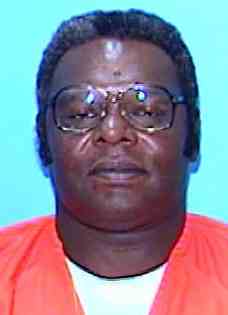
Johnny Robinson
Murderer Brian Kevin Rosenfeld
Murderer · USA · 1985
Brian Kevin Rosenfeld Brian Kevin Rosenfeld was sentenced to three concurrent l…
23 victims
Brian Kevin Rosenfeld
Murderer · USA · 1985
Brian Kevin Rosenfeld Brian Kevin Rosenfeld was sentenced to three concurrent l…
23 victims
 Marvin Gray
Murderer · USA · 1975
Marvin Gray was convicted killer who claimed responsibility for 23 slayings and…
23 victims
Marvin Gray
Murderer · USA · 1975
Marvin Gray was convicted killer who claimed responsibility for 23 slayings and…
23 victims
 Yahweh ben Yahweh
Murderer · USA · 1980
Yahweh ben Yahweh was born and legally named Hulon Mitchell Jr. (October 27, 19…
23 victims
Yahweh ben Yahweh
Murderer · USA · 1980
Yahweh ben Yahweh was born and legally named Hulon Mitchell Jr. (October 27, 19…
23 victims
 Russell Ellwood
Murderer · USA · 1991
Russell Ellwood was a former taxi driver. Authorities suspected him of killing…
20 victims
Russell Ellwood
Murderer · USA · 1991
Russell Ellwood was a former taxi driver. Authorities suspected him of killing…
20 victims
 Albert DeSalvo
Serial killer · USA · 1962
Albert DeSalvo (November 3, 1931 - November 25, 1973) was a serial killer activ…
13 victims
Albert DeSalvo
Serial killer · USA · 1962
Albert DeSalvo (November 3, 1931 - November 25, 1973) was a serial killer activ…
13 victims
 Kirk Lankford
Murderer · USA · 2007
Kirk Matthew Lankford (born 1985) was an American from Kalihi, Hawaii. He was c…
1 victim
Kirk Lankford
Murderer · USA · 2007
Kirk Matthew Lankford (born 1985) was an American from Kalihi, Hawaii. He was c…
1 victim
 William Baker
Mass murderer · USA · 2001
William D. Baker, 66, returned to the Navistar International engine plant in Me…
4 victims
William Baker
Mass murderer · USA · 2001
William D. Baker, 66, returned to the Navistar International engine plant in Me…
4 victims
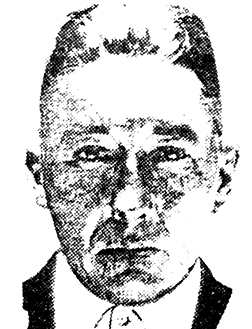 Arnold Sodeman
Serial killer · Australia · 1930
Arnold Karl Sodeman (12 December 1899 – 1 June 1936), also known as the School-…
4 victims
Arnold Sodeman
Serial killer · Australia · 1930
Arnold Karl Sodeman (12 December 1899 – 1 June 1936), also known as the School-…
4 victims
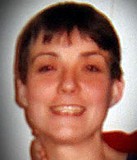 Sabine Radmacher
Murderer · Germany · 2010
Sabine Radmacher Sabine Radmacher was fatally shot by special police units the…
3 victims
Sabine Radmacher
Murderer · Germany · 2010
Sabine Radmacher Sabine Radmacher was fatally shot by special police units the…
3 victims
- Gender
- male
- Country
- USA
- Location
- St. Johns County, Florida, USA
- Date of birth
- J uly 25, 1952
- Age at first offence
- 33
- Characteristics
- serial rapist
- Victim profile
- Beverly St. George (female, 31)
- Method of murder
- Shooting
- Date(s) of murder
- August 12, 1985
- Years active
- 1985
- Date of arrest
- 5 days after
- Status
-
Executed
Executed by lethal injection in Florida on February 4, 2004
Overview
Johnny L. Robinson was convicted of first-degree murder, kidnapping, armed robbery, and sexual battery involving Beverly St. George. He was sentenced to death for the murder conviction and later was executed by lethal injection in Florida on February 4, 2004.
Status
Robinson was executed by lethal injection in Florida on February 4, 2004.
Timeline
- August 11, 1985 — Beverly St. George left her Plant City home, bound for Quantico, Virginia; her car broke down en route.
- August 12, 1985 — St. George was found partially clothed in a cemetery in St. Johns County, with two gunshot wounds to her head.
- Five days after St. George's murder — Robinson was arrested for robbing four other people in a disabled car and raping one of them.
- May 29, 1986 — Robinson was convicted of all counts by a jury.
- May 30, 1986 — The jury recommended the death penalty by a vote of 9-3.
- June 6, 1986 — Robinson was sentenced to life terms for kidnapping, armed robbery and sexual battery.
- June 19, 1986 — Robinson was sentenced to death.
- 1991 — The Florida Supreme Court denied certiorari in Robinson’s federal proceeding; Robinson’s case history included direct appeal activity resulting in reversal of the first death sentence and remand for resentencing.
- 1989 — At a new sentencing hearing, a jury voted for the death penalty; Robinson was again sentenced to death.
- Feb. 15, 1989 — A new sentencing hearing resulted in the jury voting 8-4 for the death penalty.
- April 4, 1989 — Robinson was again sentenced to death for murder and life terms on other charges.
- Feb. 27, 1991 — The Florida Supreme Court affirmed the conviction and sentence.
- June 8, 1995 — A circuit court denied appeal.
- Feb. 12, 1998 — The Florida Supreme Court denied appeal.
- Aug. 31, 2000 — The Florida Supreme Court denied a petition for writ of habeus corpus.
- June 27, 2001 — A U.S. District Court in Jacksonville denied a petition for writ of habeus corpus.
- Aug. 8, 2002 — The 11th U.S. Circuit Court of Appeals denied habeus appeal.
- Dec. 18, 2003 — Gov. Jeb Bush signed the death warrant, scheduling the execution for Feb. 4.
- Jan. 2004-Feb. 2, 2004 — Appeals were filed in state and federal courts seeking a stay of execution.
- Feb. 4, 2004 — The Florida Supreme Court denied final appeal; Robinson was executed by lethal injection.
- 7:34 p.m. EST (Feb. 4, 2004) — Robinson was pronounced dead at Florida State Prison after an injection of lethal chemicals.
People
- Johnny L. Robinson — defendant; executed by lethal injection.
- Beverly St. George — victim; found partially clothed in a cemetery in St. Johns County with two gunshot wounds to her head; died of severe brain injuries inflicted by gunshot wounds.
- Clinton Bernard Fields — accomplice/codefendant; was 16 or 17 at the time of the murder; testified against Robinson during the guilt phase of the first proceedings; later did not testify at resentencing; served a life sentence.
- Harland St. George Jr. — husband of Beverly St. George; witnessed the execution and later told reporters he would remember St. George.
Other individuals mentioned include:
- Gov. Jeb Bush — signed the death warrant.
- Charles West / Capt. Chuck West / Charles West — sheriff’s captain/detective; involved in investigation and provided testimony referenced in later proceedings.
- Peter Cannon — Robinson’s appeal attorney referenced in execution-day events.
- Jacob DiPietre / JoAnn Carrin / Sterling Ivey / Anne Conley — officials/spokespersons referenced in execution coverage.
- Charlie Crist — referenced as Florida Attorney General in federal appeal caption.
- Richard O. Watson, J. — referenced as a trial judge in one appellate summary.
- Richard Watson / Richard O. Watson — referenced in summaries.
- Barkett, J. — referenced in Florida Supreme Court decisions.
- Michael W. Moore — Secretary, Department of Corrections referenced in federal appeal caption.
- Howard Pearl — lead trial counsel referenced in Rule 3.850 proceedings.
- Dr. Harry Krop — clinical psychologist who testified at resentencing and in postconviction proceedings.
- Dr. Robert McConaghie — medical examiner for St. Johns County.
- Edmund L. Widdowson, Jr. — assistant state attorney for Somerset County, Maryland, referenced regarding Robinson’s 1979 rape conviction.
- Annette Eversole — lived with St. George and was married to St. George’s brother.
- Charles West — testified as lead investigator.
- Ethel Byrd and Warner Byrd — mitigation witnesses who testified during the 3.850 hearing.
- Cora Mae Evans / Winifred Lovett / Brenda Ann Shivers — women whose affidavits were discussed in relation to mitigation.
- Rev. J.B. Robinson — biological father referenced in Dr. Krop’s testimony.
- Coreen Smith / Earl Smith — people discussed in Krop’s mitigation investigation.
- Janie — referred to as Robinson’s step-grandmother and a person who drank.
- Baby Boy (Baby Boy Hester) — referred to as Robinson’s grandfather; described as beating Robinson and as a farm labor contractor.
- Troy Hester / Troy Hester — referenced in mitigation testimony.
- Thomas E. Cushman / Pat Doherty / Chris Quarles — referenced in Rule 3.850/follow-on discussion.
Background
Beverly St. George was traveling to Quantico, Virginia, and left her Plant City home on the morning of August 11, 1985. Her car broke down en route.
Robinson had a prior rape conviction in Maryland and was on parole at the time of the St. George murder, according to the proceedings described. Robinson also had multiple rape convictions mentioned in the coverage and proceedings.
Fields served as an accomplice/codefendant and was later serving a life sentence. Fields invoked his Fifth Amendment right not to testify at resentencing; the court allowed his redacted testimony from the guilt phase of the first proceedings to be read to the jury.
Dr. Harry Krop described Robinson’s background as involving emotional deprivation, physical abuse, and sexual abuse during childhood, and also described diagnoses including antisocial personality disorder and a psychosexual disorder, with later modifications discussed in postconviction proceedings.
The offence
Beverly St. George was abducted after her car broke down on Interstate 95. She was taken to a cemetery in St. Johns County and was sexually assaulted and killed there.
Two gunshot wounds to St. George’s head were found. She received severe brain injuries inflicted by the gunshot wounds and died as a result of those injuries.
Robinson and Fields were arrested for the murder. Their versions of the events conflicted.
Robinson’s statement and claimed version
Robinson gave a statement to police explaining that he and Fields came upon St. George’s car while traveling toward Orlando on I-95 and pulled over to render aid. St. George accompanied them to the cemetery. Robinson alleged consensual sexual activity on the hood of his car.
Robinson claimed the gun, which he removed from his belt and placed on the hood, went off accidently and shot St. George in the face. Robinson then shot her again and said: “How do you tell someone I accidently shot a white woman?”
Fields’s version as read at resentencing
At resentencing, Fields’s redacted guilt-phase testimony was read to the jury. Fields testified that Robinson ordered St. George into his car at gunpoint and handcuffed her. Fields said Robinson drove to the Pellicer Creek Cemetery where Robinson removed the handcuffs and sexually assaulted St. George. Fields testified that Robinson then expressed concern that St. George could identify them and walked up to her, put the gun to her cheek, and fired a shot. Fields testified he heard the shot, saw St. George fall, and then watched Robinson fire a second shot. Fields also testified that Robinson took money out of St. George’s purse and burned her purse, underwears, and papers and other stuff. Fields testified that Robinson and Fields drove away and that Robinson threw the murder weapon into a wooded area at some point along I-95.
Fields’s earlier guilt-phase testimony included further details read to the resentencing jury, including that Fields was also convicted of first-degree murder, kidnapping, rape, and armed robbery; that Fields “got life, not death”; and that the State had promised Fields “some slack” regarding sentencing; and that Fields was granted use immunity for his testimony.
Autopsy and medical examiner testimony
Dr. Robert McConaghie described St. George as 5 and a-half feet tall, weighing approximately 125 pounds, and as a young adult white woman about 30 to 31 years of age. McConaghie testified that St. George received two gunshot wounds to her face: one entered the left cheek and traveled into the bottom of the skull and ended on the right side of the back of her head; the other entered the left side of her forehead, went backward into the right and ended up on the back of the right side of the head. McConaghie testified to extensive hemorrhage inside the skull.
McConaghie testified that the bullet track penetrated both sides of the main lobes of the brain and that the medulla had been penetrated twice, once by each bullet. McConaghie testified that St. George “died as a result of severe brain injuries inflicted by the gunshot wounds.”
McConaghie testified that, aside from a scratch over her thumb and the two gunshot wounds, “there was no other significant injury” to her body and that he “saw no markings of any kind or indentations or injuries to her wrists, her hands, or her arms.” He testified that spermatozoa were present and that “[r]ecent sexual intercourse had taken place.”
McConaghie gave an impression about the sequence of shots: “the impression . . . that the bullet in the left cheek was the initial shot and the one in the forehead was the second shot.”
McConaghie testified that with regard to the left cheek, the wound was a tight contact wound, explaining the gun was “pressed to the cheek and pressed into the cheek.” Robinson’s counsel posed questions about whether the contact pressure could have been caused by St. George moving rather than the gun being pushed toward her. McConaghie responded that he had “no way of knowing whether the gun was being pushed in or she was pushing toward the gun.”
McConaghie testified that the forehead wound was consistent with the gun being held “one to two feet away.”
Investigation and arrest
The body was discovered partially clothed in a cemetery in St. Johns County. The investigation included crime scene evidence described through later testimony and coverage, including a .22-caliber pistol, shell casing evidence, tire tracks, and later the discovery of a stolen .22-caliber pistol in a burglary report.
A yellow Chevrolet Caprice was mentioned in the investigation. Deputies arrived after a call about a yellow Caprice in a parking lot at a truck stop and took Robinson and Fields into custody. Matching tracks were reported between the Caprice and tracks taken from the crime scene.
Robinson admitted to the shooting during interviews described in the investigation coverage.
Trial
Robinson was convicted by a jury of first-degree murder, kidnapping, armed robbery, and sexual battery.
At the initial trial, the jury recommended death by a vote of 9-3. The record described that Robinson received death on the murder conviction and life terms for the other convictions at the initial sentencing.
Guilty-phase testimony on resentencing
Fields did not testify at resentencing and invoked his Fifth Amendment right. The court allowed redacted guilt-phase testimony to be read to the resentencing jury, including Fields’s description of the abduction, handcuffing, sexual assault, and shooting.
Accomplice-corroboration dispute in accounts
Robinson claimed consensual sex and an accidental shooting followed by another shot out of fear; Fields described an abduction at gunpoint, handcuffing, rape, and shooting twice after expressing concern about identification.
Sentencing
At resentencing, a jury again recommended death by a vote of eight to four. The trial court found statutory aggravating circumstances and nonstatutory mitigating circumstances and again imposed the death penalty.
Aggravating circumstances argued and found
During resentencing, the State argued statutory aggravating factors including:
- murder committed by a person under sentence of imprisonment (Robinson was on parole for his prior rape conviction),
- murder committed by a person previously convicted of another felony involving use or threat of violence,
- murder committed in the course of kidnapping and sexual battery,
- murder particularly wicked, evil, atrocious, or cruel, including handcuffing immediately, repeated rape, terrorizing, and putting the firearm up to her cheek while she begged,
- murder in a cold, calculated, and premeditated manner, including taking St. George to a desolate area with a murder weapon and shooting twice because he thought she might later identify him, and
- murder to avoid arrest.
The trial court accepted the aggravating circumstances and found no statutory mitigating circumstances.
Mitigating circumstances
The trial court accepted as mitigating that Robinson had a difficult childhood and suffered physical and sexual abuse during childhood. The court also accepted Dr. Krop’s opinion that Robinson had a psychosexual disorder as a nonstatutory mitigating circumstance.
The trial court declined to find Robinson was intoxicated at the time of the offenses because it was “not supported by the evidence.” The trial court also found “no credible evidence that [Robinson] was incarcerated as a child in an adult prison.” The trial court stated that Robinson’s prison behavior “is not in mitigation of the crime.”
Appeals
Robinson’s case involved multiple appeals and postconviction proceedings described in the material.
Florida Supreme Court and federal proceedings (citations listed in the record)
- Robinson v. State , 520 So.2d 1 (Fla. 1988). (Direct Appeal-Reversed)
- Robinson v. State , 574 So.2d 108 (Fla. 1991). (Direct Appeal)
- Robinson v. Florida , 112 S.Ct. 131 (1991). (Cert. Denied)
- Robinson v. State , 707 So.2d 688 (Fla. 1998). (PCR)
- Robinson v. State , 773 So.2d 1 (Fla. 2000). (State Habeas)
- Robinson v. State , 2004 WL 170362 (Fla. Jan. 29, 2004). (Successive PCR)
- Robinson v. Moore , 300 F.3d 1320 (11th Cir. 2002). (Habeas)
- Robinson v. U.S. , 118 S.Ct. 1398 (1998). (Cert. Denied)
- Robinson v. Crosby , ___ F.3d ___ (11th Cir. February 4, 2004). (Sec. 1983)
Federal appeal content described (ineffective assistance during resentencing)
Robinson filed a § 2254 petition challenging his death sentence and asserted ineffective assistance of counsel during resentencing. The federal appellate proceedings described a standard under Strickland and AEDPA. The appellate court affirmed denial of the § 2254 petition.
The material included extensive discussion of:
- the State’s use of accomplice testimony,
- investigator testimony and Robinson’s post-arrest statement,
- medical examiner testimony,
- Dr. Krop’s mitigation evidence and background,
- Rule 3.850 proceedings including testimony from Howard Pearl and Krop,
- and the conclusion that Robinson had not demonstrated the prejudice necessary for relief.
Outcome
Robinson’s death sentence remained in place after appellate and postconviction proceedings described. On February 4, 2004, the Florida Supreme Court denied final appeal, and Robinson was executed by lethal injection in Florida.
Execution
Robinson was scheduled for execution by lethal injection at Florida State Prison near Starke, Florida. He was pronounced dead at 7:34 p.m. EST after an injection of lethal chemicals.
Last meal
For his final meal, Robinson ordered and ate fried chicken gizzards, french fries, smoked sausage, butter pecan ice cream, and Dr. Pepper.
Last words
Robinson was asked by a prison official if he had any last words: “Yep!” he said. Then he said, “Later!” And that was all.
Other details
Defendant identification and aliases
The material listed:
- Name: ROBINSON, JOHNNY L.
- Race: BLACK
- Sex: MALE
- Height: 5'11''
- Weight: 277
- Birth Date: 07/25/1962
- Current Facility: FLORIDA STATE PRISON
- Aliases: JAMES LEE ROBINSON; JIMMY C. ROBINSON; JOHNNY BERNELL ROBINSON JR; JOHNNY L. ROBINSON; JOHNNY LEARTICE ROBINSON
DC number
DC Number: 102767.
Details about the kidnapping/rape/murder setting and evidence
The material described the cemetery as Pellicer Creek Cemetery and also referenced Pellicer Cemetery and County Road 204 in St. Johns County. It described that St. George was abducted at gunpoint, handcuffed, raped, and shot twice in the head.
Additional robbery and sexual assault referenced in sentencing/appeals narrative
The material described that five days after St. George’s murder, Robinson was arrested for robbing four other people in a disabled car and raping one of them. It also described that the trial-related and postconviction-related discussions considered how such similar circumstances might affect mitigation or opening the door to rebuttal evidence.
Spotted an error, or have more information about this case?