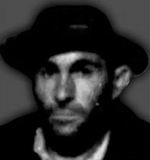
Ernesto Picchioni
Murderer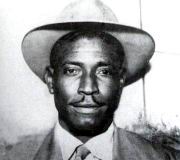 Louis Till
Murderer · Italy · 1945
Louis Till was executed by hanging by the U.S. Army on July 2, 1945. Louis Till…
1 victim
Louis Till
Murderer · Italy · 1945
Louis Till was executed by hanging by the U.S. Army on July 2, 1945. Louis Till…
1 victim
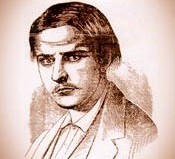 Vincenzo Verzeni
Murderer · Italy · 1869
Vincenzo Verzeni was born in Bettanuco, in the Bergamasco region, in 1849. He m…
12 victims
Vincenzo Verzeni
Murderer · Italy · 1869
Vincenzo Verzeni was born in Bettanuco, in the Bergamasco region, in 1849. He m…
12 victims
 Andrea Volpe
Murderer · Italy · 2004
The Beasts of Satan were a suspected satanic cult in Italy. Members of this gro…
3 victims
Andrea Volpe
Murderer · Italy · 2004
The Beasts of Satan were a suspected satanic cult in Italy. Members of this gro…
3 victims
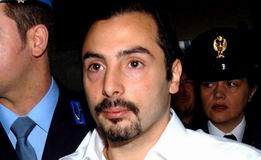 Nicola Sapone
Murderer · Italy · 2004
Nicola Sapone was one of the members of the suspected satanic cult “The Beasts…
3 victims
Nicola Sapone
Murderer · Italy · 2004
Nicola Sapone was one of the members of the suspected satanic cult “The Beasts…
3 victims
 Gianluca Casseri
Murderer · Italy · 2011
Gianluca Casseri committed suicide by shooting himself the same day after an ar…
2 victims
Gianluca Casseri
Murderer · Italy · 2011
Gianluca Casseri committed suicide by shooting himself the same day after an ar…
2 victims
 Luigi Chiatti
Murderer · Italy · 1992
Luigi Chiatti was an Italian serial killer. He was born Antonio Rossi to a 24-y…
2 victims
Luigi Chiatti
Murderer · Italy · 1992
Luigi Chiatti was an Italian serial killer. He was born Antonio Rossi to a 24-y…
2 victims
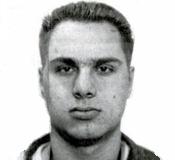 Barton Kirkham
Murderer · USA · 1956
Barton Kay Kirkham (December 1936 – June 7, 1958) was a deserter of the United…
2 victims
Barton Kirkham
Murderer · USA · 1956
Barton Kay Kirkham (December 1936 – June 7, 1958) was a deserter of the United…
2 victims
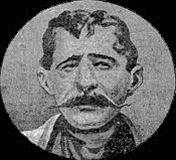 Alexandros Schinas
Assassin · Greece · 1913
Alexandros (Alekos) Schinas (Greek: Αλέξανδρος Σχινάς) was a Greek anarchist as…
1 victim
Alexandros Schinas
Assassin · Greece · 1913
Alexandros (Alekos) Schinas (Greek: Αλέξανδρος Σχινάς) was a Greek anarchist as…
1 victim
 Stephen Grant
Murderer · USA · 2007
February 14, 2007 — Stephen Grant contacted the Macomb County sheriff's departm…
1 victim
Stephen Grant
Murderer · USA · 2007
February 14, 2007 — Stephen Grant contacted the Macomb County sheriff's departm…
1 victim
 Dwight Loving
Murderer · USA · 1988
Dwight J. Loving was a private at Fort Hood, Texas at the time of the murders.…
2 victims
Dwight Loving
Murderer · USA · 1988
Dwight J. Loving was a private at Fort Hood, Texas at the time of the murders.…
2 victims
 Misty Witherspoon
Murderer · USA · 2005
Misty Witherspoon — defendant; her husband was Quinn Witherspoon (a Concord Pol…
1 victim
Misty Witherspoon
Murderer · USA · 2005
Misty Witherspoon — defendant; her husband was Quinn Witherspoon (a Concord Pol…
1 victim
- Gender
- male
- Country
- Italy
- Location
- Nerola, Italy
- Date of birth
- ???
- Characteristics
- robbery, murder for hire
- Victim profile
- Men and women
- Method of murder
- Shooting / St abbing with knife
- Date(s) of murder
- 1944 - 1947
- Years active
- 1944–1947
- Date of arrest
- September 7, 1947
- Status
-
Life imprisonment
Sentenced to life in prison on March 12, 1949
Timeline
- March 12, 1949 — He was sentenced to life in prison.
- 2016 — The case record listed him under “Monster’s Child Monday, Apr. 16, 1956” and included later editorial material about an English benefactor’s death and inheritance, but this did not change his sentencing status.
Background
Ernesto Picchioni was identified as the father of Carolina and as the “Monster of Nerola.” He lived with Carolina and her mother, two sisters and a brother in a dank stone cottage in a lonely gorge in the hills east of Rome. He was described as an itinerant olive-picker, chicken thief, and loud-mouthed braggart who was first a Fascist and later a Communist.
Carolina recalled that he was always roaring at his wife and children. She said he once made them dig a long family grave in the backyard so that “it will be ready when I want to get rid of you.”
The offence
Carolina remembered seeing her father commit a murder when she was nine years old. She said:
“Father was squabbling in the kitchen one night with a stranger.”
“I heard them and went to look. On the kitchen floor I saw a man with his throat cut and his head all bloody. I hurried back to bed.”
The record stated that after Carolina’s father was known to all Italy as the “Monster of Nerola,” a lawyer named Pietro Monni stopped in the lonely gorge in 1944 to ask help in fixing the leak in his bicycle tire and stayed for the night. Carolina’s mother heard a shot and said:
“I got up and saw my husband carrying out a big bundle—a sheet with a human foot hanging out.”
The record further stated that another bicyclist stopped later and did not live the night. It said Carolina’s terrified mother notified the police.
At the trial, Picchioni was said to have confessed to two more murders, and “a dozen others were attributed to him.” The record characterized him as “Lust killer of women” and stated that “buried victims in his garden.” It also stated “Motive: Sex.”
The record stated “VICTIMS: 16.”
Investigation
Carolina’s mother notified the police after another bicyclist did not live the night. The record did not include further investigative details.
Trial
At trial, Picchioni “brazenly confessed to two more murders,” and “a dozen others were attributed to him.”
Sentencing
The record stated that Picchioni was sentenced to life imprisonment.
Outcome
The case record listed the disposition as “Convicted.”
Aftermath
Carolina’s mother took up washing, and Carolina and her sisters were sent to Rome’s House of Calasanziane Sisters for orphans and convicts’ children. The record said Carolina learned to sew, made laces and embroideries, and made bridal trousseaux. It said she left the institution only for group walks, saw no movies, and read only religious books.
The record described the institution’s routine: she rose every day at 5:30, attended Mass at 6, and worked all day. It said Carolina had grown into a tall, slim, black-eyed girl of 17 when, one day last fall, the Sisters told all 157 girls to line up for inspection.
A greying, well-dressed man looked along the line and said:
“I'll take that one,”
“and pointed to Carolina.”
The record stated that the Sisters hastily told him the story of her father, and that he said:
“All the more reason to take her,”
“She deserves a break.”
Carolina’s benefactor was described as an Englishman named Robert Wilbraham Fitz Aucher, “a vicar's son” with “great charm and erratic fortune.” The record stated he sold a rust-proofing process to a Belgian steel concern for close to $1,000,000 “Three years ago,” and that after that he expanded “from Norway to Iran.” It said Fitz Aucher did not marry and decided to adopt children, dreaming of being a “Pygmalion” to transform a poor Italian girl into a perfect English lady.
The record said Italian friends sent Fitz Aucher to the Calasanziane Sisters, and that Fitz Aucher arranged a legal guardianship for Carolina and younger sister Gabriella. While he traveled the international business circuit, he lodged Carolina with an elderly couple in one of Rome’s most expensive districts.
The record said Carolina went on a happy whirl of movies and shopping, rode home weekly in a Rolls-Royce to her old village of Nerola, and that Fitz Aucher started her studying English, tennis, and driving. It said he planned to adopt her formally and take her to London.
The record stated that “A fortnight ago Fitz Aucher died of a heart attack.” It then stated that “Last week every daily newspaper in Rome headlined the happy story of La Cenerèntola, the Cinderella girl,” who “had inherited an estimated $2,000,000” in his will. It stated that Carolina, the monster’s child, “had overnight become the richest 17-year-old girl in Italy.”
The record stated that Carolina talked happily of building a home for her mother, of praying for the soul of Signor Fitz Aucher, that “very good man,” and of going to Texas to see some cowboys. It did not provide additional details about those remarks beyond the quotations.
“very good man”

Spotted an error, or have more information about this case?