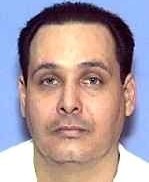
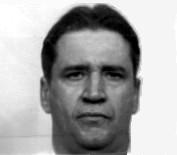
Richard Hinojosa
Murderer Brian Kevin Rosenfeld
Murderer · USA · 1985
Brian Kevin Rosenfeld Brian Kevin Rosenfeld was sentenced to three concurrent l…
23 victims
Brian Kevin Rosenfeld
Murderer · USA · 1985
Brian Kevin Rosenfeld Brian Kevin Rosenfeld was sentenced to three concurrent l…
23 victims
 Yahweh ben Yahweh
Murderer · USA · 1980
Yahweh ben Yahweh was born and legally named Hulon Mitchell Jr. (October 27, 19…
23 victims
Yahweh ben Yahweh
Murderer · USA · 1980
Yahweh ben Yahweh was born and legally named Hulon Mitchell Jr. (October 27, 19…
23 victims
 Russell Ellwood
Murderer · USA · 1991
Russell Ellwood was a former taxi driver. Authorities suspected him of killing…
20 victims
Russell Ellwood
Murderer · USA · 1991
Russell Ellwood was a former taxi driver. Authorities suspected him of killing…
20 victims
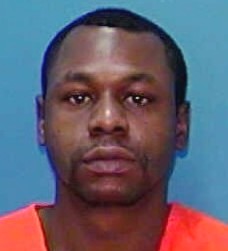 Jermaine Foster
Murderer · USA · 1992
Jermaine Foster was tried together with codefendants Booker, Henderson, and Cat…
2 victims
Jermaine Foster
Murderer · USA · 1992
Jermaine Foster was tried together with codefendants Booker, Henderson, and Cat…
2 victims
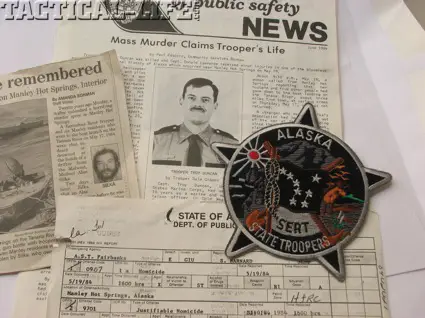 Michael Alan Silka
Spree killer · USA · 1984
Michael Alan Silka was killed during a shoot-out with the police on May 19, 198…
9 victims
Michael Alan Silka
Spree killer · USA · 1984
Michael Alan Silka was killed during a shoot-out with the police on May 19, 198…
9 victims
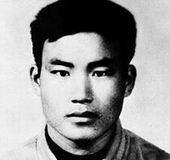 Woo Bun-Kon
Spree killer · South Korea · 1982
Woo Bun-Kon carried out a spree killing in Sang-Namdo, South Korea, and killed…
57 victims
Woo Bun-Kon
Spree killer · South Korea · 1982
Woo Bun-Kon carried out a spree killing in Sang-Namdo, South Korea, and killed…
57 victims
 Robert Gary Girts
Murderer · USA · 1992
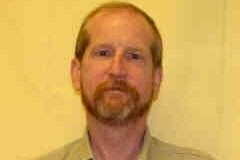
Robert Gary Girts was a Poland Township native who worked at a funeral home in…
1 victim
Robert Gary Girts
Murderer · USA · 1992
Robert Gary Girts was a Poland Township native who worked at a funeral home in…
1 victim
 Albert Clozza
Murderer · USA · 1983
Albert Clozza was convicted of killing a 13-year-old girl, Patricia Beth Bolton…
1 victim
Albert Clozza
Murderer · USA · 1983
Albert Clozza was convicted of killing a 13-year-old girl, Patricia Beth Bolton…
1 victim
 Henry Wainwright
Murderer · United Kingdom · 1874
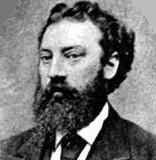
Henry Wainwright was executed by hanging outside Newgate on 21st December 1875.…
1 victim
Henry Wainwright
Murderer · United Kingdom · 1874
Henry Wainwright was executed by hanging outside Newgate on 21st December 1875.…
1 victim
- Gender
- male
- Country
- USA
- Location
- Bexar County, Texas, USA
- Date of birth
- November 17, 1961
- Age at first offence
- 25
- Characteristics
- kidnapping, rape
- Victim profile
- Man / Terry Wright (female, 29 )
- Method of murder
- Shooting / St abbing with screwdriver
- Date(s) of murder
- 1986 /May 10, 1994
- Years active
- 1986–1994
- Date of arrest
- December 1994
- Status
-
Executed
Executed by lethal injection in Texas on August 17, 2006
Case record: Richard Hinojosa
Background
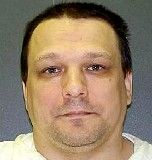
Richard Hinojosa was convicted and sentenced to death for the capital murder of Terry Wright in San Antonio. Hinojosa was executed by lethal injection in Texas on August 17, 2006.
Hinojosa was known on death row as “Hawkeye” because his mother was part Cherokee and Choctaw.
Hinojosa previously had a conviction in Bexar County for robbery and voluntary manslaughter.
Hinojosa acknowledged that he gunned down a man in 1986 and accepted an eight-year prison term in a plea bargain for that incident. He spent 2½ years in prison for the voluntary manslaughter conviction before receiving a death sentence for Terry Wright’s killing.
Hinojosa expressed love for his family and asked Terry Wright’s family to find peace in their heart before his execution.
The offence
On the evening of May 10, 1994, Richard Hinojosa broke into the home of his next-door neighbor, Terry Wright, and kidnaped, raped and stabbed the dental office manager numerous times.
Hinojosa cut the telephone wires to Wright’s home. He entered Wright’s house, engaged in a violent struggle with Wright, and forced the woman into her vehicle.
Hinojosa took Wright to a secluded area known for illegal trash dumping. Once there, Hinojosa raped Wright and fatally stabbed her 11 times in the back and chest.
After the stabbing, Hinojosa dumped Wright’s nude body in a field and covered her with grass.
At the time of the attack, Terry Wright was 29 years old. Hinojosa was linked to the crime through both fingerprint and DNA evidence.
Investigation
Co-workers at the dental office where Terry Wright managed called her father when she failed to show up for work. Her father found a window broken at her house, the place ransacked, and phone lines cut.
Evidence showed Wright was taken from her home, stabbed 11 times, thrown into the trunk of her car, and dumped in a secluded area known for illegal trash dumping.
Her car was found abandoned and broken down. Fluid from a broken transmission line led police to a dirt road, and search dogs then were used to find the body.
A footprint was found in the mud in the atrium outside Wright’s home, directly adjacent to a broken window.
Police discovered Wright’s abandoned black Beretta car near the intersection of Sulphur Springs Road and Loop 410. A trail of transmission fluid guided police from the car to a dirt road where a metal pipe protruding through the mud severed the car’s transmission line.
With the help of a K-9 unit, officers located Wright’s nude body lying in a field near where her vehicle had been discovered.
An autopsy revealed that Wright had been stabbed 11 times in her chest and back and that there was sperm present in her vagina. DNA testing indicated that Richard Hinojosa was the probable source of the sperm found inside Wright.
DNA evidence showed that only 1 in 19,900,000 randomly selected people of Hinojosa’s racial classification group would match the DNA profile of sperm collected on the vaginal swab. His DNA profile matched the semen collected from the victim.
Police found a footprint identical to the one found in the atrium near the location where the victim’s body was located. According to a Fila brand shoe representative, the prints were made by a leather Fila “Slant Shot” tennis shoe, style number 1-T32-0517.
In trial testimony, Hinojosa’s ex-wife Rebecca Alfaro stated that she had purchased matching pairs of size 10 or 11 white Fila tennis shoes for Hinojosa and for herself, and she testified at trial that after Wright’s murder she was unable to locate Hinojosa’s tennis shoes.
When police began asking about Hinojosa’s shoes, Alfaro looked for the shoes but could not find them.
Hinojosa offered several excuses for why the shoes were missing: maybe his father accidently threw them away, maybe a dog carried them away, or maybe somebody stole them.
Investigators took DNA samples from Hinojosa while he was in custody following a domestic violence accusation. Those DNA samples were matched to the DNA found on Wright.
A taxi driver testified that he was dispatched to the intersection of Sulphur Springs Road and Loop 410 and picked up two Hispanic males who paid him between $380 and $400 to take them to Dallas.
Testimony described conflicting accounts of hairstyle at the time of the offence, including statements that Hinojosa had a shaved head and a “beaver tail,” another that he had a “mohawk,” and another that he had a clean cut hairstyle. A witness explained that Hinojosa changed his hairstyle frequently.
Arrest
A Texas court record described that, in December 1994, Hinojosa was arrested on a domestic violence accusation. While he was in custody, authorities took DNA samples from him.
Separate reporting described that several days after Terry Wright’s body was found, Richard Hinojosa was arrested and charged with her murder.
Trial
In Bexar County, a grand jury indicted Hinojosa for capital murder. The indictment was in cause no. 95-CR-4325, issued August 15, 1995, and charged, on or about May 10, 1994, that Hinojosa intentionally and knowingly caused the death of Terry Wright by stabbing her with an object unknown to the grand jury while in the course of committing and attempting to commit predicate felony offenses of burglary, kidnaping, robbery, and aggravated sexual assault upon Wright, respectively.
The guilt-innocence phase of the capital murder trial commenced on July 14, 1997. On July 21, 1997, the jury returned its verdict, finding Hinojosa guilty of capital murder.
The punishment phase began and ended on July 25, 1997, and the trial court sentenced Hinojosa to death by lethal injection.
On automatic appeal, the Texas Court of Criminal Appeals affirmed Hinojosa’s conviction and sentence.
Evidence and arguments at trial
The State’s evidence included testimony that the presence of sperm on vaginal swabs taken from the victim indicated sexual intercourse within 24 hours of her death.
Fingerprint and DNA evidence were used to link Hinojosa to the crime.
Defense attorneys argued during the 1997 trial that Hinojosa had been dating Wright when the murder happened, which would explain fingerprints and semen found by investigators.
The defense also suggested that others in the neighborhood were responsible for the crime.
Hinojosa testified that he had been having an affair with Wright and said his sex with the victim was consensual and that he was not involved in her murder.
A defence theory described in later interviews and filings was that the presence of Hinojosa’s semen in Wright’s body did not establish that he sexually assaulted Wright, because they had gone out on dates.
Sentencing
After a jury found Hinojosa guilty of capital murder, the trial judge sentenced him to death.
Appeals
A state writ application was filed in the trial court, and later the Texas Court of Criminal Appeals denied state habeas relief.
Hinojosa filed a petition for writ of habeas corpus in federal district court, and the federal district court denied habeas relief and a certificate of appealability.
Hinojosa petitioned the 5th Circuit Court of Appeals for a certificate of appealability, and the 5th Circuit Court denied it.
Hinojosa petitioned the U.S. Supreme Court for certiorari review, and the U.S. Supreme Court denied the appeal.
A direct appeal decision described the conviction as affirmed and stated that evidence supported conviction, search and arrest warrant affidavits were not deficient, DNA evidence was admissible, and Hinojosa did not have standing to challenge the death penalty under the United Nations Charter.
Hinojosa’s habeas corpus grounds
In federal habeas proceedings, Hinojosa argued that the prosecution suppressed exculpatory and impeachment evidence in violation of Brady, knowingly used perjured testimony, and that his trial counsel rendered ineffective assistance in multiple respects. He also argued multiple constitutional and procedural errors related to the trial court’s jury instructions and Texas statutes requiring jurors to continue deliberating.
The federal district court denied habeas relief, denied all relief requested in the petition, and denied a certificate of appealability.
Outcome
He was pronounced dead at 6:19 p.m. CDT.
Aftermath
Before the drugs were administered, Hinojosa made statements to Terry Wright’s relatives and to the warden.
He said: “I am going to be free. I am going to heaven,” and he said to the parents, a brother and two aunts of his victim:
“I pray for you. Please find peace in your heart. I know you may hate me for whatever reason. The Lord says hate no one. I hope you find peace in your heart. I know my words cannot help you. I truly mean what I say.”
He indicated to the prison warden that he had finished his statement, telling him: “Kick the tires and light the fire. I'm going home to see my son and my mom.”
He began chanting a prayer, repeatedly invoking Yahweh as the lethal drugs were being administered.
Hinojosa’s execution was the 18th execution in Texas that year, and it was one short of the total for the previous year’s executions in the state.
No last-day appeals were filed.
Texas Board of Pardons and Paroles refused a request for commutation or a temporary reprieve.
Hinojosa requested a final meal that included chef salad with ranch dressing, fried chicken, chili cheese nachos, fried eggs, French fries, onion rings, Coca-Cola and red cream soda.
During reporting, a prosecutor, Jim Kopp, described the case evidence as showing the intruder broke into Wright’s home and that prosecutors disputed the contention that the sex was consensual, pointing to evidence that Hinojosa forced Wright from her home and then assaulted and stabbed her.
Hinojosa’s execution followed the U.S. Supreme Court’s denial of an appeal challenging the lethal drugs process as unconstitutionally cruel.
Timeline
- May 10, 1994 — Richard Hinojosa broke into Terry Wright’s home, cut the telephone wires, kidnapped Wright in her vehicle, raped her, and fatally stabbed her 11 times; he later dumped her nude body in a field and covered her with grass.
- Aug. 15, 1995 — A Bexar County grand jury indicted Hinojosa for capital murder in cause no. 95-CR-4325.
- July 14, 1997 — The guilt-innocence phase of the capital murder trial commenced.
- July 21, 1997 — The jury found Hinojosa guilty of capital murder.
- July 25, 1997 — The punishment phase began and ended; the trial court sentenced Hinojosa to death by lethal injection.
- Oct. 27, 1999 — The Texas Court of Criminal Appeals affirmed the conviction and sentence on direct appeal.
- July 20, 1999 — Hinojosa filed a state writ application in the trial court.
- Jan. 31, 2001 — The Texas Court of Criminal Appeals denied Hinojosa’s application for state habeas relief.
- July 13, 2001 — Hinojosa filed a petition for writ of habeas corpus in the federal district court.
- Sept. 30, 2004 — The federal district court denied habeas relief and a certificate of appealability.
- Jan. 25, 2005 — Hinojosa petitioned the 5th Circuit Court of Appeals for a certificate of appealability.
- Aug. 25, 2005 — The 5th Circuit Court denied Hinojosa a certificate of appealability.
- Nov. 22, 2005 — Hinojosa petitioned the U.S. Supreme Court for certiorari review.
- Mar. 20, 2006 — The U.S.
- Aug. 17, 2006 — Hinojosa was executed by lethal injection in Texas; he was pronounced dead at 6:19 p.m. CDT.
Spotted an error, or have more information about this case?