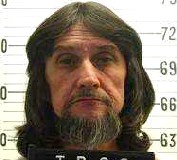
Olen Hutchison
Murderer Brian Kevin Rosenfeld
Murderer · USA · 1985
Brian Kevin Rosenfeld Brian Kevin Rosenfeld was sentenced to three concurrent l…
23 victims
Brian Kevin Rosenfeld
Murderer · USA · 1985
Brian Kevin Rosenfeld Brian Kevin Rosenfeld was sentenced to three concurrent l…
23 victims
 Yahweh ben Yahweh
Murderer · USA · 1980
Yahweh ben Yahweh was born and legally named Hulon Mitchell Jr. (October 27, 19…
23 victims
Yahweh ben Yahweh
Murderer · USA · 1980
Yahweh ben Yahweh was born and legally named Hulon Mitchell Jr. (October 27, 19…
23 victims
 Russell Ellwood
Murderer · USA · 1991
Russell Ellwood was a former taxi driver. Authorities suspected him of killing…
20 victims
Russell Ellwood
Murderer · USA · 1991
Russell Ellwood was a former taxi driver. Authorities suspected him of killing…
20 victims
 Robert Martines Perez
Murderer · USA · 1994
Name: Robert Martines Perez · Other name used in proceedings: Robert Martinez P…
15 victims
Robert Martines Perez
Murderer · USA · 1994
Name: Robert Martines Perez · Other name used in proceedings: Robert Martinez P…
15 victims
 Gary Michael Hilton
Serial killer · USA · 2005
Gary Michael Hilton was a drifter previously convicted of killing and beheading…
6 victims
Gary Michael Hilton
Serial killer · USA · 2005
Gary Michael Hilton was a drifter previously convicted of killing and beheading…
6 victims
 Shad Daniel Armstrong
Murderer · USA · 1998
Shad Daniel Armstrong burglarized a home in Texas in late August 1996 with his…
2 victims
Shad Daniel Armstrong
Murderer · USA · 1998
Shad Daniel Armstrong burglarized a home in Texas in late August 1996 with his…
2 victims
 Seema Gavit
Murderer · India · 1990
Seema Mohan Gavit and her sister Renuka Shinde received death sentences. The se…
9 victims
Seema Gavit
Murderer · India · 1990
Seema Mohan Gavit and her sister Renuka Shinde received death sentences. The se…
9 victims
 Luis Ceja
Murderer · 1930
Luis Ceja was executed at the Nevada State Prison in Carson City on September 4…
1 victim
Luis Ceja
Murderer · 1930
Luis Ceja was executed at the Nevada State Prison in Carson City on September 4…
1 victim
 Fletcher Mann
Murderer · USA · 1980
Fletcher Thomas Mann was executed by lethal injection in Texas on June 1, 1995.…
2 victims
Fletcher Mann
Murderer · USA · 1980
Fletcher Thomas Mann was executed by lethal injection in Texas on June 1, 1995.…
2 victims
- Gender
- male
- Country
- USA
- Location
- Campbell County, Tennessee, USA
- Date of birth
- October 13, 1953
- Age at first offence
- 35
- Characteristics
- to collect insurance money, murder-for-hire, convicted rapist
- Victim profile
- Hugh Huddleston, 45
- Method of murder
- Drowning
- Date(s) of murder
- August 14, 1988
- Years active
- 1988
- Date of arrest
- —
- Status
-
Sentenced to death
Sentenced to death on January 18, 1991; death sentence upheld on direct appeal culminating in Supreme Court of Tennessee decision delivered June 6, 1994
Parties and identity
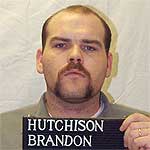
Olen Edward Hutchison, also known as Olen “Eddie” Hutchison, was the defendant.
Timeline
- 1984 — Hugh Huddleston made Chip Gaylor, then 19, the sole beneficiary of his will, with 95% of the estate held in trust for distribution to Gaylor at ages 25 and 30; Huddleston also made Gaylor the beneficiary of an insurance policy and other employment benefits amounting to over $289,000 in value.
- 1988 — Hutchison and several other men conspired to kill Hugh Huddleston by drowning while on a fishing trip at Norris Lake in Campbell County.
- 14 August 1988 — The Supreme Court stated that the offense date was 14 August 1988.
- June 6, 1994 — The Supreme Court of Tennessee, at Knoxville, delivered its opinion on direct appeal reviewing the conviction and death sentence.
- January 18, 1991 — Hutchison was sentenced to death.
Background
Hugh Huddleston died by drowning while on a fishing trip at Norris Lake in Campbell County.
Witnesses described Huddleston as having what they said was a “father-son relationship” with Hutchison’s co-defendant, Chip Gaylor, and said that Huddleston had made Gaylor beneficiary of his will.
Huddleston, described as a bachelor in his mid-forties, made Gaylor the sole beneficiary of his will in 1984. The will provided that 95% of the estate would not pass to Gaylor immediately but would be held in trust for distribution when Gaylor reached ages 25 and 30. Huddleston also made Gaylor the beneficiary of an insurance policy and other employment benefits totaling over $289,000 in value.
The offence
Hutchison was convicted of first-degree murder of Hugh Huddleston.
The Supreme Court described the case as involving a planned drowning during a fishing trip because Huddleston could not swim.
The State’s proof showed that Hutchison bought a large insurance policy on Huddleston’s life and intended to hire others to kill Huddleston in order to collect the proceeds.
Hutchison’s conspiracy included arranging for others to drown Huddleston. The Supreme Court stated that Hutchison was tried jointly with Chip Gaylor.
Conspiracy and preparation
Richard Miller, described as one of the conspirators and an acquaintance of Hutchison, Gaylor, and Huddleston, was the chief prosecution witness.
Miller testified that during the year before Huddleston’s death, Hutchison, Miller, and Gaylor were sitting around talking when Hutchison said “how much money he could make if he took insurance out on somebody and then had them killed.”
Miller testified that Gaylor remarked that he would pay Hutchison $100,000 to kill someone but said that his “insurance policy” was not good until he was 30. Hutchison responded that “that was too long to wait.”
Miller testified that about a week later Hutchison asked Gaylor to have Huddleston sign some “insurance papers” under the pretense of a tax write-off. Miller testified that Huddleston “would do almost anything Gaylor asked.” Huddleston signed the papers, and that evening Miller and Gaylor returned them to Hutchison, who indicated that he would get back in touch with them.
Shortly afterward, Hutchison had Gaylor obtain Huddleston’s signature on a promissory note representing a fictitious debt of $25,000 owed to Hutchison. Miller testified that at Gaylor’s prompting, Huddleston signed the note in Miller’s presence, and Gaylor witnessed his signature. Two other men, M. C. Curnutt and Charles Boruff, signed as witnesses after the note’s execution.
Miller testified that Hutchison informed Gaylor that a nurse would be coming to perform a physical examination on Huddleston. The examination was performed, and an insurance policy was issued on Huddleston’s life with $250,000 coverage and $500,000 in the event of accidental death.
The Supreme Court stated that Hutchison was the sole beneficiary of this policy and that Hutchison furnished the money with which the premiums were paid.
After the paperwork was completed, Hutchison offered Gaylor $10,000 to kill Huddleston. Gaylor declined because he had an obvious motive.
When Miller also refused, Hutchison said he would get someone else.
Hutchison spoke with Phil Varnadore, one of his “men,” who agreed to “get his boys to do it” for $25,000 to $50,000.
After initially discussing killing Huddleston on a hunting trip, Hutchison and Varnadore decided to drown him during a fishing trip because Huddleston could not swim.
Wilbur Hatmaker was designated to be the killer. Hatmaker and Miller scouted locations for the drowning on Norris Lake. Hatmaker instructed Miller to have Huddleston there by 8:00 p.m. the next evening.
Gaylor arranged a fishing trip with Huddleston for that day, but only Miller showed up.
Execution on the fishing trip
Miller and Huddleston rented a pontoon boat.
After dark, Hatmaker and John Rollyson appeared in a separate boat. Acting on the pretense they were friends of Miller, Hatmaker and Rollyson joined Huddleston and Miller in fishing from the pontoon boat.
According to the plan, Miller left to get bait in another boat he had brought on the trip.
Rollyson testified that after Miller left, Hatmaker pushed the victim into the water and wiped the boat with a rag.
Rollyson testified that Hatmaker promised Rollyson $12,500 for the killing, to be paid in 90 days. The Supreme Court noted that the insurance policy provided for payment in 90 days.
When Miller returned to the boat, Huddleston was gone, as were Hatmaker and Rollyson.
Miller reported Huddleston’s disappearance, and later that day Huddleston’s body was discovered in 15 feet of water.
The Supreme Court stated that there were no obvious signs of violence on the body, but the pathologist later noted a deep bruise in the victim’s scalp behind his right ear, apparently caused by a blunt object—possibly striking his head on the boat or being struck by a boat paddle or a fist.
Investigation
Investigators searched Hutchison’s home and found a recently purchased life insurance policy on Hugh Huddleston’s life, naming Hutchison as the sole beneficiary.
The Supreme Court stated that the defendant had claimed implausibly to have been unaware of the policy.
Arrest and detention
The Supreme Court stated that Hutchison was incarcerated on these charges while related civil litigation was ongoing.
Trial
Guilt phase verdict
The jury rejected Hutchison’s claim of insufficient evidence and found him guilty of first-degree murder, conspiracy to take a life, and solicitation to commit first-degree murder.
On direct appeal, Hutchison challenged his conviction and death sentence, and the Supreme Court upheld the trial court’s judgment of conviction.
Sufficiency of the proof
The Supreme Court held that the proof was legally sufficient to support the convictions beyond a reasonable doubt.
The Supreme Court described corroboration of accomplices’ testimony (Miller and Rollyson) through investigators’ discovery of the insurance papers and through Hutchison’s communications.
Cellmate testimony and letters
Keith Wilson, Hutchison’s cell mate, testified after having forwarded some of Hutchison’s letters to Miller.
Wilson testified that Hutchison had told him that the others involved “knew better than to say anything” and that “if they did, they would end up the same way as the other guy.”
Wilson testified that Hutchison remarked he had the money to get something done from jail and that “all he had to do [was] make a phone call.”
Wilson testified that Hutchison said: “as long as everybody kept their mouth shut, then they would be found not-guilty, they couldn’t prove nothing.”
Hutchison maintained that the $25,000 loan and use of the insurance policy as collateral had been a legitimate business deal between Hutchison and Huddleston, describing the arrangement as a loan Hutchison had made to the victim in the past.
Hutchison testified and maintained his innocence of any involvement in Huddleston’s death.
Conspirator civil insurance litigation
The Supreme Court stated that Hutchison and Gaylor filed claims to collect the insurance.
When the company refused to pay because of the district attorney’s investigation into the circumstances of Huddleston’s death, Gaylor sued the insurance company in federal court claiming that Hutchison was responsible for Huddleston’s death and should not be awarded the insurance proceeds.
Hutchison filed a cross-claim in the federal suit.
Severance
Hutchison alleged trial error in the trial court’s refusal to sever his trial from that of co-defendant Chip Gaylor.
The Supreme Court stated that the trial court admitted evidence that Gaylor had sued in federal court to collect the proceeds from the victim’s life insurance policy and had labeled Hutchison as the murderer in his complaint.
The State introduced the complaint for identification during cross-examination of Gaylor to impeach his testimony that he knew nothing about the victim’s death.
The Supreme Court held the trial court should have excluded the complaint or severed the trials because the complaint was admissible impeachment evidence against Gaylor but inadmissible hearsay against Hutchison. However, it concluded Hutchison was not unfairly prejudiced and declined to reverse the conviction on that basis.
Voir dire
Hutchison alleged that several voir dire errors denied him an impartial jury and due process.
The Supreme Court addressed the trial court’s discretion in the method of voir dire and noted that Hutchison did not show prejudice from refusal to sequester jurors for questions about the death penalty, pretrial publicity, homosexuality, and illegal drug use.
The Supreme Court also addressed dismissal of jurors who said they could not impose the death penalty and concluded such jurors were properly dismissed without rehabilitation.
Admission of evidence: letters and confrontation issues
Hutchison objected to the admission of letters he wrote to co-conspirator Philip Varnadore, claiming Tenn. R. Crim. P. 16 violations and unfair prejudice due to surprise admission on the fourth day of trial.
The Supreme Court found Rule 16 was not violated because Varnadore’s attorney did not give the State the letters until the middle of the trial since the attorney’s client feared possible retaliation by Hutchison. The Supreme Court also held there was no prejudicial surprise because defense counsel was given the weekend to review the letters and prepare cross-examination.
Hutchison also objected to admission of his letters and Varnadore’s testimony, claiming defense counsel was not allowed unrestricted cross-examination of Varnadore.
The Supreme Court concluded the trial court properly limited the scope of cross-examination. It stated that the trial court required Varnadore to answer questions about illegal drug activity and about the defendant’s letters, matters brought up on direct, but did not allow testimony linking the witness to the murder.
The Supreme Court concluded there was no violation of the right to confrontation and that the defendant was not prejudiced because Miller and Rollyson described Varnadore’s participation in the murder and the jury was made aware of the evidence sought on cross-examination.
Admission of co-conspirator hearsay
Hutchison argued the trial court erred by admitting co-conspirator hearsay without a prior determination that a conspiracy existed.
The Supreme Court held that the trial court acted within its discretion by admitting Miller’s testimony subject to later evidence proving a prima facie case of conspiracy.
The Supreme Court also addressed Sixth Circuit standards and acknowledged the trial court should have made an explicit finding more likely than not that a conspiracy existed, but concluded ample evidence supported that conclusion and there was no prejudice.
Post-murder statements by Hatmaker
Hutchison argued the court erred in admitting two co-conspirator statements not made “during the course of and in furtherance of the conspiracy,” and sought exclusion of testimony where the statements were made after the murder.
The Supreme Court held that a conspiracy continues until the conspirators’ ultimate goal of collecting proceeds has been achieved or abandoned.
It concluded Hatmaker’s conversation with Rollyson concerned their difficulty collecting payment after Hutchison’s arrest and was a statement in furtherance of the conspiracy.
It concluded Hatmaker’s statement to Miller on the trip to Chicago was not related to collection of insurance proceeds and should have been excluded as hearsay, but it held the error was harmless because Hatmaker’s statement identifying himself as the actual killer made Hutchison no more likely to be guilty and could not have affected the verdict.
The Supreme Court further held that other evidence confirmed the conspiracy’s existence and purpose and referenced Tenn. R. App. P. 36(b) as harmless error.
Due process issues during trial
Hutchison argued due process violations regarding surprise witness testimony, repetitive questions, impeachment cross-examination of April Hutchison, cross-examination of co-defendant Chip Gaylor, admission of rebuttal evidence, hearsay about the victim, exclusion of Ricky Miller’s attorney, and other issues.
The Supreme Court addressed and rejected the following claims:
- Keith Wilson’s testimony was admitted without prior notice because the prosecutor notified Hutchison for the first time on the first day of proof that Wilson would testify. The Supreme Court stated Wilson had recently surrendered himself after escaping from jail and was previously unavailable. Before allowing his testimony, the court allowed defense counsel to interview Wilson and the State provided counsel with Wilson’s criminal record. The defense thoroughly cross-examined Wilson, and the Supreme Court held Hutchison was not prejudiced.
- The Supreme Court concluded repetition during Wilson’s testimony was not error.
- The Supreme Court held that after the defendant questioned a witness about prior bad acts, Hutchison could not prevent proper cross-examination. It also held the defendant waived a jury-out hearing argument because he did not request one. It further held Hutchison had no right to cross-examine co-defendant Gaylor with leading questions because Gaylor testified only for himself and not against Hutchison.
- The Supreme Court held the admission of rebuttal evidence was proper: it stated that a bond hearing order showed the hearing occurred on April 24, impeaching Hutchison’s testimony, and that a boat dock receipt showed the victim rented a boat at 4:00 p.m. on the day of his death, contradicting Gaylor’s claim he could not have called Huddleston to go fishing.
- The Supreme Court addressed hearsay evidence concerning the victim and found any error harmless beyond a reasonable doubt.
- The Supreme Court held evidence about the victim receiving a phone call from Gaylor on the day of the murder and immediately after the call the victim said he was going fishing “with the boys” was properly admitted to show the victim’s state of mind, intention to fish, and to tie Gaylor to the planned fishing trip.
- The Supreme Court held that the issue of excluding Ricky Miller’s attorney, Mike Hatmaker, could not be reviewed on appeal because Hutchison failed to proffer the evidence at trial about any agreement between the State and Ricky Miller.
Jury instructions in the guilt phase
Hutchison argued the trial court made errors in jury instructions.
The Supreme Court held that:
- an accomplice testimony caution instruction was unnecessary because accomplices were already inherently suspect and the jury was sufficiently informed through corroboration requirements,
- a “dangerous wound” instruction was appropriate given evidence suggesting a blow to the victim’s head behind his ear,
- and the instructions adequately explained the jury’s duty to deliberate, consider evidence impartially, and find Hutchison not guilty unless the State proved its case beyond a reasonable doubt.
Impartiality of the trial judge
Hutchison argued that the trial judge injected personal opinions and feelings to the extent that it prejudiced him and denied due process.
The Supreme Court concluded the trial judge did not abuse discretion in controlling questions and the admission of evidence and did not unfairly prejudice Hutchison by preventing defense counsel from arguing with a witness and by attempting to avoid repetitive testimony.
Sentencing
Sentencing hearing evidence
At the sentencing hearing, the State presented no further evidence.
Hutchison presented testimony of acquaintances to establish his good reputation in the community since childhood.
School records were introduced along with proof of his success in the Future Farmers of America as a teenager.
Hutchison testified about repairing small machines and described how he could be useful while in prison.
His ailing father and his wife testified about his good qualities as a son and spouse and pleaded for mercy.
A jailer testified that Hutchison had been a good prisoner.
The jury also heard testimony that Hutchison had no prior criminal record and had been gainfully employed since adulthood.
Mitigating circumstances instructions
Hutchison’s principal assignment of error on sentencing concerned his request for jury instructions on several non-statutory mitigating circumstances.
The trial judge rejected the requested instructions and used pattern instructions, specifically instructing jurors to consider “any other mitigating factor which is raised by either the prosecution or defense at either the guilt or sentencing hearing.”
The Supreme Court held that neither the United States Constitution nor the Tennessee Constitution required the trial judge to read or submit non-statutory mitigating circumstances to the jury.
The Supreme Court discussed statutory framework and concluded the trial judge properly instructed the jury under the law in effect on the date of commission of the offense, stating the offense was committed on 14 August 1988.
The Supreme Court concluded the remainder of the defendant’s challenges to sentencing instructions were without merit, including:
- denial of an instruction defining “mitigating circumstances,”
- instructions about not allowing “sympathy” and “prejudice” to influence the verdict,
- and instructions that might have led the jury to believe unanimous agreement on a mitigating circumstance was required.
Constitutional and statutory sentence review
The Supreme Court addressed a broad attack on the Tennessee death penalty statute and held most complaints were not personal to the defendant and had no effect on the outcome, concluding they were without merit.
The Supreme Court stated that Tenn. Code Ann. T.C.A. § 39-13-206(c)(1)(D) required it to determine that the death sentence was not excessive or disproportionate in similar cases considering the nature of the crime and the defendant. It held the sentence was not imposed arbitrarily, that evidence supported the jury’s verdict, that it was not excessive or disproportionate, and that the sentence of death would be carried out as provided by law on the day of 1994 unless otherwise ordered by the court or other proper authority.
The Supreme Court adjudged costs on appeal against the defendant.
Appeals
Direct appeal in Supreme Court of Tennessee
The Supreme Court stated it reviewed the conviction and death sentence on direct appeal and upheld the conviction and death sentence.
It noted a separate concurring and dissenting opinion by Reid, C.J. Daughtrey, J. not participating.
Concurring and dissenting opinion
In a separate concurring and dissenting opinion, the concurring justice stated they concurred with the majority’s decision to affirm the conviction of first-degree murder but dissented from the death sentence.
The dissent argued the defendant was not death-eligible because the only aggravating circumstance found by the jury—“the defendant ‘employed another to commit the murder for remuneration or the promise of remuneration,’ T.C.A. § 39-13-204(i)(4) (Supp. 1993)”—was invalid in this case.
The dissent stated that “No death penalty . . . shall be imposed but upon a unanimous finding that the state has proven beyond a reasonable doubt the existence of one (1) or more of the statutory aggravating circumstances . . . . T.C.A. § 39-13-204(i) (Supp. 1993).”
The dissent asserted that if the only aggravating circumstance found by the jury was invalid or inapplicable, the defendant could not be sentenced to death.
The dissent referenced that use of this aggravator did not narrow the class of death eligible defendants, stating that it alleged the aggravating circumstance added no culpability beyond that necessary to establish first degree murder.
The dissent cited Article 1, Section 16 of the Tennessee Constitution and the Eighth Amendment to the United States Constitution and referenced Middlebrooks and Zant.
The dissent stated it would find the defendant not death-eligible and impose a sentence of life imprisonment.
The dissent also stated that discussion of other sentencing issues was pretermitted.
Outcome
The Supreme Court upheld Hutchison’s conviction and death sentence.
The sentence of death was to be carried out as provided by law on the day of 1994 unless otherwise ordered by the court or other proper authority.
Other details
Insurance and financial motive
The Supreme Court stated that Hutchison intended to collect almost $800,000 in life insurance proceeds and other benefits.
It described the insurance policy arrangements and the defendant’s role as sole beneficiary who furnished premium money, with payment linked to 90 days.
Relationship and beneficiary details
The Supreme Court described Huddleston as a bachelor in his mid-forties and that he made Chip Gaylor beneficiary of his will and life insurance and other employment benefits.
It stated that Huddleston made Gaylor sole beneficiary and that 95% of the estate was held in trust for distribution when Gaylor reached ages 25 and 30.
Bruise and possible cause
The Supreme Court stated that a pathologist noted a deep bruise in the victim’s scalp behind his right ear, apparently caused by a blunt object, possibly related to striking the head on the boat or striking by a boat paddle or a fist.
Required legal findings (as stated in dissent)
The dissent referenced the statutory requirement that death penalty imposition required a unanimous finding beyond a reasonable doubt of one or more statutory aggravating circumstances.
Spotted an error, or have more information about this case?