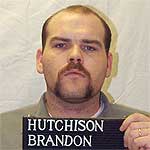
Brandon Hutchison
Murderer Russell Ellwood
Murderer · USA · 1991
Russell Ellwood was a former taxi driver. Authorities suspected him of killing…
20 victims
Russell Ellwood
Murderer · USA · 1991
Russell Ellwood was a former taxi driver. Authorities suspected him of killing…
20 victims
 Robert Martines Perez
Murderer · USA · 1994
Name: Robert Martines Perez · Other name used in proceedings: Robert Martinez P…
15 victims
Robert Martines Perez
Murderer · USA · 1994
Name: Robert Martines Perez · Other name used in proceedings: Robert Martinez P…
15 victims
 Billy Frank Vickers
Murderer · USA · 1993
Billy Frank Vickers Vickers was executed by lethal injection in Texas on Januar…
14 victims
Billy Frank Vickers
Murderer · USA · 1993
Billy Frank Vickers Vickers was executed by lethal injection in Texas on Januar…
14 victims
 Ronald Bernard Bennett
Murderer · USA · 1985
Ronald Bernard Bennett was executed by lethal injection in Virginia on November…
1 victim
Ronald Bernard Bennett
Murderer · USA · 1985
Ronald Bernard Bennett was executed by lethal injection in Virginia on November…
1 victim
 Scott Dekraai
Mass murderer · USA · 2011
Scott Dekraai was arrested after the Seal Beach shooting at the Salon Meritage…
8 victims
Scott Dekraai
Mass murderer · USA · 2011
Scott Dekraai was arrested after the Seal Beach shooting at the Salon Meritage…
8 victims
 Nathaniel Bar-Jonah
Murderer? · USA · 1993
Nathaniel Benjamin Levi Bar-Jonah was also known by the name David Paul Brown.…
1 victim
Nathaniel Bar-Jonah
Murderer? · USA · 1993
Nathaniel Benjamin Levi Bar-Jonah was also known by the name David Paul Brown.…
1 victim
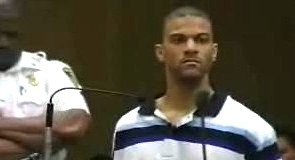 Brian Cavitt
Murderer · USA · 2006
Brian Cavitt was sentenced to life in prison on December 11, 2007. Brian K. Cav…
2 victims
Brian Cavitt
Murderer · USA · 2006
Brian Cavitt was sentenced to life in prison on December 11, 2007. Brian K. Cav…
2 victims
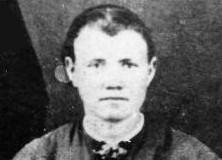 Elizabeth Woolcock
Murderer · Australia · 1873
Elizabeth Woolcock — defendant; wife of Thomas Woolcock; later executed for his…
1 victim
Elizabeth Woolcock
Murderer · Australia · 1873
Elizabeth Woolcock — defendant; wife of Thomas Woolcock; later executed for his…
1 victim
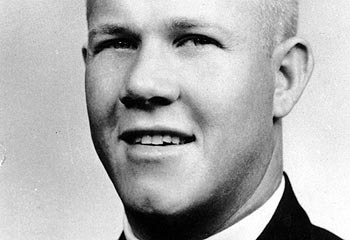 Charles Whitman
Mass murderer · USA · 1966
Charles Joseph Whitman (June 24, 1941 – August 1, 1966) shot and killed 14 peop…
15 victims
Charles Whitman
Mass murderer · USA · 1966
Charles Joseph Whitman (June 24, 1941 – August 1, 1966) shot and killed 14 peop…
15 victims
- Gender
- male
- Country
- USA
- Location
- Lawrence County, Missouri, USA
- Date of birth
- December 16, 1974
- Age at first offence
- 22
- Characteristics
- argument, alcohol
- Victim profile
- Ronald and Brian Yates
- Method of murder
- Shooting (.22 caliber handgun)
- Date(s) of murder
- January 1, 1996
- Years active
- 1996
- Date of arrest
- S everal days later in California
- Status
-
Sentenced to death
Sentenced to death on November 18, 1996
Case information
Brandon Hutchison was tried in the State of Missouri v. Brandon S. Hutchison, 957 S.W.2d 757 (Mo. banc 1997), arising from the killings of Ronald Yates and Brian Yates. Hutchison was convicted of first degree murder and the jury recommended the death sentence. The trial court entered judgment for the same.
Hutchison later filed a Rule 29.15 postconviction motion alleging that the prosecution failed to reveal plea-bargain information involving the state's primary witness, Freddy Lopez. That postconviction denial was reversed and remanded for an evidentiary hearing.
Timeline
- December 31, 1995 — Freddie Lopez and his wife Kerry Lopez threw a small New Year’s Eve party in the garage adjacent to their house; Ronald and Brian Yates arrived shortly after midnight looking for their brother Tim Yates, who had already left.
- About 4:00 a.m. — Freddie and Kerry Lopez went into the house to continue an argument about how much alcohol Kerry was drinking.
- About twenty minutes later — Hutchison ran into the house and pounded on the Lopez’s bedroom door saying that "something bad had happened in the shop."
- Around 8:00 a.m. — Ronald and Brian Yates’ dead bodies were found on the side of the road.
- Several days later — Hutchison and Salazar were apprehended in California.
- November 18, 1996 — Hutchison was sentenced to death.
- October 4, 1996 — The trial court allowed the state to endorse John Galvan as a witness for the penalty phase on the first day of trial.
- October 8, 1996 — A hearing was held to determine whether John Galvan would testify.
- October 10, 1996 — The penalty phase proceeded.
- September 30, 1997 — An appellate decision referenced in the opinion was noted as decided on that date (Rule 30.20 context).
- 11/25/97 — Handdown date for the affirmed appeal in the Supreme Court of Missouri.
- 11/20/2001 — Handdown date for the postconviction appeal that resulted in reversal and remand.
- 11/27/2001 — Postconviction appeal references “REVERSED AND REMANDED” and remand instructions (as reflected by the provided case narrative).
Background
Freddie Lopez and his wife, Kerry Lopez, threw a small New Year’s Eve party in the garage adjacent to their house on December 31, 1995. Ronald Yates and Brian Yates arrived shortly after midnight. They were looking for their brother, Tim Yates, who had already left. Freddie Lopez invited them to stay for a few beers.
During the party, several guests became intoxicated, including Hutchison. Freddie Lopez and Ronald Yates shared a line of methamphetamine.
The offence
Disturbance and escalation at the garage
Hutchison caused a minor disturbance when he punched another guest, Jeremy Andrews, for no apparent reason. Andrews also observed Hutchison making shooting motions with his hand towards the Yates brothers.
At about 4:00 a.m., Freddie and Kerry Lopez went into the house to continue an argument that they had started in the garage about how much alcohol Kerry was drinking. Several guests went home, leaving only Hutchison, Michael Salazar, and Ronald and Brian Yates in the garage.
About twenty minutes later, Hutchison ran into the house and pounded on the Lopez’s bedroom door, saying that "something bad had happened in the shop." Salazar called for Freddie Lopez from the porch. When Lopez came out, Salazar was holding a .25 caliber revolver and told Lopez that he had shot someone.
Lopez entered the garage and saw both Yates brothers lying on the floor. Salazar told Lopez that one of the brothers had tried to stab him.
Injuries and medical findings
Autopsies showed that both brothers had been shot at point blank range with a .25 caliber gun. The bullet that hit Ronald Yates lodged in his spinal cord, paralyzing him from the waist down. Brian Yates sustained a relatively minor bullet wound to the chest and a more serious one to the stomach.
Medical evidence established that both brothers were still alive when Lopez found them on the garage floor. Lopez testified that he saw Ronald Yates gasp. Hutchison insisted that nobody call an ambulance and that Ronald Yates was already dead.
Transport and continued violence
Hutchison suggested removing Ronald and Brian Yates from the garage in Lopez’s white Honda Accord. Hutchison and Salazar put Ronald Yates in the trunk first. Hutchison then put Brian Yates in the trunk on top of Ronald after dragging Brian by his shoulders, dropping him on the floor, and kicking him in the upper body.
While Hutchison and Salazar prepared the transport, Salazar went into the house to fetch a drug scale and a .22 caliber handgun, which he also put in the car. The three men took off in the car with Hutchison driving.
After driving for a short time, they pulled over on the side of a dirt road. Hutchison and Salazar got out and walked to the back of the car. Lopez testified that as Hutchison climbed out of the car, he held the .22 caliber pistol and said, "we got to kill them, we got to kill them." Lopez heard several gunshots and then Hutchison and Salazar got back into the car. Lopez testified that Hutchison was still clutching the gun when he returned to his seat.
Moving the bodies and disposing of weapons
The three men proceeded to a nearby creek bed. Lopez testified that he dropped bullet casings in the water and Hutchison buried both the .25 and .22 caliber guns wrapped in his tee-shirt.
They drove to the trailer home of a mutual friend, Troy Evans, and Hutchison pounded on Evans' door until Evans let them inside. Evans' girlfriend, Frankie Young, noticed Lopez's white Honda parked in front of the trailer. Hutchison begged Evans for permission to take a shower because he had blood on one of his hands.
Lopez and Salazar made several phone calls, including one call to a girlfriend of Salazar who lived in Yuma, Arizona. After returning to the Lopez’s house, Kerry Lopez noticed a significant amount of blood on the Honda's back bumper.
Hutchison and Salazar left in the Yates brothers' car and drove to a girlfriend's house. The girlfriend gave them a ride to the Joplin bus station, where they bought two tickets to Yuma, Arizona.
Victims’ final condition and discovery
At around 8:00 a.m., Ronald and Brian Yates’ dead bodies were found on the side of the road. Both had died of execution-style gunshot wounds to the head from .22 caliber bullets. Ronald Yates had sustained a shot in each eye and one to the back of the head. Brian Yates had sustained one shot in the right eye and one in the right ear.
Ronald and Brian Yates’ hair and blood were found on a piece of carpet found with the bodies. Fiber analysis determined that the carpet came from the trunk of Lopez's car.
Hutchison and Salazar were apprehended several days later in California.
Investigation
After arrest, Salazar told police investigator Mark Aleshire that he had shot Ronald Yates in the back and Brian Yates in the chest and stomach with the .25 caliber gun, and that Hutchison shot the brothers in the head with the .22 caliber gun. Aleshire incorporated these statements into a police report.
During Hutchison’s interrogation with investigator Bill Wegrzyn, Wegrzyn provided Miranda rights and Hutchison indicated he wanted to talk. Wegrzyn testified that Hutchison later did not answer questions and then shouted obscenities.
Arrest / apprehension
Trial
Conviction and sentence recommendation
A jury convicted Hutchison of first degree murder and recommended the death sentence.
Evidence admitted and excluded
The Supreme Court of Missouri addressed multiple evidentiary and instructional issues on appeal:
The court held that it committed no error in not permitting the police investigator to read to the jury his police report that included Salazar's confession to shooting the Yates brothers in the garage. The court found Salazar's statement was hearsay, did not exonerate Hutchison, and was not made under circumstances that provide considerable assurance of reliability. The court also found the evidence was uncontroverted and duplicative of statements already in evidence.
The court held the trial court acted within discretion by permitting a police investigator to testify that Hutchison stopped answering questions during interrogation and shouted obscenities. The court concluded Hutchison waived his right to silence when he began answering and did not reinvoke that right based on the record. It found a sudden change in demeanor during a custodial interrogation could be interpreted as conduct showing consciousness of guilt.
The court held the trial court did not abuse its discretion in allowing the state to endorse John Galvan as a witness for the penalty phase on the first day of trial. Galvan testified Hutchison stabbed him. The court found the state did not intend surprise or deceit, provided Hutchison with Galvan’s medical records eleven minutes after receiving them on October 8th, gave Hutchison an opportunity to interview Galvan, and prosecutors told Hutchison’s counsel they were investigating Galvan before endorsing him.
The court found no manifest injustice or miscarriage of justice resulted from testimony that Hutchison punched a party guest for no apparent reason. The court found the evidence pale compared with more specific and incriminating evidence about the execution style murders.
The court found no manifest injustice or miscarriage of justice resulted from the prosecutor’s opening statement, including statements describing the victims’ discovery and the prosecutor’s comments during the opening statement. The court noted the opening statement was supported by evidence, the jury was instructed at the outset that opening statements were not evidence, and it referenced a particularly offensive comparison.
The court found no manifest injustice or miscarriage of justice resulted from the modification to the jury instructions, especially given that the modification came from the criminal jury instructions’ Notes on Use.
The court found no evidence demonstrated the sentence was imposed under the influence of passion, prejudice, or any other arbitrary factor. The court stated the evidence supported the jury’s finding of two statutory aggravating circumstances and that the death sentence was not excessive or disproportionate in similar cases, considering the crime, the strength of the evidence, and the defendant.
Jury deliberation and outcome
The jury convicted Hutchison of first degree murder and recommended the death sentence.
Verbatim testimony and quoted statements
Lopez testified that Hutchison said: "we got to kill them, we got to kill them."
During trial testimony about interrogation:
Q: [By Prosecutor Selby] Now again, as an investigator on this case, did you interview Mr. Hutchison?
A: Yes, I did.
Q. Did he indicate to you that he understood those rights?
A. Yes, he did.
Q. And after discussing those rights with him, did he indicate that he was willing to talk to you?
A. He said he wanted to talk to us. He said he wasn't going to sign anything, but he wanted to talk to us.
Q. Then you had mentioned that then you began asking some more questions about the actual events?
A. Yes, sir. I did.
Q. What did you ask him?
A. I asked him specifically what he did the evening hours of December 31st and the early morning hours of January 1st.
Q. And what was his response to that question or those questions?
A. He said that he and Michael Salazar had gone to a party at Freddie Lopez's house in Verona, and at that party, they met two girls from Branson. One was a Lisa and one was a Barbara and they left that party and they went to Springfield.
Q. And then did you ask him any further questions after he told you that?
A. At that point, I asked him some details in reference to who those people were, what type of vehicle they went to Springfield in, what time they left the party, and what time they arrived in Springfield, and where they stayed when they went to Springfield.
Q. You might speak up a little bit. And what was Mr. Hutchison's response to-to those questions?
A. He didn't answer any of those questions. It was at this point that he was curious and started asking me about the details in reference to the homicide in particular.
Q. What was the defendant's-what was your response to the defendant's questions?
A. He wanted to know how they had been shot and I explained to him that it was a very brutal execution style killing and that the guys, the brothers, had been-had been shot in the head, in the eyes specifically, and Mr. Hutchison's attitude changed. He shouted some obscenities and we ended the conversation.
Sentencing
Hutchison was sentenced to death on November 18, 1996.
Independent review
The Supreme Court of Missouri performed independent review pursuant to section 565.035.3, RSMo 1994. It found no evidence the sentence was imposed under the influence of passion, prejudice, or any other arbitrary factor. It also found the evidence supported the jury’s finding of two statutory aggravating circumstances and found the death sentence was not excessive or disproportionate.
The court described the evidence supporting statutory aggravating circumstances as follows: Ronald and Brian Yates were rendered helpless by bullet wounds from Salazar’s .25 caliber pistol. It described Ronald’s spinal cord as severed and stated he would have been paralyzed from the waist down, and it stated both brothers would have been in shock based on a serious abdominal wound. The court stated Hutchison refused to take them to a hospital and insisted no paramedics be called; it further described Hutchison kicking Ronald Yates, dragging his broken body across the garage floor, and shoving both severely injured brothers into the trunk. The court described Hutchison driving ten to fifteen minutes while searching for a place to shoot and dump the bodies, finding evidence of a bloody fingerprint on the inside of the car trunk showing at least one brother was conscious during the ride. It further described Hutchison stopping, opening the trunk, and shooting both in their eyes and ears.
Appeals
Direct appeal
The Supreme Court of Missouri affirmed the convictions and death sentence. The Court en banc held:
- No error in excluding the portion of Aleshire’s police report reading Salazar’s confession (hearsay; no exoneration; reliability not established; duplicative).
- No violation of the right to remain silent from testimony that Hutchison stopped answering and shouted obscenities; waiver and no reinvocation on the record; conduct indicating consciousness of guilt.
- No abuse of discretion in allowing endorsement of John Galvan as a penalty phase witness on the first day of trial; timing, disclosure of medical records, interview opportunity, and no continuance.
- No manifest injustice or miscarriage of justice from testimony Hutchison punched a party guest for no apparent reason.
- No manifest injustice or miscarriage of justice from the prosecutor’s opening statement.
- No manifest injustice or miscarriage of justice from the modification to jury instructions.
- No evidence the sentence was imposed under passion, prejudice, or other arbitrary factor; evidence supported two statutory aggravators; death sentence not excessive or disproportionate.
The Supreme Court stated the opinion author was William Ray Price, Jr., Judge and the opinion vote was AFFIRMED. It stated Benton, C.J., Limbaugh, Covington, White and Holstein, JJ., concur; and Robertson, J., concurred in result only.
Postconviction appeal (Rule 29.15)
Hutchison appealed the denial of his Rule 29.15 postconviction motion alleging the prosecution struck a deal before or during trial with the state's primary witness Freddy Lopez. At trial, both Lopez and the prosecutor denied that any deal existed. The motion court denied relief without allowing Hutchison to present evidence to support the claim.
The Supreme Court of Missouri REVERSED AND REMANDED. It held:
- An evidentiary hearing was required because the motion, coupled with the files and records of the case, did not conclusively show Hutchison was entitled to no relief.
- The state had a duty to disclose plea agreements negotiated with state witnesses.
- Failing to disclose violated due process if the undisclosed evidence might have caused a different result.
- The state was required to correct testimony of its witnesses that it knew to be false.
- The case was remanded for Hutchison to present evidence that a plea bargain had been struck.
- If he was successful, the motion court was to determine whether the evidence was material to the outcome.
Details alleged in postconviction proceedings
Hutchison alleged that:
- The state did not reveal a plea bargain to defense counsel that could be used to impeach Lopez during testimony.
- Lopez testified falsely that he did not have a plea bargain, and the prosecutor failed to correct this.
- The prosecutor reaffirmed the lack of a plea bargain during closing statement.
The narrative described trial testimony as follows: At trial, Lopez testified he had no deal with the prosecution and that the prosecution was not willing to make a deal at that time. He also testified that he was "pray[ing]" that he got a deal for this testimony against Hutchison. During closing argument, the prosecutor stated that Lopez did not have a deal and was still charged with two counts of first-degree murder, and stated:
"He didn't get out of anything. If anything, he convicted himself on the stand because he is responsible also. He went along."
The postconviction narrative further stated Hutchison alleged that at the time of trial the prosecuting attorney had made an agreement to reduce Lopez’s charges from first-degree murder to second-degree murder, with term-of-years details as follows: the prosecuting attorney was offering fifteen years on both charges; Lopez was asking for ten years. The only detail not resolved was said to be the term of years to be served.
The Supreme Court reversed the motion court’s denial and remanded for an evidentiary hearing, including instructions that on remand the parties should be allowed to present witnesses and evidence relating to plea negotiations or agreements occurring before, during or after Hutchison's trial.
Outcome / current status
Hutchison’s direct appeal resulted in an affirmed conviction and death sentence. The Rule 29.15 postconviction denial was reversed and remanded for further proceedings consistent with the opinion, including an evidentiary hearing to allow Hutchison to present evidence regarding a plea bargain agreement with Freddy Lopez.
Spotted an error, or have more information about this case?