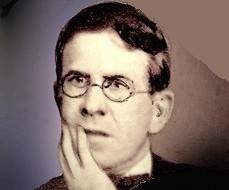
Dr. Bennett Clark Hyde
Murderer? Leo Frank
Murderer? · USA · 1913
Leo Max Frank (April 17, 1884 – August 17, 1915) was an American man who became…
1 victim
Leo Frank
Murderer? · USA · 1913
Leo Max Frank (April 17, 1884 – August 17, 1915) was an American man who became…
1 victim
 Richard Allen Williams
Murderer? · USA · 1992
Boone County Prosecutor Kevin Crane dismissed the charges in August 2003 after…
10 victims
Richard Allen Williams
Murderer? · USA · 1992
Boone County Prosecutor Kevin Crane dismissed the charges in August 2003 after…
10 victims
 James DeBardeleben
Murderer? · USA · 1965
James DeBardeleben (James Mitchell “Mike” DeBardeleben), born March 20, 1940, w…
8 victims
James DeBardeleben
Murderer? · USA · 1965
James DeBardeleben (James Mitchell “Mike” DeBardeleben), born March 20, 1940, w…
8 victims
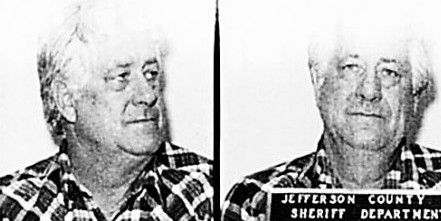 Thomas McCormick
Murderer? · USA · 1975
Thomas McCormick recruited homeless men from a Denver church mission to work on…
8 victims
Thomas McCormick
Murderer? · USA · 1975
Thomas McCormick recruited homeless men from a Denver church mission to work on…
8 victims
 Todd Warzecha
Murderer? · USA · 1972
Todd Warzecha was a prime suspect in two unsolved Mid-Michigan murders. Michiga…
6 victims
Todd Warzecha
Murderer? · USA · 1972
Todd Warzecha was a prime suspect in two unsolved Mid-Michigan murders. Michiga…
6 victims
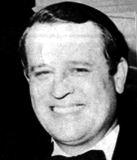 Dr. John Robert Hill
Murderer? · USA · 1950
Dr. John Robert Hill was a prominent Houston surgeon. His wife was Joan Robinso…
5 victims
Dr. John Robert Hill
Murderer? · USA · 1950
Dr. John Robert Hill was a prominent Houston surgeon. His wife was Joan Robinso…
5 victims
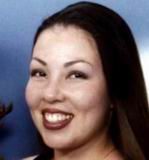 Mia Gonzales
Homicide · USA · 2007
Mia Gonzales, age 36, was charged in connection with the Oct. 27, 2007 shooting…
1 victim
Mia Gonzales
Homicide · USA · 2007
Mia Gonzales, age 36, was charged in connection with the Oct. 27, 2007 shooting…
1 victim
 Brooke Marie Rottiers
Murderer · USA · 2006
Brooke Marie Rottiers was 30 years old and lived in Corona in August 2006. She…
2 victims
Brooke Marie Rottiers
Murderer · USA · 2006
Brooke Marie Rottiers was 30 years old and lived in Corona in August 2006. She…
2 victims
 Milton Griffin-El
Murderer · USA · 1986
Milton Griffin-El was executed by lethal injection in Missouri on March 25, 199…
2 victims
Milton Griffin-El
Murderer · USA · 1986
Milton Griffin-El was executed by lethal injection in Missouri on March 25, 199…
2 victims
 John Mills
Murderer · USA · 1995
John Mills was sentenced to death on October 18, 1996 in Knox County for the st…
1 victim
John Mills
Murderer · USA · 1995
John Mills was sentenced to death on October 18, 1996 in Knox County for the st…
1 victim
 Shawn Bentler
Mass murderer · USA · 2006
Shawn Bentler (born 1983 or 1984) was a convicted murderer from Bonaparte, Iowa…
5 victims
Shawn Bentler
Mass murderer · USA · 2006
Shawn Bentler (born 1983 or 1984) was a convicted murderer from Bonaparte, Iowa…
5 victims
- Gender
- male
- Country
- USA
- Location
- Kansas City/Independence, Missouri, USA
- Date of birth
- 1872
- Age at first offence
- 37
- Characteristics
- poisoner, history of mental illness
- Victim profile
- James Moss Hunton / Thomas Hunton Swope / Chrisman Swope (the father and relatives of his wife))
- Method of murder
- Poisoning (cyanide and strychnine)
- Date(s) of murder
- September-December 1909
- Years active
- 1909
- Date of arrest
- —
- Status
-
Died in custody
Sentence of life imprisonment on May 16, 1910 was overturned; three attempts at retrial occurred, but in 1917 the charges were dismissed; Dr. Bennett Clark Hyde died on August 8, 1934 (cause of death listed as apoplexy).
Case overview
Dr. Bennett Clark Hyde was accused in Kansas City of murdering members of the Swope family with poison. The prosecution and trial proceedings linked Hyde to the purchase and use of cyanide and strychnine and to the administration of capsules and pills in the period before multiple deaths and illnesses in the Swope household. A jury found Hyde guilty of murder and the judge sentenced him to life imprisonment on May 16, 1910. That verdict was later overturned. After multiple retrial attempts, the charges were dismissed in 1917. Hyde died on August 8, 1934; the cause of death was listed as apoplexy.
People
- Dr. Bennett Clark Hyde — defendant; physician.
- Miss Frances Swope (later Frances Hyde) — wife of Dr. Hyde; daughter-in-law relative in the Swope family.
- Mrs. Logan Swope — Frances’s mother.
- Col. Thomas Hunton Swope — Frances’s moneybags uncle; Swope clan chieftain; the will referenced gifts including Frances Hyde.
- James Moss Hunton — Col. Swope’s cousin; died after treatment by Dr. Hyde.
- Chrisman Swope — a nephew identified as dying after symptoms following those of Col. Swope.
- Pearl Keller — nurse attending Col. Swope on the day of his death.
- Margaret Swope — one of Frances’s younger sisters who testified.
- Hyde’s colleague, Dr. Edward Stewart — provided information to police about Hyde’s access to typhoid culture.
- Prosecuting attorneys: M. Atkinson, Virgil Conkling, Elliott W. Major, and James A. Reed — named as chief prosecutors in the trial listing.
- Chief defense lawyers: R.R. Brewster, M. Cleary, and Frank Walsh — named in the trial listing.
- Judge Ralph S. Latshaw — named as judge in the trial listing.
- Juror Harry Waldron — involved in a retrial; ran away during Hyde’s second hearing.
- Thomas H. Swope — referenced as “Colonel” Thomas H. Swope in the Kansas City Public Library entry; described as the philanthropist/developer tied to the deaths.
- Thomas Hunton Swope — referenced in the case summary as Col. Swope and as having the will.
Timeline
- June 21, 1905 — Hyde married Frances Swope in a secret marriage.
- March 1899 — charges against Hyde for grave-robbing accusations were dropped.
- Late September 1909 — Dr. Hyde was called to tend to James Moss Hunton, who had a stomach problem.
- October 1, 1909 — Col. Swope needed something to soothe his stomach and called on Dr. Hyde.
- October 2, 1909 — Hyde gave Col. Swope a pill.
- October 3, 1909 — Col. Swope died.
- Nov. 10 — Dr. Edward Stewart said he had given Hyde a test tube filled with typhoid culture.
- Dec. 6, 1909 — Chrisman Swope died, three days after he began to show symptoms resembling those suffered by Col. Swope.
- Late December 1909 — Police arrested Hyde.
- April 11, 1910 — Trial started; Frances and other family members clashed on the witness stand.
- May 16, 1910 — Hyde was found guilty of murder; he was sentenced to life in prison.
- October 1911 — Hyde won a new trial; the new trial started in October 1911.
- Dec. 11, 1911 — During the second hearing, juror Harry Waldron fled the jurors’ hotel after opening a nailed transom, crawling through the space, slipping down a fire escape, and bolting.
- 1913 — A third Hyde trial ended when the jury could not agree.
- 1915 — Frances Hyde bore Hyde a son.
- 1917 — Charges were dismissed.
- 1920 — Frances Hyde filed for divorce, citing repeated and constant acts of cruelty and violence; she divorced him for “cruelty and violence.”
- Aug. 8, 1934 — Hyde died after collapsing and hitting the ground; cause of death was listed as apoplexy.
- Tuesday, March 25, 2008 — Publication date referenced for a “Poison mind of Dr. Hyde” item.
Background
Dr. Bennett Clark Hyde had a background described as tainted with scandal from the very start of his medical career. While Hyde worked for his alma mater as an anatomy instructor, two men were arrested for grave robbing, and they confessed that they had been working for Hyde. Charges were filed against Hyde but were dropped in March 1899.
Hyde became the Kansas City police surgeon in 1905 and was fired in 1907 for alleged mistreatment of a patient.
Hyde married Frances Swope in a secret marriage on June 21, 1905, connecting him with a wealthy family. Their marriage occurred while Frances’s mother and wider family members expressed opposition to Hyde. Frances stood by her husband even when another woman sued him for breach of promise within days of the wedding.
Frances and her mother, brother, and sisters clashed with Hyde’s legal proceedings as witnesses during the trial.
The offence
The prosecution alleged that Hyde used poison to kill members of the Swope family, described as reducing the size of the family and increasing his wife’s share of the estate. The trial narrative included use of cocktails or medicine containing poisons such as typhoid, cyanide, and strychnine in connection with deaths and illnesses. Autopsy findings and testing were described as revealing traces of poison. The state charged that Hyde murdered to reduce the size of the Swope family and increase his wife’s share in the $3,500,000 Swope estate, and that she received $118,000.
Hyde’s defence argued that the deaths occurred in the course of ethical medical practice and that the illnesses among relatives resulted from bad drinking water at the Swope mansion in Independence, where most of the family lived.
Investigation
Investigators exhumed the bodies of Col. Swope and his nephew and examined them for traces of poison. Investigators found strychnine, but the concentrations were not high enough to prove that Dr. Hyde had knowingly poisoned his patients.
Dr. Edward Stewart told police that he had given Hyde a test tube filled with typhoid culture on Nov. 10. Hyde told Stewart he was planning to use the cultures for an experiment. A druggist also came forth and said that he had sold Hyde large quantities of cyanide and strychnine, which Hyde said he needed to kill rats.
Arrest
Police arrested Hyde in late December. Frances declared to the press that her husband was wrongly accused.
Trial
The trial started on April 11, 1910. Frances and her mother, brother, and sisters clashed on the witness stand. After Mrs. Swope’s testimony about Hyde’s knowledge of Swope’s will, one newspaper reported:
“Mother-in-Law tries to hang Son-in-Law,” reported one newspaper after Mrs. Swope's testimony that Hyde had knowledge of Swope's will, and thus a motive to kill.
Margaret Swope testified that:
“Dr. Hyde came into my room and looked over my medicines,” said Margaret Swope.
A short time later, a nurse gave her a capsule.
“My convulsions followed.”
Another sister testified that:
“Hyde had come into her room in the middle of the night and jabbed her arm with a needle. The arm quickly became infected.”
Hyde’s defense stated that Col. Swope had died of old age and that illnesses among the other relatives were the result of bad drinking water at the Swope mansion in Independence. The jury could not understand why Hyde needed all that cyanide and strychnine to kill off a few rats.
The jury found him guilty, and the judge sentenced Hyde to life in prison. Hyde was sentenced to life imprisonment on May 16, 1910, and was found guilty of murder on May 16, 1910.
Frances issued a statement for the press:
“Clark is innocent and he shall be freed.”
Sentencing
Hyde was sentenced to life imprisonment after the jury found him guilty of murder. The Kansas City Public Library entry described the May 16, 1910 verdict as being found guilty of murdering philanthropist “Colonel” Thomas H. Swope and several family members after Hyde’s purchase of cyanide capsules and test tubes of typhoid cultures. The verdict was later overturned by a higher court.
Appeals and retrials
In September (after the May 16, 1910 conviction), Hyde’s lawyers filed an appeal citing 255 errors in the case and attacking the competence of the poison experts who testified for the prosecution.
Hyde won a new trial that started in October 1911. The second hearing ended in a mistrial. Around midnight on Dec. 11, juror Harry Waldron fled during the trial by prying open a nailed transom, crawling through the space, slipping down a fire escape, and bolting from the jurors' hotel.
Police caught up with Waldron a few days later, but he was in no shape for the jury box. Waldron told the judge:
“I had been driven almost to distraction,” a wild-eyed and trembling Waldron told the judge.
“I couldn't stand being cooped up. There seemed to be nothing but walls and eyes around me.”
A third trial in 1913 ended with a jury disagreement. Prosecutors talked about a fourth trial, but in 1917 the charges were dismissed.
A Kansas City Public Library entry stated that the overturning involved the Missouri Supreme Court, with the first trial’s verdict overturned after Frances Hyde paid for appeals. Another passage described that the courts ruled the evidence was merely circumstantial and did not prove guilt. After seven years of court battles, Hyde was legally cleared of suspicion in the murders.
Outcome
Hyde was found guilty of murder and sentenced to life imprisonment on May 16, 1910, but the conviction was overturned. There were three attempts at retrial, including a second hearing ending in mistrial due to juror flight, and a third trial ending with a jury disagreement in 1913. In 1917, the charges were dismissed. Hyde was legally cleared of suspicion after court battles.
Aftermath
After the jury could not be sustained against Hyde and the charges were dismissed, Hyde moved to Lexington about 40 miles from Kansas City. He set up a modest country practice and lived quietly and alone until Aug. 8, 1934.
In October 1920, Frances Hyde filed for divorce charging “repeated and constant acts of cruelty and violence.” Another passage described the divorce as being for “cruelty and violence.” Frances Hyde had one son and a daughter; she had borne Hyde a son in 1915 and a daughter in 1917.
Hyde died on Aug. 8, 1934. On that day, he went to visit the local newspaper office to get a sneak peek at the news and fell dead after entering the office. The cause of death was listed as apoplexy.
Other details
Medical and poison details described in the case narrative
- Dr. Hyde treated James Moss Hunton by extracting “the bad blood” after being called in late September 1909; two pints and some pills later, Hunton died. Dr. Hyde listed the cause of death as apoplexy.
- Dr. Hyde was called to tend Col. Swope after Swope needed something to soothe his stomach on Oct. 1, 1909. Nurse Pearl Keller said Swope had been reading the newspaper when she gave him his capsule. Within 20 minutes, his limbs began to stiffen, he started groan, and then fell into violent convulsions. Nurse Keller recorded Swope’s last words:
“I wish I had not taken that medicine. I wish I were dead.”
- The death certificate signed by Dr.
- In December after Col. Swope’s death, eight nieces, nephews, and cousins named in the will came down with typhoid. Chrisman Swope died on Dec. 6, described as three days after he began to show symptoms resembling those suffered by his late uncle.
Motive statements and household suspicion
- Frances’s mother told police that the motive was money, that Hyde had seen Col. Swope’s will, and was bumping off anyone standing between him and the old man’s fortune.
- There were misgivings in the household that Hyde tried to kill off the entire Swope clan to collect the family fortune; nurses went to the authorities after becoming afraid.
Trial listings and named legal roles (as provided)
The trial listing included:
- Place: Kansas City, Missouri
- Dates of Trial: April 16-May 16, 1910
- Verdict: None (as stated in the listing), while the narrative elsewhere states a guilty verdict on May 16, 1910 and a life sentence.
- Significance: described as a monument to the power of money in the criminal justice system; Hyde’s wealthy wife hired the best attorneys available and the verdict was overturned.
Prior career-related events included in the narrative
- Two men were arrested for grave robbing, and they confessed they had been working for Hyde; charges were filed but dropped in March 1899.
- Hyde was fired in 1907 for alleged mistreatment of a patient.
- Hyde served as Kansas City police surgeon starting in 1905.
Defense and prosecution assertions about estate value and shares
- The state charged Hyde murdered to reduce the size of the Swope family and increase his wife’s share in the $3,500,000 Swope estate; the narrative stated she received $118,000.
- Hyde’s defense asserted the deaths were in ethical medical practice.

Spotted an error, or have more information about this case?