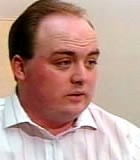
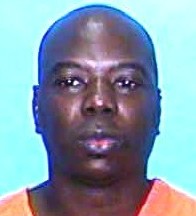
Richard Allen Williams
Murderer?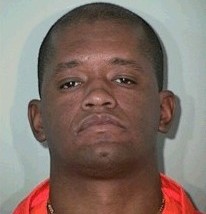 Andre Minnitt
Murderer? · USA · 1992
Andre Minnitt was convicted of crimes connected to the El Grande Market slaying…
3 victims
Andre Minnitt
Murderer? · USA · 1992
Andre Minnitt was convicted of crimes connected to the El Grande Market slaying…
3 victims
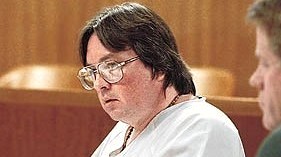 Floyd Tapson
Murderer? · USA · 1987
Floyd Tapson was convicted by a jury in the Thirteenth Judicial District Court,…
3 victims
Floyd Tapson
Murderer? · USA · 1987
Floyd Tapson was convicted by a jury in the Thirteenth Judicial District Court,…
3 victims
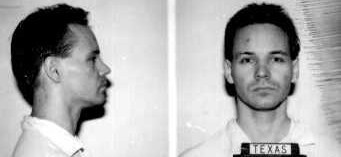 Michael Roy Toney
Murderer? · USA · 1985
Michael Roy Toney (December 29, 1965 – October 3, 2009) · Name as recorded: Mic…
3 victims
Michael Roy Toney
Murderer? · USA · 1985
Michael Roy Toney (December 29, 1965 – October 3, 2009) · Name as recorded: Mic…
3 victims
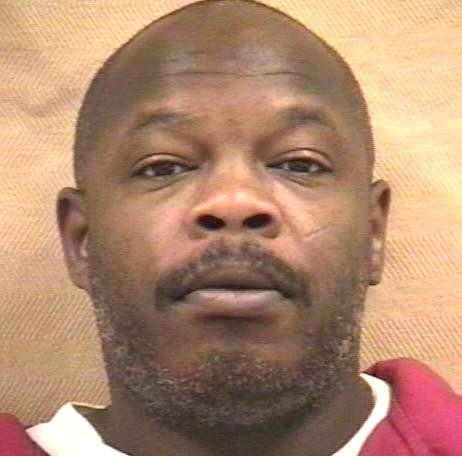 Glen Edward Chapman
Murderer? · USA · 1992
Defendant: Glen Edward Chapman Legal case references: In the Supreme Court of N…
2 victims
Glen Edward Chapman
Murderer? · USA · 1992
Defendant: Glen Edward Chapman Legal case references: In the Supreme Court of N…
2 victims
 James Campbell
Murderer? · USA · 1997
September 1997 — James Campbell’s first trial ended with a hung jury. · January…
2 victims
James Campbell
Murderer? · USA · 1997
September 1997 — James Campbell’s first trial ended with a hung jury. · January…
2 victims
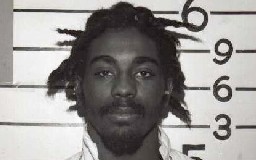 Larry Hicks
Murderer? · USA · 1978
Larry Hicks · Larry Hicks was sentenced to death on September 1, 1978. · At ret…
2 victims
Larry Hicks
Murderer? · USA · 1978
Larry Hicks · Larry Hicks was sentenced to death on September 1, 1978. · At ret…
2 victims
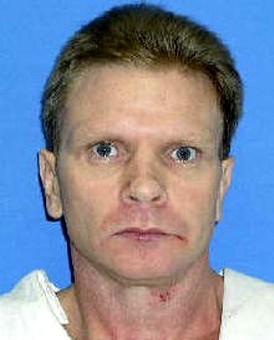 Bobby Wayne Woods
Murderer · USA · 1997
Defendant: Bobby Wayne Woods · Execution: Bobby Wayne Woods was executed by let…
1 victim
Bobby Wayne Woods
Murderer · USA · 1997
Defendant: Bobby Wayne Woods · Execution: Bobby Wayne Woods was executed by let…
1 victim
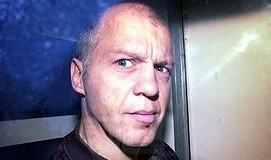 Michael Stone
Murderer · United Kingdom · 1996
Defendant: Michael Stone (born Michael John Goodban in 1960) · Victims: Lin Rus…
2 victims
Michael Stone
Murderer · United Kingdom · 1996
Defendant: Michael Stone (born Michael John Goodban in 1960) · Victims: Lin Rus…
2 victims
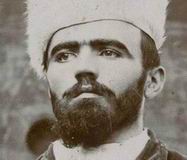 Joseph Vacher
Serial killer · France · 1894
Joseph Vacher (November 16, 1869 – December 31, 1898) was a French serial kille…
11 victims
Joseph Vacher
Serial killer · France · 1894
Joseph Vacher (November 16, 1869 – December 31, 1898) was a French serial kille…
11 victims
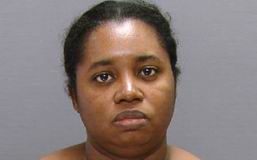 Stacey Newkirk-Smalls
Murderer · USA · 2012
Stacey Newkirk-Smalls was a Tacony mother accused in the May 2012 murders of he…
2 victims
Stacey Newkirk-Smalls
Murderer · USA · 2012
Stacey Newkirk-Smalls was a Tacony mother accused in the May 2012 murders of he…
2 victims
- Gender
- male
- Country
- USA
- Location
- Columbia, Missouri, USA
- Date of birth
- 1966
- Age at first offence
- 26
- Characteristics
- poisoner, nurse
- Victim profile
- 9 men 58 years old or older and one 69-year-old woman (patients under his care)
- Method of murder
- Poisoning (succinylmonocholine)
- Date(s) of murder
- 1992
- Years active
- 1992
- Date of arrest
- —
- Status
-
Acquitted / overturned
Charges dismissed in August 2003; Boone County Prosecutor Kevin Crane dismissed the charges after subsequent tests found the unexplained presence of succinylcholine residue in control samples of tissue meant to provide a standard for comparison.
Case record: Richard Allen Williams
STATUS and legal outcome
Boone County Prosecutor Kevin Crane dismissed the charges in August 2003 after subsequent tests by the FBI and National Medical Services found the unexplained presence of the residue in control samples of tissue meant to provide a standard for comparison. Richard Williams said, “I think as far as I'm concerned, it's the end of it, due to my innocence.”
Timeline
- May 7, 2002 — Dr. Kevin Ballard, director of analytical toxicology at National Medical Services, found that succinylmonocholine was present in tissues of all of the 10 victims.
- May 31, 2002 — Boone County’s Dix ruled each of the 10 deaths a homicide.
- June 3, 2002 — Boone County Prosecuting Attorney Kevin Crane charged Richard Williams with 10 counts of first-degree murder.
- July 18, 2002 — Preliminary hearing date was set for July 18.
- July 23, 2002 — Richard Williams pleaded innocent to 10 counts of first-degree murder; Boone County Prosecutor Kevin Crane told the court he would seek the death penalty in the case.
- August 6, 2003 — Proceedings included in the case status narrative following charging and later dismissal.
- August 2003 — The charges were dropped; Boone County Prosecutor Kevin Crane dismissed the charges due to the unexplained presence of residue in control samples used for comparison.
The offence
Richard Allen Williams was charged with 10 counts of first-degree murder connected to deaths in 1992 of patients under his care at Truman Memorial Veterans Hospital in Columbia, Mo. The accusation was that Williams fatally poisoned the patients with succinylcholine, a powerful muscle relaxant that can cause a person to stop breathing and that is typically used before inserting a breathing tube for surgeries.
The Reuters account described that a Missouri grand jury indicted Williams for administering succinylcholine, described as “a derivative of curare that is used as a poison by South American Indians,” to kill nine men and one woman while he worked as a nurse at the hospital in 1992.
Victims and relevant case figures
- The deaths occurred on Ward 4E at the hospital during a period in 1992 while Williams was on duty.
- An affidavit outlined that 41 mysterious deaths occurred on Ward 4E between May and August 1992 while Williams was on duty.
- Authorities said people under Williams’ care were 20 times as likely to die as other patients on the ward.
- In 1993, authorities obtained permission to exhume the bodies of 13 people who died.
- New tests indicated that 10 of the 13 victims were given succinylcholine.
A number of events and death counts were discussed in relation to the hospital ward and to Williams’ period on duty:
- Between May and August 1992 while Williams was on duty, there were 41 deaths, including 19 “code blues.”
- Another description stated that in the 60 days between May and August 1992 while Williams was on duty, there were 41 deaths and that the FBI investigation concluded patients were 20 times more likely to die while Williams was working than while other nurses were on duty.
- The Veterans Affairs inspector general office report and related discussion said patients were 20 times more likely to die when Williams was on duty.
Specific individuals referenced:
- Elzie Havrum, 66, died after being admitted to Truman Ward 4-East on June 14, 1992, hours before his death on June 15, 1992.
- Leo Yamry, 75, of Eldon, Mo., died on Aug. 22, 1992.
- A whistle-blower claimed Williams killed 42 patients at the veterans hospital and perhaps others at a nearby nursing home.
Background and characteristics of the case
Relatives and caregivers described unusually frequent deaths associated with Williams’ night shift on the ward, where families and staff suspected he was present when patients died. Hospital records reflected deaths occurring in unexpected ways, including deaths that came in the middle of the night.
A nurse on 4-East noticed the numbers of deaths and thought someone could be doing “mercy killing,” according to an FBI report. Williams had been described by fellow workers as the “Angel of Death.”
Williams denied the charges. He said:
- “Someone has it in for me. I'm not guilty of anything.”
- “I didn't become a nurse to mercy-kill or to determine when someone would die.”
Williams was a registered nurse since March 8, 1992, and was often in charge of the 27-bed ward between midnight and 8 a.m.
Investigation
Who investigated and related parties
The investigation involved:
- state officials,
- the FBI,
- agents from the federal Department of Veterans Affairs.
The Veterans Affairs inspector general was identified as:
- Richard Griffin, who recommended new tests and was quoted regarding the persistence of investigators:
- “It was never a cold case as far as our organization and the FBI were concerned. We never gave up on the case,” he said.
- Wayne Kessler, special agent in the VA’s Office of Inspector General, who later visited Boone County Medical Examiner Jay Dix.
Exhumations and testing
In 1993, authorities exhumed 13 veterans whose bodies had been exhumed for testing. Lab tests at the time failed to reveal a cause of death.
Later testing included:
- Dr. Michael Baden, chief of forensic science for the New York State Police, who performed autopsies and took tissue samples.
- National Medical Services testing by Dr. Kevin Ballard, director of analytical toxicology.
A reopened investigation involved hand delivery of samples:
- In November of the later narrative, Wayne Kessler hand-delivered 10 samples (with three deteriorated) to National Medical Services in suburban Philadelphia.
- Dr. Kevin Ballard analyzed tissue specimens from Elzie Havrum’s kidney, diaphragm and liver, finding concentrations of succinylmonocholine, described as showing the presence of succinylcholine.
Authorities believed Havrum was injected with succinylcholine between 1 a.m. and 1:08 a.m. based on Ballard’s findings. Ballard made identical findings on samples from nine other veterans.
Control samples and basis for later dismissal
The dismissal in August 2003 occurred after subsequent tests by the FBI and National Medical Services found the unexplained presence of the residue in control samples of tissue meant to provide a standard for comparison.
In the subsequent appellate description, the prosecutor had retained National Medical Services and Ballard to test tissue samples from 10 patients to determine cause of death. The initial report led to charging, but later NMS and Ballard wrote the prosecutor over a year later but before trial that the report was unreliable.
Arrest and pretrial
Richard Allen Williams appeared at arraignment via closed-circuit television from the Columbia jail where he was being housed. He was without counsel at the hearing but had since hired two lawyers, and he was ordered held without bond.
Public defender Kathryn Benson defended Williams and said he would plead innocent.
Williams was held in Boone County Jail without bond.
In July 2002, his arraignment and preliminary hearing scheduling were included:
- preliminary hearing date was set for July 18.
Trial and related proceedings
Wrongful death trial (civil)
A wrongful death suit was filed by the family of Elzie Havrum against the government. The case came to trial in summer 1998 before U.S. District Judge Nanette Laughrey.
The testimony came from hospital officials, doctors and nurses, medical examiners, FBI agents and members of the Havrum family. Williams did not testify.
On Aug. 7, 1998, Laughrey determined by the preponderance of evidence that Williams was a murderer. Laughrey said:
“I believe nurse Williams killed Elzie Havrum,” Laughrey said in her ruling.
“I am convinced the VA staff was alerted to the relationship between Richard Williams and deaths prior to Elzie Havrum's final admission.”
Laughrey awarded the Havrum family $450,000.
The case narrative also stated that Keller, Christensen and many relatives of the dead veterans believed Laughrey’s ruling was the last word because a statute of limitations had expired on other claims.
Board and regulatory actions
After these events, regulatory outcomes included:
- In September 1998, Richard Williams was put on probation for three years by the state Board of Nursing.
- The narrative stated he admitted he had failed to ensure a safe environment for patients at Ashland Health Care in 1994 and that he had been convicted of stealing from a St. Louis employer in 1996.
Sentencing
No sentence for the murder charges was described in the provided text, because the murder charges were dismissed in August 2003.
Appeals and related litigation
Negligence action and appellate decision
Williams later appealed a district court’s dismissal of his negligence action against National Medical Services, Inc. (“NMS”) and its employee Kevin D. Ballard, M.D., Ph.D. The case was heard by the United States Court of Appeals for the Eighth Circuit.
- Submitted: February 18, 2005
- Filed: March 16, 2005
- The appellate decision affirmed the district court’s judgment dismissing the negligence action.
The appellate panel included: WOLLMAN, HANSEN, and BENTON, Circuit Judges. Circuit Judge Benton wrote the decision. The appellate decision described the procedural background:
- Williams was subject to criminal investigation into the death of several patients at the Veterans Hospital in Columbia, Missouri.
- The prosecutor retained NMS and Ballard to test tissue samples from 10 patients in order to determine the cause of death.
- Relying on Ballard’s initial report, the prosecutor charged Williams with 10 counts of murder in the first degree.
- NMS and Ballard wrote the prosecutor over a year later but before trial that the report was unreliable.
- Williams, after being cleared on all charges and released from custody, sued NMS and Ballard for negligence.
- The district court dismissed the complaint for failure to state a claim based on Missouri law: NMS and Ballard owed no duty of care to Williams as an adverse party expert witness.
The appellate court affirmed:
- “Accordingly, the Supreme Court of Missouri would find that NMS and Ballard owed no duty of care to Williams, an adverse party.”
- “The district court properly dismissed his cause of action.”
- “The judgment is affirmed.”
Outcome
In August 2003, the criminal charges against Richard Williams were dropped and dismissed by Boone County Prosecutor Kevin Crane. The dismissal followed subsequent tests by the FBI and National Medical Services that found unexplained presence of residue in control samples used for comparison.
Richard Williams was released from custody and stated:
- “I think as far as I'm concerned, it's the end of it, due to my innocence,” he told the Columbia Daily Tribune upon his sudden release from prison.
Other details
Nursing home Ashland Healthcare and related reviews
Williams worked at Ashland Healthcare:
- as director of nursing from July 1993 to July 1994, according to one account.
- another description stated he worked at Ashland Healthcare from July 1993 to July 1994.
During the year he worked there, about 30 patients died at the nursing home. A Boone County nursing home described as:
- 104-bed Harry S. Truman Memorial Veterans Hospital (for the hospital where he was charged),
- and Ashland Healthcare described as a 60-bed home.
The narrative stated:
- the county medical examiner previously called the number of deaths “statistically significant” but ruled out foul play;
- the state Division of Health Standards and Licensing began reviewing some of the deaths at Ashland after Williams’ hospital charges were filed;
- the state review found no rule violations, and Darrell Hendrickson planned to meet with Boone County prosecutor Kevin Crane to share information.
Hendrickson said:
- “As a result of that review, we have not found that the facility violated any regulations dealing with nursing homes,” he said.
- Hendrickson also said: “people close to the case history with Ashland said we maybe ought to go back and see that we haven't missed anything and make sure nothing has changed.”
In addition:
- The state Board of Nursing previously investigated Williams’ employment at Ashland Healthcare and found an abnormal number of deaths occurred during his period.
- After Williams was dismissed in July 13, 1994, six residents died in the 10 months after his dismissal; no charges resulted.
The narrative also stated that Williams was removed after state inspectors found he had failed to adequately supervise staff to ensure the safety, treatment and care of residents.
Wrongful death-related testimony and quotations
Hospital director Gary Campbell was quoted as saying:
- “This is over with for us.”
Witness and staff names and roles mentioned
Multiple individuals appeared in the narrative, including:
- Darrell Hendrickson, deputy director of the division that licenses nursing homes and hospitals, and associated with reviewing Ashland deaths.
- Kevin Crane, Boone County Prosecuting Attorney.
- Kathryn Benson, public defender.
- Chris Kelly, Associate Circuit Judge.
- J.L. Kurzejeski, hospital director (quoted for position on further investigation).
- Eddie Adelstein, a hospital pathologist present for a telephone conference call; he quoted exchanges between Kurzejeski and Steve Falcone.
- Steve Falcone, VA chief of staff for the central region (appears in quoted exchange).
- Rudi Keller, reporter for the Columbia Daily Tribune (named as the first to associate Williams’ name with deaths in print).
- Dr. Gordon Christensen, associate chief of staff for research and epidemiologist who investigated and analyzed death patterns; he told Linda McGary that “Nurse H” was way off the charts.
- Linda McGary, quality of care team member who responded:
- “Oh my, that's the one,” McGary said.
- Cynthia Pescaglia, head nurse on 4-East.
- Muhannad Al-Kilani, physician in training who asked a question to Williams during the incident around Aug. 22, 1992, and who later said he had made the remark in jest.
- Earl Dick, chief of staff blamed by VA inspector general report.
- Catherine Wine, director of nursing blamed by VA inspector general report.
- Jack Kroll, assistant inspector general who made a quoted remark:
- “It seems the director . . . felt before you report to law enforcement you need a body laying there with a knife in its back,”
- Sen. Christopher “Kit” Bond, quoted as commending efforts:
- “putting the care of patients above everything else.”
- Richard Griffin, VA inspector general (quoted in multiple places).
- Thomas Young, medical examiner for Jackson County (testified in wrongful death trial).
- Gary Campbell, hospital director quoted.
- Jay Dix, Boone County medical examiner who stored samples and later ruled deaths homicides.
- Wayne Kessler, special agent in the VA’s Office of Inspector General.
- Dr. Michael Baden, chief of forensic science for the New York State Police.
- Dr. Kevin Ballard, director of analytical toxicology at National Medical Services.
- Ken Jacob, then-state Rep. who contacted an FBI agent; he said that two anonymous sources wanted to talk to the FBI.
- Phillip Williams, an FBI agent in Jefferson City (not identified as nurse Williams).
- Rudi Keller, quoted expressing concern about accusing someone of murder in print.
The narrative also included statements or quotes attributed to individuals, including:
- “We're pursing the investigation, be it at the VA or elsewhere,” Crane said.
- “I thought again it was premature . . . there was no evidence that anybody did anything wrong,” Kurzejeski said later.
- “Mr. Falcone said to Mr. Kurzejeski, 'The last time we had to call in the FBI, we ended up firing the director and the chief of staff. Is that something you want us to do?'” (quote included as presented).
- Kurzejeski’s response was stated as “no.”
- “Unless something else should appear, there is no intent to do any further investigation,” Kurzejeski said.
- “We do not consider this investigation to be over. It will continue throughout this process,” Crane said.
- “Simply because these are the victims we've identified doesn't mean we have forgotten anybody,” Crane said.
- “I don't know, apparently they have been working on it to find the truth,” Havrum said.
- “It seems that way.”
- “I have no objection to it. If he in fact did these things, he had no mercy on them. I see nothing wrong with doing the same to him.”
- Agent Williams sought permission to exhume Elzie Havrum’s body; David Havrum said: “said that they knew there was something wrong but they didn't know what it was at that time, but they knew something was suspicious in his death.”
- David Havrum also said Williams “had told him that the agents knew that the veterans didn't die from a disease.”
- Dr. Baden’s and other quotes were also included, including:
- “As soon as the drug is given, people are paralyzed, and they can't breathe on their own,” Dix said.
- “Someone has to be present to help the person breathe with a ventilator.”
- “Mr. Williams is the common denominator essentially with each of these 10 patients,” Dix said.
- “None of them was legitimately given succinylcholine. Each died while Mr. Williams was on duty.”
- Wayne Kessler’s involvement was described without direct quoted speech.
Incident details on the ward involving Al-Kilani
The narrative described an Aug. 22, 1992 death of Leo Yamry and a conversation involving Muhannad Al-Kilani and Williams. Al-Kilani asked Williams: “Why are you killing my patient?” Williams responded: “Are you kidding?” Al-Kilani replied: “No,” as written in the narrative. The remark led to Williams’ removal from patient care.
In early September, during internal board examination, Al-Kilani said he had made the remark in jest and also said: “That patient died. And those other two patients, and these two patients were unexpected to die, and both of them died with the same nurse.” The narrative said Williams was cleared of patient abuse in that incident but assigned to clerical duties.
Probation, theft conviction, and whistle-blower retaliation claims
The narrative stated that Christensen told a House subcommittee in March 1999 that the Department of Veterans Affairs represses free speech and punishes whistle-blowers, and that honest employees’ jobs are eliminated when they report poor patient care.
The narrative also stated Christensen’s claims killed his chances of advancement and that officials threatened to fire him.
Separately, in September 1998 the state Board of Nursing probation narrative said Williams admitted:
- failing to ensure a safe environment for patients at Ashland Health Care in 1994; and
- being convicted of stealing from a St. Louis employer in 1996.
FBI lab prioritization and delays
The narrative included that the FBI lab put higher priority on other cases, including the bombing of the World Trade Center and the deaths of the Branch Davidians at Waco, Texas. It also included a statement that a private contractor hired to run tests became diverted to O.J. Simpson defense work, affecting attention to the veterans case.
“statutorily” referenced and limitations
The wrongful death narrative included references that the ruling by Laughrey was believed to be final word on other claims because a statute of limitations had expired.
Additional hospital town description
The narrative described Columbia, with its major medical facilities, and described the Truman memorial veterans hospital as near the University of Missouri football stadium and adjoining the university’s medical school and hospital. A “code blue” was defined in the narrative as a case in which emergency resuscitation efforts are used to try to keep a patient alive.
Disposition of specimens and further review milestones
The narrative described:
- tissue samples stored by Boone County Medical Examiner Jay Dix;
- returned samples from the FBI lab to Dix;
- the FDA? No—provided text mentioned FBI lab returned samples to Dix and that Dix stored them in a freezer;
- a National Medical Services May 7 report and May 31 ruling.
Age and victim range noted
Prosecutors said victims ranged in age from 58 to 85.
Nine of the tested victims were men 58 years old or older and one was a 69-year-old woman.
Release from custody and end of criminal case
The narrative stated that authorities described the case as moving slowly and that later newer science called the succinylcholine results into question, leading to dismissal in August 2003.
Spotted an error, or have more information about this case?