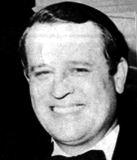
Dr. John Robert Hill
Murderer?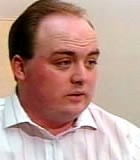 Richard Allen Williams
Murderer? · USA · 1992
Boone County Prosecutor Kevin Crane dismissed the charges in August 2003 after…
10 victims
Richard Allen Williams
Murderer? · USA · 1992
Boone County Prosecutor Kevin Crane dismissed the charges in August 2003 after…
10 victims
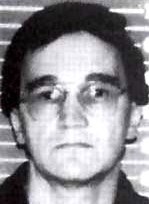 James DeBardeleben
Murderer? · USA · 1965
James DeBardeleben (James Mitchell “Mike” DeBardeleben), born March 20, 1940, w…
8 victims
James DeBardeleben
Murderer? · USA · 1965
James DeBardeleben (James Mitchell “Mike” DeBardeleben), born March 20, 1940, w…
8 victims
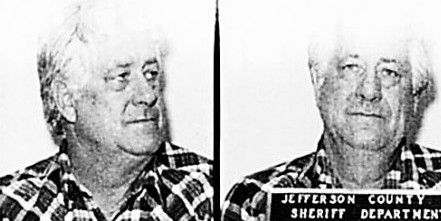 Thomas McCormick
Murderer? · USA · 1975
Thomas McCormick recruited homeless men from a Denver church mission to work on…
8 victims
Thomas McCormick
Murderer? · USA · 1975
Thomas McCormick recruited homeless men from a Denver church mission to work on…
8 victims
 Todd Warzecha
Murderer? · USA · 1972
Todd Warzecha was a prime suspect in two unsolved Mid-Michigan murders. Michiga…
6 victims
Todd Warzecha
Murderer? · USA · 1972
Todd Warzecha was a prime suspect in two unsolved Mid-Michigan murders. Michiga…
6 victims
 Andre Minnitt
Murderer? · USA · 1992
Andre Minnitt was convicted of crimes connected to the El Grande Market slaying…
3 victims
Andre Minnitt
Murderer? · USA · 1992
Andre Minnitt was convicted of crimes connected to the El Grande Market slaying…
3 victims
 Terry Ratzmann
Mass murderer · USA · 2005
Terry Michael Ratzmann was an American mass murderer who killed seven members o…
7 victims
Terry Ratzmann
Mass murderer · USA · 2005
Terry Michael Ratzmann was an American mass murderer who killed seven members o…
7 victims
 Robert Napper
Homicide · United Kingdom · 1992
Robert Clive Napper (born 25 February 1966) was a paranoid schizophrenic convic…
3 victims
Robert Napper
Homicide · United Kingdom · 1992
Robert Clive Napper (born 25 February 1966) was a paranoid schizophrenic convic…
3 victims
 Eric Christopher Houston
Spree killer · USA · 1992
Eric Christopher Houston was a 20-year-old former student at Lindhurst High Sch…
4 victims
Eric Christopher Houston
Spree killer · USA · 1992
Eric Christopher Houston was a 20-year-old former student at Lindhurst High Sch…
4 victims
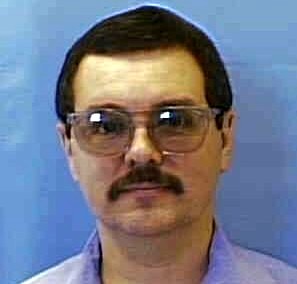 Donald Harvey
Serial killer · USA · 1970
Donald Harvey was known as an American serial killer and a self-professed “Ange…
87 victims
Donald Harvey
Serial killer · USA · 1970
Donald Harvey was known as an American serial killer and a self-professed “Ange…
87 victims
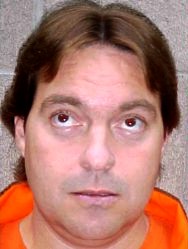 Danny Lee Jones
Murderer · USA · 1992
Danny Lee Jones On March 26, 1992, Jones and Robert Weaver were visiting in Rob…
2 victims
Danny Lee Jones
Murderer · USA · 1992
Danny Lee Jones On March 26, 1992, Jones and Robert Weaver were visiting in Rob…
2 victims
 Joel Carl Smith
Murderer · United Kingdom · 2003
Joel Carl Smith (born 1973) was a drug dealer. He was also known as “Cocaine” o…
2 victims
Joel Carl Smith
Murderer · United Kingdom · 2003
Joel Carl Smith (born 1973) was a drug dealer. He was also known as “Cocaine” o…
2 victims
- Gender
- male
- Country
- USA
- Location
- Houston, Texas, USA
- Date of birth
- 1931
- Age at first offence
- 19
- Characteristics
- parricide
- Victim profile
- His wife Joan Robinson Hill / His first wife / H is father / His brother / A fellow physician
- Method of murder
- Poisoning?
- Date(s) of murder
- 1950's - 1969
- Years active
- 1950–1969
- Date of arrest
- —
- Status
-
Mistrial in wife's death, 1971; shot to death in apparent contract murder with second trial pending on September 24, 1972
Case record: Dr. John Robert Hill
Background
Dr. John Robert Hill was a prominent Houston surgeon. His wife was Joan Robinson Hill, and her father was the wealthy oilman Ash Robinson. Joan Robinson Hill died on March 19, 1969.
The deaths of Joan Robinson Hill and Dr. John Hill were the subject of two books and a movie: “Blood and Money” by Tommy Tompson, “Perscription Murder” by Ann Kurth, and “Murder In Texas” starring Sam Elliot, Katharine Ross, Farrah Fawcett and Andy Griffith.
The offence
Dr. John Hill was charged with causing the death of Joan Robinson Hill by withholding medical attention. The charge used was the rarely used offence of “murder by omission,” meaning he was accused of killing her by not getting treatment in time to save her.
The events involving Joan Hill’s illness and death included her becoming violently ill “for no readily apparent reason,” with her blood pressure found to be dangerously low at 60/40 and attempts to stabilize her failing the next morning before she died. The cause of death was uncertain, with some thinking pancreatitis and others opting for hepatitis.
There was also an assertion of violence connected with Dr. Hill’s relationship with another wife. During testimony, Ann Kurth said that Hill had attempted to kill her.
Dr. John Hill was later shot to death at the door of his River Oaks mansion. Police suspected Ash Robinson was behind the shooting.
Investigation
Ash Robinson remained convinced that his daughter had been murdered and named John Hill as the culprit.
Noted pathologist Dr. Milton Helpern was hired to conduct a second autopsy and cautioned that Joan Hill might have been poisoned.
Police arrested three people in connection with the case after several months of investigation. Bobby Vandiver and girlfriend Marcia McKittrick admitted complicity, claiming they had been hired by Lilla Paulus, a notorious Houston brothel madam. When Vandiver was shot by police in an unrelated incident, McKittrick promised a 10-year sentence and agreed to testify against Paulus.
Additional testimony was provided by Paulus’ own daughter. She told the court of overhearing her mother say, “Ash Robinson is looking for somebody to kill John Hill.”
Police could not “connect the dots and connect Robinson to the shooting,” and they could not find enough evidence to take to a grand jury.
Arrest
Bobby Vandiver and Marcia McKittrick were arrested in connection with Dr. John Hill’s shooting, along with Lilla Paulus.
Vandiver was shot by police in an unrelated incident before he could be brought to trial.
Marcia McKittrick was located and involved in the investigation as the getaway car driver.
Trial
Dr. Hill’s trial over Joan Hill’s death
The trial began with jury selection on February 15, 1971. The dates of trial were February 15–26, 1971.
The chief prosecutor was I.D. McMaster, with Erwin Ernst and l.D. McMaster also named in the case details. The chief defense counsel was Richard Haynes, and Donald Fullenweider and Richard Haynes were named as chief defense lawyers.
Dr. John Hill’s appearance influenced jury selection. Assistant District Attorney I.D. McMaster aimed for a predominantly male, middle-class panel, expecting it likely to frown on a wealthy philandering physician. Haynes tried to sit jurors likely to favor his client.
A jury was selected consisting of eleven men and one woman.
The judge was Frederick Hooey. Judge Frederick Hooey allowed Ann Kurth to testify against her former husband, after prosecutors unearthed precedent that a wife had been permitted to testify against her husband. Hooey agreed to allow Kurth’s testimony subject to his ability to stop her at any time, and he was uneasy with his own ruling.
McMaster led Kurth through her relationship with Hill and asked whether she had seen anything unusual at Hill’s apartment during the week of Joan Hill’s illness. Kurth said she entered the bathroom and found three petri dishes with “something red in them.” Hill came in and angrily shooed her from the room, saying that it was “just an experiment.” The next day, Kurth said she spotted unusual pastries in the refrigerator and that Hill told her not to eat them.
Kurth also testified to an incident in which Hill attempted to kill her during their marriage. McMaster asked: “What happened next?” Kurth responded: “He pulled a syringe from his pocket and … tried to get it into me.” Kurth said she managed to knock the syringe from Hill’s hand, and he then produced another hypodermic needle. When asked what he did with that needle, Kurth said: “He tried to get that syringe into me!” The prosecutor questioned whether Hill was attempting to treat her or harm her: “Was he attempting to treat you? Or harm you? Do you know?” Kurth answered: “Yes, I knew.” Kurth hesitated and then blurted out: “Because he told me how he had killed Joan with a needle.”
Haynes demanded a mistrial on grounds that the defense had not been given an opportunity to prepare against a direct accusation of murder, describing it as the first he had heard of any syringes. Judge Hooey initially denied the request but ordered a recess. During the adjournment, Hooey granted a mistrial.
Ten days (eleven days into the hearing) into the trial, the court granted the mistrial. Jurors, when polled afterward, indicated they were inclined to believe John Hill innocent, and Ann Kurth’s story “hadn’t impressed them at all.”
The retrial was set for the next year and was adjourned another three times until being put on the docket for November 1972. Before that could happen, Dr. John Hill was shot to death on September 24, 1972, with the second trial pending.
Retrial relating to Joan Hill
The second trial was pending on September 24, 1972, but Dr. John Hill died before it could proceed.
Sentencing
A criminal conviction and sentence in relation to Dr. Hill’s death were imposed on Lilla Paulus. Lilla Paulus was convicted and sentenced to 35 years imprisonment in 1975.
Appeals
No appeal outcomes were stated for the mistrial proceedings in connection with Joan Hill’s death. The outcome described was the mistrial and then Hill’s death before a retrial.
Outcome
Dr. John Hill’s 1971 trial over Joan Hill’s death ended in a mistrial.
In relation to Dr. Hill’s shooting death, Marcia McKittrick was involved as a witness against Paulus under a promised 10-year sentence, and Paulus was convicted and sentenced to 35 years imprisonment in 1975.
Three trials failed to establish Dr. John Hill’s guilt or innocence in a civil matter described below, and the civil suit outcome included an acquittal of Ash Robinson of collusion in the death of his son-in-law and the suit being quashed.
Aftermath
Hill’s surviving wife, Connie, and son, Robert, brought a civil suit against Ash Robinson alleging that he had caused John Hill’s wrongful death. In that civil action, Lilla Paulus’ daughter declined to testify, and Marcia McKittrick became the main witness against Robinson.
A polygraph examination indicated that Marcia McKittrick was being truthful in saying that Robinson had caused the death of John Hill. A similar test suggested that Robinson was being truthful when he said he hadn’t.
Given this, the jury acquitted Robinson of collusion in the death of his son-in-law, and the suit was quashed.
It was also stated that three trials failed to establish Dr. John Hill’s guilt or innocence but resulted in one of the most remarkable legal sagas of the 20th century.
Other details
A motive theme described in connection with the case included “Failed Divorce, Outburst Leads To Mistrial, Retrial Unnecessary.”
Dr. John Hill had remarried and divorced Ann Kurth before the 1971 trial began. Ann Kurth was the ex-wife of a well-known lawyer, whose name remained on a well-known local law firm. The time course described was that Hill had ditched Kurth after just nine months of marriage.
It was stated that Hill “boasted to second wife of killing five victims, including first wife, his father, brother, and a fellow physician.”
Spotted an error, or have more information about this case?