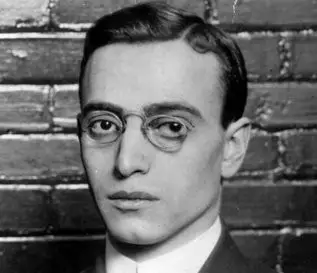
Leo Frank
Murderer?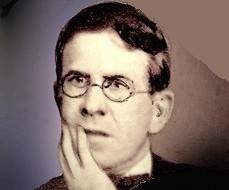 Dr. Bennett Clark Hyde
Murderer? · USA · 1909
Dr. Bennett Clark Hyde was accused in Kansas City of murdering members of the S…
3 victims
Dr. Bennett Clark Hyde
Murderer? · USA · 1909
Dr. Bennett Clark Hyde was accused in Kansas City of murdering members of the S…
3 victims
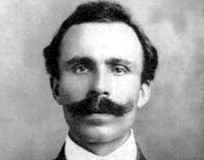 Bartolomeo Vanzetti
Murderer? · USA · 1920
Bartolomeo Vanzetti (June 11, 1888–August 23, 1927) was an anarchist who was co…
2 victims
Bartolomeo Vanzetti
Murderer? · USA · 1920
Bartolomeo Vanzetti (June 11, 1888–August 23, 1927) was an anarchist who was co…
2 victims
 Nicola Sacco
Murderer? · USA · 1920
Nicola Sacco Nicola Sacco and Bartolomeo Vanzetti were convicted of murdering t…
2 victims
Nicola Sacco
Murderer? · USA · 1920
Nicola Sacco Nicola Sacco and Bartolomeo Vanzetti were convicted of murdering t…
2 victims
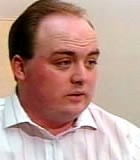 Richard Allen Williams
Murderer? · USA · 1992
Boone County Prosecutor Kevin Crane dismissed the charges in August 2003 after…
10 victims
Richard Allen Williams
Murderer? · USA · 1992
Boone County Prosecutor Kevin Crane dismissed the charges in August 2003 after…
10 victims
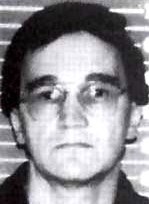 James DeBardeleben
Murderer? · USA · 1965
James DeBardeleben (James Mitchell “Mike” DeBardeleben), born March 20, 1940, w…
8 victims
James DeBardeleben
Murderer? · USA · 1965
James DeBardeleben (James Mitchell “Mike” DeBardeleben), born March 20, 1940, w…
8 victims
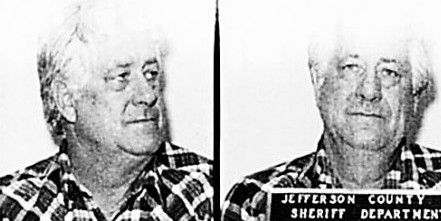 Thomas McCormick
Murderer? · USA · 1975
Thomas McCormick recruited homeless men from a Denver church mission to work on…
8 victims
Thomas McCormick
Murderer? · USA · 1975
Thomas McCormick recruited homeless men from a Denver church mission to work on…
8 victims
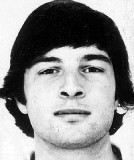 Paul Steven Haigh
Serial killer · Australia · 1978
Paul Steven Haigh was an Australian serial killer. · 1978 — After being paroled…
7 victims
Paul Steven Haigh
Serial killer · Australia · 1978
Paul Steven Haigh was an Australian serial killer. · 1978 — After being paroled…
7 victims
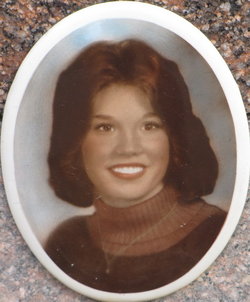 Janice Buttrum
Homicide · USA · 1980
Janice Buttrum was a seventeen-year-old caucasian woman. Demetra Faye Parker wa…
1 victim
Janice Buttrum
Homicide · USA · 1980
Janice Buttrum was a seventeen-year-old caucasian woman. Demetra Faye Parker wa…
1 victim
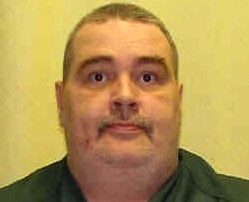 Jessie James Cowans
Homicide - Murderer · USA · 1977
Jessie James Cowans Jessie James Cowans was arrested for armed robbery when he…
2 victims
Jessie James Cowans
Homicide - Murderer · USA · 1977
Jessie James Cowans Jessie James Cowans was arrested for armed robbery when he…
2 victims
- Gender
- male
- Country
- USA
- Location
- Atlanta, Georgia, USA
- Date of birth
- April 17, 1884
- Age at first offence
- 29
- Characteristics
- miscarriage of justice, rape?, rape, to avoid arrest
- Victim profile
- Mary Phagan, 13, a pencil-factory worker
- Method of murder
- Strangulation
- Date(s) of murder
- April 27, 1913
- Years active
- 1913
- Date of arrest
- —
- Status
-
Life imprisonment
Sentenced to death on August 26, 1913; commuted to life imprisonment on June 20, 1915; kidnapped from prison and lynched by a group of prominent citizens who called themselves the "Knights of Mary Phagan" on August 16, 1915
Background
Leo Max Frank (April 17, 1884 – August 17, 1915) was an American man who became the only known Jew to be lynched on American soil. He became the subject of a widely regarded miscarriage of justice after he was convicted in the rape and murder of a pencil-factory worker, 13-year-old Mary Phagan. The Frank case focused many conflicting cultural pressures, and the jury's conclusion represented, in part, class and regional resentment of educated Northern industrialists who were perceived to be wielding too much power in the South, threatening southern culture and morality. The trial was sensationalized by the media. Georgia politician and publisher Tom Watson used the case to build personal political power and support for a revival of the Ku Klux Klan.
The offence
Mary Phagan was convicted in the rape and murder case involving Leo Frank. Mary Phagan had been strangled with a 2-cm (3/4-inch) cord and apparently raped. At the trial, the prosecution's theory held that Conley's last affidavit was true, Frank was the murderer, and the murder notes had been dictated by Frank in an effort to pin the crime on Lee. The defense's theory held that Conley was the murderer, and that Lee helped Conley write the notes.
People
- Leo Max Frank — convicted person; pencil factory manager/superintendent
- Mary Phagan — victim; 13-year-old pencil-factory worker
- Lucille Selig — Frank’s wife; wealthy family of industrialists; two generations earlier founded the first synagogue in Atlanta
- Rudolf Frank — Frank’s father
- Rae Frank — Frank’s mother
- Newt Lee — factory night watchman; reported the discovery of a dead girl and was arrested early in the investigation
- Jim Conley — the plant’s black janitor
- George Epps — 13-year-old pencil factory worker; friend of Mary Phagan; testified in proceedings described as contradicting Frank’s account
- Nina Formby — madam of a bordello; gave statements reported as involving police pressure and later recantation
- William Smith — hired lawyer for Conley associated with the Georgian; represented Conley’s interests
- Hugh M. Dorsey — prosecutor (solicitor)
- Luther Rosser — lead defense attorney for Frank
- Tom Watson — Georgia politician and publisher who campaigned against Frank
- John M. Slaton — governor of Georgia who commuted Frank’s sentence
- Major Asa Warren Candler — commander of a detachment of the Georgia National Guard
- Judge Leonard Roan — judge referenced as handling verdict safety arrangements
- Oliver Wendell Holmes — U.S. Supreme Court justice who wrote an opinion after habeas corpus issues
- Joseph R. Lamar — U.S. Supreme Court justice who denied a writ of habeas corpus
- Charles Evans Hughes — U.S. Supreme Court justice who dissented
- Fred Wilburn — jury foreman at verdict time, reported as stating the verdict and guilty finding
- Joseph Mackey Brown — former governor; described as a ringleader who had threatened lynching during clemency hearings
- Newton (Newt) Morris — described as “Judge Newton (Newt) Morris”
- Eugene Herbert Clay — described as son of a U.S. senator and former mayor of Marietta; described as a ringleader
- John Tucker Dorsey — lawyer and state legislator; described as ringleader and named as a prosecutor/solicitor general in discussion
- Fred Morris — lawyer; described as a ringleader
- Bolan Glover Brumby — owner of a furniture factory; described as a ringleader
- William Frey — conspirator described as providing rope and table; sheriff referenced at the lynching site
- Alonzo Mann — old man who volunteered testimony in 1982 that he had seen Conley dragging Mary Phagan’s body
- Anti-Defamation League — founded after Frank’s arrest and trial
Investigation
At 3:00 a.m. on April 27, the police received a call from the factory's night watchman, Newt Lee, reporting the discovery of a dead girl. When the police arrived at the factory, they found Phagan's body in a dark, dirty basement. Phagan had been strangled with a 2-cm (3/4-inch) cord, and apparently raped. Some evidence at the crime scene was lost, including bloody fingerprints, and a trail in the dirt along which Phagan had been dragged.
At first Frank said that Lee's time card was complete. It was supposed to be punched every half hour during the watchman's rounds. Later Frank said Lee had not punched the card at three intervals.
The police investigated a variety of suspects, and arrested both Lee and a young friend of Phagan's for the crime. Gradually they became convinced they were not the culprits. A detective sneaked into Lee's apartment and found a blood-soaked shirt. The prosecution later claimed that the shirt had been planted by Frank in order to incriminate Lee.
Suspicion did not at first fall on Frank. The police noted that he had not answered the phone when they called his house at 4 a.m. and that he seemed extremely nervous when they forced him to go to the factory with them before dawn. They took his detailed answers on minor points as a sign of suspicion. Frank pointed out at the trial that the police had refused to tell him the nature of their investigation when they came to his house and made him accompany them.
The media coverage included competition between the Atlanta Constitution and the Georgian. As many as 40 extra editions came out the day Phagan's murder was reported. The Georgian published a doctored morgue photo of Phagan, with her head shown spliced onto the body of another girl. Some evidence was described as going missing when it was “borrowed” from the police by reporters. The two papers offered a total of $1,800 in reward money for information leading to the apprehension of the murderer. Two notes were found in the plant, supposedly written by Phagan as she was dying and accusing a "Negro" of killing her. These came to be known as the "murder notes".
Jim Conley, the plant's black janitor, later claimed that the notes were dictated to him by Frank.
Suspicion increasingly focused on Conley. On May 1, Conley was caught by the plant's day watchman, E.F. Holloway, washing a shirt. Conley tried to hide the shirt, then claimed the stains were from rust. Conley denied under oath that he had a grade-school education and could read and write. Conley had a record of drinking and violence and had served a sentence on the chain gang.
Holloway told the Georgian that he believed Conley "strangled Mary Phagan while about half drunk," leading to a May 28 headline reading "SUSPICION TURNED TO CONLEY; ACCUSED BY FACTORY FOREMAN." Seeing the headline, Conley provided a new story: an agitated Frank, in a meeting in the dark, made him hide in a wardrobe to avoid being seen by two women, dictated the murder notes to him, gave him cigarettes, and told him to leave the factory. Afterward, Conley went out drinking and saw a movie. Phagan's $1.20 in pay had also disappeared, leading police to wonder if Conley might have killed her for the money.
The police asked Frank to confront Conley. Frank refused because his lawyer was out of town. Even when Rosser returned, no meeting took place. Under further pressure from the police about discrepancies in his story, Conley gave another version. In that account, Frank asked Conley for help in moving Phagan's body and gave Conley $200. When police asked where the $200 was, Conley said Frank had taken it back. Conley also said that Frank told him on the day of the murder, "Why should I hang? I have wealthy people in Brooklyn."
The Georgian hired William Smith to be Conley's lawyer and offered to pay his fees. Smith specialized in representing black clients. Smith arranged for Conley to be moved to a different jail and severed his own relationship with the Georgian.
Two witnesses came forward to incriminate Conley. Will Green, a carnival worker, said that he had been playing craps at the factory with Conley and had run away when Conley declared his intention to rob a girl who walked by. William Mincey, an insurance salesman, said he met a drunk Conley on the street and that Conley, trying to brush Mincey off, said, "I have killed one today and do not wish to kill another." Mincey thought it was a joke. Neither man testified in court.
The investigation included disputes over the creation and handling of evidence such as the “murder notes,” including later claims that police intimidation influenced witnesses.
Arrest
Frank was arrested and tried after the indictment and trial events described. A murder indictment was returned against Frank by a grand jury.
Trial
On May 24, 1913, a murder indictment was returned against Frank by a grand jury. The grand jury included five Jews.
Frank’s trial began on July 28. The prosecutor was Hugh M. Dorsey. Frank was represented by eight lawyers led by Luther Rosser.
The defense used peremptory challenges to eliminate the only two black jurors.
Because of heat, windows were left open, and spectators included a mob outside the city hall who watched through the windows, described as becoming important as a factor in witness and jury intimidation.
Frank’s alibi was presented through defense witnesses covering the time during which the crime could have been committed. Conley reiterated his testimony from his final affidavit and added that Frank regularly had sex with women in his upstairs office on Saturdays while Conley kept lookout. Another witness with a criminal record testified to the same thing. Conley admitted changing his story and lying repeatedly.
The Georgian carried a statement: 'Many people are arguing to themselves that the negro, no matter how hard he tried or how generously he was coached, still never could have framed up a story like the one he told unless there was some foundation in fact.'
Frank spoke on his own behalf via an unsworn statement as allowed by Georgia Code, Section 1036. His speech included a moving explanation of his nervousness:
Gentlemen, I was nervous. I was completely unstrung. Imagine yourself called from sound slumber in the early hours of the morning ... To see that little girl on the dawn of womanhood so cruelly murdered — it was a scene that would have melted stone.
In closing statements, the defense attorney Luther Rosser told the jury: "Who is Conley? He is a dirty, filthy, black, drunken, lying, nigger."
Frank issued a widely publicized statement questioning how the "perjured vaporizings of a black brute" could be accepted in testimony against him.
The prosecutor compared Frank to Dr. Jekyll and Mr. Hyde and argued that Frank had killed Phagan to keep her from talking.
In the defense request, a mistrial was sought due to juror intimidation, but the motion was denied. The judge arranged for the safety of Frank and his lawyers by brokering a deal so they would not be present when the verdict was read.
Timeline
- April 26, 1913 — Mary Phagan came to the factory to claim her pay before going to see the parade.
- April 27, 1913 — police received a call from Newt Lee reporting the discovery of a dead girl.
- May 1, 1913 — Jim Conley was caught washing a shirt; he claimed stains were from rust.
- May 24, 1913 — a murder indictment was returned against Frank by a grand jury.
- July 28, 1913 — Frank’s trial began.
- August 25, 1913 — Frank was convicted of murder.
- November 1913 — Frank’s appeals to the Georgia Supreme Court failed.
- April 19, 1915 — Frank v. Mangum appeal was denied on a 7-2 vote.
- June 20, 1915 — Governor John M. Slaton commuted Frank’s sentence to life in prison.
- August 16, 1915 — Frank was kidnapped from prison and lynched by the "Knights of Mary Phagan".
- August 17, 1915 — Leo Frank’s life ended (noted in the case introduction as his death date).
- March 7, 2008 — a historical marker was placed in front of a building in Marietta.
Verdict and sentence
On August 25, 1913, Frank was convicted of murder. On the next day, Judge Roan pronounced sentence. The judge ordered that on October 10, 1913, Leo Frank "be hanged by the neck until he shall be dead, and may God have mercy on his soul."
The jury, deliberating less than two hours, returned a guilty verdict. Asked whether the jury had reached a verdict, jury foreman Fred Wilburn replied: “We have, your honor. We have found the defendant guilty.”
Appeals
Frank’s appeals to the Georgia Supreme Court failed in November 1913.
U.S. Supreme Court Justice Joseph R. Lamar denied a writ of habeas corpus sought by Frank’s lawyers. U.S. Supreme Court Justice Oliver Wendell Holmes also denied habeas corpus, with a short opinion stating:
“I very seriously doubt if the petitioner ... has had due process of law ... because of the trial taking place in the presence of a hostile demonstration and seemingly dangerous crowd, thought by the presiding Judge to be ready for violence unless a verdict of guilty was rendered.”
Lamar later granted a writ of error allowing Frank to appeal to the full U.S. Supreme Court. On April 19, 1915, the Supreme Court ruled that errors of law could not be reviewed by habeas corpus. The appeal Frank v. Mangum was denied on a 7-2 vote. Holmes and Justice Charles Evans Hughes dissented, with Holmes stating: 'Mob law does not become due process of law by securing the assent of a terrorized jury.'
Clemency
Frank applied for clemency from Governor John M. Slaton. Slaton reviewed more than 10,000 pages of documents and examined new evidence tending to incriminate Conley, including studies comparing Conley’s speech patterns to the language of the murder notes. Slaton commuted Frank’s sentence to life in prison on June 20, 1915, described as assuming Frank’s innocence would eventually be fully established and he would be set free.
Slaton said: "I can endure misconstruction, abuse and condemnation," but "I cannot stand the constant companionship of an accusing conscience which would remind me that I, as governor of Georgia, failed to do what I thought to be right ... It means that I must live in obscurity the rest of my days, but I would rather be plowing in a field than to feel that I had that blood on my hands."
In his written decision, Slaton said of the U.S. Supreme Court opinion that there was "no error of law" in Frank’s trial and that "there was sufficient evidence to sustain the [guilty] verdict." He stated the Court had ruled "correctly in my judgement." He explicitly stated he was "sustaining the jury, the judge, and the appellate tribunals."
Slaton’s reason for commuting Frank’s sentence was that the Frank verdict fell in that "territory 'beyond a REASONABLE DOUBT and absolute certainty,' for which the law provides in allowing life imprisonment instead of execution."
On bias against Frank as a Jew, Slaton wrote: "The charge against the State of Georgia of racial prejudice is unfair."
The commutation was issued six days before the new governor was to take office. A mob threatened to attack the governor at home. A detachment of the Georgia National Guard under the command of Major Asa Warren Candler, along with county policemen and a group of Slaton’s friends sworn in as deputies, dispersed the mob.
Around the same time, a fellow inmate attempted to kill Frank by slashing his throat, but Frank recovered.
Kidnapping and lynching
After the commutation, a group calling itself the "Knights of Mary Phagan" openly organized a plan to kidnap Frank from the state prison farm and take him to Marietta, 240 miles (386 km) away, to lynch him. They recruited between 25 and 28 men with the necessary skills. Ringleaders were Joseph Mackey Brown; Judge Newton (Newt) Morris; Eugene Herbert Clay; John Tucker Dorsey; Fred Morris; Bolan Glover Brumby.
The Washington Post reported a list describing participants including Moultrie McKinney Sessions and John Tucker Dorsey. It also described Gordon Baxter Gann later mayor of Marietta and a state legislator. It further stated that in all, 26 names were on the list, some of whom may never be adequately identified. It described that none of the lynchers were indicted. It stated John Tucker Dorsey would theoretically have been in charge of prosecuting the lynchers.
On August 17, the Knights of Mary Phagan kidnapped Frank from the prison farm. The kidnapping was described as highly organized. They forced their way into the prison with a display of their weapons and took Frank. The lynching site at Frey's Gin, two miles (3 km) west of Marietta, had already been prepared, complete with a rope and table supplied by conspirator Sheriff William Frey.
Frank’s only requests were that they allow him to write a note to his wife, that they return his wedding ring to his wife, and that they cover his lower body before hanging him since he was wearing nothing but a nightshirt. Frank’s last words were: "I think more of my wife and my mother than I do of my own life."
Frank’s body was transferred to an undertaker and buried in the Mount Hebron Cemetery in Flushing New York.
Other details
Early life
Leo Frank was born in Cuero, Texas, to Rudolf and Rae Frank. His family moved to Brooklyn, New York, shortly after his birth. He was a student at Brooklyn Public Schools and Pratt Institute and graduated from Cornell University. Frank earned an engineering degree at Cornell in 1906 and married Lucille Selig in 1910. An uncle of Frank owned a large share of National Pencil Factory, a Confederate veteran, and through that connection Frank was hired and promoted to factory superintendent.
Frank traveled to Massachusetts, New York, and Germany for further apprenticeships in pencil manufacturing. He was president of a local chapter of the B'nai Brith. The Franks moved in a cultured and privileged milieu whose leisure pursuits included opera, bridge and tennis.
Relation to Mary Phagan
Mary Phagan worked to support her widowed mother and five siblings. By age thirteen, Phagan was living in an Atlanta suburb. The week before her murder, a shortage of supplies at the factory led to a reduction in her hours. Her wages for the week came to $1.20. On April 26, 1913, celebrated locally as Confederate Memorial Day, she came to the factory to claim her pay before going to see the parade. Her pay was issued to her by Frank.
Murder notes (verbatim)
The murder notes were described as being found in the plant near the body. The notes were reproduced with wording and punctuation described in the narrative.
One note read: "Mam that negro hire down here did this I went to make water and he push me down that hole a long tall negro black that hoo it wase, long sleam tall negro. I wright while play with me."
The other note read: "he said he wood love me, laid down, play like the night witch did it, but that long tall black negro did buy his self."
Trial statements and courtroom descriptions (verbatim)
Frank’s argument style included an unsworn statement and quotes appearing in the record. The defense attorney Luther Rosser said: "Who is Conley?
Frank’s widely publicized statement questioned how the "perjured vaporizings of a black brute" could be accepted in testimony against him.
During the clemency discussion, Tom Watson used the Jeffersonian to write: "If Frank's rich connections keep on lying about this case, SOMETHING BAD WILL HAPPEN."
Frank applied for clemency from departing Governor John M. Slaton, and Slaton said: "I can endure misconstruction, abuse and condemnation," but "I cannot stand the constant companionship of an accusing conscience which would remind me that I, as governor of Georgia, failed to do what I thought to be right ...
Frank’s last words were: "I think more of my wife and my mother than I do of my own life."
Aftermath
After Frank’s lynching, approximately half of Georgia's 3,000 Jews left the state. Many American Jews saw Frank as an American Alfred Dreyfus. The intensity of national and international attention focused on the case was comparable to that in the Lindbergh kidnapping.
Frank’s arrest and trial led to the founding of the Anti-Defamation League in 1913. Southerners who believed Frank was guilty saw similarities between the Frank trial and The Birth of a Nation. Tom Watson used sentiments aroused by sensational coverage of the Frank trial to build up power.
Some members of the lynching mob decided to create a new Ku Klux Klan. The new Klan was inaugurated in 1915 at the top of Stone Mountain, led by William J. Simmons, and attended by a few aging survivors of the original Klan, along with members of the Knights of Mary Phagan.
Postcards featuring pictures of the Knights of Mary Phagan posing with pride in front of Frank's dead body were made and sent to friends and relatives. Pieces of cloth from the clothing Frank was wearing when he was murdered were torn off his body as souvenirs and bought and sold as memorabilia.
Following 1980s testimony by Alonzo Mann, the case was revisited in the 1988 made-for-TV movie, The Murder of Mary Phagan, starring Jack Lemmon, Peter Gallagher, and Kevin Spacey. A pardon was later issued by the Georgia State Board of Pardons and Paroles. On March 11, 1986, the board issued a pardon described as recognizing the State's failure to protect the person of Leo M. Frank and preserve his opportunity for continued legal appeal of his conviction, and failure to bring his killers to justice, as an effort to heal old wounds. It granted Leo M. Frank a Pardon.
Mary Phagan’s great-niece, also named Mary Phagan, wrote a book about the case in 1987. Leaders in the Jewish community worked to have the site of Frank’s lynching officially recognized. On March 7, 2008, a historical marker was placed in front of the building at 1200 Roswell Rd in Marietta near the location where Frank was lynched. Keynote speakers included Bill Nigut, Southeast Regional Director of the Anti-Defamation League; Cobb [County] Chairman Sam Olens; former Georgia Gov. Roy Barnes; state Senator Steve Thompson; Rabbi Steven Lebow; Georgia Historical Society President Todd Groce; and attorney Dale Schwartz.
Related dramatizations
The Leo Frank story was portrayed in films and other media described as including The People v. Leo Frank, Murder in Harlem (1935), and others. It also included dramatization in a musical Parade produced on Broadway in 1998. The musical won the 1999 Tony Award for Best Score and Best Book of a Musical, and began a national tour in 2000.


Spotted an error, or have more information about this case?