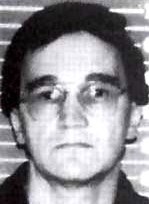
James DeBardeleben
Murderer? Thomas McCormick
Murderer? · USA · 1975
Thomas McCormick recruited homeless men from a Denver church mission to work on…
8 victims
Thomas McCormick
Murderer? · USA · 1975
Thomas McCormick recruited homeless men from a Denver church mission to work on…
8 victims
 Todd Warzecha
Murderer? · USA · 1972
Todd Warzecha was a prime suspect in two unsolved Mid-Michigan murders. Michiga…
6 victims
Todd Warzecha
Murderer? · USA · 1972
Todd Warzecha was a prime suspect in two unsolved Mid-Michigan murders. Michiga…
6 victims
 Richard Allen Williams
Murderer? · USA · 1992
Boone County Prosecutor Kevin Crane dismissed the charges in August 2003 after…
10 victims
Richard Allen Williams
Murderer? · USA · 1992
Boone County Prosecutor Kevin Crane dismissed the charges in August 2003 after…
10 victims
 Dr. John Robert Hill
Murderer? · USA · 1950
Dr. John Robert Hill was a prominent Houston surgeon. His wife was Joan Robinso…
5 victims
Dr. John Robert Hill
Murderer? · USA · 1950
Dr. John Robert Hill was a prominent Houston surgeon. His wife was Joan Robinso…
5 victims
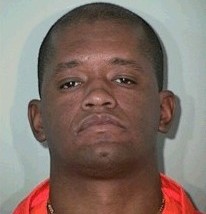 Andre Minnitt
Murderer? · USA · 1992
Andre Minnitt was convicted of crimes connected to the El Grande Market slaying…
3 victims
Andre Minnitt
Murderer? · USA · 1992
Andre Minnitt was convicted of crimes connected to the El Grande Market slaying…
3 victims
 Craig Gregerson
Murderer · USA · 2006
Craig Roger Gregerson (born c. 1986) was a Salt Lake City, Utah man convicted o…
1 victim
Craig Gregerson
Murderer · USA · 2006
Craig Roger Gregerson (born c. 1986) was a Salt Lake City, Utah man convicted o…
1 victim
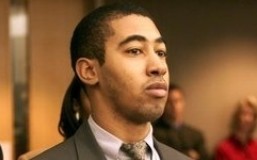 Robert Wayne Harris
Mass murderer · USA · 1999
March 15, 2000 — Robert Wayne Harris masturbated in front of a female customer…
6 victims
Robert Wayne Harris
Mass murderer · USA · 1999
March 15, 2000 — Robert Wayne Harris masturbated in front of a female customer…
6 victims
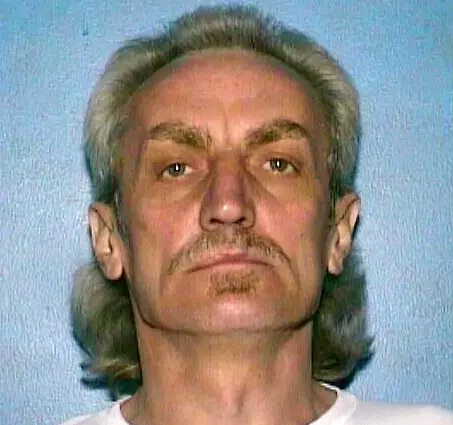 Gregory Madej
Murderer · USA · 1981
Gregory Madej was sentenced to death in 1982. On January 10, 2003, the Governor…
1 victim
Gregory Madej
Murderer · USA · 1981
Gregory Madej was sentenced to death in 1982. On January 10, 2003, the Governor…
1 victim
 William Horncy
Mass murderer · United Kingdom · 2003
William Horncy (born 1954) was a British murderer. He was convicted of murderin…
5 victims
William Horncy
Mass murderer · United Kingdom · 2003
William Horncy (born 1954) was a British murderer. He was convicted of murderin…
5 victims
 Gregory Allen Bowen
Murderer · USA · 1985
December 25, 2001 — Gregory Allen Bowen and his friend Mike Colby left Crescent…
3 victims
Gregory Allen Bowen
Murderer · USA · 1985
December 25, 2001 — Gregory Allen Bowen and his friend Mike Colby left Crescent…
3 victims
- Gender
- male
- Country
- USA
- Location
- Louisiana/Rhode Island, USA
- Date of birth
- March 20, 1940
- Age at first offence
- 25
- Characteristics
- convicted rapist, crack addict, drug addict, drug dealer, fugitive, kidnapping, rape, rapist, serial rapist, sexual abuse, sexual assault, torture
- Victim profile
- Men and women
- Method of murder
- Strangulation - Stabbing with knife
- Date(s) of murder
- 1965 - 1983
- Years active
- 1965–1983
- Date of arrest
- May 25, 1983
- Status
-
Convicted rapist and counterfeiter; sentenced to a total of 375 years
Case record
James DeBardeleben (James Mitchell “Mike” DeBardeleben), born March 20, 1940, was a convicted rapist and counterfeiter who had been in prison since the 1980s. He was known as the “mall passer” by agents while he was being heavily sought for counterfeiting. After his arrest for counterfeiting, he was found to have committed much more serious sex crimes. He was not brought to trial for any murders; two homicide cases were investigated by agents, and he remained a suspect in several more.
He received a total sentencing of 375 years. The DSM-IV cited DeBardeleben as an example of antisocial personality disorder.
Background
DeBardeleben was the second of three children. He had a younger brother named Ralph and a younger sister whose identity was not publicly known. He later grew to stand six feet tall.
In 1945, when DeBardeleben was five years old, his family moved to Austin, Texas. His father, serving in the U.S. Navy, was shipped out to the South Pacific for nine months.
In 1949, his family moved to Kentucky for a short while before relocating to Frankfurt, Germany, but after a year his family moved again.
Early life and adult life
In 1956, when DeBardeleben was sixteen, it was reported that “Michael” first physically assaulted his mother, and it was unknown what sparked the violent encounter.
On September 8, 1956, at the age of sixteen, he purchased two handguns and ammunition with a friend.
Later in that month, he was arrested and convicted for possessing a concealed firearm, described as his first felony.
He had other arrests, including for sodomy, attempted murder and kidnapping.
In the Spring of 1957, he was expelled from Peter Schuyler High School and did not seek to pursue any formal education.
In October 1957, he enlisted in the U.S. Air Force and was stationed at Lackland Air Force Base in Texas. After one year, he was court-martialed for disorderly behavior and was sentenced to spend two months in the base stockade and have his wages forfeited.
In 1958, the Air Force ordered him to visit a psychiatrist for counseling after he had been pronounced AWOL several times.
At the age of eighteen, he was discharged from the Air Force and moved to Fort Worth, Texas with relatives.
In 1959, he attempted school again by enrolling in R.L. Paschal High School, but after three months he was expelled.
In August 1959, he married his first wife, Linda Weir, but three weeks later separated from her. Also that month, he was arrested for attempted robbery with an accomplice. Two weeks later, he was involved in a string of auto theft and was sentenced to five years probation.
In October 1959, with an unknown woman, he fathered a premature daughter who was stillborn.
Later, he met Charlotte Weber, who was seventeen at the time he started courting her. In March 1960, he impregnated Charlotte, and on June 9, 1960, he married her.
On December 12, 1960, he successfully fathered a daughter, Bethene.
Afterward, Charlotte became pregnant again with another child but was forced by “Michael” to give it up for adoption.
In August 1961, his brother Ralph committed suicide for unknown reasons.
Mall passing and counterfeiting
In the early 1980s, Secret Service agents investigated a string of counterfeiting cases. The suspect was determined to enter a mall with counterfeit $20 bills, make a small purchase at each store, and receive most of the remainder in legitimate cash as change. DeBardeleben was identified as the suspect, and a national manhunt ensued.
At the time of his arrest, more wads of counterfeit $20 bills were found in his car, each with a label stating the city in which it would be used. His counterfeiting operation was also discovered along with evidence of sex crimes.
DeBardeleben was convicted of multiple crimes and was serving a 375-year sentence at Leavenworth Prison in Kansas.
Counterfeit bill identification
On July 31, 1979, a bank teller in Florence, Kentucky discovered a counterfeit twenty-dollar bill. She filled out a Counterfeit Note Report and submitted the bill to the local Secret Service Field Office.
One month later, in Cincinnati, Ohio, a clerk at a United Dairy Farmers store discovered another counterfeit twenty-dollar bill.
Later that month, at a Burger Chef in Cincinnati, yet another counterfeit bill was identified.
Later that year, more bills were identified in Elizabeth, New Jersey, and Scranton, Pennsylvania.
When the counterfeit bill found in Kentucky was sent to the Secret Service, it was forwarded to the Forensic Services Division Lab. Visual inspection identified that the bill was counterfeit.
The note’s major identifying defects were described as:
- A small black diagonal in the field to the left of the “J” in the Federal Reserve Board Seal
- A defect in the interior outline of the zero in “20” in the upper-left corner on the front of the bill
On the back of the bill, there was described as a green curl in the sky above the White House and below the letter “T” in “UNITED.”
The Secret Service identified the bill as Circular number 7215, described as identifying the bill as the 7215th separate example of a counterfeit bill detected by the Secret Service, and that all other bills with those exact defects would also be identified as Circular number 7215.
It was also described that by the time his counterfeiting career was halted, his bills consisted of Circular numbers 7215, 7373 and 7404.
Counterfeiting technique
DeBardeleben created bills using a ten-step counterfeiting technique:
- A yellowish-black half-tone screen was applied to a blank 8 ½ by 11 sheet of twenty-pound Cranes Crest White paper.
- He printed the back-plate green ink portrait of the White House, south lawn and trees and shrubbery.
- He affixed the green treasury seal and serial numbers on front.
- He printed the black ink portions of the note, including the portrait of President Jackson and the word “TWENTY.”
- He added wispy blue traces.
- He added the wispy red traces to mimic the synthetic threads used in real bills.
- He dried the bills.
- He cut the bills to a uniform 6.14 x 2.16 inches.
- He steeped them in a tea solution to “age” the bills.
- He hand crumpled them to help disguise them.
He then went to busy stores and malls and purchased small ticket items such as socks. He gave the clerk a fake twenty-dollar bill, and the change he received was described as his “proceeds” from counterfeiting.
Investigation and composite sketch
By the end of 1980, DeBardeleben had passed over $30,000 worth of notes discovered in 38 states.
In 1982, he passed over $130,000 worth of counterfeit bills in 44 states. His counterfeiting increased, and he became a top priority of the Counterfeit Division.
Because of his method of passing bills, he was dubbed “The Mall Passer.”
With the help of store employees in Kentucky, Minnesota and Colorado, Secret Service agents completed a composite sketch. The suspect was described as 5' 9" to 5'10" tall and 160 to 170 pounds, with black hair with a receding hairline, dark frame eyeglasses, and approximately 30 to 35 years old.
Agents distributed the sketch to Secret Service Field Offices in areas where he was known to have passed fake bills, and distributed it to all the malls in the area to raise public awareness.
While distributing the sketch, agents learned from mall employees that he was well-dressed and used disguises including fake beards, mustaches and wigs. Agents learned that he avoided male and older female clerks, and sought out young women and girls he could distract through conversation while they rang up his low-priced purchases.
Arrest
On May 25, 1983, DeBardeleben entered a mall in Knoxville, Tennessee, purchased several small items, and was arrested after store clerks alerted mall security, which notified the Secret Service. By the time he realized he had been identified as the “Mall Passer,” it was described as too late for him to flee and he was immediately arrested.
In custody, DeBardeleben refused to answer any questions, admit to any crime, or discuss counterfeiting charges being brought against him. A primary objective was described as locating his printing plant.
Agents used car keys found on DeBardeleben and a search warrant. When agents opened the trunk of his car, they realized that the suspect involved was connected to crimes much more serious than counterfeiting. The full extent was described as only being comprehended later after agents in Washington, D.C. located a storage unit that he had rented.
Storage unit search and seized items
The storage unit search was described as involving Agents Dennis Foos and Greg Mertz.
Among items located by the Secret Service were homemade audiotapes and photographs of “sex-slayings,” and a “death kit” containing handcuffs, shoelaces, chains, K-Y jelly, and a woman’s bloody underwear.
Agent Foos contacted the Federal Bureau of Investigations, seeking guidance or help due to the nature of the investigation. The FBI was described as reluctant to help because investigations typically start with a victim and investigators work towards finding the offender, while in this case Secret Service agents had the offender and evidence but no known victims yet.
Agents Foos and Mertz created a database on an Apple II computer similar to VICAP to compile lists of crimes and victims in areas where he was believed to have been preying.
Eventually, the Secret Service identified victim names and crimes that fit the evidence.
Apartment search and storage lead
The post-arrest investigation included a search described as occurring at the Oakwood Apartments in Apartment L-517, a furnished studio.
The apartment had been rented the previous autumn for $485 a month by DeBardeleben posing as J. R. Jones. According to a card given to the Oakwood manager, “Mr. Jones” was described as a “district representative” for Optikon Electronics, Inc., in Glen Burnie, Maryland.
Secret Service agents described finding an apartment with dirty dishes, clothing in disarray, a bed, a table or two, and a television. Agents described disappointment at not finding a printing operation.
Agents described discovering paper bags of greeting cards and men’s black socks, described as “proceeds,” and several pages and scraps of paper with dozens of names, addresses, and telephone numbers written on them.
Secret Service agents described searching for evidence of where he kept press and printing supplies (“plant”) but described finding no printing supplies at the apartment.
Landmark Mini-Storage search
Dennis Foos began a canvass of likely storage locations and searched a facility described as Landmark Mini-Storage on Edsall Road in Alexandria.
Manager Linda E. Johnston told Foos she recognized the man in the photo as J.R. Jones and described renting mini-storage locker #230 at Landmark for $28 a month in November 1982.
She described leaving locker #230 lit and unlocked and observing a red bubble light resting on the floor. She described calling local police but being brushed off, and she described expecting police to arrive.
Secret Service agents gathered at Landmark for the search, snapped DeBardeleben’s padlock with a heavy bolt cutter, and opened locker #230.
Agents found red and blue police bubble lights and a siren outfitted with a wire and plug to draw power from an automobile cigarette lighter. Agents described that the locker did not contain a printing press.
The locker contained vinyl briefcases, plastic envelopes, bulging paper bags, portfolios and other containers, including two large footlockers.
In one footlocker, agents described an empty gun case, ammunition, handcuffs, and twine. They also described a dark blue ski mask and an Icoflex large-format camera.
Agents described a red plastic pouch containing counterfeit money and a police badge, and another bag filled with handwritten notes, phone numbers, and women’s names and addresses.
They also described drugs, plus a coke kit (mirror and razor blades) and a kit for testing drug purity with a gram scale.
Over three hours, agents identified and seized a single aluminum printing plate and $52,760 worth of counterfeit money in various stages of completion, much of it sorted into stacks and graded A, A-, B+ and so on according to color-coded wrappers.
Agents described finding a camera tripod, eyebolts, a man’s hat with a bloodstained visor, and a device for punching out auto ignitions.
They described finding various fake identifications, a pair of women’s underpants with a severely distended elastic band, whips, a dildo, and another bag described as a “death kit” with shoelaces, a choker chain, K-Y jelly, and handcuffs.
They described finding wads of clay for taking key imprints and metal key blanks.
Agents described finding newspaper clips reporting crimes of various sorts, self-help texts and psychiatric texts with extensive underlining, and raunch books, magazines, tapes and photographs “hundreds of photos.” They described that evidence appeared intermixed, including clothing and “police equipment,” handcuffs, and explicitly depicted photographs.
At eleven o’clock that night, agents transported contents to a make-shift evidence room at the Washington Field Office, and Greg Mertz began sifting through it.
At about four in the morning, Mertz shoved one of DeBardeleben’s audiocassette tapes into his Dictaphone.
Victims and alleged offences
The actual number of victims of DeBardeleben was described as never being known.
Secret Service agents believed he had preyed on women for eighteen years prior to his arrest.
The following incidents were described with specific dates, locations, victims, and acts:
- On September 3, 1978, in Delaware, DeBardeleben kidnapped Lucy Alexander, repeatedly raped and sodomized her, forced her to perform fellatio, and then released her in an isolated area.
- On February 4, 1979, DeBardeleben kidnapped Elizabeth Mason, repeatedly choked her and banged her head on a wall until she lost consciousness, then left her for dead.
- On June 1, 1979, DeBardeleben kidnapped Laurie Jensen, took her to his home, and for 24 hours raped and sodomized her, forced her to perform fellatio, forced her to masturbate herself using an oversized dildo, demanded that she call him “Daddy,” and took pictures and audiotaped her throughout. He then released her a few blocks from her home.
- On November 1, 1980, DeBardeleben kidnapped Dianne Overton, but she managed to fight him off and escaped before he could harm her.
- On November 12, 1980, DeBardeleben kidnapped Maria Santini, stripped her and tied her hands and feet, took pictures of her in provocative poses, and then dumped her in the woods.
- On April 27, 1982, DeBardeleben kidnapped real estate agent Jean McPhaul. Her body was later found in an attic of a new home, lashed to a rafter by a ligature on her throat. She was fully clothed and had two puncture wounds to the heart.
The evidence also described five wives. Agents believed he practiced fantasies on his wives prior to acting them out on women he kidnapped.
DeBardeleben’s third wife testified in court that to him, “all women were whores, sluts, tramps. They asked for what they got.” (Michaud, 1994).
Evidence found by the Secret Service included a detailed description titled “Script/Scenario” written by DeBardeleben describing conversations he would have with his fourth wife, Caryn while torturing her. The writing included:
“1 – Tell me all about the pain: necessary? Why? Describe it: details, more details… how does it feel – I don't know, it's not happening to me!! Convince me that you like it! 2 – Tell me how you feel humiliated, degraded… 3 – … how you like for me to bite your tits, slap your face, bite you in the ass, make loud surprise noises. 4 – Bite or cigar or whip at moment of ejaculation. 5 – Hair: pull as mane: say "arf," "bow wow," "neigh." 6 – Say original statements.”
DeBardeleben wrote about Caryn:
“She never really loved me…” “I don't want to kill Caryn – I want to punish her…”
Agents described Caryn as the source of DeBardeleben’s anger and hatred towards women.
Charges and indictments
By the time investigators completed piecing together evidence, DeBardeleben faced eleven indictments, including two for murder, in nine states.
The indictments included:
- Six charges for counterfeiting in various states
- Sodomy, robbery and armed criminal action in Missouri
- Kidnapping charges in Connecticut
- A federal kidnapping charge in Baltimore
Secret Service and investigators used forensic techniques including reprinted copies of photos from negatives taken from his storage unit. They described comparing distinguishing marks such as moles and scars, under a federal court order where DeBardeleben was forced to submit to body photographs.
The photographs proved DeBardeleben was the man found in photographs of sex slaying gathered with evidence from his storage unit.
They also described taking handwriting samples to compare to notes and diaries found in his storage unit, sending samples to a handwriting expert who determined letters were written by the same individual based on details, height of letters, and the slant of writing.
They described ordering him to give head and pubic hair samples to be compared to samples from known victims. They described microscopic hair comparison based on pigment particle shape and distribution, and precise color.
Forensic scientists described concluding that hair samples matched those on some victims.
Trial and convictions
DeBardeleben was tried and convicted based upon forensic evidence, victims’ testimony and witnesses’ identification in six separate cases for counterfeiting, kidnapping and assault.
Other states involved in the indictments were described as deciding to forgo lengthy trials because by the time he would be eligible for parole he would be 100 years old.
DeBardeleben had moved between prisons due to complaints, including fear of harm by other inmates.
He refused to acknowledge his crimes and claimed that Secret Service manufactured evidence against him.
Post-arrest correspondence and appeals
Since his imprisonment, DeBardeleben had spent his time corresponding with other serial killers such as Ted Bundy and putting together numerous appeals.
Other details (names, quotations, investigative narrative fragments)
DeBardeleben was described as having a North Carolina driver’s license in his wallet identifying the suspect as Roger Collin Blanchard of Charlotte, described as a fake.
He was described as having a battered ’71 Chrysler bearing stolen Tennessee plates, registered to a James R. Jones of Alexandria, Virginia.
The Oakwood Apartments surveillance was described as being dispatched to Jones’s address “No. L-517 at the Oakwood Apartments on South Reynolds Street.”
Agents included Dennis Foos, Greg Mertz, Jane Vezeris, and Mike Stephens, each described in connection with the investigation.
A quote was attributed to DeBardeleben in connection with a broader theme statement: “When you work hard to do something right, you don't want to forget it.”
The writing further included a set of quoted materials attributed to Roy Hazelwood, Dr. J. Reid Meloy, and others. These included categorisations and quotations, such as Hazelwood’s definition and remarks about sexual sadism and related concepts, and Meloy’s quotation:
“In virtually all cases of sexual sadism, including sexual homicide” Meloy says, “rehearsal fantasy is a prerequisite.”
Additional quotations included Hazelwood’s statement:
“A sexual sadist,” says Hazelwood, “is an individual who is aroused by the suffering of another person. It is not the infliction of pain that's arousing, it's the victim's suffering. He may use pain - physical or psychological - as a tool to elicit the suffering, but it's the suffering that's most important to him. One thing that's confused with sexual sadism is cruelty committed during a crime. A lot of crimes are extremely cruel, but very few crimes are called sexual sadism. We've overused the term, sadism, in our society. In my opinion, sexual sadism counts for no more than 7-10% of sexual crimes committed. But the sexual sadist is the great white shark of sexual crimes. He's the premier predator.”
The narrative also included:
“He had red lights, sirens, and police badges,” Hazelwood recalls, “and thousands of pages of writing in which he described feeling degraded and needing to restore his self-respect by ripping off society. He had audiotapes of himself torturing his wives and other victims, and he had thousands of photographs, many of which depicted his victims. He would rehearse with his wives and he'd then act out that fantasy with his other victims, and he would even put himself on an audiotape with a falsetto voice, playing the role of the victim.”
It also included Hazelwood’s statement about one partner’s recipe for control:
“Get his satisfaction early Isolate her and keep her dependent Make all decisions Prevent her from acquiring any skills Don't let her get educated or have any power Be ready to cut her loose if necessary Never show weakness”
And the narrative included further recounted quotations attributed to Hazelwood about categories of rapists, including:
“Anger-excitation: "He's a sexual sadist. He's punishing women because he believes them to be evil and powerful, so he's trying to take away that power. He has deep and complex fantasies."”
The narrative included Stephen G. Michaud interview quotations about writing and access. These included:
“Roy had just completed his analysis of DeBardeleben for the Secret Service,” Michaud recalls, “and he let me have a look at it. At this point, DeBardeleben had just been caught.”
And:
“And after working all night and day we came up empty-handed. Unbelievable.”
Timeline
- 1945 — DeBardeleben’s family moved to Austin, Texas.
- 1949 — DeBardeleben’s family moved to Kentucky for a short while before relocating to Frankfurt, Germany.
- 1956-09-08 — At age sixteen, he purchased two handguns and ammunition with a friend.
- 1956 — He was arrested and convicted for possessing a concealed firearm.
- 1957 (Spring) — He was expelled from Peter Schuyler High School.
- 1957 (October) — He enlisted in the U.S.
- 1958 — He was ordered to visit a psychiatrist for counseling after he was pronounced AWOL several times.
- 1959 (August) — He married his first wife, Linda Weir, but three weeks later separated from her; he was arrested for attempted robbery with an accomplice and sentenced to five years probation for auto theft.
- 1959 (October) — With an unknown woman, he fathered a premature daughter who was stillborn.
- 1960-06-09 — He married Charlotte Weber.
- 1960-12-12 — He successfully fathered a daughter, Bethene.
- 1961 (August) — His brother Ralph committed suicide.
- 1978-09-03 — In Delaware, DeBardeleben kidnapped Lucy Alexander.
- 1979-02-04 — DeBardeleben kidnapped Elizabeth Mason.
- 1979-06-01 — DeBardeleben kidnapped Laurie Jensen.
- 1979-07-31 — In Florence, Kentucky, a bank teller discovered a counterfeit twenty-dollar bill.
- 1980-11-01 — DeBardeleben kidnapped Dianne Overton, and she escaped.
- 1980-11-12 — DeBardeleben kidnapped Maria Santini.
- 1982-04-27 — DeBardeleben kidnapped real estate agent Jean McPhaul.
- 1983-05-25 — DeBardeleben was arrested in Knoxville, Tennessee after being recognized as the “Mall Passer.”
- 1983-05-28 — Foos began a canvass at Landmark Mini-Storage on Edsall Road in Alexandria.


Spotted an error, or have more information about this case?