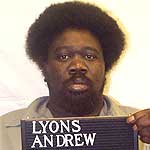
Andrew Lyons
Murderer Brian Kevin Rosenfeld
Murderer · USA · 1985
Brian Kevin Rosenfeld Brian Kevin Rosenfeld was sentenced to three concurrent l…
23 victims
Brian Kevin Rosenfeld
Murderer · USA · 1985
Brian Kevin Rosenfeld Brian Kevin Rosenfeld was sentenced to three concurrent l…
23 victims
 Russell Ellwood
Murderer · USA · 1991
Russell Ellwood was a former taxi driver. Authorities suspected him of killing…
20 victims
Russell Ellwood
Murderer · USA · 1991
Russell Ellwood was a former taxi driver. Authorities suspected him of killing…
20 victims
 Robert Martines Perez
Murderer · USA · 1994
Name: Robert Martines Perez · Other name used in proceedings: Robert Martinez P…
15 victims
Robert Martines Perez
Murderer · USA · 1994
Name: Robert Martines Perez · Other name used in proceedings: Robert Martinez P…
15 victims
 Billy Frank Vickers
Murderer · USA · 1993
Billy Frank Vickers Vickers was executed by lethal injection in Texas on Januar…
14 victims
Billy Frank Vickers
Murderer · USA · 1993
Billy Frank Vickers Vickers was executed by lethal injection in Texas on Januar…
14 victims
 Anthony Quinn Cook
Murderer · USA · 1988
November 10, 1993 — The execution date was recorded as November 10, 1993. · Nov…
1 victim
Anthony Quinn Cook
Murderer · USA · 1988
November 10, 1993 — The execution date was recorded as November 10, 1993. · Nov…
1 victim
 Anthony Doyle
Murderer · USA · 2003
Anthony Dewayne Doyle (TDCJ Number 999478) was born on 10/16/1984. He was male…
1 victim
Anthony Doyle
Murderer · USA · 2003
Anthony Dewayne Doyle (TDCJ Number 999478) was born on 10/16/1984. He was male…
1 victim
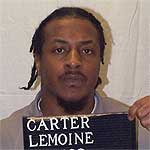 Lemoine Carter
Murderer · USA · 1994
Name: Lemoine Carter · Court / proceeding: United States Court of Appeals for t…
2 victims
Lemoine Carter
Murderer · USA · 1994
Name: Lemoine Carter · Court / proceeding: United States Court of Appeals for t…
2 victims
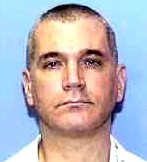 John David Battaglia
Murderer · 2001
John David Battaglia was charged and convicted in Dallas County of capital murd…
2 victims
John David Battaglia
Murderer · 2001
John David Battaglia was charged and convicted in Dallas County of capital murd…
2 victims
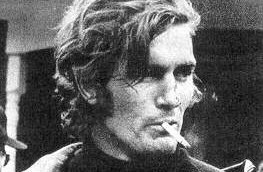 Paul John Knowles
Spree killer · USA · 1974
Paul John Knowles (April 17, 1946 – November 18, 1974) was an American spree ki…
35 victims
Paul John Knowles
Spree killer · USA · 1974
Paul John Knowles (April 17, 1946 – November 18, 1974) was an American spree ki…
35 victims
- Gender
- male
- Country
- USA
- Location
- Cape Girardeau County, Missouri, USA
- Date of birth
- September 21, 1957
- Age at first offence
- 35
- Characteristics
- parricide
- Victim profile
- Dontay Harris, 11 months old (his son), Bridgett Harris, 22 (his ex-girlfriend), and Evelyn Sparks, 49 (Bridgett's mother)
- Method of murder
- Shooting (shotgun)
- Date(s) of murder
- September 20, 1992
- Years active
- 1992
- Date of arrest
- Same day
- Status
-
Sentenced to death
Sentenced to death on June 28, 1996
Parties
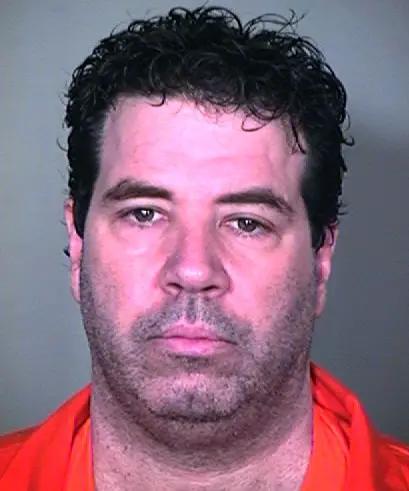
Andrew Lyons (defendant)
Background
As of September 1992, Andrew Lyons and Bridgette Harris had been living together for three years in Cape Girardeau, Missouri. Their eleven-month old son, Dontay, lived with them, as did Bridgette’s two children from a previous relationship, seven-year-old Demetrius and four-year-old Deonandrea.
Approximately one week before the murders, Lyons told a longtime friend that he was having problems with Bridgette. Lyons told the friend that “he just felt like killing” and that the “best thing for Bridgette to do...was to get killed...”
Around the same time, Bridgette moved out of the house she shared with Lyons. She and the three children moved in with Bridgette’s mother, Evelyn Sparks.
Two days before the murders, Lyons drove his truck alongside Bridgette and her older sister while they were walking on a sidewalk. He stopped the truck and pulled forward the passenger’s seat, revealing a shotgun. The women ran away and reported the incident to the police.
The day before the murders, Lyons told another friend that Evelyn was interfering with his relationship with Bridgette and that “she should leave them alone or he would kill her.” That night, he told Bridgette’s best friend that “I am going to end up killing Evelyn.” Around midnight, Lyons told yet another friend that he was going to shoot Evelyn with his shotgun and “catch a train out of here.”
The offence
On the morning of Sunday, September 20, 1992, Lyons went to Evelyn’s house, where Bridgette was staying. He and Bridgette argued. Lyons left, went back to his house, and grabbed his shotgun and a duffel bag packed with clothes and ammunition.
Shortly after 10 a.m., Lyons returned to Evelyn’s house. Evelyn was in the kitchen. Bridgette, Deonandrea, and Dontay were downstairs in the basement. Demetrius heard a loud noise from upstairs and went to see what happened. On his way, he passed Lyons coming down the stairs carrying a shotgun. Demetrius saw his grandmother lying on the kitchen floor and ran to his room.
In the basement, Lyons shot Dontay once and shot Bridgette once. Lyons then drove to the house where his half-brother Jerry DePree was staying. Lyons asked DePree to follow him to the house of his friends John and Gail Carter so that he could drop off his truck. Upon arriving at the Carter’s house, Lyons went in to talk to Gail.
Lyons told Gail that he had killed Bridgette and Evelyn and that he had shot Dontay by accident. Lyons went back outside and transferred the shotgun and duffel bag from his truck to De Pree’s car. Lyons got into DePree’s car and told him to drive away. DePree asked Lyons what was wrong, and Lyons told him that he had shot some people and that the police would probably be looking for him.
DePree dropped Lyons off at Trail of Tears State Park. Lyons left his shotgun in DePree’s car. Back at Evelyn Sparks’s house, another of Evelyn’s daughters arrived around 11:00 a.m. She found her mother on the kitchen floor and called the police. The police discovered Bridgette and Dontay in the basement.
“All three were dead.”
Evelyn died from massive hemorrhaging and tissue destruction caused by a gunshot wound above her left hip. Bridgette died from massive hemorrhaging and tissue destruction caused by a gunshot below her right shoulder. Dontay died from extensive brain tissue damage secondary to a contact gunshot wound to the left eye.
When DePree learned later in the day that Evelyn, Bridgette, and Dontay had been shot to death, he turned over Lyons’s shotgun to the police.
A firearms examiner determined that the shell casing found in the shotgun and the two shell casings found at Evelyn’s house matched the shell casings of cartridges fired from the shotgun.
Investigation
After the shootings, “major case squad was called out for Cape Girardeau’s second triple-homicide in one month.”
Deputy David Valentine found Lyons at 3:15 p.m. on September 20, 1992, approximately four hours after the shootings. Valentine spotted Lyons trying to hide behind a picnic table at Trail of Tears State Park. Lyons started running. Valentine yelled at him to stop. Lyons would not stop, but kept running. Valentine pulled his own shotgun and pumped it. Valentine yelled, “Stop or I’ll shoot!” Lyons stopped. Valentine and a Park Ranger placed Lyons under arrest. Sgt. Vince Diebold arrived seconds after Lyons had been caught. Diebold read Lyons his Miranda rights. Lyons said he understood them.
Lyons was placed in Diebold’s car. Diebold asked Lyons where the gun was. Lyons claimed he had thrown it into the river. Lyons then asked, “Can I get a lawyer?” Diebold said, “Yes, sir, you can.” About a minute later, Lyons said, “Didn’t nobody die, did they?” Diebold said, “Yes, sir, I was told they did.” Lyons said, “All of them?” Diebold said, “I was told three people died.” Lyons changed his mind about wanting a lawyer, and he agreed to talk to the police.
Lyons gave a tape-recorded statement to Detective Judy Gentry from the Cape Girardeau Police Department and to Dennis Overby of the Missouri State Highway Patrol.
In his confession, Lyons admitted shooting Bridgett. He admitted shooting the 11-month-old baby, while claiming it was an accident. He claimed he didn’t remember actually shooting Evelyn.
Confession details (verbatim quotations included)
As to Evelyn: Lyons admitted that he had gotten his shotgun and had gone to the front door of Evelyn’s house. He admitted that he had been mad at Evelyn because she was always getting involved in his business with Bridgett, trying to run his house, always stirring up problems. He said he was mad at Evelyn because she was always telling him if he tried to take the baby, Dontay, she’d have every policeman in Cape after him since she worked at the police department. Lyons said he remembered that Evelyn was in the kitchen, standing, and that she had seemed upset. He claimed not to remember actually shooting her.
As to Dontay: Lyons admitted that he shot Dontay, but said that Bridgett had been grabbing Dontay when he fired. He admitted pointing the shotgun at Bridgett. He said: “Pointed it, it was too late she reached and grabbed the baby.” Lyons asked: “What happened after she grabbed the baby?” He said: “Too late. The gun had already gone off.”
As to Bridgett: Lyons admitted shooting Bridgett. He admitted that he had been mad at her because she was staying out until 3 or 4 in the morning, using drugs, not being a good mother to the baby. He said he was mad at Bridgett because she had made a report to the police about him on Friday, claiming she was afraid of him. He said he was mad because on Friday when he had picked up the baby from Bridgett and her mother, they had threatened to have him arrested for kidnapping if he did not return the baby to them, which he had done. He said he was mad at Bridgett because even though she was claiming to be afraid of him, she was still sending her 7-year-old son over to his house trying to get money from him to go to the fair. He said he was mad at Bridgett because even though she claimed to be afraid of him she kept calling him wanting money for pampers. He said he was mad at Bridgett because she had cut the tires on his car three or four months before. Lyons admitted that he pointed the gun at Bridgett after he had already shot Dontay. He said she “went to screaming” once he had shot the baby. He said she was “more or less” kneeling when he shot her. He also claimed she was trying to grab the shotgun.
Evidence (forensic and physical)
The shotgun was a Mossberg 12-gauge shotgun. The examiner could tell it fired all three shots by markings left on the shell casings. The expert noted that the shotgun had to be pumped between each shot.
Gunshot distance findings were made for Evelyn and Bridgett. Each shot hit from a distance between 20 to 42 inches: “for each shot, the end of the barrel was farther than 20 inches from the victim, but closer than 42 inches.”
The Medical Examiner, Dr. Gordon Johnson, noted that Dontay’s eye wound was a contact wound: “The shotgun was right up to the eye when it was fired.” Andy Wagoner confirmed that Dontay had been lying on his back on the mattress in the basement at the time he was shot, based on shotgun wadding.
The Federal brand shotgun shells contained thumb-sized pieces of plastic called wadding that separated gunpowder from pellets. Each shell had two pieces of wadding, one pink and one white. On close range shots, wadding entered the victim’s body. Both pieces of wadding—pink and red—were found inside Evelyn Sparks’ body. Both pieces of wadding—pink and red—were found inside Bridgett Harris’ body. For Dontay, both pieces of wadding went all the way through his head. One piece was embedded deep into the mattress with bone and hair and shotgun pellets; the other piece lay on top of the mattress once bedding had been removed.
Bridgett was found lying immediately to Dontay’s right, next to the mattress, just inches from him. She was shot just under her right arm, toward the back, with pellets traveling downward, consistent with her being kneeling and reaching toward Dontay as she was shot.
Investigators established that Andrew Lee Lyons bought the shotgun on June 6, 1992. The salesman identified him as the buyer of the gun.
Ejected cartridges were found as follows: one on the kitchen floor near Evelyn; another on the floor in the basement near Dontay; a third was still in the shotgun.
The shooter had to push a button to take the safety off, since the shotgun had a safety.
Trial
After being delayed several years for various mental evaluations and treatment for depression, Andrew Lee Lyons was tried for the triple murder in Scott County before Circuit Judge Anthony J. Heckemeyer, in April 1996 on a change of venue.
The defense called a psychologist to claim that the severe depression of Andrew Lee Lyons had affected his ability to consider the consequences of his actions.
Prosecuting Attorney Morley Swingle pointed to strong evidence of deliberation, reminding the jury that depression did not give a person a license to commit a triple murder, nor did it provide immunity from the death penalty. He asked the jury to make the punishment fit the crime.
The jury found Lyons guilty of first degree murder of both adults, and of involuntary manslaughter of the baby. The jury recommended the death penalty.
Sentencing
On June 27, 1996, Circuit Judge Anthony J. Heckemeyer sentenced Andrew Lee Lyons to death for the murders of Evelyn Sparks and Bridgett Harris, and to 7 years in prison for the involuntary manslaughter of Dontay Harris.
Appeals
Lyons’ convictions were affirmed by the Missouri Supreme Court.
The case included: State v. Lyons, 951 S.W.2d 584 (Mo. banc 1997).
The United States Supreme Court action in the case was listed as cert. denied, 522 U.S. 1130 (1998).
Post-conviction relief (Rule 29.15)
Appellant filed for post-conviction relief under Rule 29.15 after the denial of post-conviction relief by the motion court.
The evidentiary hearing on the post-conviction relief motions occurred on August 12, 1999. The motion court requested proposed findings and conclusions from both parties, then adopted the state’s proposed findings and conclusions.
Opinion court’s disposition and reasoning (as stated)
The opinion stated that:
- The motion court did not err in denying Lyons’ claim that he received ineffective assistance of counsel.
- Counsel had legitimate strategic decisions for failing to present evidence that state doctors believed Lyons incapable of deliberating. Counsel took reasonable steps to evaluate Lyons’ mental health status and fought to ensure a favorable mental health evaluation, and overwhelming evidence supported deliberation.
- Counsel were not ineffective in failing to more exhaustively question Lyons’ sisters, mother, brother, or a certain psychologist, and no prejudice was shown.
- Lyons failed to establish that his attorneys acted unreasonably in failing to move for a mistrial or request the fourth venirepanel be discharged when one venireperson said he believed Lyons “guilty as sin.” Only one comment was at issue; that person was stricken; a juror from that panel indicated no prejudice.
- The court did not fail to exercise independent reflection, and findings were supported by evidence.
- Counsel adequately challenged the penalty phase instructions; there was no prejudice from counsels’ failure to call a researcher to testify.
- Counsel were not ineffective for failing to more exhaustively challenge proportionality review; the method of proportionality review was upheld and similar challenges had been repeatedly denied.
The opinion listed:
- Opinion Author: Ann K. Covington, Judge
- Opinion Vote: AFFIRMED
- “All concur.”
The opinion also stated that:
- Appellant was convicted of two counts of murder in the first degree, section 565.020.1, RSMo 1994, and one count of involuntary manslaughter, section 565.024.1, RSMo 1994.
- The convictions and sentences were affirmed.
Outcome
The motion court’s denial of post-conviction relief was affirmed.
Spotted an error, or have more information about this case?