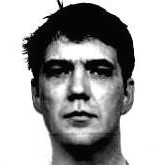
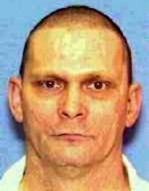
Randall Hafdahl
Murderer Brian Kevin Rosenfeld
Murderer · USA · 1985
Brian Kevin Rosenfeld Brian Kevin Rosenfeld was sentenced to three concurrent l…
23 victims
Brian Kevin Rosenfeld
Murderer · USA · 1985
Brian Kevin Rosenfeld Brian Kevin Rosenfeld was sentenced to three concurrent l…
23 victims
 Marvin Gray
Murderer · USA · 1975
Marvin Gray was convicted killer who claimed responsibility for 23 slayings and…
23 victims
Marvin Gray
Murderer · USA · 1975
Marvin Gray was convicted killer who claimed responsibility for 23 slayings and…
23 victims
 Yahweh ben Yahweh
Murderer · USA · 1980
Yahweh ben Yahweh was born and legally named Hulon Mitchell Jr. (October 27, 19…
23 victims
Yahweh ben Yahweh
Murderer · USA · 1980
Yahweh ben Yahweh was born and legally named Hulon Mitchell Jr. (October 27, 19…
23 victims
 Russell Ellwood
Murderer · USA · 1991
Russell Ellwood was a former taxi driver. Authorities suspected him of killing…
20 victims
Russell Ellwood
Murderer · USA · 1991
Russell Ellwood was a former taxi driver. Authorities suspected him of killing…
20 victims
 Linsey Blansett
Murderer · USA · 2014
Lindsey Nicole Blansett was accused of killing her 10-year-old son, Caleb, in W…
1 victim
Linsey Blansett
Murderer · USA · 2014
Lindsey Nicole Blansett was accused of killing her 10-year-old son, Caleb, in W…
1 victim
 Mary Ann Wittich
Murderer · USA · 2007
Mary Ann Wittich committed suicide by shooting herself the same day she drugged…
2 victims
Mary Ann Wittich
Murderer · USA · 2007
Mary Ann Wittich committed suicide by shooting herself the same day she drugged…
2 victims
 Justin Fuller
Murderer · USA · 1997
Justin Fuller was executed by lethal injection in Texas on August 24, 2006. · A…
1 victim
Justin Fuller
Murderer · USA · 1997
Justin Fuller was executed by lethal injection in Texas on August 24, 2006. · A…
1 victim
 Anne Louise Gordon
Murderer · USA · 2002
Anne Louise Gordon was sentenced to life in prison without parole on July 17, 2…
2 victims
Anne Louise Gordon
Murderer · USA · 2002
Anne Louise Gordon was sentenced to life in prison without parole on July 17, 2…
2 victims
 Andrew Yellowbear
Murderer · USA · 2004
Andrew John Yellowbear Jr. (born September 5, 1974) was the defendant in a Wyom…
1 victim
Andrew Yellowbear
Murderer · USA · 2004
Andrew John Yellowbear Jr. (born September 5, 1974) was the defendant in a Wyom…
1 victim
- Gender
- male
- Country
- USA
- Location
- Randall County, Texas, USA
- Date of birth
- J une 17, 1953
- Age at first offence
- 32
- Characteristics
- to avoid arrest
- Victim profile
- James D. Mitchell Jr., 42 (Amarillo police officer)
- Method of murder
- Shooting ( 9 mm semi-automatic pistol)
- Date(s) of murder
- November 11, 1985
- Years active
- 1985
- Date of arrest
- Same day
- Status
-
Executed
Executed by lethal injection in Texas on January 31, 2002
Case record: Randall Wayne Hafdahl
Background
Randall Wayne Hafdahl was sentenced to death for the capital murder of Amarillo police officer James Delbert Mitchell, Jr., during the lawful discharge of his duties in Amarillo, Texas, on November 11, 1985.
Hafdahl admitted that he had consumed alcohol and hallucinogenic mushrooms earlier in the day of the murder.
Hafdahl was indicted in the 181st District Court of Randal County, Texas.
The offence
Shortly after 4:00 p.m. on November 11, 1985, Amarillo Police Sergeant James Mitchell was driving home from work when he witnessed an accident.
Randall Hafdahl, driving across Texas with two friends—Shawn Terry and Daniel Helgren—was driving recklessly and lost control of his car. Hafdahl’s car left the highway, crossed a frontage road, crashed through a wooden fence, and came to rest in the back yard of a private residence.
Officer Mitchell stopped to render assistance. Hafdahl unsuccessfully tried to restart the car.
Hafdahl then exited the car and hid a loaded 9 mm pistol under a jacket he carried and attempted to flee through a gate.
Hafdahl admitted that he first saw Officer Mitchell as Mitchell entered the yard through the downed fence. The evidence established that Hafdahl turned from Mitchell and tried to escape through a gate which he could not unlatch. Mitchell, who had drawn his gun, pursued Hafdahl through the yard until Hafdahl was stopped by a locked gate.
According to one eyewitness, Mitchell identified himself as a police officer and ordered Hafdahl to stop. When Mitchell was approximately six feet away, Hafdahl turned and fired four shots from a 9 mm semi-automatic pistol, hitting Mitchell each time. Two of the four wounds were mandatorily fatal, perforating Mitchell’s heart and lung. Mitchell never returned fire.
Hafdahl then fled the scene, only to turn himself in later that night.
Hafdahl testified at trial that he was not trying to flee but was trying to hide the gun, that he knew the police would arrive shortly, and that he understood he was a convicted felon in Texas who had stopped reporting to his probation officer. Hafdahl also testified that although he intentionally shot Officer Mitchell, he was acting in self-defense and did not realize Mitchell was a police officer. Hafdahl believed Mitchell was “an angry motorist” whom Hafdahl had run off the road. Hafdahl attributed his misperception to the drugs and alcohol, as well as the rapidity with which the accident and the shooting occurred.
At least nine eyewitnesses testified that the backyard was visible from the highway and that they could tell Officer Mitchell was a uniformed police officer. The two passengers in Hafdahl’s car identified Mitchell as a police officer; one passenger stated that he knew “without a doubt” that Mitchell was an officer the second he saw him and added: “[H]e had his blue uniform, and his gun, so I knew he was a police officer, just by looking.”
At least four witnesses, including one passenger in Hafdahl’s car, saw Hafdahl turn and look at Officer Mitchell before firing. One witness in the yard heard Mitchell identify himself by saying, “Hey halt, halt, stop, police.”
The evidence established that at least one bullet that hit Mitchell was shot at a maximum of six feet and could have been closer.
Investigation
During the punishment phase of trial, the State presented evidence that Hafdahl had been arrested on Aug. 11, 1980, in Richardson, Texas, and charged with unlawful carrying of a weapon and felony theft. The police had been conducting surveillance of Hafdahl’s house on suspicion that the occupants were involved in a burglary ring. Hafdahl and another man left the house and got into a van, which the police stopped for a traffic violation. During the stop, Hafdahl was caught trying to shove a .38-caliber gun under the seat. When police searched the house, they discovered stolen property and narcotics.
Five law enforcement officers from both Texas and Colorado testified that they knew Hafdahl to have a bad reputation for being peaceful and law abiding, and a reputation for being dangerous and violent.
During cross-examination of one of these officers, defense counsel elicited details of a kidnapping investigation for which Hafdahl was arrested in 1982. Hafdahl was charged with aggravated kidnapping but was never indicted. The officer stated that the alleged kidnapping victim was forcibly taken from Grand Prairie, Texas, by Hafdahl and two others, and transported first to Colorado, then Wyoming, and eventually returned to Texas, where she escaped. The victim claimed she was beaten, gagged, and her life threatened. Hafdahl was not named among the two men who originally kidnapped her from a parking lot, but the victim’s statement listed him as one of nine people who participated in the course of the abduction.
While in Colorado, Hafdahl worked at a place called the “Bates Farm.” The Bates Farm manufactured methamphetamines and traded stolen guns and illegal weapons. Hafdahl was known as the “right-hand-man” and the “enforcer” for the Bates Farm. He oversaw the entire drug operation, including selling drugs and collecting debts or money for the sale of drugs. Hafdahl carried a weapon on a daily basis.
Arrest and suspects
After the shooting, Hafdahl fled and later turned himself in later that night.
Shawn David Terry, 22, was arrested near the scene of the shooting.
Daniel Louis Helgan, 24, was arrested later in New Mexico.
The State presented testimony of two police officers—one from Rockwall and the other from Grand Prairie—who stated they had arrested Hafdahl on a warrant for aggravated kidnapping and released him pending an investigation by the FBI. The evidence indicated Hafdahl was never officially charged by the FBI on these charges.
One of Hafdahl’s companions testified that in the days before the murder Hafdahl admitted that he had “jumped bond” in Dallas, began using an alias, and dyed his hair.
Trial
Procedural history
- November 29, 1985 — Hafdahl was indicted in the 181st District Court of Randal County, Texas, for the capital murder of James Mitchell, a peace officer acting in the course of his official duty, on November 11, 1985.
- April 4, 1986 — A jury found Hafdahl guilty of capital murder.
- April 5, 1986 — Following a separate punishment hearing, the court assessed Hafdahl’s punishment at death.
- June 13, 1990 — Hafdahl’s conviction and sentence were affirmed by the Texas Court of Criminal Appeals.
- December 17, 1990 — The Texas Court of Criminal Appeals denied rehearing.
- May 28, 1991 — The United States Supreme Court denied Hafdahl’s petition for certiorari review.
- July 30, 1991 — Hafdahl filed an application for state writ of habeas corpus.
- June 1, 1994 — Habeas relief denied by the Court of Criminal Appeals in an unpublished order.
- May 22, 1995 — Hafdahl filed a third state habeas application, denied by Court of Criminal Appeals.
- May 25, 1995 — Hafdahl filed a petition for federal writ of habeas corpus in the district court.
- April 22, 1997 — Hafdahl filed an amended petition for writ of habeas corpus.
- December 17, 1999 — The district court denied habeas corpus relief and all discovery motions.
- March 14, 2000 — Hafdahl filed a motion for certificate of probable cause, denied by District Court.
- August 23, 2000 — U.S. Court of Appeals for Fifth Circuit granted certificate of appealability.
- May 15, 2001 — After briefing and oral argument, the Fifth Circuit denied Hafdahl’s requested relief.
- June 20, 2001 — The Fifth Circuit denied rehearing.
- September 18, 2001 — Hafdahl filed a petition for writ of certiorari in the United States Supreme Court.
- November 26, 2001 — The United States Supreme Court denied Hafdahl’s petition for writ of certiorari.
Issues at trial
The critical issue at trial was whether Hafdahl knew that Mitchell was a police officer. Hafdahl testified that he believed Mitchell was “an angry motorist” and that he did not realize Mitchell was a police officer until after he fired the fatal shots. The prosecution presented extensive evidence intended to show Mitchell was visually identifiable as a policeman and that Mitchell verbally identified himself.
The prosecution argued that Hafdahl had a motive to avoid apprehension by state and federal authorities. Two Texas officers testified that they had arrested Hafdahl on a warrant for aggravated kidnapping and turned the case over to the FBI. During the guilt phase, neither officer testified about the details of the alleged kidnapping. The implication presented at trial was that Hafdahl might have believed he was a wanted man and consequently killed the officer in order to evade capture.
Witnesses and forensic testimony
Dr. Ralph Erdmann, a forensic pathologist, reconstructed the crime scene at trial and testified that, based on the distance and angle from which each shot was fired, only one shot—the one in Mitchell’s wrist—could have been fired when Mitchell was standing, while the other three, including the two fatal ones through the heart, were fired when Mitchell was already down.
In addition, the State presented four witnesses who said they saw Hafdahl turn and look at Mitchell before shooting.
Sentencing
At sentencing, the State requested the death penalty and introduced additional evidence as to the three required “special issues”:
- Whether Hafdahl deliberately killed Mitchell;
- whether Hafdahl’s response to Mitchell’s provocation, if any, was unreasonable;
- whether Hafdahl would probably commit criminal acts of violence in the future.
The jury sentenced Hafdahl to death on April 7, 1986.
Daniel Helgran received a sentence of one year’s probation for failure to stop and render aid.
Appeals
Hafdahl filed state and federal habeas corpus petitions. A federal habeas petition was denied by the district court in December 1999, and the Fifth Circuit denied requested relief in May 2001.
Hafdahl sought review in the United States Supreme Court and that petition was denied on November 26, 2001.
In his federal habeas petition, Hafdahl contended that his constitutional rights were violated both in the guilt phase and punishment phase when the prosecutor knowingly used false testimony of a forensic pathologist and when the state court admitted testimony relating to a prior unadjudicated kidnapping offense.
The Fifth Circuit affirmed the district court’s denial of habeas relief.
In the federal appellate decision, the court recited that Hafdahl was convicted of murder in a Texas state court and sentenced to death for killing a police officer, that the conviction and sentence were affirmed on appeal, and that the district court denied federal habeas relief.
Outcome
Hafdahl was executed by lethal injection in Texas on January 31, 2002.
Aftermath
Hafdahl’s final meal was a Chef salad with ranch dressing, double meat cheese burger (all the way), French fries, ketchup, and a chocolate shake.
Hafdahl’s final written words were:
"All I want to say, I love you. Approximately 28 years ago, I remember looking down at a bassinet. I saw an angel. I am looking at her right now. I love you Colleen. Let's get going. The road goes on forever and the party never ends. Let's rock and roll. Let's go Warden. Me and you, all of us. Remember Wet Willie. Keep on smiling, keep smiling. I love you. It's on the way, I can feel it. It's OK baby, we have a party to go to."
Hafdahl then made an oral last statement during which he expressed affection for his daughter and shouted:
"The road goes on forever and the party never ends."
He then shouted:
"Rock 'n Roll!"
Afterwards, he regained composure and the lethal injection was begun. Hafdahl said:
"It's on the way. I can feel it. Take me home. We got a party to go to,"
He later shouted:
"Remember Wet Willie. Keep on smiling. Keep on smiling."
Hafdahl’s eyes closed and he seemed to snore; he took about six deep breaths and closed his eyes.
He was pronounced dead at 6:48 p.m.
After Hafdahl’s trial, Dr. Ralph Erdmann pleaded guilty to perjury and tampering with government records in other cases he testified in.
Prior criminal history and other details
Hafdahl was arrested on charges of aggravated kidnapping and spent seven days in jail in Grand Prairie, Texas, but was never convicted on these charges.
In 1970, Hafdahl was arrested on charges of misdemeanor theft and shoplifting in Houston, Texas.
In 1975, in Tarrant County, Texas, Hafdahl received a probated sentence of 10 years for the delivery of LSD.
In 1980, in Richardson, Texas, Hafdahl was arrested for unlawful carrying of a weapon. The charges were dismissed because Hafdahl could not be found.
When Hafdahl was arrested on the night of the murder in Amarillo, officers recovered a gin bottle and beer cans and several pieces of identification with at least three different names.
Family members and witnesses testified that they had never seen Hafdahl do anything violent, even when provoked, though one relative admitted she had not seen him in the six or seven years prior to his arrest.
At the time of his death, Officer Mitchell was 43 years old and had been a police officer for 20 years, 16 of which were spent with the Amarillo Police Department.
Officer Mitchell was survived by his wife; three children aged 20, nine, and eight; and a six-month-old grandson.

Spotted an error, or have more information about this case?