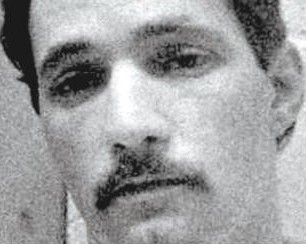
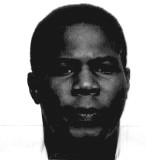
Joseph Savino
Murderer Brian Kevin Rosenfeld
Murderer · USA · 1985
Brian Kevin Rosenfeld Brian Kevin Rosenfeld was sentenced to three concurrent l…
23 victims
Brian Kevin Rosenfeld
Murderer · USA · 1985
Brian Kevin Rosenfeld Brian Kevin Rosenfeld was sentenced to three concurrent l…
23 victims
 Yahweh ben Yahweh
Murderer · USA · 1980
Yahweh ben Yahweh was born and legally named Hulon Mitchell Jr. (October 27, 19…
23 victims
Yahweh ben Yahweh
Murderer · USA · 1980
Yahweh ben Yahweh was born and legally named Hulon Mitchell Jr. (October 27, 19…
23 victims
 Russell Ellwood
Murderer · USA · 1991
Russell Ellwood was a former taxi driver. Authorities suspected him of killing…
20 victims
Russell Ellwood
Murderer · USA · 1991
Russell Ellwood was a former taxi driver. Authorities suspected him of killing…
20 victims
 Robert Martines Perez
Murderer · USA · 1994
Name: Robert Martines Perez · Other name used in proceedings: Robert Martinez P…
15 victims
Robert Martines Perez
Murderer · USA · 1994
Name: Robert Martines Perez · Other name used in proceedings: Robert Martinez P…
15 victims
 Arthur Hans Halvorsen
Murderer · USA · 1985
March 31, 1985 — Arthur Hans Halvorsen drank at a bar during the afternoon; he…
2 victims
Arthur Hans Halvorsen
Murderer · USA · 1985
March 31, 1985 — Arthur Hans Halvorsen drank at a bar during the afternoon; he…
2 victims
 Billy Wayne White
Murderer · USA · 1976
Billy Wayne White was sentenced to death for the capital murder of Martha Laura…
1 victim
Billy Wayne White
Murderer · USA · 1976
Billy Wayne White was sentenced to death for the capital murder of Martha Laura…
1 victim
 Paula Sims
Murderer · USA · 1986
Paula Sims gave birth to three children, but only one survived. A son was born…
2 victims
Paula Sims
Murderer · USA · 1986
Paula Sims gave birth to three children, but only one survived. A son was born…
2 victims
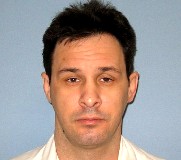 Christopher Thomas Johnson
Murderer · USA · 2005
Christopher Thomas Johnson was convicted of capital murder and sentenced to dea…
1 victim
Christopher Thomas Johnson
Murderer · USA · 2005
Christopher Thomas Johnson was convicted of capital murder and sentenced to dea…
1 victim
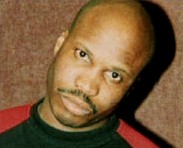 Maury Troy Travis
Serial killer · USA · 2001
Maury Troy Travis (born October 25, 1965; died June 10, 2002) was an American s…
17 victims
Maury Troy Travis
Serial killer · USA · 2001
Maury Troy Travis (born October 25, 1965; died June 10, 2002) was an American s…
17 victims
- Gender
- male
- Country
- USA
- Location
- Bedford County, Virginia, USA
- Date of birth
- 1958
- Age at first offence
- 30
- Characteristics
- drugs
- Victim profile
- Thomas McWaters, 64 (his male lover )
- Method of murder
- Beating with a hammer
- Date(s) of murder
- November 29, 1988
- Years active
- 1988
- Date of arrest
- Next day
- Status
-
Released
Executed by lethal injection in Virginia on July 17, 1996; Joseph John Savino beat his 64-year-old male lover McWaters to death with a hammer in Bedford County after having been recently released on parole from custody in New York; convicted murderer to die tonight; Joseph Savino has appealed, but unless intervention arrives, his sentence stands
Case record: Joseph Savino
Other details
Joseph Savino was sentenced to death and was executed by lethal injection in Virginia on July 17, 1996.
Joseph Savino beat his 64-year-old male lover McWaters to death with a hammer in Bedford County after having been recently released on parole from custody in New York.
A report said: “Executed by lethal injection in Virginia on July 17, 1996 clemency petition Joseph John Savino beat his 64-year-old male lover McWaters to death with a hammer in Bedford County after having been recently released on parole from custody in New York. Convicted murderer to die tonight Joseph Savino has appealed, but unless intervention arrives, his sentence stands The Virginian-Pilot Wednesday, July 17, 1996”.
Background
The facts were derived mostly from Savino's own testimony at the state plea proceeding on June 13-15, 1989, and the state habeas hearing on July 21-22, 1992.
The indictment charged that Savino “did willfully, deliberately, feloniously and with premeditation, kill and murder Thos´Thomas' McWaters, Jr. in the commission of robbery while armed with a deadly weapon,” in violation of Va. Code Ann. § 18.2-31(d). The indictment also charged the underlying robbery.
Under Va. Code Ann. § 19.2-264.4, the guilt and penalty phases of a capital murder case were conducted in separate proceedings.
Such memoranda were routinely required by the judges in that circuit.
The offence
Savino explained that he sat downstairs contemplating the murder before he actually committed it.
He got a hammer, went upstairs, beat McWaters, returned downstairs for knives, and stabbed McWaters until he was dead.
Savino told police that he knew that it was risky to use the telephone at the house after the killing, so he decided to use a pay phone.
Savino seemed to display complete and clear recall of the events when recounting the killing to police and to defense counsel.
Trial
Guilty plea
Savino next complained that the trial court violated his Fourteenth Amendment rights by accepting his guilty plea without affirmatively establishing on the record that the plea was knowing and voluntary.
The memorandum of understanding that Savino signed set out his understanding of the rights he would have if he entered a plea of not guilty and the rights he would waive by pleading guilty, including “all objections to the admissibility of the statement to Investigator Rush and all other evidence.”
In the memorandum, Savino stated that he had told his lawyers all of the facts and circumstances surrounding the case and that his lawyers had discussed with him the nature of the charges against him and the possible defenses he might have. Savino further represented that his attorneys had explained, and that he understood, all of the elements of the offenses with which he had been charged and that would have had to be proved before he could be found guilty.
Savino actually made two incriminating statements on December 1, 1988—one at 1:00 p.m., and another at 4:25 p.m.
Before taking the plea, the trial judge reviewed the memorandum of understanding with Savino in open court. The judge confirmed that Savino read and understood the memorandum and then signed it with full knowledge. In response to the judge's questions, Savino declared that his plea was free and voluntary.
The colloquy, coupled with the substance of the memorandum, more than satisfied the concerns articulated in Boykin v. Alabama, 395 U.S. 238, 243-44 (1969), about not presuming from a silent record a waiver of constitutional rights associated with a not guilty plea, and instead engaging in a thorough on-the-record inquiry.
In addition, such in-court representations from the defendant were treated as conclusive with regard to the validity of the plea and could not be controverted later absent some compelling reason, which Savino did not present.
When a defendant making a guilty plea was represented by counsel, as Savino was, the plea was strongly presumed to be valid in subsequent habeas proceedings.
Savino's claim about the guilty plea was both procedurally defaulted and without merit.
Under Virginia law, trial errors that could have been but were not presented on direct appeal could not be raised in habeas corpus proceedings, referencing Slayton v. Parrigan, 205 S.E.2d 680, 682 (Va. 1974), cert. denied sub nom., 419 U.S. 1108 (1975).
Such claims were also barred on federal habeas review, referencing Harris v. Reed, 489 U.S. 255, 262 (1989), and Wainwright v. Sykes, 433 U.S. 72, 87 (1977).
A federal habeas court could consider a challenge only when the petitioner showed “cause for the default and actual prejudice as a result of the alleged violation of federal law, or demonstrates that failure to consider the claims will result in a fundamental miscarriage of justice,” referencing Coleman v. Thompson, 501 U.S. 722, 750 (1991), and Harris, 489 U.S. at 262.
Savino argued that his claim should be considered on the merits because it was akin to an ineffective assistance of counsel claim which could not have been raised on direct appeal. The comparison failed because the alleged error was committed by the court, not counsel, and thus Savino's attorneys would not have had to concede ineffectiveness in order to present the challenge.
Savino's own argument that the error was obvious from the transcript of the plea proceeding demonstrated that the claim could have been raised on direct appeal. Because Savino failed to present the issue on direct appeal when he could have done so, the state habeas court found the claim procedurally defaulted under Slayton.
The Virginia Supreme Court refused to review the claim as procedurally defaulted, foreclosing federal court review under Sykes and its progeny.
Because Savino showed neither “cause” and “prejudice” for his default nor a fundamental miscarriage of justice, the claim was precluded from being considered on the merits.
Even if the substance were reached and reviewed de novo, the record indicated that Savino was adequately informed of the nature and the consequences of his guilty plea, and the court would agree with the district court's conclusion that the record demonstrated that Savino's plea was knowing and voluntary.
Mental health expert testimony
Savino argued that testimony by the Commonwealth's mental health expert regarding future dangerousness violated his Fifth Amendment right against compelled self-incrimination and his Sixth Amendment right to effective assistance of counsel.
The court found no such violations, relying on Estelle v. Smith, 451 U.S. 454, 471 (1981), about protection for capital defendants who undergo psychological evaluation and face the results as evidence at the penalty stage.
Under the Fifth Amendment, a defendant was entitled to warning before the evaluation that he had the right to remain silent and that if he waived that right by cooperating, his statements could be used against him at the penalty phase, referencing Estelle, 451 U.S. at 462-63.
Under the Sixth Amendment, a defendant had a right to effective assistance from his attorney regarding the decision of whether to cooperate, which required that counsel receive notice of the scope, nature and intended uses of the evaluation, referencing Estelle, 451 U.S. at 470-71.
Both amendments required clear notice to the defendant and his counsel regarding any psychiatric evaluation by the prosecution, referencing Estelle, 451 U.S. at 471.
In Smith, the Court differentiated between a defendant who intended to introduce psychiatric evidence and one who “neither initiates a psychiatric evaluation nor attempts to introduce any psychiatric evidence,” referencing Smith, 451 U.S. at 468, 472.
When a defendant asserted a mental status defense and introduced psychiatric testimony in support of that defense, the prosecution could rebut with evidence taken from the defendant's own examination or require submission to evaluation by the prosecution’s expert, referencing Buchanan v. Kentucky, 483 U.S. 402, 422-23 (1987), and Smith, 451 U.S. at 465.
That defendant had no Fifth Amendment protection against introduction of mental health evidence in rebuttal to the defense’s psychiatric evidence, referencing Powell v. Texas, 492 U.S. 680, 684-85 (1989), and Buchanan, 483 U.S. at 422-23.
The court stated that by indicating intent to introduce psychiatric testimony, the defendant waived his right to remain silent—but not his right to notice—referencing Powell, 492 U.S. at 685.
In Virginia, Va. Code Ann. § 19.2-264.3:1 governed psychiatric testimony in a capital case.
The provisions operated to notify the defense that its decision to introduce psychiatric testimony constituted a waiver of the defendant's right to remain silent during examination by the Commonwealth's mental health examiner.
The statute treated the waiver as a condition precedent to the prosecution's use of psychiatric evidence, referencing Washington v. Murray, 952 F.2d 1472, 1480 (4th Cir. 1991).
The statute detailed the conditions under which the Commonwealth was entitled to have an examiner evaluate the defendant and outlined the scope and permissible uses of that examination, referencing Va. Code Ann. § 19.2-264.3:1(F) & (G).
In preparation for the penalty phase, Savino's counsel moved for appointment of a mental health expert pursuant to Va. Code Ann. § 19.2-265.3:1(A).
Several months later, the defense gave notice that it intended to present information from the court-appointed expert, Dr. Lisa Hovermale, to support a claim in mitigation.
Soon after, the court granted the Commonwealth's motion for appointment of a second expert under § 19.2-265.3:1(F).
The Commonwealth indicated that, if Savino were convicted, it would present at sentencing the report of that expert, Dr. Arthur Centor.
At the penalty phase, Dr. Centor testified and said there was a “high probability” that Savino would be a future danger to society.
The court concluded that Savino waived his Fifth Amendment rights by requesting a psychiatric evaluation under the statute, and that the statute provided adequate notice of the waiver.
The court stated that notice was supplemented by the “Smith line of cases,” referencing Buchanan, 483 U.S. at 425.
Both defense counsel and the Commonwealth's expert had warned Savino beforehand that any information he gave to the psychiatrist could be used in the capital sentencing phase.
Under the precedent cited, this advice precluded a Fifth Amendment claim, referencing Giarratano v. Procunier, 891 F.2d 483, 487-88 (4th Cir. 1989), cert. denied, 498 U.S. 881 (1990).
The court also held that the statute provided adequate warning of the scope of the Commonwealth's evaluation and the possible uses of mental health information.
Savino argued that he deserved specific notice that his evaluation could be used to establish future dangerousness, but the court held that Smith and its progeny did not require such specific notice.
The court applied Woomer v. Aiken, 856 F.2d 677, 681-82 (4th Cir. 1988), cert. denied, 489 U.S. 1091 (1989), which used Buchanan to reject a similar claim because defense counsel requested one mental health evaluation and consented to the other and thus had actual notice of examinations.
The court stated that the constitution did not require specific notification that a psychiatric evaluation might provide a basis for a future dangerousness argument, referencing Woomer, 856 F.2d at 682.
Va. Code Ann. § 19.2-264.3:1 also differentiated between statements made during psychiatric evaluation and an expert’s opinion based on such statements.
The statute forbade use of statements or disclosures made by the defendant during a capital sentencing evaluation as evidence against him for proving aggravating circumstances, but allowed use of those statements or disclosures in rebuttal to issues raised by the defense in mitigation, referencing Va. Code Ann. § 19.2-264.3:1(F) & (G).
The court concluded that the statute did not preclude use of the opinion of the Commonwealth's examiner for establishing an aggravating circumstance.
The Virginia Supreme Court interpreted the statute as permitting expert opinions on future dangerousness, referencing Stewart v. Virginia, 427 S.E.2d 394, 407-08 (Va.), cert. denied, 114 S.Ct. 143 (1993), and Edmonds v. Virginia, 329 S.E.2d 807, 813 (Va.), cert. denied, 474 U.S. 975 (1985).
The court also cited Barefoot v. Estelle, 463 U.S. 880, 896-903 (1983), stating that expert psychiatric testimony was admissible on issue of predicting future dangerousness.
The court stated that it was bound by state court decisions on state questions in habeas review, referencing Estelle v. McGuire, 502 U.S. 62, 67-68 (1991), and found the interpretation consistent with Buchanan.
The court found that Dr. Centor’s testimony abided by these rules and principles.
At sentencing, the Commonwealth’s expert did not disclose any statement that Savino made during his evaluation.
Dr. Centor rendered an opinion on Savino’s future dangerousness and based the opinion on evidence other than Savino’s statements to him, naming three factors: Savino’s past criminal history, “the nature of the crime,” and Savino’s history of substance abuse.
On cross-examination by the Commonwealth, the defense expert read aloud a fourth factor from Dr. Centor’s report: Savino’s “stated conviction from an early age that he'll die before his time and therefore there's no use in trying to make anything out of himself.”
Dr. Hovermale read the statement of her own accord.
The court held that even if the testimony was error, it was harmless.
Under Virginia law, the circumstances of the criminal offense themselves could constitute sufficient evidence of future dangerousness, referencing Va. Code Ann. § 19.2-264.4(C) and Delong v. Virginia, 362 S.E.2d 669, 677 (Va. 1987), cert. denied, 485 U.S. 929 (1988).
At sentencing, the Commonwealth presented evidence of Savino’s prior criminal record and Savino’s own statements of his criminal history.
The court found that the nature of the crime and circumstances surrounding it revealed viciousness and dangerousness.
Dr. Centor presented his opinion that Savino represented a future danger and specified that his opinion was based on Savino’s criminal history and drug addiction, as well as the nature of the crime.
Dr. Centor stated he reviewed numerous outside materials, including police reports, Savino’s statements to police, FBI reports of previous convictions and sentences, the medical examiner's report, Dr. Hovermale's report, copies of twenty-six warrants for Savino's arrest, and photographs of the crime scene.
Excluding Savino's statements would probably have had little if any impact on Dr. Centor’s assessment.
Dr. Centor never mentioned his interview with Savino on direct examination and did so only upon questioning by the defense.
Therefore, the court held that the alleged error could not be said to have had a “substantial and injurious effect or influence in determining the[ ] verdict,” referencing Brecht v. Abrahamson, 113 S.Ct. 1710, 1713 (1993).
The court concluded that Savino’s constitutional rights were not violated by Dr. Centor’s testimony regarding future dangerousness.
Appeals
The district court denied habeas relief, and the district court’s order denying habeas relief was affirmed for the foregoing reasons.
Timeline
- December 1, 1988 (1:00 p.m.) — Savino made an incriminating statement.
- December 1, 1988 (4:25 p.m.) — Savino made another incriminating statement.
- June 13-15, 1989 — State plea proceeding.
- July 21-22, 1992 — State habeas hearing.
- July 17, 1996 — Executed by lethal injection in Virginia.
Conclusion / Outcome
The district court’s order denying habeas relief was affirmed.
Spotted an error, or have more information about this case?