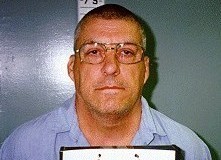
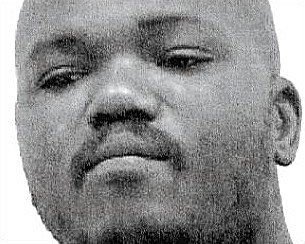
Douglas Franklin Wright
Serial killer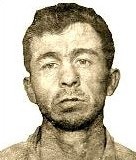 Donald Henry Gaskins
Serial killer · USA · 1969
Donald Henry Gaskins, also known as Donald “Pee Wee” Gaskins, was a serial kill…
200 victims
Donald Henry Gaskins
Serial killer · USA · 1969
Donald Henry Gaskins, also known as Donald “Pee Wee” Gaskins, was a serial kill…
200 victims
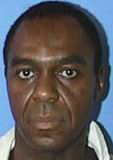 Carl Eugene Watts
Serial killer · USA · 1974
Carl Eugene Watts (born November 7, 1953; died September 21, 2007), also known…
100 victims
Carl Eugene Watts
Serial killer · USA · 1974
Carl Eugene Watts (born November 7, 1953; died September 21, 2007), also known…
100 victims
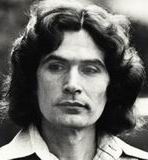 Rodney Alcala
Serial killer · USA · 1977
Rodney James Alcala (born August 23, 1943) was also known as Rodrigo Jacques Al…
100 victims
Rodney Alcala
Serial killer · USA · 1977
Rodney James Alcala (born August 23, 1943) was also known as Rodrigo Jacques Al…
100 victims
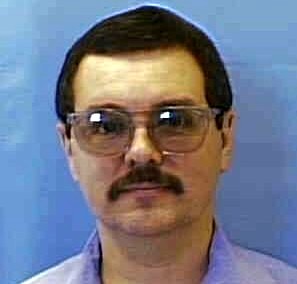 Donald Harvey
Serial killer · USA · 1970
Donald Harvey was known as an American serial killer and a self-professed “Ange…
87 victims
Donald Harvey
Serial killer · USA · 1970
Donald Harvey was known as an American serial killer and a self-professed “Ange…
87 victims
 Ottis Toole
Serial killer · USA · 1961
Ottis Elwood Toole (sometimes misspelled as “Otis”) was an American serial kill…
65 victims
Ottis Toole
Serial killer · USA · 1961
Ottis Elwood Toole (sometimes misspelled as “Otis”) was an American serial kill…
65 victims
 Donald Leroy Evans
Serial killer · USA · 1975
Donald Leroy Evans (born July 5, 1957) was an American serial killer who murder…
60 victims
Donald Leroy Evans
Serial killer · USA · 1975
Donald Leroy Evans (born July 5, 1957) was an American serial killer who murder…
60 victims
 Fred Marion Gilreath
Murderer · USA · 1979
May 11, 1979 — Linda Gilreath and her father, Gerrit Van Leeuwen, returned to t…
2 victims
Fred Marion Gilreath
Murderer · USA · 1979
May 11, 1979 — Linda Gilreath and her father, Gerrit Van Leeuwen, returned to t…
2 victims
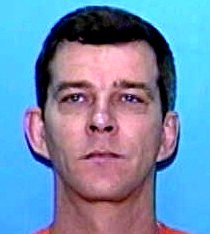 Victor Marcus Farr
Murderer · USA · 1990
Victor Marcus Farr (born 07/03/61) was convicted in the Third Judicial Circuit,…
1 victim
Victor Marcus Farr
Murderer · USA · 1990
Victor Marcus Farr (born 07/03/61) was convicted in the Third Judicial Circuit,…
1 victim
 Henry Francis Hays
Murderer · USA · 1981
Henry Francis Hays Henry Francis Hays was a member of the Ku Klux Klan in Alaba…
1 victim
Henry Francis Hays
Murderer · USA · 1981
Henry Francis Hays Henry Francis Hays was a member of the Ku Klux Klan in Alaba…
1 victim
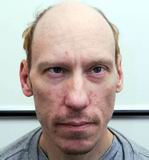 Stephen Port
Serial killer · United Kingdom · 2014
Stephen Port (born 1975) was a convicted British rapist and serial killer who m…
4 victims
Stephen Port
Serial killer · United Kingdom · 2014
Stephen Port (born 1975) was a convicted British rapist and serial killer who m…
4 victims
 Louis Kenneth Neu
Murderer · USA · 1933
Louis Kenneth Neu was executed by hanging in New York on February 1, 1935. Neu…
2 victims
Louis Kenneth Neu
Murderer · USA · 1933
Louis Kenneth Neu was executed by hanging in New York on February 1, 1935. Neu…
2 victims
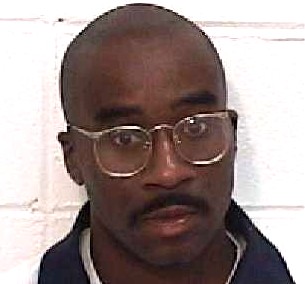 Ray Cromartie
Murderer · USA · 1994
Ray Jefferson Cromartie was convicted in Thomas County Superior Court of malice…
1 victim
Ray Cromartie
Murderer · USA · 1994
Ray Jefferson Cromartie was convicted in Thomas County Superior Court of malice…
1 victim
- Gender
- male
- Country
- USA
- Location
- Oregon, USA
- Date of birth
- March 25, 1940
- Age at first offence
- 29
- Characteristics
- kidnapping, rape, drug dealer, abuse
- Victim profile
- An Oregon woman and her mother / Luke Tredway, 10-year-old boy / Four homeless men
- Method of murder
- ??? / Shooting ( .357 Sturm Ruger Blackhawk)
- Date(s) of murder
- 1969 / 1984 / 1991
- Years active
- 1969–1991
- Date of arrest
- —
- Status
-
Executed
Executed by lethal injection in Oregon on September 6, 1996
Case summary
Douglas Franklin Wright (born 1940-03-25) was executed by lethal injection in Oregon on September 6, 1996. He was the first person executed by lethal injection in Oregon on September 6, 1996.
Wright was sentenced to death on 1993-10-11 for luring three homeless white men to a remote area of Wasco County aboard the Warm Springs Indian Reservation with a false promise of work and then killing them. After the Oregon Supreme Court upheld his conviction and sentence, Wright abandoned the rest of his appeals. Wright later admitted killing a fourth man, Anthony Nelson, a Makah Indian.
In the days leading up to his execution, Wright confessed to an additional kidnapping and murder in 1984, that of a ten-year-old boy.
Timeline
- 1991 — Wright lured five homeless men to the Warm Springs Indian Reservation with promises of jobs; he shot four of them, and a fifth man escaped and alerted police.
- 1993-10-11 — Wright was sentenced to death.
- 1994-03-08 — Wright’s appeal in the United States Court of Appeals for the Ninth Circuit was argued and submitted.
- 1994-03-18 — The Ninth Circuit decided Wright’s appeal in United States of America, Plaintiff-appellee, v. Douglas Franklin Wright, Defendant-appellant (79 F.3d 112 / 19 F.3d 1442 are both present in the material).
- 1996-01-10 — Wright’s appeal in the Ninth Circuit was argued and submitted from the United States District Court for the District of Oregon in United States of America, Plaintiff-Appellee, v. Douglas Franklin WRIGHT, Defendant-Appellant.
- 1996-03-07 — The Ninth Circuit filed the opinion in the appeal (No. 95-30054).
- 1996-09-06 — Wright was executed by lethal injection in Oregon.
Background
The events central to the case, which would become known as the Warm Springs Murders, began in the Fall of 1991. Two young homeless men were approached in downtown Portland by a man offering them work outside the city. One of the young men was Randy Henry, who sometimes used the name Marty McDaniel. The other was McDaniel’s friend Tony Nelson. The pair accepted the offer and left with the man in a Toyota bearing Oregon license plates.
After a brief stop at the driver’s apartment in a nearby town, the trio drove to the Mt. Hood area. They drove off the highway and into a forested area within the exterior boundaries of the Warm Springs Indian Reservation. Exiting the Toyota, the driver and Tony Nelson walked away from the car while McDaniel stood facing the opposite direction. Suddenly McDaniel heard a gunshot, turned toward the sound, and saw the driver with a long-barrelled revolver. McDaniel sprinted off barefoot through the woods to the highway where he was able to flag down a motorist named Ervie Dominguez. Dominguez drove McDaniel to a rest area and called the police. While Dominguez was calling authorities, McDaniel left the area.
Two days later, hunters found the body of Tony Nelson.
The offence
Wright was convicted of killing three homeless men. The three murders were described as murders involving the non-Indian victims, and the facts were set out as involving luring homeless men to the Warm Springs Indian Reservation with a promise of work followed by shooting.
A ballistics description connected Tony Nelson’s killing to other deaths: ballistics tests indicated that the firearm which had killed Tony Nelson had also killed an Anthony Barker, whose body had been discovered a few days before and within one mile of the location where Nelson’s body was found. A cooperative effort involving state, federal, and tribal officials produced four victims and a jurisdictional jigsaw puzzle. The Warm Springs murder investigation involved four victims: Tony Nelson and three other victims described as non-Indians.
The material stated that with promises of jobs, the convicted murderer lured five homeless men to the Warm Springs Indian Reservation in 1991 and shot four of them. The fifth man escaped and alerted police.
The material also stated that Wright was charged with killing a fourth homeless man, but that case never went to trial.
Investigation
The FBI located Wright after interviews in the area and after locating a man who had been in prison with Wright and who was able to identify him as the man who had earlier picked up Nelson and McDaniel.
Using motor vehicle registration information, agents determined that Wright owned a Toyota with Oregon plates, was employed in a neighboring community, and listed an apartment as his address. McDaniel identified the apartment house but was unable to pick Wright out of a photo lineup.
Agents obtained a search warrant for Wright’s car and apartment based on the evidence gathered to that point in the investigation. The execution of those warrants produced two weapons, one of which was a .357 Sturm Ruger Blackhawk. Subsequent ballistics tests tied the .357 to both the Nelson and Barker deaths.
Arrest
The material described the investigation leading to the identification of Wright and the obtaining of search warrants for Wright’s car and apartment. It did not state a separate “arrest” event.
Trial
The charges against Wright proceeded in three phases:
- The felon-in-possession charges went to trial in federal court, where Wright was convicted of all counts.
- Oregon then proceeded with murder charges involving the non-Indian victims, where Wright was convicted and sentenced to death.
- The United States indicted Wright on the Nelson murder charges, which were headed for a bench trial before the motions leading to the appeal.
The material stated that Wright was convicted on October 6, 1993 of eight counts of aggravated murder, among other crimes, for three of the murders. The material also stated that Wright was convicted on October 6, 1993 and that he later admitted killing a fourth man, Anthony Nelson.
Sentencing
Wright was sentenced to death on 1993-10-11.
The material also stated that Wright had no final words but mouthed, “I'm sorry,” to the mother of one of his victims before he died. She nodded.
Appeals
United States Court of Appeals, Ninth Circuit (19 F.3d 1442 / 79 F.3d 112)
Wright appealed his conviction and sentence for two counts of violating 18 U.S.C. Sec. 922(g).
A. Wright argued the district court erred in not changing venue because it should have presumed prejudice. The court concluded the record did not demonstrate a level of “prejudicial and inflammatory media publicity” such that prejudice should have been presumed.
The court stated that while it was mindful of the difficulties in questioning prospective jurors about Wright’s background, the district court properly dealt with the situation by asking whether jurors recognized Wright by face or appearance.
The court addressed Wright’s reliance on a juror’s indication after questioning that the juror had heard something about the charges pending against Wright, concluding that post-trial questioning was discretionary and did not reveal that any information about these charges played a role in jury deliberations.
The court concluded the district court did not abuse its “considerable discretion” in denying Wright’s request for post-verdict juror interviews and in not holding an evidentiary hearing upon learning about one juror’s vague recollection.
B. Wright challenged the district court’s denial of his motion for a Franks hearing. The court concluded the district court applied the correct standard and properly denied Wright’s request because Wright did not make a substantial preliminary showing that Agent Samuel either deliberately or recklessly omitted a material fact from his affidavit. The court concluded that even if the facts Wright asserted were omitted were added, they would not negate the showing of probable cause. The court concluded Wright’s request to subpoena Magistrate Juba was properly denied because any such testimony would have been irrelevant. The court concluded that because a Franks hearing was not necessary, the district court was justified in denying Wright’s request to cross-examine Agent Samuel as to his supplemental affidavit because the court had made clear it never relied on that affidavit.
C. Wright claimed there was not probable cause to believe he had committed a crime, let alone to search his apartment and car. The court concluded the record flatly contradicted Wright’s claim and that there was evidence for a magistrate to conclude it would be reasonable to seek the evidence in Wright’s apartment and car. The court concluded Samuel’s affidavit supported that conclusion and was not ambiguous as to where to look.
D. Wright challenged suppression of a gun found in his car because the warrant authorized the search of a pickup truck. The court concluded that Turner supported the search. The court stated the warrant’s description was partially inaccurate but sufficiently particular “to enable the executing officer to locate and identify the premises with reasonable effort,” and that there was not a “reasonable probability that another premise might be mistakenly searched.”
E. Wright challenged the inclusion of his 1969 assault conviction in his criminal history score. The court found this conviction was properly counted under U.S.S.G. Sec. 4A1.2(e)(1), counting back fifteen years from the day before commencement of the offense at issue—August 30, 1991—and finding that Wright had spent his last day in prison for the 1969 assault.
F. The court concluded that Wright’s uncounted prior convictions properly served as a basis for upward departure under U.S.S.G. Sec. 4A1.3(a). The court stated that the district court adequately explained its reasons for departing and the basis of its departure, and that the extent of its departure was reasonable.
The Ninth Circuit outcome was “AFFIRMED.”
A procedural and decision history was included:
- The matter included “Argued and Submitted March 8, 1994” and “Decided March 18, 1994.”
- The panel was “BROWNING, KOZINSKI and NOONAN, Circuit Judges.”
- The material included “MEMORANDUM.”
United States Court of Appeals, Ninth Circuit (No. 95-30054)
The material included the case *United States of America, Plaintiff-Appellee, v.
- The Ninth Circuit matter was “No. 95-30054.”
- It included “Argued and Submitted January 10, 1996—Portland, Oregon.”
- It included “Filed March 7, 1996.”
- It stated it was an appeal from the United States District Court for the District of Oregon, with Owen M. Panner, Chief District Judge, Presiding.
- The panel was “John T. Noonan, Jr., Edward Leavy and Michael Daly Hawkins, Circuit Judges.”
- It stated “Opinion by Judge Hawkins.”
I. Facts and jurisdictional setting
The material reiterated that the events were set in motion in the Fall of 1991 and described Randy Henry sometimes using the name Marty McDaniel, along with Tony Nelson, and Ervie Dominguez.
It also reiterated the ballistics results tying Wright’s .357 Sturm Ruger Blackhawk to both Tony Nelson and Anthony Barker deaths, and that the investigation produced four victims with a jurisdictional jigsaw puzzle based on non-Indians versus Tony Nelson being a member of the Makah Tribe.
The material described that because Wright had a prior felony conviction, his possession of the two firearms could be charged in either state or federal court, and that the charges proceeded as described above.
It stated that the interlocutory appeal involved the district court’s pre-trial order denying Wright’s motion to dismiss the Nelson murder charges based on a claimed double jeopardy violation, due process grounds, and the district court’s supervisory power to dismiss indictments for prosecutorial excess. The material stated the court had jurisdiction over the double jeopardy claim and affirmed; it dismissed the remaining claims for lack of jurisdiction.
II. Analysis
A. Double Jeopardy The court stated it reviewed de novo the denial of a motion to dismiss on double jeopardy grounds. It referred to the Blockburger test and discussed Supreme Court decisions including Blockburger v. United States and United States v. Dixon, which overruled Grady and made clear that Brown, Harris, and Vitale did not establish a same-conduct double jeopardy test. The court stated that because the test set forth in Blockburger was the only test for analyzing a double jeopardy claim and because Wright admitted and the court agreed the present prosecution was not barred under this test, the district court properly denied the motion to dismiss.
B. Remaining Claims The court stated Wright contended the federal government wrongfully conspired with the State of Oregon to subject him to successive prosecutions and also appealed the district court’s refusal to dismiss his indictment under the due process clause and pursuant to the district court’s inherent supervisory power. The court concluded those claims did not fall within the narrow category of claims reviewable on interlocutory appeal and dismissed the remainder of the appeal for lack of jurisdiction.
The outcome included “AFFIRMED IN PART AND DISMISSED IN PART.”
Outcome
Wright refused to appeal his execution.
On September 6, 1996, inmate Douglas Franklin Wright, 56, became the first person executed by lethal injection in Oregon.
The material stated that Oregon was the only state where voters had outlawed capital punishment twice, in 1914 and 1964, and that they voted to re-establish it in 1920 and 1978.
Aftermath
The material stated that Wright had served 12 years in prison for the 1969 murders of an Oregon woman and her mother.
In the days leading up to execution, Wright confessed to kidnapping, molesting and killing a 10-year-old boy who disappeared from Portland 12 years before.
The material stated that Wright was charged with killing a fourth homeless man, but that case never went to trial. It also stated that Wright admitted killing a fourth man, Anthony Nelson, who was a Makah Indian, and that if Wright had not quit his appeal process, he would have been tried before a federal court in the Nelson case because killing a Native American is a federal crime.
Other details
People and identifications
- Randy Henry sometimes used the name Marty McDaniel.
- Tony Nelson was a Makah Indian and was also described as McDaniel’s friend.
- Ervie Dominguez was a motorist who drove McDaniel to a rest area and called the police.
Weapons and forensic links
- The investigation produced two weapons from the search of Wright’s car and apartment.
- A .357 Sturm Ruger Blackhawk was one of the weapons recovered.
- Ballistics tests tied the .357 to both the Nelson and Barker deaths.
Victims and counts described in the material
- Wright was convicted of killing three street people (homeless men).
- The material stated that Wright lured five homeless men in 1991 and shot four of them, with a fifth man escaping.
- The material stated that Wright was convicted on eight counts of aggravated murder, among other crimes, for three of the murders.
Quotes
No verbatim quotes beyond the “I'm sorry” statement and the quoted legal language were included in the material beyond those already embedded within the legal analysis narrative:
- Wright mouthed, “I'm sorry,” to the mother of one of his victims before he died; she nodded.
- The Ninth Circuit used quoted phrases including “prejudicial and inflammatory media publicity,” “considerable discretion,” “to enable the executing officer to locate and identify the premises with reasonable effort,” and “reasonable probability that another premise might be mistakenly searched.”

Spotted an error, or have more information about this case?