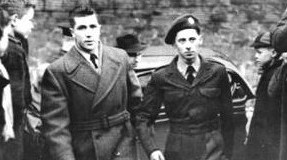
Iain Hay Gordon
Homicide ?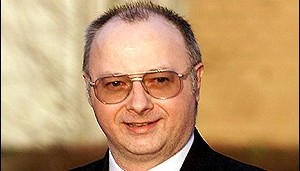 Stephen Downing
Homicide ? · United Kingdom · 1973
Stephen Downing was a 17-year-old council worker who worked in the Bakewell cem…
1 victim
Stephen Downing
Homicide ? · United Kingdom · 1973
Stephen Downing was a 17-year-old council worker who worked in the Bakewell cem…
1 victim
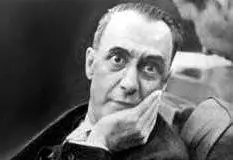 Pierre Jaccoud
Homicide ? · Switzerland · 1958
Pierre Jaccoud (born in 1905) was a Swiss lawyer and politician. He served as “…
1 victim
Pierre Jaccoud
Homicide ? · Switzerland · 1958
Pierre Jaccoud (born in 1905) was a Swiss lawyer and politician. He served as “…
1 victim
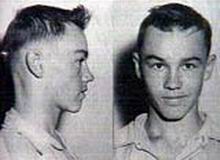 Steven Truscott
Homicide ? · Canada · 1959
Steven Murray Truscott (born January 1945) was a Canadian who was convicted of…
1 victim
Steven Truscott
Homicide ? · Canada · 1959
Steven Murray Truscott (born January 1945) was a Canadian who was convicted of…
1 victim
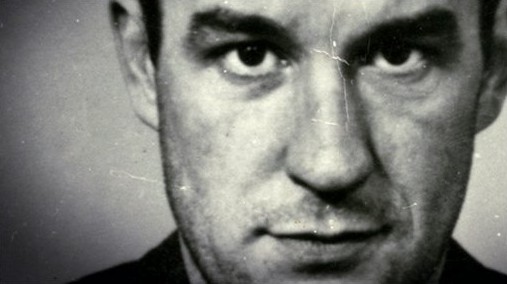 Peter Manuel
Serial killer · United Kingdom · 1956
Peter Manuel (born in the United States; died July 11, 1958) committed crimes i…
12 victims
Peter Manuel
Serial killer · United Kingdom · 1956
Peter Manuel (born in the United States; died July 11, 1958) committed crimes i…
12 victims
 Angus Sinclair
Serial killer · United Kingdom · 1961
Angus Sinclair was sentenced to life in prison for the murders of Helen Scott a…
8 victims
Angus Sinclair
Serial killer · United Kingdom · 1961
Angus Sinclair was sentenced to life in prison for the murders of Helen Scott a…
8 victims
 John Reginald Christie
Serial killer · United Kingdom · 1943
John Reginald Halliday Christie (April 8, 1899–July 15, 1953) was an English se…
8 victims
John Reginald Christie
Serial killer · United Kingdom · 1943
John Reginald Halliday Christie (April 8, 1899–July 15, 1953) was an English se…
8 victims
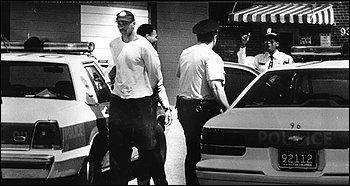 James Edward Swann
Serial killer · USA · 1993
James Edward Swann, Jr., also known as “The Shotgun Stalker,” was an American s…
4 victims
James Edward Swann
Serial killer · USA · 1993
James Edward Swann, Jr., also known as “The Shotgun Stalker,” was an American s…
4 victims
 Bobbie Sue Terrell
Murderer · USA · 1984
Bobbie Sue Dudley Terrell was a Pinellas County nurse and worked as the night s…
12 victims
Bobbie Sue Terrell
Murderer · USA · 1984
Bobbie Sue Dudley Terrell was a Pinellas County nurse and worked as the night s…
12 victims
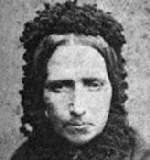 Maria Swanenburg
Serial killer · Netherlands · 1880
Maria Catherina Swanenburg (Leiden 9 September 1839 - Gorinchem 11 April 1915)…
27 victims
Maria Swanenburg
Serial killer · Netherlands · 1880
Maria Catherina Swanenburg (Leiden 9 September 1839 - Gorinchem 11 April 1915)…
27 victims
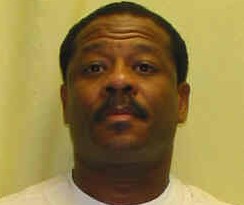 Jerome Henderson
Murderer · USA · 1985
Jerome Henderson was sentenced to death on August 5, 1985. The clemency report…
1 victim
Jerome Henderson
Murderer · USA · 1985
Jerome Henderson was sentenced to death on August 5, 1985. The clemency report…
1 victim
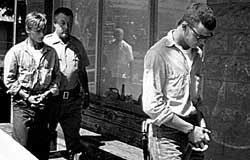 Leonard Maine
Spree killer · USA · 1967
Leonard Maine was convicted in connection with multiple violent offences involv…
4 victims
Leonard Maine
Spree killer · USA · 1967
Leonard Maine was convicted in connection with multiple violent offences involv…
4 victims
- Gender
- male
- Country
- United Kingdom
- Location
- Whiteabbey, County Antrim, Northern Ireland, United Kingdom
- Date of birth
- 1932
- Age at first offence
- 20
- Characteristics
- history of mental illness
- Victim profile
- Patricia Curran, 19 (daughter of a prominent Ulster judge)
- Method of murder
- St abbing 37 times with a fine-blade knife
- Date(s) of murder
- November 13, 1952
- Years active
- 1952
- Date of arrest
- —
- Status
-
Released
Cleared of murder in 2000 after being found guilty but insane in March 1953; ordered to be detained “during Her Majesty’s Pleasure”; released in 1960 and cleared in 2000
Case overview
Iain Hay Gordon was convicted of the killing of Patricia Curran and was found guilty but insane at his trial in March 1953. He was ordered to be detained “during Her Majesty’s Pleasure” and was released in 1960. His conviction was later quashed, and he was cleared of the murder in 2000.
Timeline
- 12 November 1952 — Patricia Curran left her parents’ home in Whiteabbey, Belfast, to attend Queen’s University.
- early hours of 13 November 1952 — Patricia Curran had still not returned home; her father rang the police to report her disappearance.
- 13 November 1952 — Her brother Desmond Curran left the house to look for her; Desmond saw Patricia lying covered in blood in the grounds.
- March 1953 — Iain Hay Gordon was tried at Belfast Assizes; he was found guilty but insane and ordered to be detained “during Her Majesty’s Pleasure”.
- 1960 — Gordon was released.
- 1970s — Desmond’s mother and her husband died in the 1970s.
- 1993 — Gordon began his legal campaign in earnest and took redundancy.
- 2000 — Gordon’s appeal resulted in a finding of unreliability of the confession and his conviction was quashed; he was cleared of murder.
The offence
On the morning of 12 November 1952, 19-year-old Patricia Curran left her parents’ home in Whiteabbey, Belfast, to attend Queen’s University. When she had still not returned home by the early hours of 13 November 1952, her father, Mr Justice Curran, rang the police to report her disappearance. Her brother, Desmond Curran, left the house to look for her and saw something lying on the ground. When he got to Patricia, she was lying on her back covered in blood. She died shortly afterwards.
Initially, it was thought that Patricia had been shot with a shotgun. A post-mortem revealed that Patricia had been stabbed 37 times with a fine-bladed knife. Patricia normally telephoned for a car to fetch her once she had got to the bus stop, but on this occasion she had not done so even though she had been found close to the house. The grounds where her body was discovered were her family’s home grounds in Whiteabbey.
The appeal proceedings later discussed evidence about the time of death. Sir Louis Blom-Cooper QC questioned the time of Miss Curran’s death, stating that the Crown had a fixation that the time of death was 5.45pm and that the forensic pathologist said death was likely to have occurred at around 6pm and could have been anything as much as four hours later.
Investigation
Police launched a massive manhunt, questioning everyone they could. An 11-year-old girl told police that she had seen Patricia with a man.
Following receipt of this information, police questioned every person, military and civilian, at the nearby Edenmore RAF Station. Leading Aircraftsman Iain Hay Gordon aroused suspicion with some of his answers to routine questions. When it was found that he had asked other airmen to supply him with an alibi, he was given closer scrutiny.
It was also discovered that Desmond Curran knew Gordon and that Gordon had contacted Desmond and asked whether Gordon had been mentioned in Patricia’s diaries. Under pressure, he eventually broke down and confessed to the killing. Gordon said he had met Patricia as she walked home from the bus stop and asked her for a kiss. After a few kisses he “lost control” and started to stab her. There was evidence of attempted sexual assault.
Arrest and charging
Gordon was recalled on the 13th because, although he said he had been resitting an exam at his barracks on the night of the murder, there was no witness to support his alibi. By the 14th, the interview had turned into an interrogation. A trial later noted that Gordon was arrested two months later, in January, and charged, and that he had been a 20-year-old RAF national serviceman at the time of the killing.
Confession and allegations around interrogation
In March 1953 reporting on his appeal campaign, Gordon maintained that police forced him to confess. Sir Louis Blom-Cooper QC told the court that “material irregularities” went to “the very heart of a fair trial”.
During the appeal, counsel asserted that evidence to the original trial that the confession had been dictated by Gordon to police was inaccurate. Sir Louis also accused Detective Superintendent John Capstick of lying to the 1953 jury when Capstick said that Gordon had voluntarily dictated his statement. He described the statement and transcript as being developed by question and answer rather than a voluntary dictation.
At the appeal hearing, Ronald Weatherup QC stated the Crown had to bear in mind that “tactical decisions” were taken at the time of the trial which could not be speculated upon. Crown counsel then conceded that the confession was not reliable. Mr Weatherup said he accepted the confession had not been voluntary and its contents were not a reliable account of what had happened.
Trial
Gordon was tried at Belfast Assizes in March 1953. He was found guilty but insane and was ordered to be detained “during Her Majesty’s Pleasure”. He later discovered there had been witnesses prepared to vouch that on the night of the murder he had been sitting the exam, but his defence lawyers had never called on them.
In later appeal reporting, Sir Louis Blom-Cooper QC launched an appeal against the conviction and said the trial verdict of 3 March 1953 was “not just unsatisfactory but unsafe”. He told the judges that the verdict went wrong because of “material irregularities”. He also argued that the evidence about the confession was unsafe.
Sentencing and detention
After conviction in March 1953, Gordon was ordered to be detained “during Her Majesty’s Pleasure”. After his conviction, he was sent to Holywell Hospital, a psychiatric hospital in Antrim, and spent seven years there. He later said he did not receive any treatment in the mental hospital and that for two years he was locked up in a closed ward with psychopaths.
In 1960, Gordon was released and allowed to return to his mother in Scotland. His release was under a deal that allowed him to return to Glasgow, and it was described as being on condition that he changed his name and did not discuss the case.
Appeals and legal outcome
Appeal initiation and grounds
In 1993, Gordon started his campaign to clear his name when he retired. In July, the Criminal Cases Review Commission announced that his case had been referred to the Court of Appeal in Northern Ireland. The commission was only able to launch an investigation into his case after a change in the law allowing “guilty but insane” verdicts to be re-examined by the CCRC.
Sir Louis Blom-Cooper QC said the verdict at Gordon’s trial on 3 March 1953 was “not just unsatisfactory but unsafe”. He said the confession was not a voluntary dictation, and he argued that the evidence was unsafe.
Crown concession and court decision
During the appeal in October 2000, Crown counsel Ronald Weatherup QC conceded that Gordon’s confession was not reliable and accepted it had not been voluntary. The Lord Chief Justice, Sir Robert Carswell, suggested that knocking out the confession removed the bulk of the Crown case, asking: “Knock out the confession and it takes the bulk of the Crown case away. What is left?” Weatherup responded: “We don’t contest that if the confession is taken away there is no basis on which the verdict can be sustained. Without that confession would the verdict be guilty? The answer is no.”
The Court of Appeal delivered a judgment in Gordon’s appeal. The court ruled that the enforced confession that led to him being found guilty but insane was inadmissible, and quashed his conviction. He was cleared of the murder in 2000, described as after 48 years.
Aftermath
Gordon lived a quiet, exemplary life in Glasgow after being freed in 1960. He changed his name back to Iain, took part in a documentary about his miscarriage of justice, and told his former colleagues who he really was.
A lawyer, Margot Harvey, hoped a claim for compensation would be settled speedily due to Gordon’s age and failing health. She said Gordon was a “very frail, vulnerable person” and that “what happened to him was heinous”. She also said: “The debris of this case is scattered throughout his family and his poor mother died bankrupt trying to clear his name.”
The Guardian reporting in 2000 stated it would probably never be known who killed Patricia Curran and mentioned it had been suggested that Patricia argued with her mother shortly before her death and that there was a cover-up, but no proven person was identified.
Family and other individuals mentioned
Mr Justice Curran was Patricia Curran’s father and rang the police about her disappearance. Patricia’s mother was Doris Curran. Patricia’s brother Desmond Curran knew Gordon and had been part of a crusading religious group called Moral Rearmament, where he tried to recruit Gordon. Desmond later converted to Catholicism five years after his sister’s murder and his Orangeman father broke ranks to attend Desmond’s ordination as a priest in Rome in 1964. Desmond ministered in a black township just outside Cape Town, South Africa, and was known as “The Lamp” by his flock.
A journalist, John Linklater, campaigned for Gordon for many years. Another QC mentioned was Louis Blom-Cooper QC. Gordon’s constituency MP was Maria Fyfe, who succeeded in changing the law so Gordon could appeal.
Quotes included
“I’m delighted,” he said, almost overwhelmed by the hugs of his legal team and supporters. “I feel a great burden has been lifted off my shoulders.
I never had any doubt I would clear my name. I didn’t know when or how but I always believed it would come to pass and I’ve been vindicated.”
“Knock out the confession and it takes the bulk of the Crown case away. What is left?”
“We don’t contest that if the confession is taken away there is no basis on which the verdict can be sustained. Without that confession would the verdict be guilty? The answer is no.”
“Superintendent Capstick lied about that.”
“tactical decisions”
“Material irregularities” went to “the very heart of a fair trial”.
“not just unsatisfactory but unsafe”.
Gordon also described his own experience of the interrogation:
“You did it, you did it, you did it”
“You’re a liar, you’re a liar, you’re a liar. If you don’t confess you’ll go to hell.”
He described the confession being written up:
“He played a sort of fantasy game, saying, ‘Suppose you had met Patricia Curran. Would you have walked her up the drive?’ And he wrote that up as ‘He walked her up the drive’. The whole thing was Capstick’s invention. ‘Would you stop to give her a kiss?’ That went down as ‘He stopped to give Curran a kiss.’”
He also said:
“It turned my life upside down”
And:
“I refuse to be bitter or have any feelings of vengeance towards the murdered girl's family.”
Other details
Gordon was originally from Glasgow. He was described as a “frail, bespectacled pensioner” at the time of the appeal reporting in 2000, described as “painfully thin and ghostly pale” in a neat navy blue suit. At that time he was described as a 68-year-old Glaswegian.
Gordon reported that he was pressured to confess and said he later described the interrogation as a “game of charades” and that “psychologists later described it as a kind of brainwashing”. He said: “I was terrified the police would reveal his past gay experimentation in an age when homosexuality was still illegal and considered a mortal sin by many.”
Gordon said he was told that if he did not confess, police would tell his mother about his friendship with a local homosexual and that “They said the shock would kill her.” He said he “signed a confession” and that his plea was “guilty but insane.” He later said he did not kill Patricia and that, gradually, when he came to his senses in prison and in the hospital, he realised he “hadn’t killed her.”
He said that when he was sentenced, he was relieved because “those were the days you could have hung.” He also described how, during detention, he kept telling himself “Tomorrow I'll be free” until it became automatic.
After his release, he said he could not get a job because of his history and worked for Collins on the condition he changed his name to John and never talked about his case. He later said he abided by the rules for 33 years.
In his appeal campaign, Gordon formally began the process of clearing his name in 1993, with the Court of Appeal agreeing that the evidence was “unreliable” and Crown authorities making it difficult for him even after that.
He planned to celebrate Christmas with his disabled partner in hospital in late 2000.
Spotted an error, or have more information about this case?