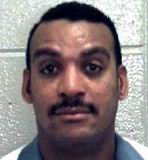
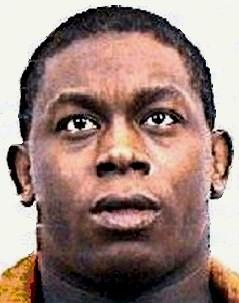
Emmanuel Hammond
Murderer Brian Kevin Rosenfeld
Murderer · USA · 1985
Brian Kevin Rosenfeld Brian Kevin Rosenfeld was sentenced to three concurrent l…
23 victims
Brian Kevin Rosenfeld
Murderer · USA · 1985
Brian Kevin Rosenfeld Brian Kevin Rosenfeld was sentenced to three concurrent l…
23 victims
 Yahweh ben Yahweh
Murderer · USA · 1980
Yahweh ben Yahweh was born and legally named Hulon Mitchell Jr. (October 27, 19…
23 victims
Yahweh ben Yahweh
Murderer · USA · 1980
Yahweh ben Yahweh was born and legally named Hulon Mitchell Jr. (October 27, 19…
23 victims
 Russell Ellwood
Murderer · USA · 1991
Russell Ellwood was a former taxi driver. Authorities suspected him of killing…
20 victims
Russell Ellwood
Murderer · USA · 1991
Russell Ellwood was a former taxi driver. Authorities suspected him of killing…
20 victims
 Robert Martines Perez
Murderer · USA · 1994
Name: Robert Martines Perez · Other name used in proceedings: Robert Martinez P…
15 victims
Robert Martines Perez
Murderer · USA · 1994
Name: Robert Martines Perez · Other name used in proceedings: Robert Martinez P…
15 victims
 Stephan Letter
Serial killer · Germany · 2003
Stephan Letter was a German serial killer who was known to be responsible for t…
28 victims
Stephan Letter
Serial killer · Germany · 2003
Stephan Letter was a German serial killer who was known to be responsible for t…
28 victims
 Rick Forsyth
Mass murderer · USA · 1993
Defendant: Rick Forsyth (Rick Wayne Forsyth) Victims: Jolene Forsyth (age 39) a…
6 victims
Rick Forsyth
Mass murderer · USA · 1993
Defendant: Rick Forsyth (Rick Wayne Forsyth) Victims: Jolene Forsyth (age 39) a…
6 victims
 Herman Clark
Murderer · USA · 1981
Herman Robert Charles Clark Jr. was convicted in connection with a capital murd…
1 victim
Herman Clark
Murderer · USA · 1981
Herman Robert Charles Clark Jr. was convicted in connection with a capital murd…
1 victim
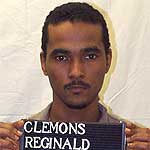 Reginald Clemons
Murderer · USA · 1991
Reginald Clemons was prosecuted in the case State of Missouri v. and was senten…
2 victims
Reginald Clemons
Murderer · USA · 1991
Reginald Clemons was prosecuted in the case State of Missouri v. and was senten…
2 victims
 Andrew DeYoung
Murderer · USA · 1993
Andrew DeYoung was convicted in Cobb County, Georgia of malice murder and was s…
3 victims
Andrew DeYoung
Murderer · USA · 1993
Andrew DeYoung was convicted in Cobb County, Georgia of malice murder and was s…
3 victims
- Gender
- male
- Country
- USA
- Location
- Fulton County, Georgia, USA
- Date of birth
- June 6, 1965
- Age at first offence
- 23
- Characteristics
- serial rapist, kidnapping, robbery
- Victim profile
- Julie Love, 27
- Method of murder
- Shooting ( sawed-off shotgun)
- Date(s) of murder
- July 12, 1988
- Years active
- 1988
- Date of arrest
- August 1989
- Status
-
Executed
Executed by lethal injection on 25 January 2011 in Georgia
Background
Emmanuel Fitzgerald Hammond was convicted by a jury in Fulton County of murder, kidnapping and armed robbery. He was sentenced to death for the offense of malice murder and later was executed by lethal injection in Georgia.
Hammond had a girlfriend, Janice Weldon. Weldon was an intimate companion of Emmanuel Hammond and later was the person who had Hammond arrested after he assaulted and tried to strangle her. Weldon was given immunity for her testimony.
Maurice Porter was Hammond’s cousin in the case and testified at Hammond’s trial. Porter pleaded guilty to murder and rape and was sentenced to life in prison.
The victim, Julie Love, was a 27-year-old preschool teacher. Love was engaged a week before she went missing. Love last was seen by her fiancé the morning of July 11, 1988.
Hammond was “Demon,” a nickname that was used in court records and referenced during the events leading to the kidnapping and murder.
The offence
Julie Love’s car had run out of gas. Love walked nearby to get help and was offered a ride by Hammond, his girlfriend Janice Weldon, and her cousin Maurice Porter. Love declined and the group left. Minutes later, they returned.
Hammond stepped out with a sawed-off shotgun and forcibly threw the victim into the back of the car. Hammond and Porter drove to a school, where Love’s purse was searched. Hammond instructed Weldon and Porter to take Love’s bank cards to an automated bank teller machine and get money using an access number given by Love. The access number they had tried to use was incorrect and the machines had kept the cards. Hammond, angry at this result, struck Love repeatedly with the shotgun barrel.
Porter raped Love.
Love asked Hammond not to be hurt and told him she had more cards at home. The group went to Love’s apartment complex but were deterred from entering by a security guard at the entrance to the complex. Weldon demanded she be allowed to go home. Love was dropped off at her apartment by the group, after which Hammond and Porter and Weldon returned to the school.
Hammond took clothes hangers and a sheet from the trunk of the car. He tied Love’s feet together, tied her hands behind her back, and wrapped a sheet around her body. He then wrapped a coat hanger around her neck, and tried to strangle her by telling Porter to pull one end while he pulled the other. Love struggled and broke free. Hammond got her under control and retied her hands. Hammond directed Porter to drive to Grove Park, where they stopped by the side of the road.
Hammond left Porter with the car and took Love into the woods. Porter heard a gunshot. A few minutes later Hammond returned alone with blood on his face.
Hammond later admitted to Weldon that after Love “put her hands in front of her face,” he “blew the side of her face off” and that he dumped her body in a trash pile and covered her up with a board.
After Hammond later was arrested, the sawed-off shotgun used in the killing was recovered from Michael Dominick, to whom Hammond had sold the gun not long after the murder.
The victim’s earrings also were recovered after having been pawned for $140 by Janice Weldon.
In addition to the murder of Julie Love, the state offered evidence establishing that on three previous occasions Emmanuel Hammond had kidnapped young women and robbed or attempted to rob them by obtaining their bank cards to use in automated teller machines, and that he stabbed the third of these women numerous times and left her for dead on a trash pile in a wooded area.
Investigation
Julie Love’s disappearance put her friends and family into a frenzy. Her fiancé, Mark Kaplan, found Love’s abandoned red Mustang and prompted police to launch an investigation. Kaplan made fliers, organized rallies, and turned his home into a staging area for hundreds of volunteers.
Investigators pursued the case for almost a year before receiving a break.
In August 1989, Janice Weldon filed assault charges against Hammond after he tried to strangle her. Weldon later told police that Hammond and his cousin Maurice Porter killed Julie Love. Police followed up Weldon’s report by placing a “body bug” on Weldon and monitoring conversations between Weldon and Maurice Porter. Porter made several incriminating statements.
Porter confessed and led police to skeletal remains near a trash pile. The remains were identified by Weldon’s childhood dentist and next-door neighbor as the mortal remains of Julie Love. Authorities arrested Porter and Hammond after the body bug monitoring and corroboration of Weldon’s report.
Arrest
Porter and Hammond were arrested after Porter made incriminating statements during monitoring and after he confessed and led police to skeletal remains identified as Julie Love’s remains.
Trial
Guilt phase and evidence
The guilt phase evidence included testimony and events described by Porter and Weldon. Porter and Weldon testified that Porter, the driver, stopped the car so Hammond could ask Julie Love if she wanted a ride. Love answered in the negative and pointed to a nearby house, claiming she lived there. They drove off. Hammond saw Love returning to the road, told Porter to turn around and drive by again with lights on bright, and told Weldon to drive, and they returned to Love.
Hammond, armed with the sawed-off shotgun, jumped out, grabbed the victim and threw her into the back of the car. Hammond remained at Grove Park Elementary School with Love and the shotgun while Weldon and Porter went to attempt to withdraw money using Love’s bank cards and an access number given by Love.
When the access number did not work and the machines kept the cards, Hammond struck Love repeatedly with the shotgun. Porter raped Julie Love. After Love pleaded for cards at home, the group attempted to go to her apartment complex but was deterred by a security guard. Weldon demanded to go home. Love was dropped off at her apartment. Hammond got clothes hangers and a sheet from the trunk, tied Love and tried to strangle her with a coat hanger. Love struggled and broke free. Hammond retied her hands, left Porter in the car, and took Love into the woods, where Porter heard a gunshot.
Hammond returned alone with blood on his face. Porter testified about Hammond’s response when Porter said he knew what he thought had happened; Hammond responded “had to.”
The victim’s earrings had been pawned for $140 by Janice Weldon.
Sawed-off shotgun evidence
Weldon and Porter both testified that Hammond was armed with a 12-gauge shotgun at the time of the crime. Police were unable to locate the gun initially. During trial, Michael Dominick informed the prosecution that Hammond had sold him a sawed-off 12-gauge shotgun not long after Julie Love had disappeared. The gun was seized by police during a search of Dominick’s residence in connection with criminal drug charges unrelated to this case. Dominick’s testimony and the gun were offered as newly discovered evidence.
The defendant objected and moved to exclude the testimony and gun because Dominick’s name was not on the list of witnesses furnished prior to trial and because, except for his testimony, there was nothing to tie the gun to the crime. The court initially granted the defense motion as the record stood but later, after the defendant testified and admitted he had seen the gun (and denied selling it but admitted he was present when Janice Weldon sold the gun to Dominick), the state re-offered the gun. The court admitted the gun after the defendant identified it, and Dominick testified in rebuttal that Hammond sold the gun to him.
The medical examiner’s testimony included identification of pink shotgun wadding found near Julie Love’s remains and a conclusion that Love died from a gunshot wound to the head consistent with a closeup blast by a 12-gauge sawed-off shotgun. The examiner concluded that the remains did not include the bones that made up the right side of Julie Love’s face.
Trial issues and rulings
During voir dire, qualified prospective jurors were excused with instructions to return at 1:30 p.m. Fifty-six qualified prospective jurors were present, with three absent. One prospective juror was excused for medical reasons after reporting a father’s stroke. The court waited over an hour for two other absent jurors, and when they failed to show and could not be located, the court ruled jury selection would proceed without them. The defendant contended the venire was incomplete and the court erred, but the court found there were enough qualified jurors to allow selection of a jury and three alternates, and the record showed the two absent jurors were located late Friday afternoon after selection and questioned by the court and parties.
Janice Weldon telephoned Love’s home and listened to a recorded message saying, “Hi, this is Julie, and I can't come to the phone right now. . . .” The defendant did not object on hearsay grounds to admission of the audiotape containing this message.
A hearsay objection to another tape containing incoming messages from friends and relatives was sustained; that tape was not played to the jury.
Weldon testified that the defendant had given her earrings to pawn, and the state asked where the earrings had come from. Weldon answered: “I don't know if it's appropriate or not, but they used to go steal cars a lot, him and his cousin.” The defendant moved for a mistrial on impermissible character evidence; the court denied the motion and gave curative instructions.
Regarding prosecutorial misconduct, the defendant claimed the prosecutor expressed opinions, asked improper questions, and introduced improper evidence. The court addressed multiple alleged instances of misconduct, including questions and sustained objections with jury instructions to disregard, and concluded that there was no misconduct that might have prejudiced the substantial rights of the defendant after considering curative instructions. The court also addressed a closing argument dispute where, after a bench conference outside the hearing of the jury, the court directed the prosecutor to go forward without expressly sustaining objections and without stating directly or indirectly that jurors should place themselves in the shoes of the victim. The court concluded there was no reversible error in refusing to grant a motion for mistrial.
The defendant contended a juvenile adjudication for armed robbery should have been excluded from evidence at sentencing because he was unrepresented by an attorney. The record showed he was represented by an attorney, and the trial court did not err by allowing the juvenile adjudication in evidence during sentencing.
The defendant argued the prosecutor’s sentencing-phase comment violated OCGA 17-8-76. The prosecutor argued: “There is no life without parole in Georgia. So one day he will be a free man.” The defendant objected and asked the court to instruct the jury to disregard; the court sustained the objection and gave curative instructions. The court concluded the code did not require a mistrial absent the request.
The defendant’s claims of error related to refusing written requests to charge numbers 2 through 10. The court refused one request involving parole eligibility, and found no error for the remaining requests.
Sentencing
After conviction, a two-day sentencing phase followed. On March 8, 1990, the jury’s recommendation of a death sentence was returned on March 8, 1990. The defendant also argued the prosecutor made an improper parole remark at the sentencing phase. So one day he will be a free man.”
During sentencing review, the appellate decisions included findings that aggravating circumstances were found by the jury beyond a reasonable doubt, including that the murder of Julie Love was outrageously and wantonly vile, horrible and inhuman in that it involved torture and depravity of mind (OCGA 17-10-30(b)(7)); that the murder was committed while engaged in the capital felony of armed robbery (OCGA 17-10-30(b)(2)); and that the murder was committed by a defendant with a prior record of conviction for the capital felony of armed robbery (OCGA 17-10-30(b)(1)).
The sentence was affirmed, and the reviewing court concluded it was neither influenced by passion, prejudice, or other arbitrary factor and that it was not excessive or disproportionate to sentences in similar cases.
Appeals
Direct appeal and remand
On direct appeal, the Georgia Supreme Court rejected all of Hammond’s challenges but remanded his case to the trial court “to give the defendant the opportunity to litigate the issue of trial counsel’s effectiveness.” The Georgia Supreme Court later affirmed Hammond’s convictions and death sentence after remand proceedings. The court affirmed the trial court’s ruling that Hammond’s counsel had not rendered ineffective assistance during the original trial or on direct appeal.
Hammond later filed a petition for writ of certiorari in the United States Supreme Court, which was denied on October 2, 1995.
State habeas corpus proceedings
Hammond filed a petition for writ of habeas corpus in the Superior Court of Butts County, Georgia on December 20, 1995. He filed an amended petition on January 9, 1998 and April 19, 1999. An evidentiary hearing was held on December 14, 1999. On November 16, 2000, the state habeas corpus court entered an order denying Hammond state habeas relief. Hammond’s application for a certificate of probable cause to appeal in the Georgia Supreme Court was denied on May 28, 2002. Hammond filed a petition for writ of certiorari in the United States Supreme Court, which was denied on January 27, 2003.
Federal habeas corpus proceedings
Hammond filed a petition for writ of habeas corpus in the United States District Court for the Northern District of Georgia on June 12, 2003. He filed an amended petition on January 5, 2004. On January 4, 2008, the district court denied federal habeas corpus relief. The district court denied a motion to alter and amend judgment on February 12, 2008. The district court granted in part a certificate of appealability on June 18, 2008.
The Eleventh Circuit granted Hammond’s application for expansion of the certificate of appealability on July 18, 2008. The case was orally argued before the Eleventh Circuit on February 24, 2009. On November 4, 2009, the Eleventh Circuit issued an opinion denying relief. Hammond’s petition for panel rehearing was denied May 10, 2010.
United States Supreme Court
Hammond filed a petition for writ of certiorari in the United States Supreme Court, which was denied on January 10, 2011.
Timeline
- July 11, 1988 — Julie Love last was seen by her fiancé the morning of July 11, 1988.
- August 1989 — Janice Weldon filed assault charges against Hammond after he tried to strangle her; Weldon reported that Hammond and Maurice Porter killed Julie Love, leading to Porter and Hammond’s arrest and police recovery of Love’s body in August 1989.
- September 12, 1989 — Hammond was indicted in the Superior Court of Fulton County, Georgia for malice murder, felony murder, kidnapping and armed robbery.
- February 19, 1990 — Trial began between February 19 and March 8, 1990, as described in the appellate notes.
- March 7, 1990 — Hammond was convicted by a jury on all counts following a jury trial.
- March 8, 1990 — The jury’s recommendation of a death sentence was returned.
- December 20, 1995 — Hammond filed a petition for writ of habeas corpus in the Superior Court of Butts County, Georgia.
- January 9, 1998 — Hammond filed an amended petition for writ of habeas corpus.
- April 19, 1999 — Hammond filed a second amended petition for writ of habeas corpus.
- December 14, 1999 — An evidentiary hearing was held in the state habeas proceedings.
- November 16, 2000 — The state habeas corpus court entered an order denying Hammond state habeas relief.
- May 28, 2002 — Hammond’s application for a certificate of probable cause to appeal was denied by the Georgia Supreme Court.
- January 27, 2003 — The United States Supreme Court denied Hammond’s petition for writ of certiorari in Hammond v. Head.
- June 12, 2003 — Hammond filed a petition for writ of habeas corpus in the United States District Court for the Northern District of Georgia.
- January 5, 2004 — Hammond filed an amended petition for writ of habeas corpus.
- January 4, 2008 — The district court denied federal habeas corpus relief.
- February 12, 2008 — The district court denied a motion to alter and amend judgment.
- June 18, 2008 — A certificate of appealability was granted in part.
- July 18, 2008 — The Eleventh Circuit granted an expansion of the certificate of appealability.
- February 24, 2009 — The case was orally argued before the Eleventh Circuit.
- November 4, 2009 — The Eleventh Circuit issued an opinion denying relief.
- May 10, 2010 — Hammond’s petition for panel rehearing was denied.
- January 10, 2011 — The United States Supreme Court denied Hammond’s petition for certiorari.
- January 25, 2011 — Hammond was executed by lethal injection in Georgia.
Outcome
Hammond was executed by lethal injection on January 25, 2011 in Georgia. He was pronounced dead at 11:39 p.m. and was last scheduled for execution in a seven-day window beginning at noon January 25, 2011 and ending seven days later at noon February 1, 2011, with the specific date and time set for 7:00 p.m. on January 25, 2011.
Porter and Weldon testified at Hammond’s trial. Porter pled guilty to murder and rape and received a life sentence.
After his arrest, Hammond later offered money to an inmate due to be released soon and gave Weldon’s photograph and address, offering $20,000 to kill her.
Aftermath
During the time of execution, Hammond did not make a final statement and nodded when a chaplain prayed for his soul. After the injection was administered, Hammond nodded slowly, then shook his head, mouthing something inaudible while staring forward.
Hammond’s final meal was described as fried chicken, French fries, corn on the cob, jalapeno peppers, mint chocolate chip ice cream, and cherry limeade. His final words were recorded as none.
Other details
The appellate decisions referenced challenges to jury selection, evidentiary rulings, and prosecutorial arguments. The decision included discussion of voir dire excusals and substitution, tape recordings, hearsay disputes, admission of newly discovered evidence regarding the shotgun sold to Michael Dominick, and issues relating to prosecutorial conduct.
On the guilt phase, the case referenced a quote about Love’s voice message: “Hi, this is Julie, and I can't come to the phone right now. . . .”
On the parole argument at sentencing, the prosecutor stated: “There is no life without parole in Georgia.
Hammond later described his admission to Weldon about the shooting: “blew the side of her face off.” He also was quoted in the narrative regarding his response “had to” when Porter challenged what he thought Hammond had done.
Weldon also was quoted as telling Porter: “Demon going to be mad,” according to court records.
The execution-related material included statements about the nationwide shortage of sodium thiopental and attorneys’ efforts to gather more information on how Georgia obtained sodium thiopental, with claims about a “fly-by-night supplier operating from the back of a driving school in England,” and a Fulton County judge rejection of the argument with the statement that Hammond had no evidence the drug was “adulterated or inferior.”
A statement by Sara Totonchi of the Southern Center for Human Rights quoted: “We wouldn't allow a dying pet to be euthanized using drugs with such dubious origins.” A further quote attributed to Totonchi stated: “That Georgia would carry out its business of extinguishing a human life in this manner is outrageous and embarrassing.”
Spotted an error, or have more information about this case?