
Anton Probst
Mass murderer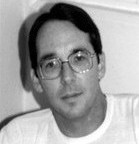 William Zeigler
Mass murderer · USA
William Thomas Zeigler Jr. was prosecuted in Florida for the murders of four pe…
1975 victims
William Zeigler
Mass murderer · USA
William Thomas Zeigler Jr. was prosecuted in Florida for the murders of four pe…
1975 victims
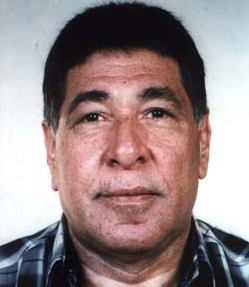 Gameel Al-Batouti
Mass murderer · USA · 1999
Gameel Al-Batouti (also rendered “Gamil ElBatouty” or “El Batouty” in U.S. offi…
216 victims
Gameel Al-Batouti
Mass murderer · USA · 1999
Gameel Al-Batouti (also rendered “Gamil ElBatouty” or “El Batouty” in U.S. offi…
216 victims
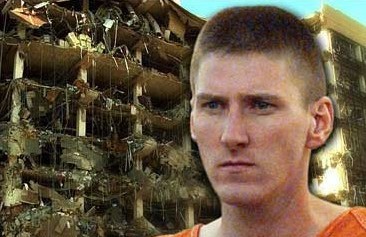 Timothy McVeigh
Mass murderer · USA · 1995
Timothy James McVeigh (April 23, 1968 – June 11, 2001) was a United States Army…
168 victims
Timothy McVeigh
Mass murderer · USA · 1995
Timothy James McVeigh (April 23, 1968 – June 11, 2001) was a United States Army…
168 victims
 Julio Gonzalez
Mass murderer · USA · 1990
Julio Gonzalez was sentenced to 174 twenty-five-year sentences (a total of 4,35…
87 victims
Julio Gonzalez
Mass murderer · USA · 1990
Julio Gonzalez was sentenced to 174 twenty-five-year sentences (a total of 4,35…
87 victims
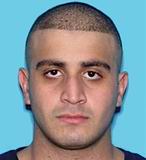 Omar Mateen
Mass murderer · USA · 2016
Omar Mir Seddique Mateen was an American mass murderer who killed 49 people and…
49 victims
Omar Mateen
Mass murderer · USA · 2016
Omar Mir Seddique Mateen was an American mass murderer who killed 49 people and…
49 victims
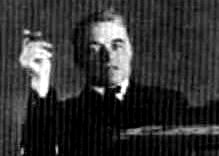 Andrew Kehoe
Mass murderer · USA · 1927
Andrew P. Kehoe committed suicide the same day by killing himself in the explos…
44 victims
Andrew Kehoe
Mass murderer · USA · 1927
Andrew P. Kehoe committed suicide the same day by killing himself in the explos…
44 victims
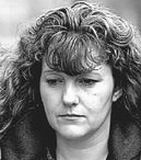 Cherrylle Dell
Murderer · Canada · 1995
Cherrylle Dell poisoned her husband, Scott Dell, with antifreeze-laced wine. Sc…
2 victims
Cherrylle Dell
Murderer · Canada · 1995
Cherrylle Dell poisoned her husband, Scott Dell, with antifreeze-laced wine. Sc…
2 victims
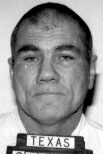 James Paul Collier
Murderer · USA · 1995
James Paul Collier was executed by lethal injection in Texas on December 11, 20…
2 victims
James Paul Collier
Murderer · USA · 1995
James Paul Collier was executed by lethal injection in Texas on December 11, 20…
2 victims
 John Houser
Murderer · USA · 2015
John Russell “Rusty” Houser was born on November 22, 1955, and died on July 23,…
2 victims
John Houser
Murderer · USA · 2015
John Russell “Rusty” Houser was born on November 22, 1955, and died on July 23,…
2 victims
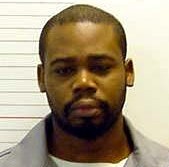 Terrance Anderson
Murderer · USA · 1997
Terrance Anderson Terrance Anderson was sentenced to death May 16, 2001. In Feb…
2 victims
Terrance Anderson
Murderer · USA · 1997
Terrance Anderson Terrance Anderson was sentenced to death May 16, 2001. In Feb…
2 victims
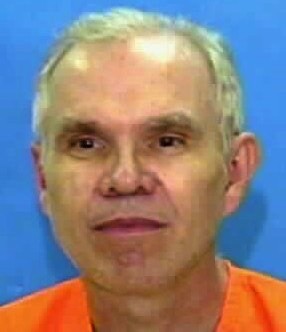 George James Trepal
Murderer · USA · 1988
George James Trepal was convicted and sentenced to death for the murder of Pegg…
1 victim
George James Trepal
Murderer · USA · 1988
George James Trepal was convicted and sentenced to death for the murder of Pegg…
1 victim
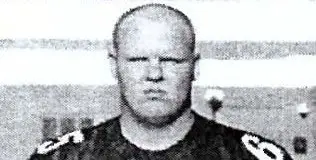 Nathan Gale
Mass murderer · USA · 2004
Nathan Gale (September 11, 1979 – December 8, 2004) was a native of Marysville,…
4 victims
Nathan Gale
Mass murderer · USA · 2004
Nathan Gale (September 11, 1979 – December 8, 2004) was a native of Marysville,…
4 victims
- Gender
- male
- Country
- USA
- Location
- Philadelphia, Pennsylvania, USA
- Date of birth
- 1843
- Age at first offence
- 23
- Characteristics
- robbery
- Victim profile
- Christopher and Julia Dearing and four of their children ; Cornelius Carey (boy employee) and Elizabeth Dolan (family friend)
- Method of murder
- Beating with an axe and a hammer
- Date(s) of murder
- April 7, 1866
- Years active
- 1866
- Date of arrest
- 5 days after
- Status
-
Executed
Executed by hanging on June 8, 1866
Background
Anton Probst was born in Germany in 1843 and came to the United States in 1863, during the height of the Civil War. Almost immediately upon arriving in New York, he volunteered for service in the Union Army. He did not do so because of patriotic zeal but rather because recruits were being paid $300 in those days. Probst volunteered for the army several times, collecting a bounty for his enlistment, serving a few weeks in a training camp, and then deserting to move on to another northern city to enlist again for another $300. He never saw any action but he managed to make a comfortable living during the war. His “racket” came to an end in 1865, and by the fall of that year, Probst found himself penniless in Philadelphia.
While living on the streets, Probst found that Christopher Dearing was looking for a handyman to work on his farm. Probst applied at the small homestead on Jones’ Lane and was soon hired. The Dearing farm was only a few acres in size, with a small house and a barn where a horse and one pig were kept, along with grazing space for cattle. Christopher Dearing, his wife Julia, and their five children supported themselves by raising and selling cattle.
Probst revealed his true personality only to Julia Dearing. She noticed how he did little work and would lounge in the barn when he was supposed to be tending the cattle. After he made several lewd comments to her, she urged Christopher Dearing to fire the strange young man after just three weeks. Dearing agreed, and Probst, claiming to be in poor health, was taken in by a Philadelphia charity hospital. Probst lingered there from December 1865 to the following February.
While lying on his cot in the poor house, Probst schemed to rob the Dearings and to get even with them. He returned to the farm on March 2, 1866 and begged Christopher Dearing to hire him back. Dearing agreed, feeling sorry for the man. Over the course of the next month, Dearing worked harder than he ever had in his life and Probst pretended to be quite friendly with the family, with Julia also beginning to feel kindly towards the young man.
The offence
Probst continued to scheme and on April 7 decided to put his plan into action. That morning, Christopher Dearing traveled by buggy to the Philadelphia docks to meet a visiting family friend, Miss Elizabeth Dolan from Burlington, New Jersey. Meanwhile, Probst and Cornelius Carey, a boy employed to help on the farm, worked in a field. Events began around nine in the morning, as it started to rain. Probst and Carey took shelter under a tree. When Carey looked away for a moment, Probst clobbered Carey with the blunt end of an ax, and when Carey fell stunned, Probst turned the ax over and severed Carey’s head with it. Probst hid the body in a haystack.
Probst then lured the entire family into the barn one by one with methodical precision. In the barn, he struck them senseless with a hammer and then chopped them with the ax until Julia and four of her children, including an infant, had been slaughtered. When Mr. Dearing arrived home with Elizabeth Dolan, Probst was waiting for him. Probst told him there was a sick animal in the barn, and after they went inside, Probst attacked Christopher Dearing with the hammer and ax as well.
Miss Dolan had gone into the house, and she was also lured into the barn and slain. After he was finished, Probst neatly lined all of the bodies up inside of the barn and tossed hay over them.
After the killings, Probst ransacked the farm house looking for money. He found $10 in Christopher Dearing’s wallet, with $4 later found to be counterfeit, as well as a revolver and a battered old watch. Probst also managed to find $3 in Miss Dolan’s purse, but that was all. He then used Dearing’s razor to shave off his beard and exchanged clean clothes and boots for his own blood-soaked apparel. He ate bread and butter and then went to his room for a nap.
He slept peacefully, unconcerned about the murders. Before leaving the farm, Probst fed the dogs and chickens, put out feed for the horses and the cow in the barn, and left the scene with the bodies of the Dearing family lying under hay.
Only one of the children survived the massacre. Willie Dearing, the oldest son, had gone to stay with friends a few days before the crime occurred. After feeding the animals, Probst leisurely strolled away and spent the next few days on the streets.
Neighbors came to the farm on the day after the murders and found the bodies of the family in the barn. They notified the police, and police had little trouble tracking down Probst.
Investigation
Neighbors notified the police after they found the bodies in the barn the day after the murders. Police tracked down Probst. Probst had sold Christopher Dearing’s revolver to a bartender and sold his watch to a jeweler.
Arrest
On April 12, five days after Philadelphia’s first mass murder, Probst was arrested by a single policeman while he was drinking in a tavern at 23rd and Market Streets. Probst surrendered without a fight. At first, he protested his innocence, but the evidence against him was so strong that the jury found him guilty quickly.
Trial
At the end of his trial on May 1, the jury took only 20 minutes to find Probst guilty.
Sentencing
Probst was executed on June 8.
Outcome
Probst was executed by hanging on June 8, 1866. Before the execution occurred, he made a complete confession of his crimes.
Following his execution, Probst’s body was delivered to the medical college, where it was dissected. His mounted skeleton went on display in the museum of the college, which still operated.
Aftermath
The events became known as “the Murders in the Neck,” for the canal-laced district at the tip of South Philadelphia.
The Deering family bodies were later described as being buried in a mass grave at Holy Cross Cemetery in Yeadon under a statue of the Blessed Mother. Their bodies were moved from a church graveyard at 10th and Moore in the 1950s for the construction of St. Maria Goretti High School. Susan Kushner observed the day “just reflecting on who they were.” Robert E. Whomsley, director of the Catholic Cemeteries Office, told Kushner that the family could not put up a marker because it would be unfair to the rest of the 8,471 adults and children buried in the grave. Whomsley invited Kushner to visit, and she said she would visit “this summer” with scores of other descendants of what was once Philadelphia’s most horrific mass murder, describing it as “kind of a family reunion.”
G. Jordan Lyons published an account titled The Philadelphia First Ward Horror. Kushner shared archives for the research, and she described reading about the killings as bringing “a special place within me,” saying: “I feel I am grieving for them,” Kushner said.
Following the massacre, Anton Probst remained associated with Philadelphia after death due to the medical college display of his mounted skeleton.
Spotted an error, or have more information about this case?