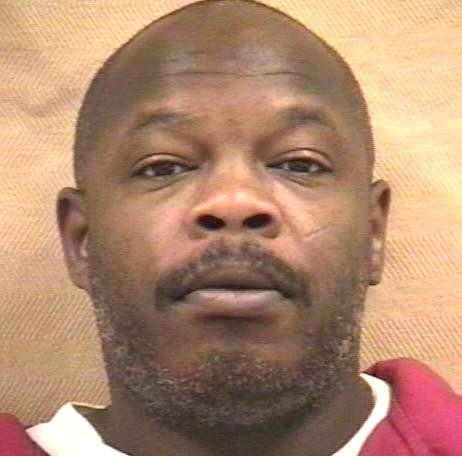
Glen Edward Chapman
Murderer? Richard Allen Williams
Murderer? · USA · 1992
Boone County Prosecutor Kevin Crane dismissed the charges in August 2003 after…
10 victims
Richard Allen Williams
Murderer? · USA · 1992
Boone County Prosecutor Kevin Crane dismissed the charges in August 2003 after…
10 victims
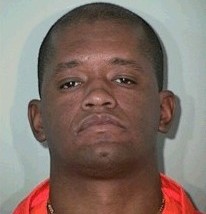 Andre Minnitt
Murderer? · USA · 1992
Andre Minnitt was convicted of crimes connected to the El Grande Market slaying…
3 victims
Andre Minnitt
Murderer? · USA · 1992
Andre Minnitt was convicted of crimes connected to the El Grande Market slaying…
3 victims
 Floyd Tapson
Murderer? · USA · 1987
Floyd Tapson was convicted by a jury in the Thirteenth Judicial District Court,…
3 victims
Floyd Tapson
Murderer? · USA · 1987
Floyd Tapson was convicted by a jury in the Thirteenth Judicial District Court,…
3 victims
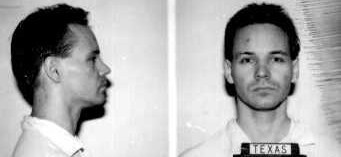 Michael Roy Toney
Murderer? · USA · 1985
Michael Roy Toney (December 29, 1965 – October 3, 2009) · Name as recorded: Mic…
3 victims
Michael Roy Toney
Murderer? · USA · 1985
Michael Roy Toney (December 29, 1965 – October 3, 2009) · Name as recorded: Mic…
3 victims
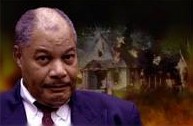 James Campbell
Murderer? · USA · 1997
September 1997 — James Campbell’s first trial ended with a hung jury. · January…
2 victims
James Campbell
Murderer? · USA · 1997
September 1997 — James Campbell’s first trial ended with a hung jury. · January…
2 victims
 Courtney Matthews
Mass murderer · USA · 1994
Courtney Matthews, 19, was a soldier at nearby Fort Campbell and worked at a Ta…
4 victims
Courtney Matthews
Mass murderer · USA · 1994
Courtney Matthews, 19, was a soldier at nearby Fort Campbell and worked at a Ta…
4 victims
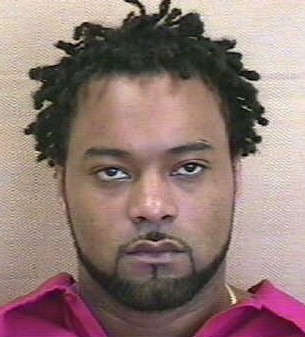 Desmond Keith Carter
Murderer · USA · 1992
Desmond Keith Carter was tried capitally for first-degree murder and robbery wi…
1 victim
Desmond Keith Carter
Murderer · USA · 1992
Desmond Keith Carter was tried capitally for first-degree murder and robbery wi…
1 victim
 Joseph Trueblood
Murderer · USA · 1988
Joseph Trueblood was executed by lethal injection in Indiana on June 12, 2003.…
3 victims
Joseph Trueblood
Murderer · USA · 1988
Joseph Trueblood was executed by lethal injection in Indiana on June 12, 2003.…
3 victims
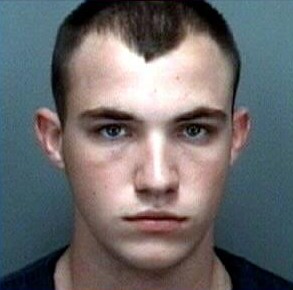 Leo Boatman
Murderer · USA · 2006
Leo Boatman was described by the Marion County sheriff as a "would-be serial ki…
3 victims
Leo Boatman
Murderer · USA · 2006
Leo Boatman was described by the Marion County sheriff as a "would-be serial ki…
3 victims
- Gender
- male
- Country
- USA
- Location
- Hickory, North Carolina, USA
- Date of birth
- 1967
- Age at first offence
- 25
- Characteristics
- —
- Victim profile
- Betty Jean Ramseur, 31 / Tenene Yvette Conley, 28 (prostitutes)
- Method of murder
- Strangulation
- Date(s) of murder
- July-August 1992
- Years active
- 1992
- Date of arrest
- January 11, 1993
- Status
-
Acquitted / overturned
Sentence of death imposed on November 16, 1994; charges dismissed and Glen Edward Chapman exonerated and released on April 2, 2008
Case identification
Defendant: Glen Edward Chapman Legal case references: In the Supreme Court of North Carolina, No. 569A94 - Catawba; State of North Carolina v. Glenn Edward Chapman Filed: 8 December 1995 Heard in the Supreme Court: 10 October 1995
Timeline
- April 27, 1992 — Chapman took part in a robbery.
- Aug. 15, 1992 — Twenty-eight-year-old Tenene Yvette Conley’s half-naked body was discovered in a closet.
- Aug. 22, 1992 — The naked body of Betty Jean Ramseur, 31, was found in a twice-burned, abandoned house in Hickory.
- Dec. 2, 1992 — Chapman was convicted of robbery and put on probation.
- Jan. 11, 1993 — Chapman, 25, was charged with first-degree murder in Ramseur’s death.
- Aug. 16, 1993 — Chapman was charged with first-degree murder in Conley’s death.
- Oct. 31, 1994 — Chapman’s joint trial for both cases began in Catawba County Superior Court.
- Nov. 10, 1994 — Chapman was convicted on two counts of first-degree murder.
- Nov. 16, 1994 — Chapman was sentenced to death.
- July 5, 1996 — Defense attorneys started the appeals process.
- April 30, 1997 — Robert Adams, one of Chapman’s original attorneys, was censured by the Bar Association for violating professional rules of conduct.
- July 23, 2002 — Frank Goldsmith became Chapman’s appellate defense attorney.
- Aug. 1, 2003 — Judge Robert Ervin made the complete investigation and case files available to Chapman’s attorneys.
- Aug. 2, 2006 — Defense attorneys filed a motion seeking a new trial.
- Nov. 6, 2007 — Judge Ervin ordered a new trial based on evidence uncovered by Laughon and her students.
- April 2, 2008 — District Attorney James Gaither dismissed the charges against Chapman and Chapman was released from prison the same day.
- April 3, 2008 — Dennis Rhoney was suspended; the SBI began looking into claims he gave false testimony during Chapman’s trial.
- 10 October 1995 — The Supreme Court heard the appeal.
- 8 December 1995 — The Supreme Court case was filed.
Background
Glen Edward Chapman was a North Carolina man sentenced to death for the 1992 murders of Betty Jean Ramseur and Tenene Yvette Conley. He later sought relief through appeals and subsequent proceedings.
At sentencing, the State offered evidence that Chapman had been previously convicted of common law robbery.
The offence
Conley death
Tenene Yvette Conley was 28 years old. The circumstances described included that Conley was a young woman who used crack cocaine daily and paid for her habit through prostitution.
Conley’s body was found in the basement of a vacant house at 649 First Avenue, S.E., in Hickory on 15 August 1992. There was no sign of forced entry into the house. Chapman, who had been hired in July 1992 to paint the trim on the outside of the house, had been inside and knew how to get into the house.
Dr. Thomas Clark, a forensic pathologist who performed the autopsy, concluded Conley died as a result of manual strangulation. Dr. Clark opined that abrasions found about Conley’s head and forehead could have been made by contact with any type of blunt object, including the floor. Dr. Clark determined Conley had had sexual intercourse within twelve hours of her death. DNA analysis of the sperm sample taken from her body matched a sample given by Chapman.
Several persons saw Chapman and Conley together during the early morning hours of 14 August 1992:
- Jamar Danner, who sold crack cocaine from his house, testified that Chapman and Conley came to his house in search of cocaine, left without purchasing any cocaine, and walked toward the house where Conley’s body was found.
- Howard Cowans testified that Chapman, Conley, and Danny Blackburn came to his home around 3:00 a.m. on 14 August 1992; the group smoked crack in Cowans’ home. After defendant, Conley, and Blackburn went outside, Cowans observed a man and a woman exit Blackburn’s car and walk toward the house where Conley’s body was found. Cowans could not identify the man but implied it was Chapman.
- Blackburn testified that after the group finished smoking crack, he offered Chapman the use of his car for ten dollars; Chapman refused, stating: "she is getting out of the car, she knows what the hell she got to do, she knows what she has got to do." Conley got out of the car and began walking up the street, followed closely by Chapman.
In a statement made to police on 18 September 1992, Chapman acknowledged painting and cleaning the house where Conley’s body was found. He stated he went to Sunny Valley, not Cowans’ house, on 14 August 1992, and he denied leaving Sunny Valley with Conley, insisting that when he left, Conley and Blackburn were together. His statement also noted: "When I smoked [sic] rock I don't want to be around women. They are always wanting something and bothering me and s---."
Ramseur death
Betty Jean Ramseur was 31 years old and was described as being white. The record described that she had been dating Chris Walker for about three years before she died. Ramseur and Walker knew Chapman, and the three formerly smoked crack together. Ramseur was on probation and was last seen by her probation officer on 11 June 1992 regarding a probation violation involving the use of controlled substances.
A fire at 407 Highland Avenue, S.E., in Hickory was reported on the morning of 12 June 1992. Alvin Creasman, a vagrant who had been living in the house, told a fire inspector that he was asleep upstairs when he was awakened by smoke. He noticed a black male and a white female at the house that morning about daybreak. Thomas Rasmussen, an SBI fire investigator, determined that the fire had been caused by human hands, either accidentally or intentionally.
On 22 August 1992, Ramseur’s badly decomposed, naked body was found under the house at 407 Highland Avenue. Dr. Brent Hall, the pathologist who performed the autopsy, determined Ramseur had died sometime in June 1992. Although he could not rule out the possibility that Ramseur had been strangled because her body was partially skeletonized, Hall opined Ramseur had died as a result of a blunt-trauma injury to the head consistent with having been struck with a brick.
The record described that Chapman told at least three people that he had killed Ramseur:
- Chapman’s cousin, Nicole Cline, testified that in June 1992 Chapman told her he had just killed Chris Walker’s girlfriend by cracking her in the head with a brick, pointed from Nicole’s residence to the house at 407 Highland Avenue, and said he had dragged the body under the house.
- Brian Cline, Nicole’s brother, testified that he overheard this conversation.
- Following this conversation but before Ramseur’s body was discovered, Brian and defendant were driving down Highland Avenue when defendant pointed to the house at 407 and said that if people continued to mess with him, they would "end up like that bitch that was under the house."
Lavar Gilliman testified that during the summer of 1992 he overheard Chapman say that he had killed someone, that the body was in the house on Highland Avenue, and that Chapman was going to burn her body so that it could not be found.
Chapman testified that he knew Conley and had gotten high with her on one occasion. He admitted having sex with Conley on 13 August 1992 but denied going with her to Cowans’ and Danner’s houses. He further denied telling Nicole and Brian Cline that he had killed a woman and denied ever having seen Lavar Gilliman before Gilliman testified. He denied killing either woman.
Investigation and evidence issues
Physical evidence and forensic testimony (as presented in the appeal)
- Conley died as a result of manual strangulation; abrasions were described; sexual intercourse was determined to have occurred within twelve hours; DNA analysis of sperm matched a sample given by Chapman.
- Ramseur died as a result of a blunt-trauma injury to the head consistent with having been struck with a brick; the autopsy could not rule out strangulation.
Fire inspection evidence
Thomas Rasmussen, an SBI fire investigator, determined that the fire at 407 Highland Avenue, S.E. had been caused by human hands, either accidentally or intentionally.
Hearsay statement admitted at trial
In the Supreme Court appeal, Chapman challenged the admission of hearsay testimony. The trial court allowed Raymond Mitchell, a fire inspector with the Hickory Fire Department, to read into evidence the hearsay statement Alvin Creasman made on 12 June 1992.
The statement Mitchell read to the jury was: "There was a fire in the living room. There was clothing found in the area of the living room. I was in the hallway asleep upstairs. The smoke woke me up. I notice[d] a black male and a white female there this morning about day break. I stayed all night here. I am a smoker."
The Supreme Court set out the reasons the trial court concluded the statement was admissible under Rule 804(b)(5), including that the State unsuccessfully attempted to locate Creasman, that the statement was trustworthy, that it was material, more probative than other evidence the prosecution could secure through reasonable means, and that justice would be served by admission.
Trial misconduct allegations referenced in the proceedings
During subsequent proceedings leading to release, the record described Judge Robert C. Ervin’s findings that the lead detectives assigned to the cases by the Hickory Police Department covered up exculpatory evidence pointing to Chapman’s innocence and inconsistent with the State’s theory of guilt. It also described a finding that Hickory Police Department Detective Dennis Rhoney had perjured himself at Chapman’s original trial, and that his testimony at hearings before Judge Ervin was "not credible."
It further described new forensic pathologist information presented by forensic pathologist Donald Jason that raised doubts as to whether Conley’s death was a homicide or instead caused by an overdose of drugs, and that Dr. Jason’s report indicated the cause of Conley’s death was "undetermined." It described that Dr. Jason found no life-threatening injuries and suggested a possible cocaine overdose.
Judge Ervin was quoted as writing: "strongly indicates that Terene Conley’s death was not a murder. The notion that a defendant can be put to death when no crime in fact occurred is troubling at best."
DNA testing and evidence reviews described
The appeal process included requests for new DNA tests and examination of withheld evidence and alleged trial errors, as reflected in the case narrative.
Arrest
Chapman was arrested in connection with the murders described; the narrative included that he was told he was being charged with the murder of Betty Jean Ramseur at the time of arrest and that he would be charged with Tenene Conley’s murder several months later.
Trial
Court and jury trial details
Chapman’s joint trial for both murder cases began on Oct. 31, 1994 in Catawba County Superior Court. On Nov. 10, 1994, Chapman was convicted on two counts of first-degree murder. On Nov. 16, 1994, Chapman was sentenced to death.
Aggravating and mitigating circumstances (as described in the Supreme Court decision)
The jury found two aggravating circumstances for both murders:
- Chapman had been previously convicted of a felony involving the use or threat of violence to the person.
- The murder for which Chapman stood convicted was part of a course of conduct in which Chapman engaged and which included the commission by Chapman of other crimes of violence against another person or persons.
The record described that three statutory and sixteen nonstatutory mitigating circumstances were submitted to the jury, but no juror found any mitigating circumstance.
Evidence offered and mitigation
At sentencing, the State offered evidence that Chapman had been previously convicted of common law robbery, and the robbery victim testified to Chapman’s actions during the robbery.
Chapman offered evidence that he provided for Gwyn Anderson and their child and that he was helpful toward his friends and neighbors. Chapman’s father testified that he always counted on Chapman to take care of the house and help with other children as Chapman was growing up.
Dr. Mark Worthing testified defendant was of low average intelligence. Defendant had been diagnosed with alcohol and cocaine dependency. Dr. Worthing opined that Chapman could appreciate the criminality of his conduct unless severely impaired. Because Chapman denied committing the murders, Dr. Worthing was unable to ask specific questions about what drugs he had used at the time of the offenses and thus was unable to determine the extent of defendant’s impairment at that time.
Appeals
Issues addressed on direct appeal to the Supreme Court of North Carolina
Chapman appealed his convictions and sentences. The Supreme Court determined: "We conclude that defendant received a fair trial, free of prejudicial error, and that the sentences of death are not disproportionate. ... NO ERROR."
The Supreme Court addressed multiple assignments of error, including:
- Chapman’s absence from the pretrial conference in capital cases required by Rule 24.
- Submission of the “course of conduct” aggravating circumstance.
- Denial of voir dire regarding jurors’ conceptions of parole eligibility.
- Admission of the hearsay statement of Alvin Creasman as testified to by Raymond Mitchell.
- Joinder of the two murder charges.
The Supreme Court rejected these contentions and upheld the convictions and death sentences.
Pretrial conference and right to be present
The Supreme Court described the constitutional right to be present at every stage of trial and analyzed whether the Rule 24 conference was a stage of trial. It concluded the Rule 24 conference took place before the jury panel was selected and sworn and was not a stage of trial, and thus Chapman’s right to be present at every stage of his trial was not implicated.
Course of conduct aggravating circumstance notice
The Supreme Court addressed Chapman’s contention that the prosecutor failed to mention the course of conduct aggravating circumstance at the Rule 24 conference. It concluded that the prosecutor was not required to enumerate with finality all aggravating circumstances at the punishment phase and that sufficient statutory notice was provided.
Parole eligibility voir dire
The Supreme Court addressed Chapman’s contention that prospective jurors should be questioned about parole eligibility, discussing Simmons v. South Carolina and State v. Price, and concluded the issue did not provide relief.
Hearsay reliability
The Supreme Court concluded the trial court acted properly in admitting Creasman’s statement, finding sufficient indicia of reliability.
Joinder of the two murder charges
The Supreme Court rejected Chapman’s challenge to consolidation of charges under N.C.G.S. § 15A-926(a), concluding the murders had common modus operandi and temporal proximity sufficient to establish a transactional connection and that consolidation did not deprive him of a fair hearing.
Proportionality review
The Supreme Court addressed whether the death sentences were disproportionate, including discussion that no mitigating circumstances were found, comparison to other cases where death sentences had been found disproportionate, and the fact that Chapman was a multiple killer.
Dissent
Justice WEBB dissented. Justice WEBB stated:
"I dissent from the majority opinion. I believe it was error to consolidate the two cases for trial. N.C.G.S. [section] 15A-926(a) says: Two or more offenses may be joined . . . for trial when the offenses . . . are based on the same act or transaction or on a series of acts or transactions connected together or constituting parts of a single scheme or plan. I do not believe the two crimes were based on a series of acts or transactions connected together or constituting parts of a single scheme or plan. The murders occurred two months apart. I can see nothing in the record that indicates that the defendant was scheming to kill another person at the time the first murder was committed. The fact that the two crimes had a common modus operandi does not show a continuing scheme or plan. I believe that without more of a showing of one scheme to murder two persons it was error to consolidate the cases for trial. I vote to grant new trials on the two charges."
Sentencing
On Nov. 16, 1994, the trial court sentenced Chapman to death for each murder. The jury found two aggravating circumstances for both offenses and found no mitigating circumstances.
Outcome
Death sentence and later exoneration
Chapman was released from death row on April 2, 2008 after the district attorney dismissed the charges.
District Attorney James Gaither, Jr. dismissed the charges against Chapman on April 2, 2008. In the described proceedings, the dismissal was based on a finding that the prosecution’s argument was "factually incomplete," and that there was not enough evidence to retry the case.
Chapman was exonerated and released on April 2, 2008.
Subsequent disciplinary and investigative actions referenced in the proceedings
- The record described that Robert Adams had been disciplined (censured) by the North Carolina State Bar on April 30, 1997 and had undergone a psychiatric evaluation ordered by the Bar in 1998, with a referral to Alcoholics Anonymous.
- The record described that Thomas Portwood had died of an alcohol-related illness, and that he admitted drinking 12 shots of alcohol per day during a different death penalty trial involving Ronald Frye, who was executed in 2001.
- The record described that Dennis Rhoney was suspended on April 3, 2008, and that the SBI began looking into claims he gave false testimony during Chapman’s trial.
Other details
People named in the case record
- Betty Jean Ramseur (victim; 31 years old)
- Tenene Yvette Conley (victim; 28 years old)
- Chris Walker (connected to Ramseur; referenced as her dating partner)
- Gwyn Anderson (Chapman’s wife; later died of liver cancer in the described narrative)
- Correy and Stacey (Chapman’s sons; described with ages 17 and 20 in the described narrative)
- Nathan Bowie (friend from Hickory; referenced as having been convicted of murder for a shooting in May 1991)
- Donald Jason (forensic pathologist referenced in the described evidence raising doubts)
- Frank Goldsmith and Jessica Leaven (Chapman’s appellate defense lawyers referenced in the described proceedings)
- Pam Laughon (mitigation specialist referenced in the described proceedings)
- Robert Adams and Thomas Portwood (Chapman’s trial attorneys referenced in the Supreme Court decision and subsequent narrative)
- Judge Robert C. Ervin (Judge who ordered a new trial and made investigation files available in the described proceedings)
- Catawba County District Attorney James Gaither, Jr. (dismissed charges on April 2, 2008 as described)
- Detective Dennis Rhoney (Hickory Police Department detective referenced in findings of perjury and credibility)
- Ronald Frye (defendant referenced in the narrative involving Thomas Portwood; executed in 2001)
- Gail Deal (juror referenced in affidavit in the described appeal narrative)
- Jason Parker (former Catawba County prosecutor referenced as declining to discuss allegations)
- Raymond Mitchell (fire inspector who read Creasman’s statement into evidence)
- Alvin Creasman (vagrant; declarant for hearsay statement; fire morning witness)
- Thomas Rasmussen (SBI fire investigator)
- Dr. Thomas Clark (forensic pathologist who performed the autopsy for Conley)
- Dr. Brent Hall (pathologist who performed the autopsy for Ramseur)
- Dr. Mark Worthing (psychologist who testified at sentencing)
- Michael F. Easley (Attorney General in the Supreme Court proceeding)
- William B. Crumpler (Assistant Attorney General for the State in the Supreme Court proceeding)
- W. Thomas Portwood, Jr. and Robert W. Adams (for defendant-appellant in the Supreme Court proceeding)
- Justice WHICHARD (Supreme Court Justice in the decision)
- Justice WEBB (dissenting Justice)
People and witnesses described in trial evidence narrative
Witnesses and related individuals included:
- Jamar Danner (sold crack cocaine; saw Chapman and Conley together)
- Howard Cowans (lived within a block; observed group and car movements; testified he could not identify the man)
- Danny Blackburn (accompanied Cowans’ home and related testimony about car use)
- Nicole Cline (testified to Chapman’s statements about killing Ramseur)
- Brian Cline (overheard conversation and relayed Chapman’s statement)
- Lavar Gilliman (overheard statements about killing and plans to burn the body)
- Irene Freeman (juror referenced in the described appeal narrative as having slept through essential testimony)
- Gwen Anderson (referenced for her role in Chapman's life; and later death from liver cancer in the narrative)
Quotes reproduced verbatim from the Supreme Court decision and narratives
- From Blackburn’s testimony:
- From Chapman’s statement to police on 18 September 1992:
- From Chapman’s statement described to Brian Cline: "end up like that bitch that was under the house."
- From the Supreme Court dissent (Justice WEBB):
Procedural status and release
Chapman was sentenced to death on November 16, 1994 and was later exonerated and released on April 2, 2008 after prosecutors dropped all charges against him. The district attorney’s office dismissed the charges on April 2, and Chapman was released from prison the same day.
Spotted an error, or have more information about this case?