
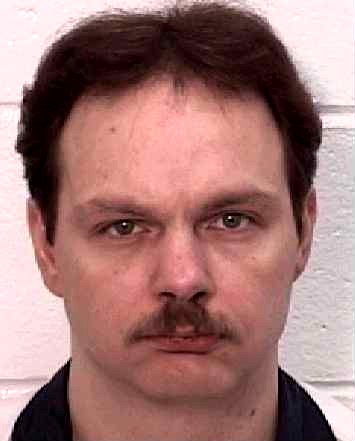
Ramon Jay Rogers
Serial killer Glen Edward Rogers
Serial killer · USA · 1993
Glen Edward Rogers was a spree killer whose cross-country rampage in 1994-95 le…
70 victims
Glen Edward Rogers
Serial killer · USA · 1993
Glen Edward Rogers was a spree killer whose cross-country rampage in 1994-95 le…
70 victims
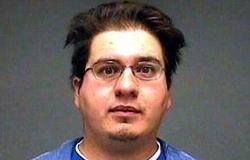 Efren Saldivar
Serial killer · USA · 1989
Efren Saldivar (born 30 September 1969) was an American serial killer who murde…
50 victims
Efren Saldivar
Serial killer · USA · 1989
Efren Saldivar (born 30 September 1969) was an American serial killer who murde…
50 victims
 Charles Cullen
Serial killer · USA · 1984
Charles Cullen (born February 22, 1960) was a former nurse and the most prolifi…
45 victims
Charles Cullen
Serial killer · USA · 1984
Charles Cullen (born February 22, 1960) was a former nurse and the most prolifi…
45 victims
 Charles Ng
Serial killer · USA · 1983
Charles Chi-Tat Ng (Chinese: 吳志達/吴志达; born December 24, 1960) was a Chinese-Ame…
25 victims
Charles Ng
Serial killer · USA · 1983
Charles Chi-Tat Ng (Chinese: 吳志達/吴志达; born December 24, 1960) was a Chinese-Ame…
25 victims
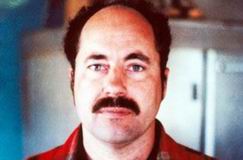 Leonard Lake
Serial killer · USA · 1983
Leonard Lake (October 29, 1945 – June 6, 1985) was an American serial killer. H…
25 victims
Leonard Lake
Serial killer · USA · 1983
Leonard Lake (October 29, 1945 – June 6, 1985) was an American serial killer. H…
25 victims
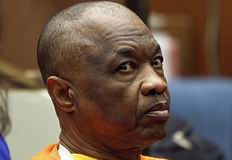 Lonnie Franklin
Serial killer · USA · 1985
Lonnie Franklin was convicted as the “Grim Sleeper” serial killer, a nickname u…
25 victims
Lonnie Franklin
Serial killer · USA · 1985
Lonnie Franklin was convicted as the “Grim Sleeper” serial killer, a nickname u…
25 victims
 Rev. Gerald Robinson
Murderer · USA · 1980
Rev. Gerald Robinson (born April 14, 1938) was an American murderer and a Roman…
1 victim
Rev. Gerald Robinson
Murderer · USA · 1980
Rev. Gerald Robinson (born April 14, 1938) was an American murderer and a Roman…
1 victim
 James Kraig Kahler
Mass murderer · USA · 2009
James Kraig Kahler resided in Columbia, Mo., after moving back to Kansas shortl…
4 victims
James Kraig Kahler
Mass murderer · USA · 2009
James Kraig Kahler resided in Columbia, Mo., after moving back to Kansas shortl…
4 victims
 Anthony Balaam
Serial killer · USA · 1994
Anthony Balaam was a crack addict from Trenton, New Jersey. He confessed to sod…
4 victims
Anthony Balaam
Serial killer · USA · 1994
Anthony Balaam was a crack addict from Trenton, New Jersey. He confessed to sod…
4 victims
 Juan Moreira
Murderer · Argentina · 1856
Juan Moreira (? - April, 1874) was a well-known figure in the history of Argent…
16 victims
Juan Moreira
Murderer · Argentina · 1856
Juan Moreira (? - April, 1874) was a well-known figure in the history of Argent…
16 victims
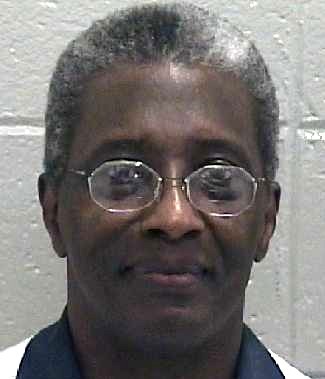 Brandon Astor Jones
Murderer · USA · 1979
Brandon Astor Jones, also known as Wilbur May, was convicted of murder and sent…
1 victim
Brandon Astor Jones
Murderer · USA · 1979
Brandon Astor Jones, also known as Wilbur May, was convicted of murder and sent…
1 victim
- Gender
- male
- Country
- USA
- Location
- San Diego County, California, USA
- Date of birth
- 1959
- Age at first offence
- 34
- Characteristics
- dismemberment
- Victim profile
- Ron Stadt, 20 (his friend) / Rose Albano, 33 (pregnant ex-girlfriend) / Beatrice Toronczak, 32 (ex-girlfriend with whom he has a 6-year-old son)
- Method of murder
- ???
- Date(s) of murder
- June 24/December 18, 1993 / February 18, 1996
- Years active
- 1993–1996
- Date of arrest
- March 13, 1996
- Status
-
Sentenced to death
Sentenced to death in 1997
Timeline
- March 14, 1996 — Ramon Jay Rogers pleaded not guilty to a charge of murder connected with the disappearance of his female companion, Beatrice Toronczak.
- February 17, 1996 — The woman, Beatrice Toronczak, was accused of being murdered sometime between Feb. 17 and March 11, 1996.
- March 6, 1996 — A missing person report was filed on behalf of Toronczak’s mother, who said she had not spoken to her daughter in 3 to 4 weeks.
- March 16, 1996 — Police confirmed that human remains discovered in a storage locker were those of Rogers’ former girlfriend, Beatrice Toronczak.
- March 18, 1996 — Rogers would be held in jail without bail until at least March 18, the date of the bail review hearing.
- March 26, 1996 — A preliminary hearing was scheduled for March 26.
- December 1993 — Rose Albano was pregnant with Rogers’ child at the time of her disappearance.
- February 1996 — Shortly after Toronczak moved into Rogers’ apartment, she disappeared.
- June 1993 — Ron Stadt vanished.
- 1990 — Rogers worked as a reserve deputy for the San Diego County Sheriff’s Department from February to August 1990.
- 1991 — People v. Wharton (1991) 53 Cal.3d 522 was cited in the appellate discussion of warrantless entry principles.
- 1988 — People v. Lucero (1988) 44 Cal.3d 1006 was cited in the appellate discussion of warrantless entry principles.
- 1994 — Rogers was questioned in early 1994 regarding the disappearance of Rose Albano.
- July 7, 2009 — The California Supreme Court upheld the capital conviction.
Background
Ramon Jay Rogers was an aspiring actor and a heavy-metal drummer. He also appeared in the TV show "Renegade." He was arrested in March of 1996 in San Diego after body parts of his visiting ex-girlfriend were found in the apartment complex he managed.
Rogers was the resident manager of the apartment complex at 7007 Saranac in San Diego.
Beatrice Toronczak was the mother of Rogers’ young son. Toronczak moved with the child from Poland to live with Rogers. She taught herself English and had come from Poland.
Rogers and Toronczak quarreled after Toronczak found him and her son living with another woman in January. Rogers threatened to lock Toronczak in the basement of the apartment complex, according to testimony from Toronczak’s mother.
Rogers and Toronczak lived with each other only intermittently, according to friends.
Rogers performed roles for a local Crime Stoppers program. Linda Zweig, who once coordinated the show, said Rogers played murderers, bank robbers and an assortment of other felons. She said: "He was very good at what he did," and added: "He was very good at what he did," (as quoted in context).
Rogers worked as a reserve deputy for the San Diego County Sheriff’s Department from February to August 1990. He also worked as an unpaid member of the search-and-rescue scuba team but was dropped from the program after his six-month probationary period. San Diego sheriff's spokesman Don Crist would not say why.
The offence
Rogers was accused of murdering Beatrice Toronczak sometime between Feb. 17 and March 11, 1996, in connection with her disappearance. The investigation involved the discovery of severed fingers and parts of Toronczak’s jawbone in storage areas at the apartment complex.
Human remains discovered in a storage locker were those of Rogers’ former girlfriend, police confirmed.
The remains found included teeth and fingers. They were reportedly teeth and fingers, and later it was stated that Toronczak’s severed fingers and parts of her jawbone were discovered in the storage areas. The body parts of Toronczak found were described as being in a plastic bag inside a storage locker near Rogers' parking space.
Rogers was also charged in relation to two other women and a missing man:
- He was charged with the murders of Toronczak and his former girlfriend Rose Albano, who was pregnant with his child at the time of her disappearance in December 1993. Albano’s partial remains were found in a trash bag near Rogers' sister's home.
- He was also charged with the murder of his one-time roommate and best friend Ron Stadt, who vanished in June 1993. His body was never found.
Jurors found Rogers guilty of:
- first degree murder as to Toronczak and Rose Albano, with a multiple-murder special circumstance; and
- the lesser charge of second degree murder as to Stadt.
Investigation
The discovery of Toronczak’s body parts triggered the reopening of two other cases involving the mutilation-murder of another of Rogers’ old girlfriends and the disappearance of one of his friends. Investigators also looked into two other murders outside San Diego County that might be linked to Rogers.
Detective Richard Carlson reviewed the missing person report filed on behalf of Toronczak’s mother and telephoned Rogers to ask how long Toronczak had been gone.
Rogers told Carlson she had been gone about a week to a week and a half, then said he had to go and hung up.
Carlson also called the person who filed the missing persons report. The person told Carlson that Toronczak’s mother said she had witnessed Rogers threaten to lock Toronczak in the basement of the apartment complex and insisted that the police look in the basement for her daughter.
After the preliminary discoveries, police dug up portions of the storage area's dirt floor in a search for more body parts. They would not confirm if they found anything else.
Arrest
Ramon Jay Rogers was arrested in March of 1996 in San Diego after the body parts of Toronczak were found in the apartment complex he managed.
On March 16, 1996, it was reported that Rogers, who appeared in "Renegade," was arrested on Monday for investigation into the murder of Toronczak after fingers, teeth and other body parts were discovered by police in lockers at his apartment complex.
He pleaded not guilty on March 14, 1996 to a charge of murder in connection with Toronczak’s disappearance.
Rogers was taken into custody late Monday on charges of illegal possession of narcotics and was later booked on charges of homicide by the San Diego Police Department, said Lt. Glenn Breitenstein, head of homicide investigations for the SDPD.
Trial
The trial was held in 1997 with San Diego Superior Court Judge Frederic L. Link presiding.
Rogers’ automatic appeal to the state Supreme Court was later considered.
The California Supreme Court discussed Rogers’ pre-trial challenges to his conviction, including:
- pre-trial evidentiary challenges; and
- instructional challenges.
Sentencing
Rogers was sentenced to death in accord with the jury verdict.
On appeal, the California Supreme Court agreed to modify his sentence because the trial court erred in entering a judgment imposing a sentence of death as to all 3 murder counts because capital punishment is not authorized for 2nd degree murder.
The California Supreme Court declined to remand the matter to allow the trial court to consider whether the authorized sentence on the 2nd degree murder count should be stayed and exercised its statutory authority to vacate the death sentence imposed on the 2nd degree murder count.
The judgment was ordered modified to reflect a state prison term of 15 years to life.
Appeals
On July 7, 2009, the California Supreme Court upheld the capital conviction.
The Supreme Court of California in People v. Rogers upheld the capital conviction based in part on evidence recovered by police officers after they conducted a warrantless entry of storage rooms under Rogers’ apartment out of concern that the mother of his child—missing for over 3 weeks—was locked inside.
The opinion for the unanimous court was written by Justice Marvin R. Baxter.
Justice Baxter said the San Diego Police Department had an objectively urgent need to try and locate Beatrice Toronczak, justifying their entry into the storage areas of the apartment complex.
The California Supreme Court noted it had upheld a warrantless entry to "seek an occupant reliably reported as missing" in People v. Wharton (1991) 53 Cal.3d 522. Baxter noted that Wharton said the police did not illegally open a closed container to confirm their suspicion that it contained a dead body because "there existed the possibility that the victim was still alive," and the emergency generated by the missing person report did not cease until the officers found the subject of those reports was dead.
Baxter also noted People v. Lucero (1988) 44 Cal.3d 1006 held the warrantless entry into a home was justified by the exigency created by the disappearance of 2 girls and a fire of unknown origin within that house, which was across the street from the last known location of the missing girls.
Baxter analogized those cases to the facts known to Carlson at the time the police entered the storage areas under Rogers’ apartment and concluded that the totality of the circumstances indicated an exigency justifying a warrantless entry.
Justice Baxter explained:
"Because the totality of the circumstances must be considered, the fact that certain circumstances were not present here, such as certain noises or smells, or gunshots or fire, does not defeat the finding of an emergency,"
He added: adding that the length of time Toronczak had been reported as missing, "did not negate the emergency nature of the situation in light of the other circumstances known to Carlson."
Baxter said the possibility that Carlson could have acted more quickly in trying to find Toronczak or his subjective belief that he lacked probable cause to obtain a warrant before entering the storage areas were irrelevant because the total circumstances justified the entry.
The justices rejected Rogers’ pre-trial, evidentiary, and instructional challenges to his conviction.
Outcome
Rogers was found guilty of first degree murder as to 2 women and guilty of the lesser charge of second degree murder as to Stadt, with a multiple-murder special circumstance.
The California Supreme Court upheld the capital conviction and modified the sentence by vacating the death sentence imposed on the 2nd degree murder count, ordering the judgment modified to reflect a state prison term of 15 years to life.
Aftermath
Rogers was described as "an extreme danger to the community" by Deputy District Attorney Bill Wood, and Wood requested Rogers be held without bail, which was granted.
Rogers would be held in jail without bail until at least March 18, the date of the bail review hearing. A preliminary hearing was scheduled for March 26.
Friends and tenants expressed support and shock, including:
- Rogers’ girlfriend Rose (whose last name was not used) said: "I'm gonna be there for him," and "My sweetheart didn't do it."
- A tenant identified herself as "Kelli" said: "Beatrice was a really, really nice lady," and also said about Rogers: "If he gets upset about something, he's going to talk to the person very rationally about it," and "He's not the kind that will chop somebody up. "One hundred percent of me believes that he is innocent."
- Kelli also said: "My sweetheart didn't do it." and added: "Kelli also said that when she first heard of the disappearance of Rogers' live-in companion, she thought Toronczak left with another male friend."
- A tenant Tom said: "He is the kind of guy who would give you the shirt off his back," and: "As the law says, he's innocent until proven guilty. We're going to stand by him."
- Another tenant who asked not to be identified said: "I didn't think he would do something like that," and "But then you never know."
Police dug up portions of the storage area's dirt floor after Monday’s discoveries, searching for more body parts, but did not confirm any additional remains.
Other details
On March 16, 1996, it was reported that the remains of Toronczak were last known to be alive on Feb. 18 and were reported missing March 6 by a family friend.
Toronczak’s mother was described as having not spoken to her daughter in 3 to 4 weeks before the missing person report.
A friend who asked not to be identified said: "Beatrice was a really, really nice lady," and also stated: "She came from Poland and didn't know one word of English. But she went to school and taught herself."
It was reported that Toronczak threatened to take the boy to her native Poland if the woman did not leave.
Ron Stadt was described as Rogers’ former roommate. It was said Stadt disappeared in 1993 apparently after confronting Rogers about having an affair with Stadt's estranged wife.
Rogers was questioned about Stadt's disappearance but was never arrested at that time.
It was reported that investigators had insufficient evidence to arrest Rogers in connection with Rose Albano before the later charges. It was also reported that Sheriff’s homicide investigators questioned Rogers in early 1994 regarding Albano’s disappearance, but he was not arrested then.
Rose Albano was described as 33 years old, and human remains were found about six months after Stadt disappeared: "the arm, leg and lower jaw of another of Rogers' girlfriends, Rose Albano, 33, was found in a trash bag off a rural road in northeast San Diego County." It was also reported that her partial remains were found in a trash bag near Rogers' sister's home.
Rogers was formally identified as a suspect in other murders, including at least one other dismemberment case.
A forensic examination was to be conducted by the Medical Examiner's office to determine the identity of the victim.
A bail review hearing was scheduled or referenced for March 18, and a preliminary hearing was scheduled for March 26.
People
- Ramon Jay Rogers — defendant; an aspiring actor and heavy-metal drummer; resident manager of an apartment complex at 7007 Saranac in San Diego.
- Beatrice Toronczak — victim; mother of Rogers’ young son; formerly lived with Rogers after moving from Poland; missing and later identified from remains found in a storage locker; age 32.
- Detective Richard Carlson — detective who reviewed the missing person report and telephoned Rogers; later involved in ordering officers to break the door open.
- Justice Marvin R. Baxter — wrote the opinion for the unanimous California Supreme Court.
- Judge Frederic L. Link — San Diego Superior Court judge who presided over the trial.
- Deputy District Attorney Bill Wood — described Rogers as "an extreme danger to the community" and requested Rogers be held without bail.
- Lt. Glenn Breitenstein — head of homicide investigations for the San Diego Police Department, who described Rogers’ custody and booking.
- Don Crist — San Diego sheriff's spokesman who would not say why Rogers was dropped from the scuba program after probation.
- Linda Zweig — coordinated the Crime Stoppers show.
- Rose Albano — former girlfriend; age 33; pregnant with Rogers’ child at time of disappearance in December 1993; partial remains found in a trash bag near Rogers' sister's home.
- Ron Stadt — Rogers’ one-time roommate and best friend; disappeared in June 1993; body never found.
- Toronczak’s mother — filed a missing person report and said she witnessed Rogers threaten to lock Toronczak in the basement; insisted police look in the basement.
- Rose — Rogers’ girlfriend quoted as supporting him; last name not used.
- Kelli — tenant quoted about Rogers’ character and her belief in his innocence.
- Tom — tenant quoted about Rogers’ character and support.
- Metropolitan News Company — provided a report dated July 7, 2009 (as part of the case narrative).
Spotted an error, or have more information about this case?